How to Tune a Carburetor for Better Performance
Tune the carburetor by matching the adjustment to the symptom: idle screw for idle speed, mixture screws for low-speed mixture, jets or other high-load fuel circuits for lean or rich running under throttle. Pick the wrong circuit and you waste time, foul plugs, wash cylinders with fuel, or leave the engine running badly. Start with the symptom, then check the circuit that actually controls it.
What you’ll need
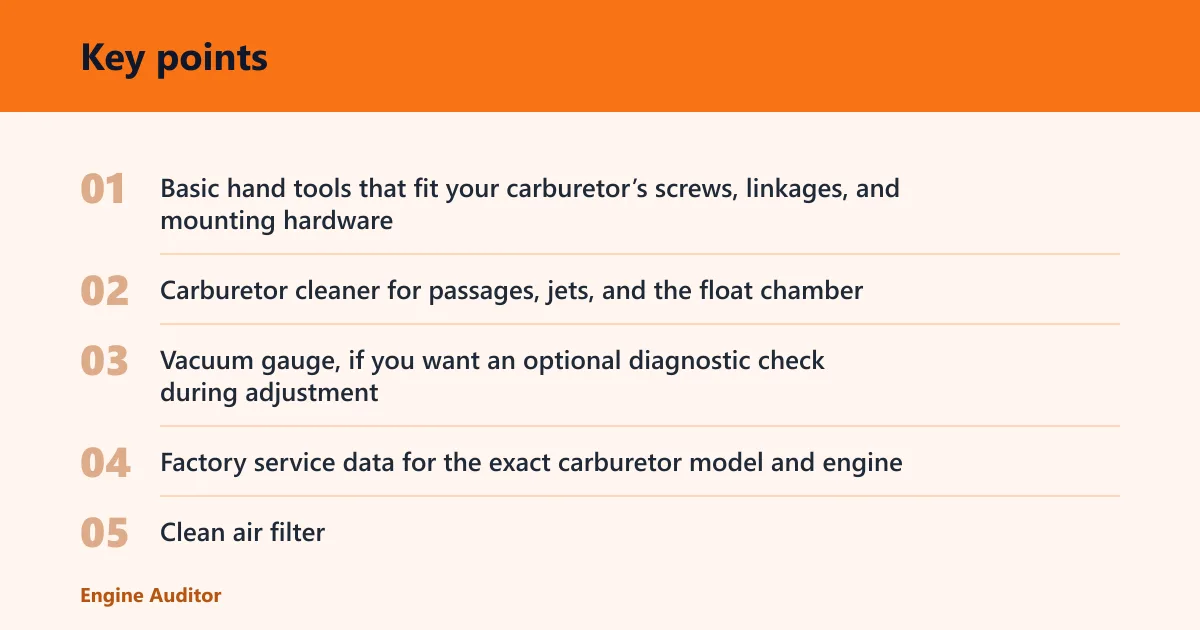


- Basic hand tools that fit your carburetor’s screws, linkages, and mounting hardware
- Carburetor cleaner for passages, jets, and the float chamber
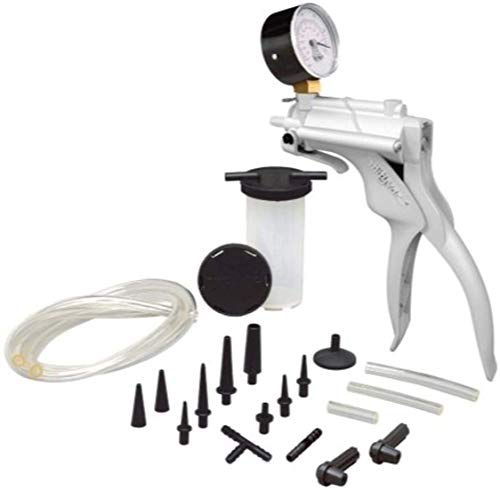
- Vacuum gauge, if you want an optional diagnostic check during adjustment
- Factory service data for the exact carburetor model and engine
- Clean air filter
- Safety glasses and gloves
- Rags and a container for small parts
Set the baseline
Start here before turning any screw. Warm the engine until it reaches operating temperature, verify ignition timing against spec, and confirm the air filter is clean. Check that the throttle linkage moves freely and snaps back to idle without binding; if it hangs, every tuning step becomes unreliable.
- Inspect throttle linkage at the carburetor and pedal or cable end. Fix sticking, bent parts, or weak return springs first.
- Check float level against the carburetor’s own specification. Do not use a universal measurement; many carburetors need their own setting, and one common reference is a float positioned parallel to the carburetor body.
- Confirm fuel supply is steady and the bowl is not overflowing or running dry.
- Set mixture screws to the known baseline, often 1.5 to 2 turns out from lightly seated.
How do you tune idle mixture?
Adjust the idle mixture screw when the engine is fully warm and the idle circuit is active. Turn in small steps to find the smoothest idle and best vacuum reading, then back off slightly if the engine prefers a slightly richer setting. This screw changes the air-fuel mixture at idle only.
Idle mixture tuning steps
- Bring the engine to operating temperature.
- Set idle speed a little above target so the engine stays running while you tune.
- Turn one mixture screw about 1/8 turn at a time and pause after each change.
- Look for the highest steady idle speed or strongest vacuum reading.
- Repeat for each mixture screw, if the carburetor uses more than one.
If the screw has little effect, the idle passage may be clogged, the throttle plate may be too far open, or the carburetor may need cleaning before tuning can work.
How do you set idle speed?
Use the idle speed screw after the mixture is close. That screw changes throttle plate position, so it sets RPM rather than fuel ratio. Many engines end up within 600-900 RPM, but the factory target matters more than a general range. Recheck mixture after every speed change.
Idle speed adjustment steps
- Turn the idle speed screw until the engine reaches the factory idle target.
- Keep the throttle linkage free so the plate returns to the same stop each time.
- Recheck the mixture screws after the speed change.
- Make 1/8-turn corrections, then let the engine stabilize before the next change.
A common first-timer mistake is using the idle speed screw to hide a lean idle circuit. That can raise RPM while the mixture still misfires.
When should you change jets?
Change the main jet, or inspect the high-load fuel circuit on your carburetor design, when idle tuning does not fix bogging, top-end lean stumble, black smoke, or fuel use that stays abnormal. The main jet does not cure every throttle complaint, and some carburetors also use needles, metering rods, power valves, or secondary circuits under load.
If that didn’t work, try this next
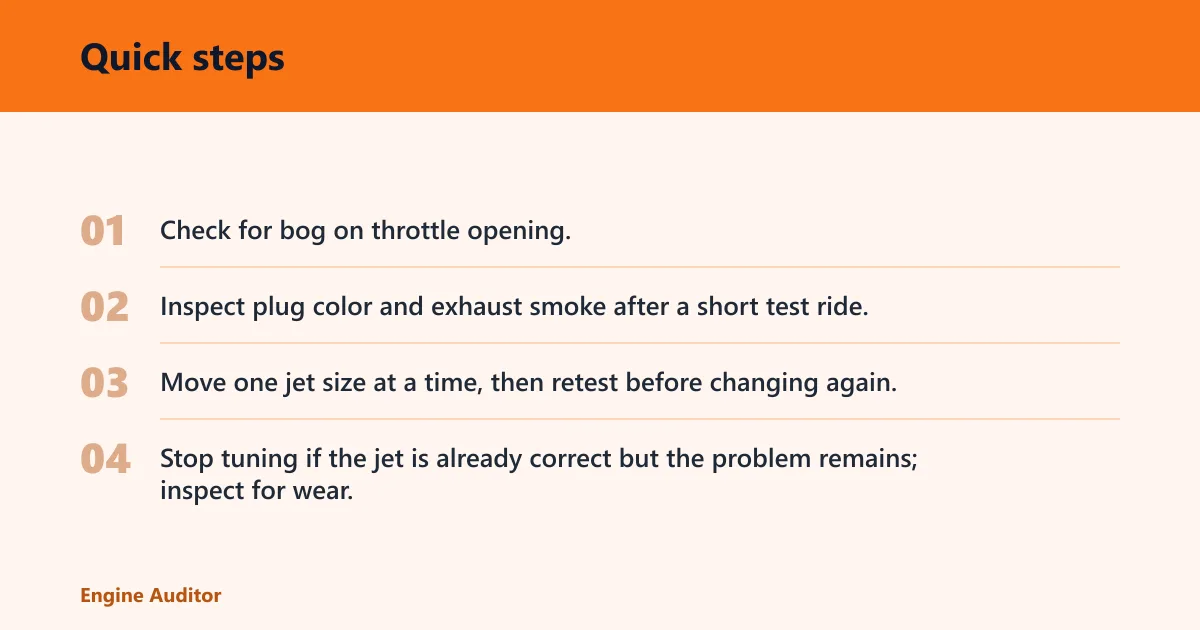
- Check for bog on throttle opening. If it appears only under load, inspect the main jet or related enrichment circuit.
- Inspect plug color and exhaust smoke after a short test ride.
- Move one jet size at a time, then retest before changing again.
- Stop tuning if the jet is already correct but the problem remains; inspect for wear, blockage, or a bad float valve.
If the engine idles cleanly but falls flat as the throttle opens from about 1/4 to 1/2, the issue often involves the main fuel circuit or transition circuit. That points away from the idle screw and toward the main fuel circuit or a related transition part.
Carburetor table
| Symptom | Most likely circuit | First check | Correct adjustment | Stop tuning and inspect parts if… |
|---|---|---|---|---|
| Rough idle | Idle mixture circuit | Engine warm, air filter clean, linkage returning fully | Adjust idle mixture screw in 1/8-turn steps | Screw has little effect or idle cannot stabilize |
| Bog on throttle | Main jet or related transition circuit | Float level and fuel supply | Change jet size or inspect enrichment parts | Jet changes do not change the stumble |
| Black smoke | Air-fuel mixture too rich | Float level, choke setting, stuck float | Reduce fuel delivery if the circuit allows it | Float valve leaks or fuel keeps dribbling |
| Surging | Too lean at idle or cruise | Vacuum leaks, float level, idle circuit | Recheck mixture screw and float setting | Vacuum reading stays unstable after adjustment |
| Hard starting | Idle circuit, choke, or float level | Fuel level and choke operation | Correct the fuel level before fine tuning | Fuel is flooding, or starting stays poor after reset |
| High fuel use | Rich mixture or float problem | Black smoke, plug condition, bowl level | Lean the correct circuit, then retest | Fuel level is wrong or jets are worn |
Common mistakes
Do not chase idle problems before checking float level. A float that is too high can flood the bowl; one that is too low can starve the engine and make every adjustment look wrong. Do not spray carburetor cleaner where it cannot safely reach a passage, and do not use cleaner as a substitute for worn parts, damaged jets, or a leaking needle and seat.
Modified engines need special attention. A freer intake, less restrictive exhaust, or a large altitude change can shift the baseline, so the factory setting may no longer be correct. Picture an ATV that idles fine at sea level with stock intake parts, then surges after a high-altitude trip; the idle screw may not be the real problem if the mixture is now too lean for the new air density.
How do you tune a carburetor after cleaning or rebuilding it?
After cleaning or rebuilding, return to the baseline first. Set the float to the carburetor’s specified level, confirm every jet and passage is clear, and restore the idle mixture screws to the starting position. Then warm the engine and repeat the idle-mixture and idle-speed steps in order.
If a rebuild did not fix rough idling, stalling, difficulty starting, hesitation during acceleration, or black smoke, inspect the float valve, jet condition, and throttle shafts before more tuning. Carburetor cleaner can clear dirt, but it cannot repair wear.
Frequently asked questions
How to tune a carburetor for more power
For more power, focus on the circuit that controls the load range where the loss happens. Idle screws will not cure a bog at full throttle. If the engine feels flat only under load, inspect the main jet or related fuel circuit and change only one step at a time.
How do I know if my carburetor is too rich or too lean?
Black smoke, fuel smell, sooty plugs, and poor fuel economy point rich. Surging, hesitation, hard starting, and a hot-running stumble can point to a lean condition. A vacuum gauge can help confirm response during idle tuning, but plug reading and symptom matching still matter most.
Should I adjust the float before tuning the mixture screws?
Yes. If the float level is wrong, mixture screws may never land in the right range. Check the float first, using the carburetor’s own specification, then set the mixture screws to the baseline and tune from there. A wrong fuel level can mimic both lean and rich faults.
Can a carburetor tune fix poor acceleration and rough idle?
It can, if the carburetor is fundamentally sound and the problem matches the correct circuit. Rough idle usually points to the idle mixture or idle speed screw. Poor acceleration may need a main jet, transition circuit, or float correction instead of more idle adjustment.
When should I change the main jet instead of adjusting screws?
Change the main jet when the problem shows up under throttle or load, not just at idle. If the engine bogs, runs lean at higher load, or still smokes black after idle tuning and float checks, jet size or another high-load fuel part needs attention.
Products related to this article
Sponsored / affiliate links. As an Amazon Associate I earn from qualifying purchases. I may earn additional commission from eligible campaigns.
 Carburetor Adjustment Tool Screwdriver Kit for 2 Cycle Small Engine Poulan Husqvarna ECHO Trimmer Weedeater Chainsaw,Carburetor Adjustment Tool Set Carburetor Tune up Adjusting Tool (11pcs +bag)
 10 Pcs Carburetor Adjustment Tool Kit for Common 2 Cycle Small Engine, Carb Adjusting Tool, Carburetor Adjuster Tool for Echo Poulan Homelite String Trimmer