Carburetor Troubleshooting Guide for Common Symptoms
Match the symptom to the carburetor circuit first: idle and tip-in faults usually point to the idle circuit, mid-throttle surging to the needle/main circuit, flooding to float or needle valve issues, and hard starting to choke or fuel delivery faults. Misdiagnosis wastes time, risks flooding cylinders, and can hide ignition or vacuum faults. This guide maps common symptoms to likely carburetor causes, then shows the checks to confirm the fault before you adjust anything.
This guide is part of our Carburetor repair guide series.
Carburetor troubleshooting: start with the symptom


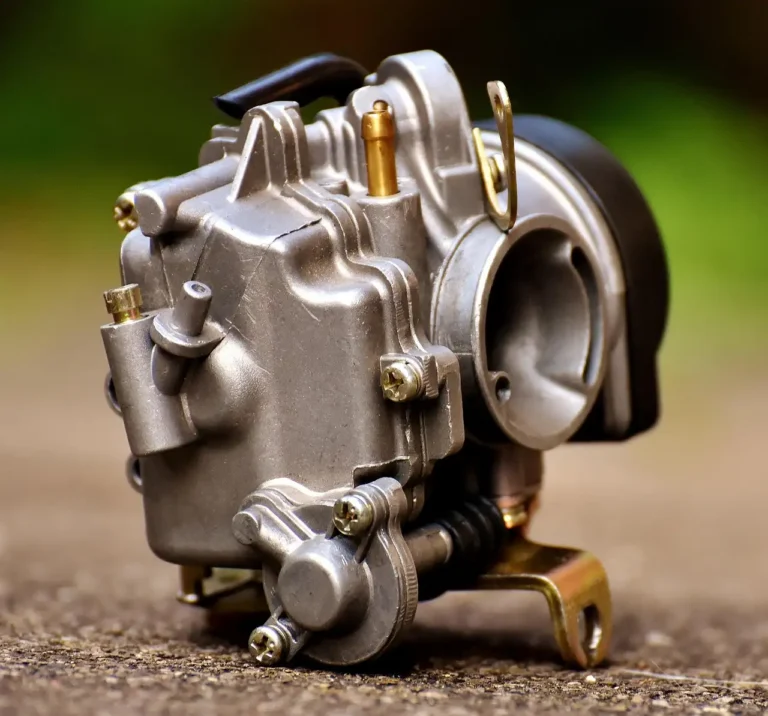
A carburetor is a device used by a gasoline internal combustion engine to control and mix air and fuel. In the venturi, airflow speeds up and pressure drops, which draws fuel into the airstream. The job is simple. The fault-finding is not.
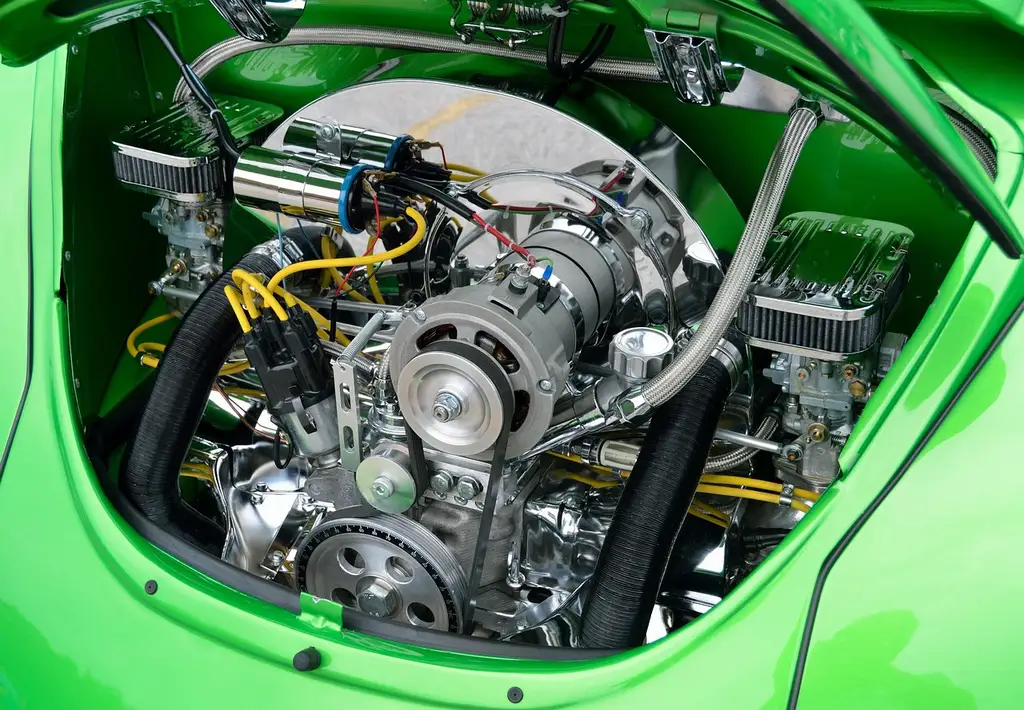
Use symptom-first diagnosis because the same drivability complaint can come from different circuits. Rough idle often points to the idle circuit, while hesitation on throttle tip-in often points to the accelerator pump. Hard starting can be choke, fuel delivery, spark, or compression. For cars and trucks, carburetors were largely replaced by fuel injection since the 1990s, but they remain common on some small engines, motorcycles, smaller outboard engines, and piston-engine aircraft. (en.wikipedia.org)
Fast read on lean, rich, and air leak behavior
A stoichiometric mixture is usually around 14.7 parts air to 1 part fuel. Too much air and not enough fuel means the engine burns lean. Too much fuel and not enough air means it burns rich. Vacuum leaks let unmetered air in and can create lean conditions, especially at idle and light throttle.
Lean faults often show as surge, hesitation, popping, or unstable idle. Rich faults more often show as black smoke, fuel smell, plug fouling, and loading up after start. A stuck-open needle valve can allow excessive fuel into the combustion chamber. A choke valve helps start the engine in cold weather by lowering air supply and providing a rich mixture.
Baseline checks before you blame the carburetor
Start with fuel supply, spark, and compression. Do not turn to the carburetor first. A weak ignition system can imitate a lean carburetor fault. Low compression can make any mixture adjustment look wrong. If fuel flow to the bowl is weak, the carburetor may be innocent.
- Confirm fresh fuel reaches the carburetor inlet.
- Check spark quality and plug condition.
- Verify compression is in a usable range for the engine.
- Then move to carburetor-specific checks.
📊 Carburetors have been largely replaced by fuel injection for cars and trucks since the 1990s. Source: Carburetor.
Which carburetor symptom do you have?
Start with the symptom at the engine, not the screw head. Rough idle, stalling, hesitation, hard starting, flooding, and fuel leaks each point to a different circuit or part. That narrows the inspection fast and keeps you from masking a fault with adjustment.
Rough idle and stalling at closed throttle
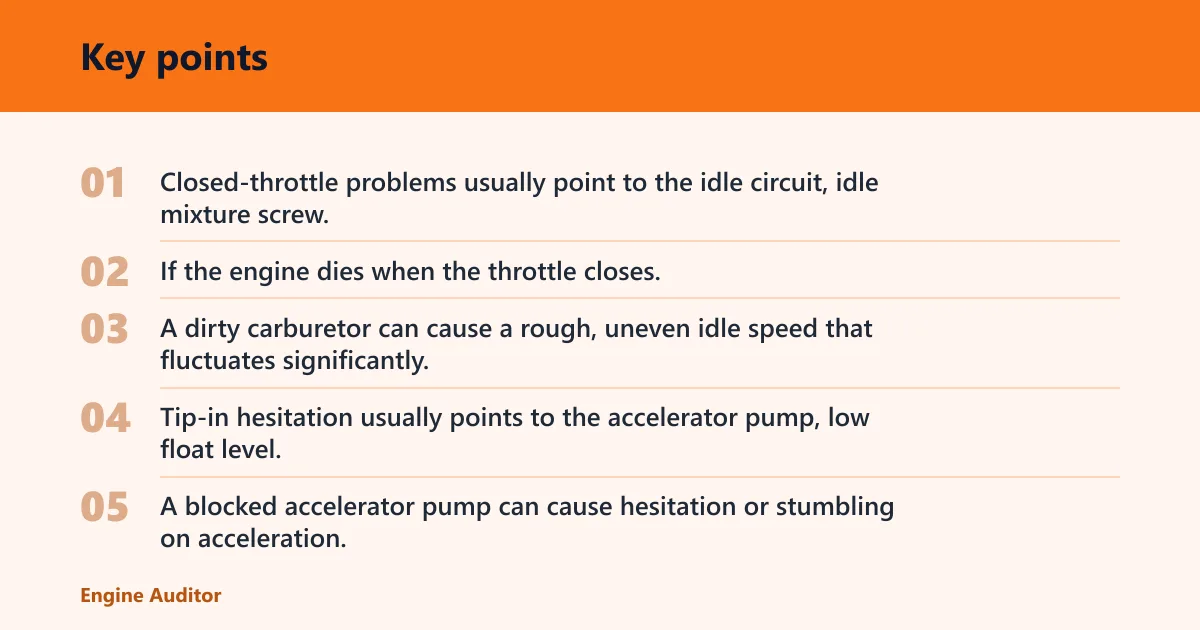
Closed-throttle problems usually point to the idle circuit, idle mixture screw, idle speed screw, or a vacuum leak. If the engine dies when the throttle closes, the idle circuit may be clogged or the idle speed set too low. A dirty carburetor can cause a rough, uneven idle speed that fluctuates significantly.
Hesitation or bogging on throttle tip-in
Tip-in hesitation usually points to the accelerator pump, low float level, or a restriction feeding the main circuit. A blocked accelerator pump can cause hesitation or stumbling on acceleration. If the engine responds slowly only when the throttle opens quickly, look there first.
Hard starting, flooding, and fuel smell
These symptoms usually point to the choke, float chamber, needle valve, or float level. The carburetor float reservoir stores a small amount of fuel. If the bowl overfills, fuel can leak, drip from the throat, or flood the intake. A stuck-open needle valve can allow excessive fuel into the combustion chamber.
High idle, surging, or unstable idle speed
High or wandering idle can come from an idle speed screw set too high, a vacuum leak, a choke valve not fully opening, or a throttle plate that does not return properly. A fast idle can hide other faults. If the idle speed screw is masking a lean or air leak problem, the engine may still stumble as soon as the throttle changes.
Say your 250 cc motorcycle starts, idles for 20 seconds, then dies when you close the throttle. That points first to the idle circuit or a vacuum leak, not to the accelerator pump. If it also needs choke longer than normal, the mixture may be too lean at idle or the pilot passage may be restricted.

Why is my carburetor causing rough idle?
Rough idle usually means the idle circuit is not supplying enough fuel, the idle mixture is off, or extra air is leaking in. If the engine dies when throttle closes, the idle circuit is a prime suspect. A dirty carburetor can make the idle unstable, but a vacuum leak or bad baseline setting can create the same feel.
Idle circuit clogging and weak low-speed fuel flow
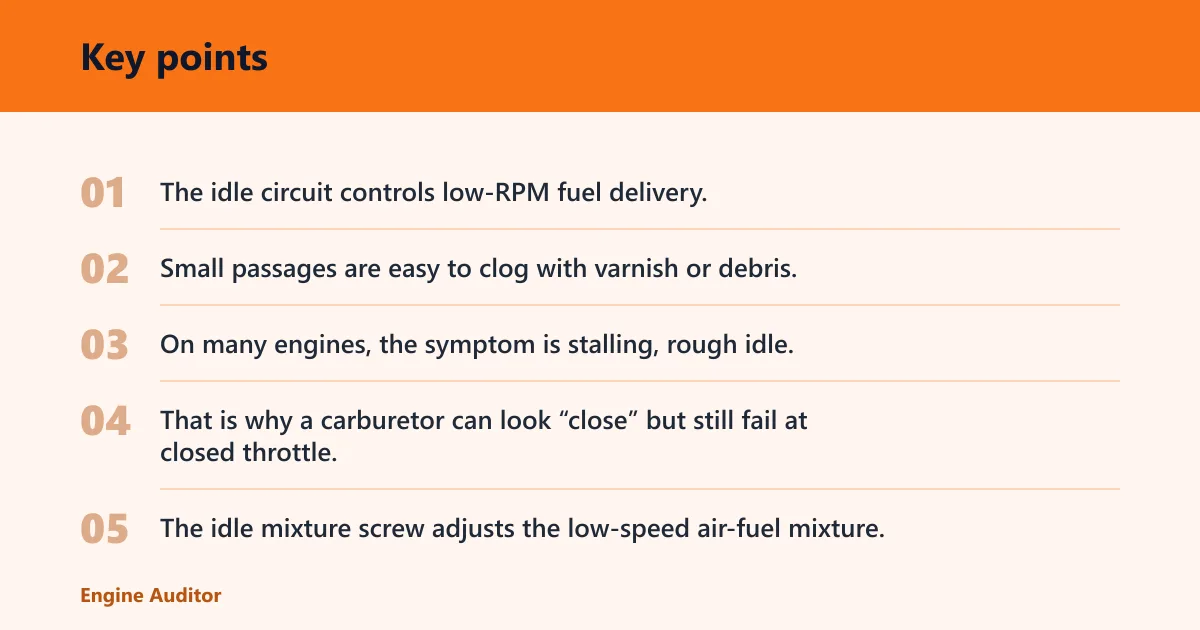
The idle circuit controls low-RPM fuel delivery. Small passages are easy to clog with varnish or debris. On many engines, the symptom is stalling, rough idle, or a need to hold the throttle open just to keep it running. That is why a carburetor can look “close” but still fail at closed throttle.
Idle mixture screw and idle speed screw baseline checks
The idle mixture screw adjusts the low-speed air-fuel mixture. The idle speed screw sets curb idle RPM. If the speed screw is set too low, the engine can stall even with a clean carburetor. If it is too high, it may hide a weak idle circuit and make diagnosis harder.
Vacuum leaks at gaskets and throttle shafts
Vacuum leaks at the base gasket, intake boots, manifold joints, or throttle shaft bushings let in unmetered air and lean the mixture. That often shows up as unstable idle, hanging RPM, or a mixture screw that seems to do little. On older carbs, worn throttle shafts can act like a permanent small leak.
Why does my engine hesitate when I hit the throttle?
Hesitation on throttle opening usually means the carburetor cannot add fuel fast enough for the extra air. That often points to the accelerator pump, a low float level, a restricted passage, or a weak fuel supply. If the stumble happens only on a quick snap of the throttle, the pump circuit rises to the top of the list.
Accelerator pump weak squirt or delay
The accelerator pump helps on sudden throttle opening. It should deliver a prompt fuel squirt that bridges the moment before airflow through the venturi pulls enough fuel on its own. A weak or delayed squirt often causes a flat spot, bog, or stall when you crack the throttle.
Lean tip-in from low float level or restricted passages
If the float level is too low, the bowl may not supply enough fuel during sudden demand. Restricted main passages can do the same. The result is a lean stumble even if the idle seems fine. That is common on small engines that run intermittently and on motorcycles stored with old fuel.
How to separate carburetor hesitation from ignition faults
A lean carburetor stumble usually appears when airflow changes fast. Ignition faults can misfire under load, at high RPM, or when the mixture is already weak. If the engine hesitates only at tip-in but revs cleanly once it is past that point, the accelerator pump or fuel delivery is more likely than spark.
Suppose an older small engine idles well but bogs hard when the throttle lever moves from low to high. That pattern fits a weak accelerator pump or low bowl level better than a general clogged carburetor. If the plug is wet after the bog, flooding is more likely than a lean tip-in fault.
Why is my carburetor flooding gas?
Flooding usually means too much fuel is entering the bowl or intake. The main suspects are a float chamber overfill, a sticking needle valve, a float set too high, or a choke valve that stays too closed. Fuel leaks around the carburetor body, throat, or overflow path are strong clues.
Float chamber overflow and fuel leaks
The float chamber stores a small amount of fuel. When fuel level rises too far, the carburetor can drip, leak, or dump fuel into the intake. Overfill can also make hot starts difficult because the engine already has excess fuel before cranking begins.
Needle valve wear, debris, and poor sealing
The needle valve shuts off fuel flow into the bowl. Wear, debris, or a sticky seat can prevent sealing. If it sticks open, fuel keeps entering the chamber. If the engine smells strongly of fuel after sitting, that valve deserves attention before any mixture adjustment.
Float level too high and choke valve faults
Float level must be set correctly. Too high enriches the mixture and can flood the engine; too low creates lean starvation. A choke valve that stays too closed can mimic flooding by over-richening the mixture during warm running. A choke that never opens fully can also hold idle quality down.
Use the symptom-to-cause diagnostic table
This one-page map is the fastest way to sort likely causes before turning screws. The confidence score is a DIY estimate of how strongly the symptom points to that circuit, based on common fault patterns. Use it as a ranking, not a verdict.
| Symptom | Likely circuit | Quick test | Next action | DIY confidence score |
|---|---|---|---|---|
| Engine dies when throttle closes | Idle circuit | Set idle speed to spec range, then see whether the engine still stalls at closed throttle | Clean idle passages, inspect idle mixture screw, check for vacuum leaks | 9/10 |
| Rough, uneven idle | Idle circuit or vacuum leak | Spray-test gasket areas and throttle shaft zones for RPM change | Fix air leaks, then reset idle mixture and speed | 8/10 |
| Flat spot on quick throttle opening | Accelerator pump | Look for a weak or delayed fuel squirt from the pump nozzle | Repair pump diaphragm, linkage, or passages | 9/10 |
| Bog only after long storage | Restricted passages or stale fuel | Check bowl fuel and main circuit flow after sitting | Clean carburetor, replace old fuel, inspect jets | 7/10 |
| Fuel dripping or strong gas smell | Float chamber or needle valve | Shut off fuel supply and see whether dripping stops | Inspect float height, needle valve, and seat | 9/10 |
| Hard cold starting, then rich running | Choke valve | Verify choke fully opens after warm-up | Adjust choke linkage or repair stuck choke plate | 8/10 |
| High idle that hangs after throttle blip | Vacuum leak or idle speed screw | Watch whether RPM drops slowly after a snap open and close | Fix leak, then reset base idle | 7/10 |
| Surging at steady light throttle | Needle/main circuit or fuel level | Check float level and main jet feed, then rule out ignition | Clean main circuit or inspect fuel delivery | 6/10 |
Small engine, motorcycle, and car notes
Small engines often show varnish-related idle and starting faults after storage. Motorcycles may expose vacuum leaks and float issues quickly because throttle response is sharper and intake parts are compact. Older cars can hide carburetor faults behind worn ignition parts, manifold leaks, or tired vacuum controls, so baseline checks matter even more.
How do I tell if a carburetor is clogged or just misadjusted?
A clogged carburetor usually causes a circuit-specific failure that does not respond much to screw changes. Misadjustment usually leaves the engine alive but unhappy, and small changes to idle speed or mixture have an immediate effect. The difference matters because cleaning and adjustment solve different problems.
Clogging signs
Clogging tends to show up after storage, stale fuel, or debris in the bowl. Symptoms often include no idle, dead tip-in, or fuel starvation at one operating range. If the engine only runs with choke partly on, the idle or main passage may be restricted.
Misadjustment signs
Misadjustment usually changes idle quality, curb speed, or the transition from idle to off-idle without total circuit loss. If turning the idle mixture screw makes a clear difference, the passage is likely open. If the screw does almost nothing, expect clogging, an air leak, or wear.
Can a vacuum leak cause carburetor problems?
Yes. A vacuum leak can mimic several carburetor faults because it adds unmetered air and shifts the mixture lean. That can create rough idle, stalling, surging, and a mixture screw that seems ineffective. Gaskets, throttle shafts, intake boots, and manifold joints are common leak points.
What a leak does to the diagnosis
A leak often shows most at idle, where airflow through the venturi is low and the leak has a larger share of total air. At higher RPM, the symptom may fade, which is why some readers blame the carburetor when the real issue is an intake air leak. Fix the leak before rejetting or over-enriching the mixture.
When should I clean a carburetor versus rebuild it?
Clean the carburetor when symptoms point to varnish, dirt, or a single blocked circuit and the hard parts still seal well. Rebuild it when wear, sticking valves, damaged gaskets, recurring leaks, or failed float control keep returning after cleaning. Replace it when the body, shafts, or castings are too worn or cracked to seal reliably.
When cleaning makes sense
Cleaning is the right first move if the engine sat with old fuel, the bowl contains residue, or the fault affects one circuit more than the rest. Clean jets, passages, bowl, and screens. Then reset the idle mixture screw and idle speed screw to a proper baseline before judging the result.
When rebuild or replacement is smarter
If a needle valve will not seal, the float is damaged, the throttle shaft has obvious play, or fuel leaks return after cleaning, a rebuild is more economical than repeated teardown. If the carburetor body is worn or cracked, replacement may be better. A repair that cannot hold fuel level will keep creating the same symptoms.
Frequently asked questions
What are the symptoms of a carburetor running too lean?
A lean carburetor often causes surging, hesitation, poor throttle response, hard starting, and sometimes backfire or overheating. It can also show up as unstable idle because too much air and not enough fuel is reaching the engine. Vacuum leaks and low float level are common causes of lean behavior.
What are the symptoms of a carburetor running too rich?
A rich carburetor may cause black smoke, fuel smell, rough running, plug fouling, hard starting, and loss of power while acceleration. Flooding is a common rich symptom when the float chamber overfills or the needle valve does not seal. A choke valve stuck closed can create the same feel.
Products related to this article
Sponsored / affiliate links. As an Amazon Associate I earn from qualifying purchases. I may earn additional commission from eligible campaigns.