Transmission Vs Drivetrain: What Is the Real Difference?
Every car owner has heard about the transmission and the drivetrain, but few really understand how they are different. Many drivers use these words as if they mean the same thing. This can lead to confusion when talking to mechanics, reading car reviews, or even shopping for a new vehicle. So, what is the real difference between transmission and drivetrain? And why does it matter for your driving experience, maintenance, and even fuel economy?
Understanding these terms is not just for car experts. It helps you make smarter decisions, spot problems early, and even save money. This guide will break down the differences in simple language, explain how each part works, and share insights that most beginners miss.
By the end, you’ll know not just what makes your car move—but how each system plays its own role in that movement.
What Is The Transmission?
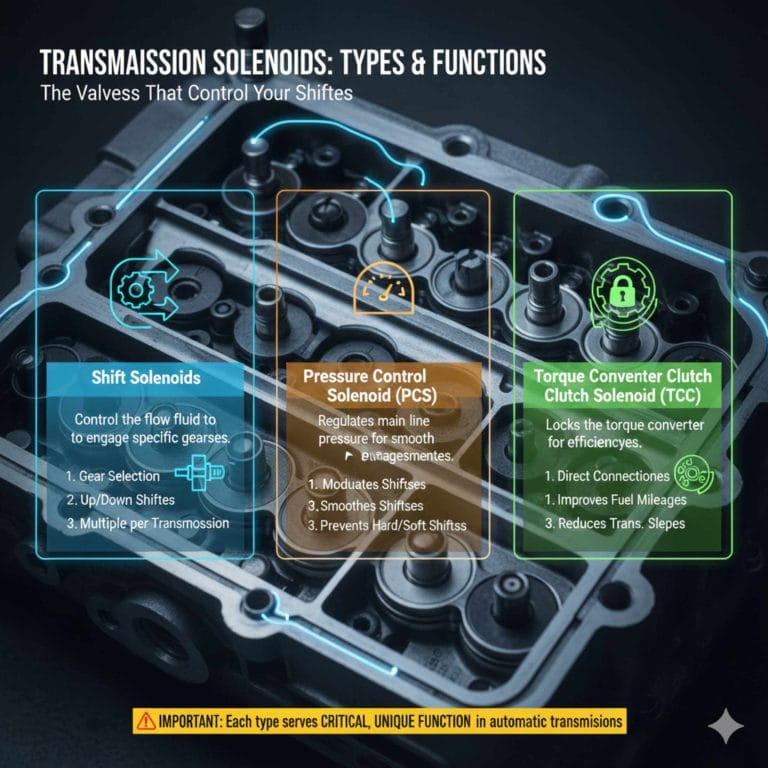
The transmission is a part of your car’s powertrain. Its main job is to control how power from the engine goes to the wheels. When your car moves, the engine creates energy, but it doesn’t directly turn the wheels. Instead, the transmission adjusts the engine’s power so your car can start, speed up, slow down, or go in reverse.
How Does A Transmission Work?
Think of the transmission as a middleman. It connects the engine to the wheels using gears. These gears change how much power and speed go to the wheels. For example, starting from a stop needs more power, so the transmission uses a lower gear.
Cruising on the highway needs less power but more speed, so it switches to a higher gear.
There are two main types of transmissions:
- Manual Transmission – You shift gears yourself using a clutch pedal and a gear stick. This gives you direct control, but it requires more skill.
- Automatic Transmission – The car shifts gears for you. Most modern cars use this system.
Some cars use newer types like CVT (Continuously Variable Transmission) or dual-clutch transmissions. These offer different benefits, but all transmissions serve the same basic job: matching the engine’s power to the wheels in the best way possible.
Key Functions Of A Transmission
- Gear Shifting: Changes gear ratios to suit driving speed and power needs.
- Torque Multiplication: Helps the car move from a stop by increasing torque.
- Direction Control: Allows you to go forward or backward.
- Disconnecting the Engine: Lets the engine run while the car is stopped (such as at a red light).
Example: Transmission In Action
When you press the gas pedal, the engine revs up. The transmission picks the right gear to deliver just enough power to the wheels. If you’re climbing a hill, it may downshift to give you more strength. If you’re on the highway, it shifts up to save fuel.
What Is The Drivetrain?
The drivetrain is a bigger system. It includes the transmission, but also other parts that deliver power all the way to the wheels. In simple terms, the drivetrain is everything that makes your car move, except the engine.
Main Parts Of The Drivetrain
- Transmission: Controls gear shifts and power delivery.
- Driveshaft: A long spinning shaft that sends power from the transmission to the wheels (especially in rear-wheel and four-wheel drive cars).
- Differential: Splits the power so both wheels can turn at different speeds (important for turning corners).
- Axles: Carry power from the differential to the wheels.
- CV Joints/U-Joints: Let the axles flex so the wheels can move up and down.
Some cars (like front-wheel drive) have a simpler setup, but all drivetrains move power from the engine to the ground.
Types Of Drivetrains
- Front-Wheel Drive (FWD): Power goes to the front wheels. Common in small cars.
- Rear-Wheel Drive (RWD): Power goes to the back wheels. Often found in trucks and sports cars.
- All-Wheel Drive (AWD): Power goes to all wheels, automatically adjusting for best grip.
- Four-Wheel Drive (4WD): Similar to AWD, but usually for off-road vehicles. Driver can turn it on or off.
Example: Drivetrain In Action
When you accelerate, the drivetrain’s job is to transfer the engine’s power—through the transmission, driveshaft, and axles—to the wheels. If you turn, the differential makes sure each wheel spins at the right speed. If you drive on rough ground, AWD or 4WD systems help you keep traction.
Transmission Vs Drivetrain: Side-by-side Comparison
Many drivers mix up these terms because the transmission is a part of the drivetrain. But they play different roles. Here is a clear comparison:
| Feature | Transmission | Drivetrain |
|---|---|---|
| Main Function | Controls gear shifting and power delivery | Delivers power from engine to wheels |
| Key Components | Gears, clutches, torque converter | Transmission, driveshaft, differential, axles |
| Location | Between engine and driveshaft | From transmission to wheels |
| Types | Manual, automatic, CVT, dual-clutch | FWD, RWD, AWD, 4WD |
| Maintenance Focus | Fluid changes, gear checks | Joints, axles, differentials |
Key insight: If your mechanic says you have a “drivetrain problem,” it could include the transmission—but also other parts like the driveshaft or differential. If they say “transmission problem,” it’s only that specific part.
Why The Difference Matters
Knowing the real difference between transmission and drivetrain can save you time, money, and stress.
1. Maintenance And Repair Costs
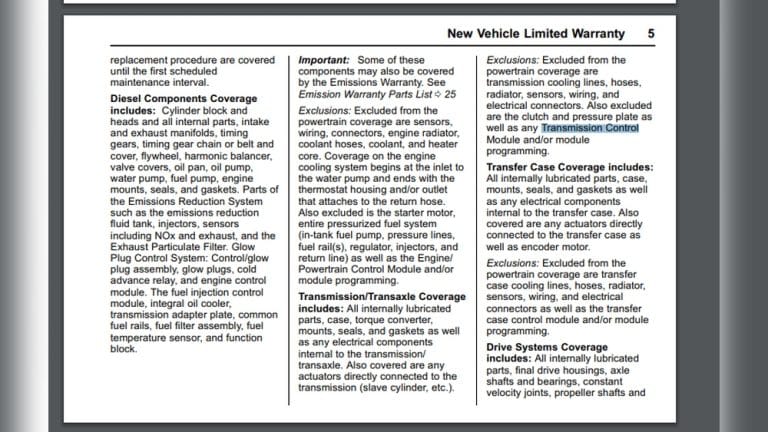
Transmission repairs are usually more expensive than other drivetrain parts. Fixing a transmission may cost from $1,500 to $5,000, while replacing a driveshaft or axle could cost $300 to $1,000. If you know which part is having trouble, you can avoid unnecessary repairs.
2. Diagnosing Problems
Common transmission problems:
- Slipping gears
- Delayed shifting
- Strange noises when shifting
Common drivetrain problems:
- Vibration when driving
- Clicking sounds when turning
- Leaking differential fluid
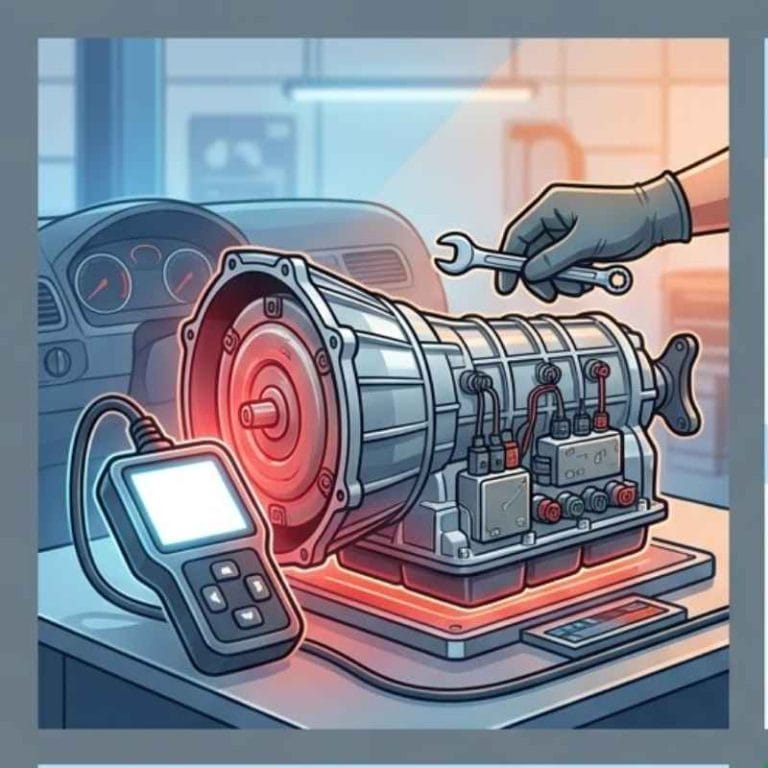
Being able to describe the right symptoms helps mechanics fix your car faster and more accurately.
3. Performance And Handling
The drivetrain layout affects how your car handles:
- FWD cars are usually lighter and better in snow.
- RWD cars offer better balance and sporty feel.
- AWD/4WD systems give extra grip, great for rough roads or bad weather.
The transmission type also matters. For example, manual transmissions give you more control, while automatics are easier in traffic.
4. Fuel Efficiency
Transmissions play a major role in fuel economy. Modern automatic transmissions with more gears (like 8-speed or CVT) often get better mileage than older versions. Drivetrain type also affects efficiency; AWD and 4WD cars use more fuel because they are heavier and have more moving parts.
Common Misconceptions
People often think “transmission” and “drivetrain” are the same. Here are some myths—busted:
- “My car’s drivetrain is broken, so I need a new transmission.” Not always. It could be the axles, differential, or driveshaft.
- “Only sports cars have RWD.” Many trucks and larger sedans use RWD for better power handling.
- “AWD and 4WD are the same.” Both send power to all wheels, but AWD works automatically while 4WD is usually driver-controlled and better for off-road.
Inside The Transmission: Key Types Explained
Modern cars offer different transmission types, each with its own strengths.
Manual Transmission
- How it works: You use a clutch and stick to change gears.
- Pros: Simple design, lower repair costs, more driving control.
- Cons: Takes practice, not ideal in heavy traffic.
Automatic Transmission
- How it works: The car shifts gears for you using sensors and fluid pressure.
- Pros: Easy to use, great for city driving.
- Cons: More complex, higher repair costs.
Continuously Variable Transmission (cvt)
- How it works: Uses belts and pulleys to offer “infinite” gear ratios.
- Pros: Smooth acceleration, better fuel economy.
- Cons: Some drivers feel it’s less responsive.
Dual-clutch Transmission
- How it works: Uses two clutches for faster gear changes.
- Pros: Very quick shifts, often found in sports cars.
- Cons: Expensive to repair, can be jerky at low speeds.

Credit: www.greenwaykiawest.com
Inside The Drivetrain: How Power Reaches The Wheels
The drivetrain’s job is to deliver power—no matter the road or weather. Each system works a bit differently.
Front-wheel Drive (fwd)
- Layout: Engine and transmission sit sideways; power goes to front wheels.
- Benefits: Lighter, better fuel economy, easier to handle in wet conditions.
- Drawbacks: Less sporty, can understeer in sharp turns.
Rear-wheel Drive (rwd)
- Layout: Engine and transmission point front to back; power goes to rear wheels.
- Benefits: Balanced weight, better for towing and sporty driving.
- Drawbacks: Not as good in snow or rain, takes more skill to handle.
All-wheel Drive (awd)
- Layout: Power goes to all four wheels, automatically adjusting for best grip.
- Benefits: Great traction on slippery roads, no driver input needed.
- Drawbacks: Heavier, more complex, uses more fuel.
Four-wheel Drive (4wd)
- Layout: Similar to AWD but you control when all wheels get power.
- Benefits: Best for off-road, deep snow, mud.
- Drawbacks: Heaviest and most complex, can hurt fuel economy if always on.
Here’s a summary of drivetrain types and where you’ll find them:
| Drivetrain Type | Common Vehicles | Best For | Main Downside |
|---|---|---|---|
| FWD | Compact cars, sedans | City driving, fuel economy | Less sporty handling |
| RWD | Sports cars, trucks | Performance, towing | Poor traction in snow |
| AWD | SUVs, crossovers | All-weather driving | Higher cost, lower MPG |
| 4WD | Pickup trucks, off-road vehicles | Rough terrain, off-road | Heavy, complex |
How To Choose: Transmission And Drivetrain For Your Needs
Picking the right setup depends on your driving style, location, and budget. Here’s what matters most:
Consider Your Driving
- City driving: Automatic transmission and FWD are easiest.
- Long highway trips: Automatic or CVT with FWD or AWD offers comfort and good MPG.
- Off-roading or snow: 4WD or AWD is safest.
- Towing/hauling: RWD or 4WD with a strong automatic transmission.
Think About Maintenance
- Manual transmissions are simple, but fewer shops can repair them today.
- AWD/4WD systems need more care—check fluids, joints, and differentials regularly.
- CVTs may need special fluids and can be costly to fix.
Budget And Longevity
- Manuals often last longer with fewer problems.
- Automatics and AWDs are more complex, with higher parts and labor costs.
- FWD is usually cheapest to repair.
Resale Value
Cars with automatic transmissions and AWD tend to have higher resale value, especially in cold or rainy areas.
Credit: www.autotrader.com
What Most Drivers Don’t Realize
1. Drivetrain Problems Can Hide
Many drivers blame the transmission for all powertrain issues. But strange noises, vibrations, or even poor fuel economy may come from the differential or axles instead. Don’t guess—get a professional diagnosis.
2. Transmission Fluid Is Critical
Both manual and automatic transmissions need the right fluid. Using the wrong type can cause expensive damage. Change fluid as recommended, not just when you notice problems.
3. Upgrades Affect Both Systems
Changing your wheels, tires, or suspension can stress the drivetrain and transmission. Always check with a professional before making big upgrades.
4. Electric Cars Are Different
Many electric cars use a single-speed transmission and a much simpler drivetrain. This means fewer moving parts and less maintenance, but also less control over gear changes.
Real-world Examples
- The Toyota Camry uses FWD with a smooth automatic transmission. This offers good fuel economy and easy handling.
- The Ford F-150 truck has RWD or 4WD, with a strong automatic transmission. It’s built for towing and rough conditions.
- The Subaru Outback features AWD with a CVT, giving great grip in snow and rain.
These setups fit different needs, showing why understanding both systems matters when buying or maintaining a car.

Credit: www.greenwaykiawest.com
Practical Tips For Car Owners
- Check your owner’s manual for the right transmission fluid and service schedule.
- Listen for new noises—clunks, whines, or clicks often mean drivetrain issues.
- Feel for changes—jerky shifting or slipping may signal transmission trouble.
- Service AWD/4WD systems before winter or off-road trips.
- Test drive different setups before you buy. Notice how each one feels.
Most Common Buyer Mistakes
- Picking AWD when FWD would be enough (and cheaper to maintain)
- Ignoring transmission type—some automatics can feel sluggish or slow to shift
- Skipping test drives in different weather/road conditions
- Not budgeting for higher
Products related to this article
Sponsored / affiliate links. As an Amazon Associate I earn from qualifying purchases. I may earn additional commission from eligible campaigns.