Carburetor Adjustment for Idle and Mixture Screws
Set idle and mixture screws only when the engine idles unevenly, stalls at warm idle, or reacts to small screw changes; start at the factory baseline, then adjust each mixture screw in about 1/8-turn steps for the smoothest idle. A bad setting can hide vacuum leaks, clogged passages, or float problems, and that wastes time and fuel. This guide shows the symptom pattern to diagnose first, then the idle-speed and mixture-screw steps that apply to common carbureted engines.
This guide is part of our Carburetor repair guide series.
Idle screws and what they do
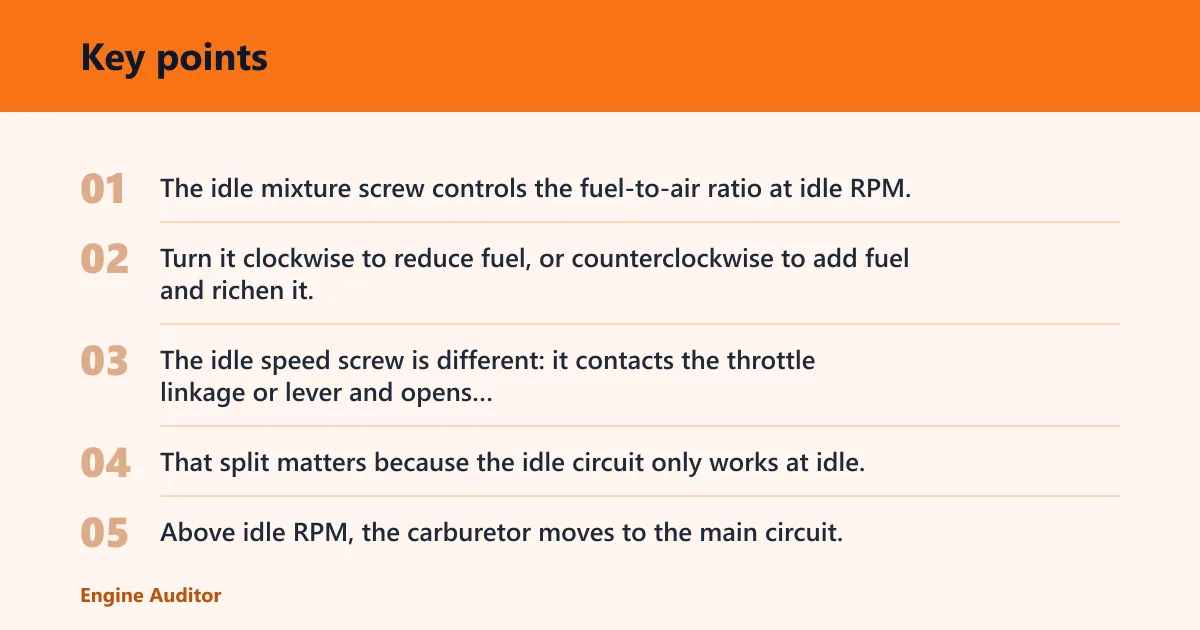


The idle mixture screw controls the fuel-to-air ratio at idle RPM. Turn it clockwise to reduce fuel, or counterclockwise to add fuel and richen it. The idle speed screw is different: it contacts the throttle linkage or lever and opens the throttle plate slightly, which raises idle RPM.
That split matters because the idle circuit only works at idle. Above idle RPM, the carburetor moves to the main circuit, so mixture screws stop changing mixture. If a problem shows up only off-idle, mixture screws usually are not the fix.
Idle mixture screw function
Use the mixture screw to shape idle quality, not to cure every driveability complaint. A clean idle circuit responds in small, predictable steps. If about a 1/8-turn change does nothing, or the engine dies no matter where the screw sits, look for another fault before going farther.
Idle speed screw function
The idle speed screw sets how far the throttle plate stays open at idle. Turning it in increases idle RPM; backing it out lowers RPM. Many carburetors use a spring behind that screw, so make changes in small turns and confirm the throttle linkage returns freely.
Why idle circuit behavior changes off-idle
At idle, the engine draws fuel through the idle circuit. As airflow rises, the main circuit takes over. That transition means a mixture screw can clean up a warm curb idle yet do little during cruise, acceleration, or decel backfire. Those other symptoms point somewhere else.
How do you know adjustment is the right fix?
Adjust the screws only after the symptom pattern matches an idle-circuit problem. A lean idle is often reported as hunting, stalling when the throttle closes, or a need for extra throttle to stay alive. A rich idle is often reported as fuel smell, sooty plugs, black smoke, or an engine that loads up at a stop.
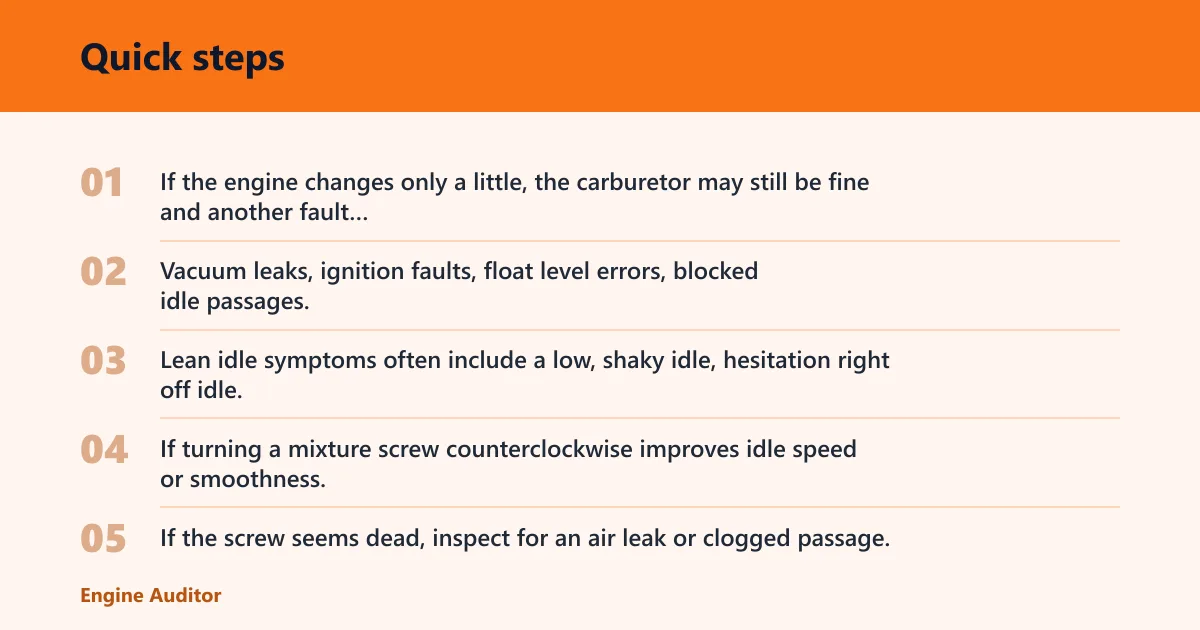
If the engine changes only a little, the carburetor may still be fine and another fault may be driving the symptom. Vacuum leaks, ignition faults, float level errors, blocked idle passages, and worn screw hardware can all mimic a bad setting.
Lean idle symptoms
Lean idle symptoms often include a low, shaky idle, hesitation right off idle, and a stall when you snap the throttle closed. If turning a mixture screw counterclockwise improves idle speed or smoothness, the circuit may have been too lean. If the screw seems dead, inspect for an air leak or clogged passage.
Rich idle symptoms
Rich idle symptoms often show up as a lumpy idle, fuel odor, soot at the tailpipe, and an engine that wants to die after a short warmup. If clockwise movement improves the idle, the mixture was likely too rich. If the idle worsens with every change, stop and inspect the carburetor instead of forcing a setting.
When to suspect another fault
Suppose a two-barrel engine idles rough no matter where both mixture screws land, and spray testing or checking hoses suggests vacuum loss. That points away from simple adjustment. A float set too high, an ignition miss, or a blocked idle passage can produce the same warm-idle complaint.

Tools and starting settings
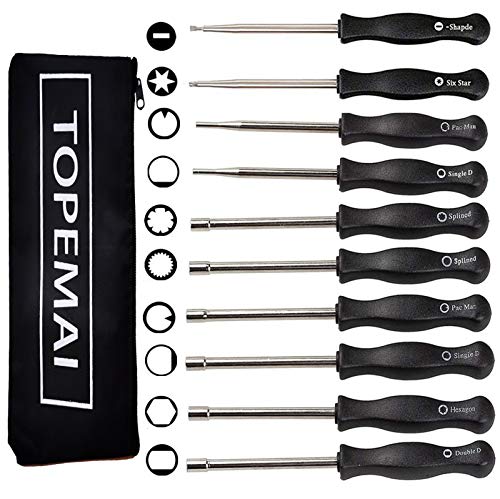
You need a flathead screwdriver for most screws, and a service manual for exact screw locations and recommended settings. A flexible idle mixture adjusting tool helps where clearance is tight; it is recommended for Rochester Quadrajets. Use the manual for make- and model-specific details, because layouts vary.
For reassembly or initial setup, back idle mixture screws out 1½ turns as a baseline setting unless the service manual says otherwise. That baseline is a starting point, not a final tune. Seat screws gently first, then back them out; do not overtighten them.
What to inspect before turning screws
Check the screw tip for wear or grooves, and inspect the threads for corrosion or damage. Replace worn or damaged screws before you tune. A damaged tip or rough seat can keep the screw from metering accurately, which makes adjustment misleading.
Idle screw decision table
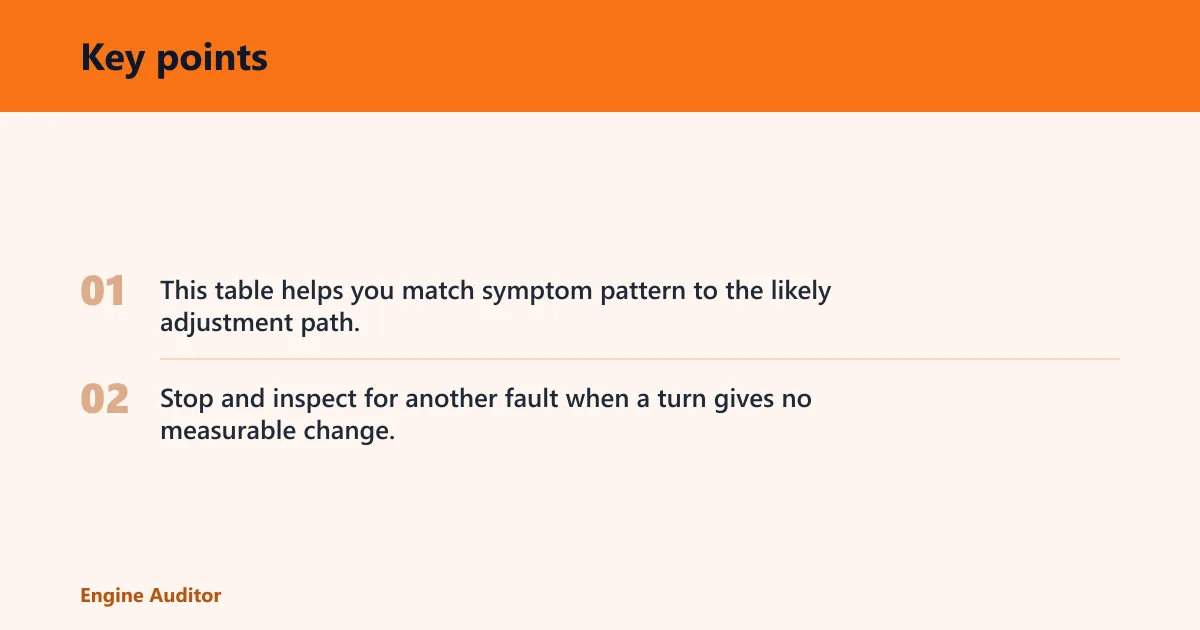
This table helps you match symptom pattern to the likely adjustment path. Stop and inspect for another fault when a turn gives no measurable change, when the screw bottoms out oddly, or when the response is clearly outside the idle circuit’s range.
| Symptom | Likely cause | Screw direction | Expected engine response | When to stop and inspect for another fault |
|---|---|---|---|---|
| Single-barrel idle hunts, stalls, or recovers only after enrichment | Lean idle mixture, vacuum leak, or clogged idle passage | Counterclockwise | Idle speed rises slightly, then smooths out | Stop if one screw has little effect or the engine still dies warm |
| Single-barrel idle smells rich, loads up, or leaves black smoke at curb idle | Rich idle mixture, high float level, or leaking needle and seat | Clockwise | Idle cleans up and exhaust smell drops | Stop if clockwise turns make no change or the screw tip feels damaged |
| Two-barrel screws affect one side more than the other | Uneven circuit balance, vacuum leak at one throttle bore, or dirt in one passage | Adjust each screw in small, equal steps | Both sides converge to the same smooth idle point | Stop if one screw hits a limit far sooner than the other |
| Four-barrel idle improves only when one pair is moved together | Normal pair setting, but one side may be off because of linkage, leak, or contamination | Turn both screws in matched small steps | Highest stable idle speed or vacuum reading appears with balanced screws | Stop if pair changes do not affect idle speed or vacuum at all |
| Mercarb 2-barrel marine idle does not respond as expected | Single center screw, marine setup issue, or another fault outside the idle circuit | Use the center screw only | Idle changes from the single center adjustment point | Stop if the center screw is unresponsive or the service manual specifies a different setup |
How do I adjust carburetor idle mixture screws correctly?
Warm the engine, set curb idle conditions, and begin from the baseline setting. Then move one mixture screw at a time in 1/8-turn steps, watching for the highest stable idle speed or the best vacuum reading. Stop when farther turning makes no improvement, then reset idle speed if needed.
- Bring the engine to normal operating temperature and confirm the choke is fully off.
- Set curb idle, not fast idle, since fast idle can distort the result. Fast idle from the choke will distort the result.
- Turn each mixture screw gently to a starting point if the carburetor has just been rebuilt.
- Adjust one screw in a small step, then wait for the engine to stabilize.
- Repeat on the other screw, keeping both sides close on multi-screw carburetors.
- Look for the highest smooth idle speed or strongest steady vacuum reading.
- After mixture is set, reset the idle speed screw so curb idle returns to spec.
A common mistake is turning the idle mixture screw before the engine has fully warmed up and the choke is completely off. That can hide the real mixture setting. Set the mixture at curb idle, then use the speed screw to return RPM to the proper level after the mixture point is found.
Verification method
Use a consistent check, such as idle speed rise, steady vacuum, or the smoothest running point on the tachometer. When a turn in either direction lowers speed, increases stumble, or drops vacuum, go back to the last better point. That is the best setting for that circuit.
What changes by carburetor type?
Carburetor type changes screw count and access. Single-barrel carburetors typically have one idle mixture screw. Two-barrel and four-barrel carburetors usually have two. The Mercarb 2-barrel marine carburetor is an exception with a single center screw.
Single-barrel layout
On a single-barrel carburetor, one screw controls the idle mix. Adjust in small steps and confirm the engine responds at idle only. If the screw bottoms out early or the tip is damaged, further tuning will not help until the hardware is repaired.
Two-barrel and four-barrel pair settings
Two-barrel and four-barrel units usually use two mixture screws. Keep the adjustments balanced, because one side can drift richer or leaner than the other. If one screw needs a very different setting to keep the engine alive, inspect that circuit first.
Rochester Quadrajet access
Rochester Quadrajets often place the screws where a normal screwdriver barely fits. That is where a flexible idle mixture adjusting tool helps. Use it to make the same small turns without marring the screw head or fighting the housing.
What if adjustment does not help?
If the screws do not change engine behavior, stop treating the carburetor as the only problem. A worn needle tip, damaged seat, blocked idle passage, or corroded thread can defeat normal adjustment. Ignition faults and vacuum leaks can do the same thing while looking like a carburetor issue.
Worn screw tip or damaged seat
During rebuild inspection, check the needle tip for a flat spot, groove, or other wear. Also inspect the seat area in the carb body. If the screw does not seat gently or the threads feel rough, replace the damaged parts before tuning again.
Blocked idle passage or contamination
Dirt, varnish, or gasket debris can block the idle passage and make every adjustment seem wrong. In that case, the screw may work mechanically but not change fuel delivery. Clean passages and confirm float level before assuming the screw setting is at fault.
Inspection points during rebuild
Use the service manual for exact screw locations and recommended settings. During rebuild, inspect the needle tip, threads, seat, and the bore around the idle circuit. Replace worn or damaged screws, then return to the baseline setting and repeat the idle check.
Frequently asked questions
Which screw sets idle speed on a carburetor?
The idle speed screw sets idle speed. It directly contacts the throttle linkage or lever and opens the throttle plate slightly, which raises idle RPM when turned in. Use it after the mixture is set, not as a substitute for mixture correction.
How many idle mixture screws should my carburetor have?
Single-barrel carburetors typically have one idle mixture screw. Two-barrel and four-barrel carburetors usually have two. The Mercarb 2-barrel marine carburetor is an exception with a single center screw, so check the service manual before you count on the usual layout.
Which way do I turn the mixture screw to lean or richen idle?
Turning the mixture screw clockwise leans the mixture. Turning it counterclockwise enriches the mixture. Make very small changes, because the idle circuit is active only at idle RPM and the engine may respond quickly to even 1/8-turn movement.
What is the baseline setting for idle mixture screws after rebuild?
A common baseline setting is 1½ turns out after the screw is seated gently. That is a starting point for reassembly, not a universal final setting. The exact setting can vary by carburetor and service manual, so verify before final adjustment.
Why does my engine stall when I adjust the idle mixture screw?
Stalling during adjustment often means the engine is already near a limit, or the real fault is elsewhere. Vacuum leaks, ignition trouble, float issues, or blocked idle passages can all make the screw appear useless. If the screw has no repeatable effect, inspect those first.
Products related to this article
Sponsored / affiliate links. As an Amazon Associate I earn from qualifying purchases. I may earn additional commission from eligible campaigns.