Best Carburetor Cleaners for Dirty Engines (2026): we compared
For heavy varnish, gum, and sludge, the best carburetor cleaner is usually a soak or dip cleaner for disassembled parts; use spray only for light-to-moderate deposits or hard-to-reach passages, and choose non-chlorinated formulas near plastics and rubber. Bad matching wastes time, leaves jets blocked, and can swell seals or strip finishes. This guide compares cleaner types by deposit severity, access, and material safety so you buy the right one first. For most dirty-but-serviceable engines, I reach for a fast-acting aerosol spray first because it hits passages quickly without full disassembly.
Quick comparison
| Product | Badge | Best for | Price | ||
|---|---|---|---|---|---|
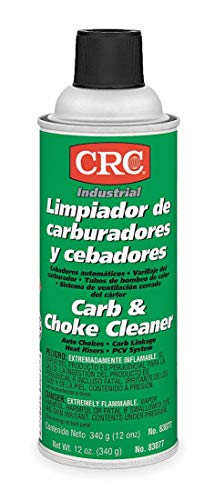 |
CRC Carb & Choke Cleaner 03077 – 12 Wt. Oz. Aerosol,CRC | Our pick | CRC 12 oz · High-performance · Low VOC | $20.18
Price as of 3 Oct 2026
|
View |
 |
Gumout Carb & Choke Jet Spray Carburetor Cleaner, Pack of 2Gumout | Budget pick | Gumout Pack of 2 · Jet-Spray · USA Made | $7.76
Price as of 3 Oct 2026
|
View |
 |
Berryman B-12 Carburetor, Choke and Throttle Body Cleaner –Berryman | Also great | Berryman 20 oz · Non-chlorinated · No Residue | $18.00
Price as of 3 Oct 2026
|
View |
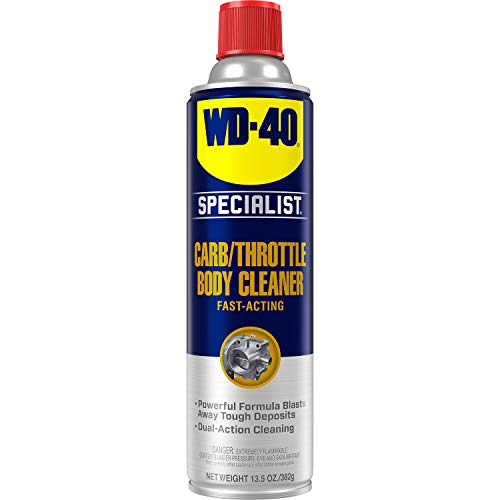 |
WD-40 Specialist Carb/Throttle Body & Parts Cleaner, 13.5 OZWD-40 Specialist | Pair with it | WD-40 Specialist 13.5 oz · Dual-Action · All-in-One | $10.98
Price as of 3 Oct 2026
|
View |
 |
Purple Power 4319PS Industrial Strength Cleaner andPURPLE POWER | Upgrade pick | Purple Power 40 oz · Concentrated · Biodegradable | $4.99
Price as of 3 Oct 2026
|
View |
The trade-off is plain: spray cleaner wins on speed and access, dip cleaner wins on heavy buildup, and fuel system cleaner wins on prevention. If the carb is dirty but still serviceable, a spray with a straw or pinpoint nozzle is the first move.
Good buying starts with engine condition, not the logo on the can. A can that fits a motorcycle carb may be wrong for a daily driver with overspray risk, while a tank additive can help and still be the wrong tool for a plugged pilot jet.
According to 9 Best Car Carb Cleaners (2026 Review Guide) — My Auto Review says Gumout Carb & Choke Cleaner is a 2-pack.
How we chose
We compared products on deposit severity, access and disassembly, surface compatibility, nozzle or soak format, and label details that matter in the shop. That means checking whether the product is meant for unpainted metal surfaces, whether it is O2-sensor-safe, whether it is VOC compliant, and whether the package includes a straw or pinpoint nozzle for tight passages.
We also separated use cases that competitors blur together: light dirtying versus full varnish failure, in-place cleaning versus removed-part soaking, and prevention versus rescue. Cost per cleanup matters too, so can size, pack count, and soak reuse all factor into the choice.

WD-40 Specialist carb/throttle body cleaner: best overall for dirty engines
This is the default pick for most dirty-but-serviceable carbs, throttle bodies, and metal parts. The fast-acting spray format fits the way most people actually clean an engine: quick passes on accessible passages, linkages, and jets without stripping the carburetor off the machine.
Its 13.5-ounce can size is a practical middle ground, and it is sold as a dual-use carb and throttle body cleaner. That matters because throttle body cleaner is often sold alongside carb cleaner, and many owners need one solvent for both jobs. It is also the kind of spray that fits the O2-sensor-safe, catalytic-converter-safe category that lowers risk from overspray on modern vehicles.
The drawback is the same one most aerosol cleaners have: it is not a rescue tool for a carburetor packed with hardened varnish. If the passages are blocked solid, a spray can waste time and may only clean the outside while the inside stays clogged.
CRC carb & choke cleaner: best value for routine carb cleaning
CRC is the value pick when the job is routine cleaning and you want a VOC-compliant spray that can cut through sludge, gum, and varnish. It is a practical choice for automatic chokes and other carburetor components where a straightforward aerosol is enough.
The can size is 12 wt. oz., which makes the price-per-job case depend on how many small cleanups you expect. Based on the spec sheet and review pattern, it is best for people who want a conventional carb cleaner without paying for a specialty bottle they may not use up quickly.
The honest drawback is precision. Like many aerosol cans, it works best when you can aim it well, and the nozzle setup is less forgiving than a dedicated dip soak if the carb is deeply gummed up.
Gumout carb & choke jet spray: best for tight passages
Gumout’s jet-spray style makes it attractive when the problem is dirt in linkages, ports, and other tight passages. The pack of two also helps with cost per cleanup, especially for people who maintain small engines, motorcycles, or a pair of mowers and want more than one can on hand.
It is a good fit for unpainted metal parts and for owners who want a fast spray without moving straight to a soak tank. My Auto Review lists it as 50-state compliant, which matters when California-friendly labeling is part of the buying decision.
The drawback is that a jet spray still behaves like a spray. It can clear grime fast, but it will not solve a carburetor that has turned into a varnish block and needs full removal.
Berryman B-12 carburetor, choke and throttle body cleaner: best for stubborn spray cleaning
Berryman B-12 sits near the upper end of spray performance for owners who need a stronger fast-drying solvent and want a non-chlorinated formula that is safe for oxygen sensors and catalytic converters. It is the better spray choice when grime is stubborn but the carb still comes apart cleanly.
The no-residue claim matters in the real world because leftover film can attract dirt, especially around linkages and throttle plates. That makes it useful for people cleaning carburetors, throttle bodies, and metal parts that need to dry without a greasy finish.
The drawback is cost. It is not the cheapest spray in the lineup, and if the carburetor is heavily gummed, the can may still be the wrong tool for the first step.
Purple Power industrial strength cleaner and degreaser: best for external grime
Purple Power is not the first thing I would choose for internal carb passages, but it earns a place for external degreasing and shop cleanup around carburetor housings, brackets, and dirty engine parts. The concentrated bottle format gives you volume for broad cleanup work.
Its biodegradable, non-flammable, phosphate-free profile makes it more of a general cleaner than a dedicated carburetor solvent. That is useful for grime on the outside of parts, but it is not the same category as a fast-acting aerosol intended for jets and internal passages.
The drawback is obvious: it is not a true carburetor cleaner replacement when deposits are inside the passages. For a blocked idle circuit, choose a spray or a dip cleaner instead.
What cleaner works when spray is not enough?

When spray stops working, the decision shifts from convenience to access. A cleaner that is perfect for a lightly dirty carb can be completely wrong for a carb with hardened varnish, a stuck float area, or passages that do not pass solvent after repeated sprays.
Decision table by engine condition and access level
| Engine condition | Access level | Best cleaner type | Red flags that mean spray is not enough |
|---|---|---|---|
| Light dirt, normal maintenance | On-engine access is easy | Aerosol spray carb cleaner | Idle screw no longer responds, visible brown varnish, cleaner runs off without entering ports |
| Moderate gum and carbon | Carb can be partially opened | Aerosol spray with straw or pinpoint nozzle | Jets still look dark after repeated sprays, throttle plate stays sticky, passage flow is weak |
| Heavy varnish and sludge | Carb removed and disassembled | Dip-style carb cleaner | Spray only wets the exterior, float bowl is crusted, pilot circuit stays blocked, parts smell stale after spraying |
| Preventive maintenance only | No carb access needed | Fuel system cleaner | Rough idle is already present, engine stalls from clogged passages, debris is visible in the carb |
When to use aerosol spray
Aerosol spray carburetor cleaner is the default for accessible metal parts, jets, linkages, and throttle bores. It dries fast, reaches tight spots better when it includes a straw or pinpoint nozzle, and is usually the right answer for dirty-but-serviceable engines.
Look for unpainted metal surfaces as the safe target. Paint, rubber, and plastics often need masking, because many sprays are solvent-heavy and can haze finishes or swell soft parts if they sit too long.
When to move to dip-style soak
Dip-style carburetor cleaner is often a practical choice for stubborn varnish and carbon on disassembled parts. It works by dropping parts into a basket or pail and letting the soak do the labor that spray cannot do alone.
The trade-off is time. The soak takes hours to work, and even then the best result often comes from follow-up spray cleaning after the parts come out of the basket.
When a tank additive is too weak
Fuel system cleaner goes into the tank, treats multiple gallons or one tank, and is best for prevention. It can help keep carburetors and injectors cleaner over time, but it is not a substitute for deep parts cleaning when a carburetor is already packed with debris.
If the engine already stalls, loads up, or will not idle because the carb passages are blocked, a tank additive is late-stage maintenance at best. In that case, removal and either spray or dip cleaning is the proper path.
How we compare spray, dip, and fuel additive cleaners
Spray is for quick access and visible deposits. Dip is for removed parts that need a long soak. Fuel additive is for prevention, not rescue. That distinction keeps you from buying a bottle that sounds useful and then finding out it cannot physically reach the failure point.
- Use spray if the carb is dirty but still accessible and the passages are not fully blocked.
- Use dip if the carb has hard varnish, crusted carbon, or passages that need hours of soak time.
- Use fuel cleaner only when you want ongoing maintenance in the tank, not a fix for a clogged carburetor.
Choose spray if the carburetor is still serviceable / choose dip if the buildup is severe
Choose spray if you can reach the jets, throttle plate, or linkages without major teardown, and if the deposits are still soft enough to dissolve quickly. Choose dip if the parts are removed, the varnish is heavy, and you need time rather than a short burst of solvent.
If the cleaner barely wets the part, if flow through the passage is still blocked, or if repeated sprays do not change how the engine runs, the carburetor likely needs to come off. That is the point where soaking or a rebuild is the safer call.
What is the best carburetor cleaner for a dirty engine?

The best carburetor cleaner for a dirty engine is usually a fast-acting aerosol spray when the carb is dirty but still serviceable. For heavier varnish, gum, or sludge on removed parts, a dip-style cleaner is the better match because it can soak for hours and reach deposits spray cannot clear.
For most buyers, WD-40 Specialist is the safest default because it is a dual-use spray for carburetors and throttle bodies, while CRC is a strong value option. If the carb is badly gummed and already removed, dip cleaner wins.
Is carburetor cleaner safe on rubber seals and plastic parts?
Not always. Many carb cleaners are intended for unpainted metal surfaces, and rubber seals, plastics, and painted parts can haze, swell, or discolor if they are exposed for too long. Non-chlorinated formulas are usually the safer starting point near sensitive materials, but masking is still smart.
Before spraying, check the residue-risk list: cover painted surfaces, avoid soaking rubber seals, and keep the nozzle aimed so overspray does not sit on plastic housings. If the label warns about coatings or trim, treat that warning seriously.
What is the difference between spray, dip, and fuel additive carb cleaners?
Spray cleaner is a fast solvent in a can for accessible passages and external carb parts. Dip cleaner is a soak bath for removed parts that need hours to loosen varnish and carbon. Fuel additive is poured into the tank and is mainly for prevention and ongoing maintenance.
The categories should not be mixed. A spray can cannot stand in for a soak on a blocked carb, and a tank additive cannot clean a carburetor that already has sludge in the bowl or jets.
Can carburetor cleaner be used on a running engine?
Sometimes, but only with caution and only when the product label allows it. Overspray risk is the main issue, especially near oxygen sensors and catalytic converters on modern vehicles. A running-engine clean is more about light deposits and temporary cleanup than true restoration.
If the carb is severely dirty, a running-engine spray job is usually the wrong approach. Shut the engine down, inspect the passages, and remove the carburetor if the buildup is more than light grime.
Which carb cleaner is safest for oxygen sensors and catalytic converters?
Look for an O2-sensor-safe formula and, if possible, a non-chlorinated cleaner that is also safe for catalytic converters. Those labels matter because overspray can move beyond the carb body and into exhaust-related components on modern vehicles.
Among the products here, Berryman B-12 and WD-40 Specialist fit that safety-minded use case best. CRC is also listed as VOC-compliant, which matters for buying decisions in California and other places where label compliance affects availability.
Do I need to remove the carburetor to clean it properly?
Not always. Light to moderate dirt can often be handled with spray cleaner while the carb stays on the engine, especially if the issue is a sticky throttle plate or a dirty passage that you can reach directly. Heavy varnish, blocked jets, or sludge usually mean removal.
If the engine still will not idle after multiple sprays, or if the carb has visible crust and slow flow through the passages, remove it. That is the cleaner, safer route than trying to force a bad in-place clean.
What cleaner works best on varnish and gum buildup?
For varnish and gum buildup, dip-style carburetor cleaner is usually the best match because it can soak hard deposits instead of relying on a brief spray contact. For moderate buildup, a strong aerosol with a straw or pinpoint nozzle can still work well on passages and linkages.
That is why spray is the default and dip is the rescue tool. If the deposits are soft, spray. If they are baked on, soak.
How long does carb dip take to work on a heavily gummed carburetor?
It usually takes hours, not minutes, for a dip cleaner to loosen a heavily gummed carburetor. That delay is the trade-off for deep cleaning power, and it is why dip is best for parts that are already disassembled and placed in a basket or pail.
After the soak, follow with spray cleaning and compressed air if available. The dip loosens the deposits, but the follow-up flush clears the passages.
Can one cleaner work on cars, motorcycles, and small engines?
Yes, but only if you match the format to the machine. Aerosol spray works well across cars, motorcycles, lawn equipment, and other small engines when the carb is accessible. Dip cleaner is better for removed parts regardless of platform, while fuel cleaner is universal for prevention.
Small engines often benefit from a straw nozzle because the passages are tight. Motorcycles need more attention to painted surfaces and rubber, while daily drivers require more care around sensors and catalytic converters.
What should I use for an extremely dirty carburetor that spray cleaner cannot fix?
Use a dip-style cleaner on a removed carburetor, and be prepared for follow-up spray cleaning. If the carb is packed with varnish, the spray is no longer the main tool; removal, soaking, and possible rebuild are the correct sequence.
If you see blocked jets, crusted bowls, or passages that do not respond after repeated spray passes, stop trying to rescue it in place. That is the point where the carburetor comes off the engine.
Which one should you buy?
Buy the spray cleaner if your carb is dirty but still serviceable, you need fast access, and you want one can for cars, motorcycles, or small engines. Buy the dip cleaner if you have a removed carb with hard varnish or sludge. Buy the fuel cleaner only if you want prevention, not a fix.
If budget is the main filter, CRC and Gumout are the better value-style choices. If you want the most straightforward all-around pick, WD-40 Specialist is the cleanest default. If overspray safety matters, Berryman B-12 and WD-40 Specialist both fit the O2-sensor-safe, catalytic-converter-safe use case better than a generic solvent spray. Holley’s low-VOC 18 oz option and Red Line SI-1 are worth a look for buyers who are shopping by label detail, but they sit outside this core carb-cleaning decision: Holley is a spray-format cleaner, while Red Line is a tank treatment for multiple tanks, not a substitute for deep parts cleaning.
For an extremely dirty carburetor that spray cleaner cannot fix, the right answer is not a bigger can. It is removal, soak, and inspection of the passages, seals, and float hardware before reassembly.
Frequently asked questions
What is the best carburetor cleaner for a dirty engine?
For most dirty-but-serviceable engines, a fast-acting aerosol spray is the best first choice because it reaches passages, linkages, and throttle bores quickly. If the carb is heavily varnished or sludge-filled, a dip-style soak is better because it can work on disassembled parts for hours.
Is carburetor cleaner safe on rubber seals and plastic parts?
Often no, or only with caution. Many cleaners are meant for unpainted metal surfaces, and rubber, plastic, and painted finishes can be damaged by overspray or soak exposure. Mask sensitive areas, keep the spray targeted, and use non-chlorinated formulas when compatibility is a concern.
What is the difference between spray, dip, and fuel additive carb cleaners?
Spray cleaner is for direct application on parts and passages. Dip cleaner is for soaking removed parts that need deep cleaning. Fuel additive goes into the tank and is mainly preventive. It can help with maintenance, but it will not clear a clogged carburetor by itself.
Can carburetor cleaner be used on a running engine?
It can be used in limited cases if the product label allows it, but running-engine cleaning raises overspray concerns and is not the fix for a badly clogged carb. If the engine is already stalling or the carb is packed with debris, remove the carburetor instead of trying to clean around the problem.
Which carb cleaner is safest for oxygen sensors and catalytic converters?
Look for O2-sensor-safe and catalytic-converter-safe labels, usually on non-chlorinated spray formulas. Those labels matter when overspray can reach modern exhaust components. Berryman B-12 and WD-40 Specialist are good examples of that safety-minded category.
Do I need to remove the carburetor to clean it properly?
Not for light grime or routine maintenance. But if spray cannot restore flow, if the jets remain blocked, or if the carb has heavy varnish, removal is the right step. A soak or rebuild is safer than forcing solvent into a carb that needs inspection.
Products related to this article
Sponsored / affiliate links. As an Amazon Associate I earn from qualifying purchases. I may earn additional commission from eligible campaigns.