Car Tire Pressure in Winter: How Cold Weather Affects PSI
Check tires when they are cold, before driving or after minimal driving; pressure commonly drops about 1 psi for every 10°F of temperature loss, and add air if any tire is about 4 psi or more below the door-jamb placard. Ignoring winter pressure loss can lengthen stopping distance, cut traction, and wear the tire’s shoulders. This guide explains how to adjust PSI in cold weather, when to recheck, and how to tell normal temperature loss from a leak.
Winter tire pressure basics


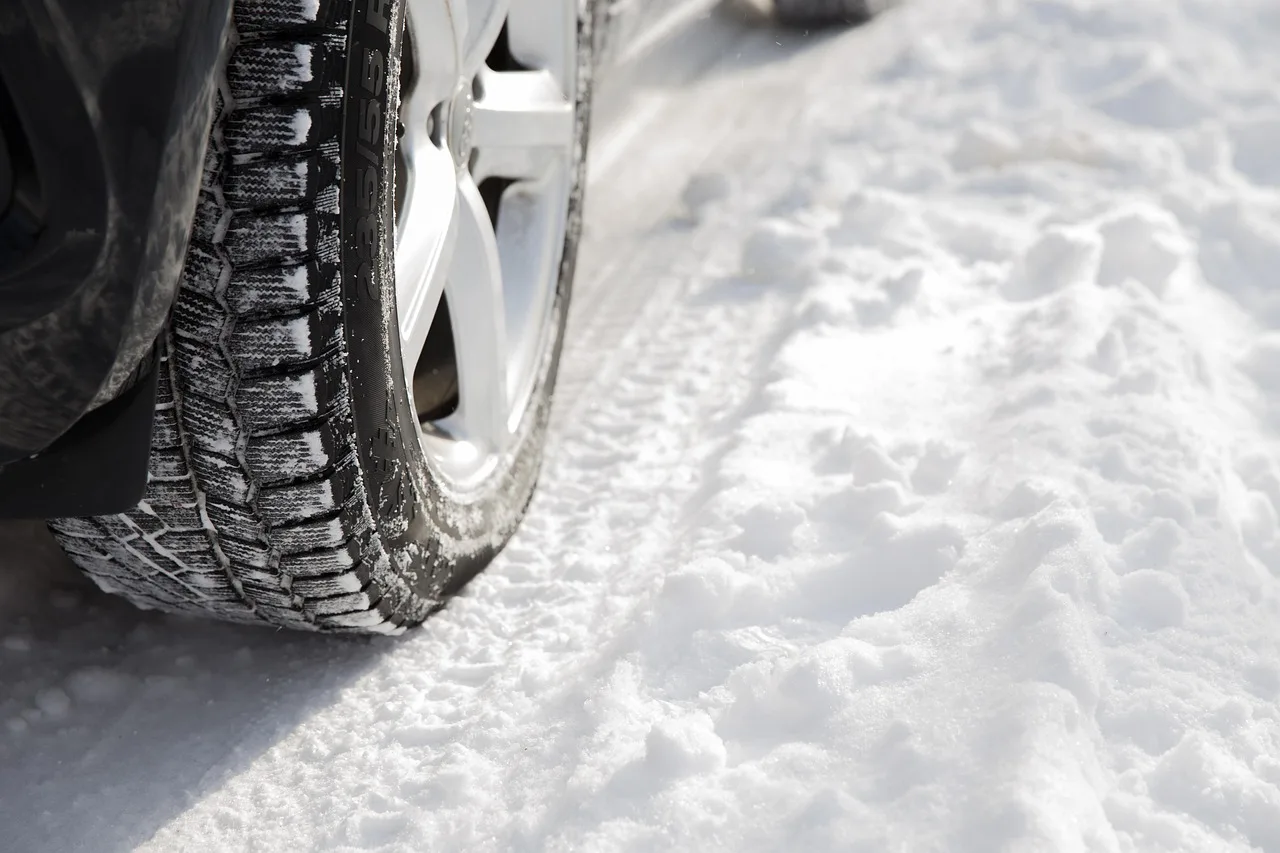
Cold weather lowers air pressure because the air inside the tire contracts as temperature falls. That change is normal, and it often shows up overnight after a cold snap or after a vehicle moves from a warm garage to outdoor air. A TPMS warning can appear for the same reason.
Use the placard pressure as the baseline. That number comes from the driver-side door jamb sticker or the owner’s manual, and it is manufacturer-specific. It is not the sidewall max PSI, which is the tire’s maximum rating, not the vehicle’s target.
How much PSI changes with temperature
A common rule of thumb is about 1 PSI for every 10°F drop in temperature. Continental’s guidance is similar in metric terms: tire pressure drops 1 to 2 PSI with every 10°C decrease, or 0.07 to 0.14 bar per 10°C. That is enough to turn a healthy reading into a low-pressure warning in one cold morning.
Winter guidance can also call for a small buffer above the standard recommendation. Nokian recommends at least 2 PSI higher air pressure in winter tires than all-season recommendations. If no separate winter recommendation exists, Nokian says add 2 to 3 PSI to the recommended air pressure.
Why the warning light appears after a cold snap
TPMS reacts to pressure crossing a threshold. It does not know whether the drop came from weather, a slow puncture, or a valve problem. That is why overnight cold snaps, garage-to-outdoor shifts, and even changes in altitude can trigger a warning without a tire being damaged.
A blinking TPMS light needs attention. In many vehicles, a blinking pattern points to a system fault rather than a simple low-pressure condition, so the light should not be treated as a weather gauge alone.
Find the right PSI
Start with the placard value on the driver-side door jamb or in the owner’s manual. That number is the vehicle maker’s target for the tires on that vehicle, and it is the reference point for winter adjustments. Continental also lists the fuel filler door and door frames as places where the recommended pressure may appear.
Why sidewall max PSI is not the target
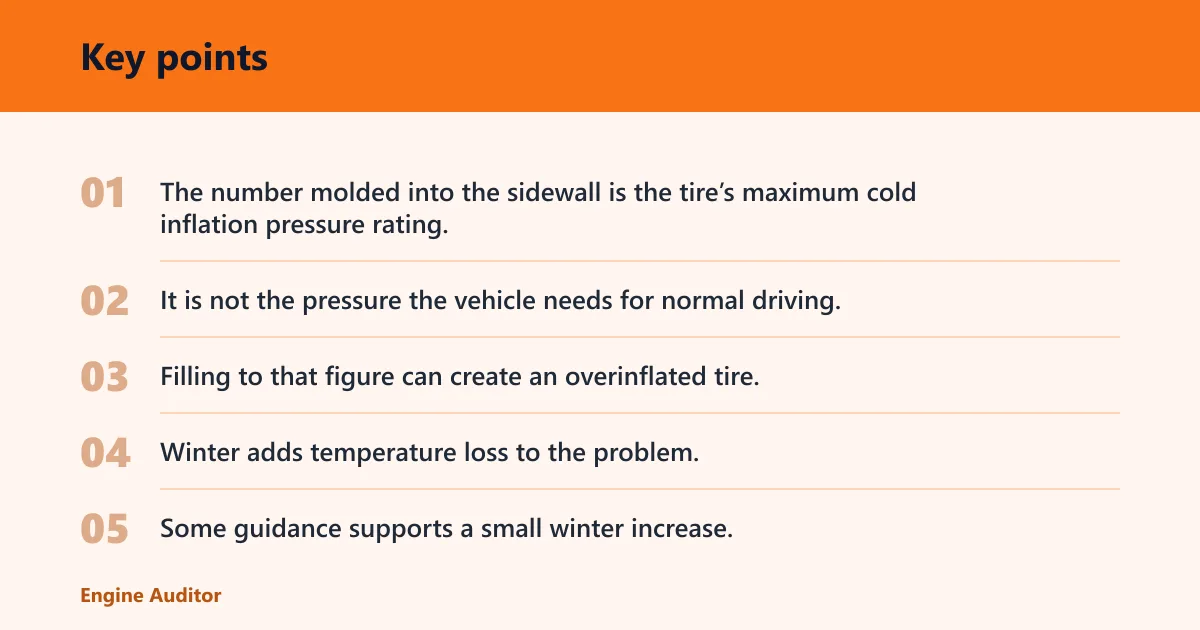
The number molded into the sidewall is the tire’s maximum cold inflation pressure rating. It is not the pressure the vehicle needs for normal driving. Filling to that figure can create an overinflated tire, which can reduce contact patch size and make ride quality harsher than intended.
How winter guidance fits the placard number
Winter adds temperature loss to the problem, so the placard number becomes the baseline for adjustment, not the final answer in every situation. Some guidance supports a small winter increase, but that does not mean chasing a single universal number. It means keeping the tire near the vehicle maker’s target after accounting for colder air.
Suppose the placard says 35 PSI and the outdoor temperature drops about 20°F before the morning commute. A 2 PSI loss is a reasonable expectation from temperature alone. That reading points to a top-off, not a leak, if all four tires moved in the same direction and there is no physical damage.
Should you add air in winter?
Yes, when the tires are below the placard target after a cold check. A small drop is normal in winter, but a tire that sits several PSI low should be corrected. Add air to the recommended value, or to the winter buffer if the vehicle and tire maker provide one.
When to top off
Top off after a cold check shows the tire below the placard number or below the winter-adjusted target you are using. If all tires lost a similar amount after a cold snap, that usually points to temperature, not damage. Recheck after the weather stabilizes so you do not overfill a tire that was measured while warm.
When not to chase the number
Do not keep adding air because a warm tire reads slightly low in the driveway or because TPMS lit up after the vehicle just came in from a garage. Short trips can warm the tire faster than the surrounding air, which skews the reading. A warm tire can look fine, then read lower once it cools.
A common first-timer mistake is filling tires immediately after a 10-minute drive on a 28°F morning. The tire may read normal while warm, then settle lower later and trigger the light again. That is why the cold check matters more than the warm one.
Cold tire checks
Measure pressure when the tires are cold, before driving or after minimal driving. Cold checks are more accurate because the tire has not been heated by road use. Nokian specifically warns that a warm garage can mislead winter pressure readings, so the outdoor condition matters.
How short trips affect readings
Short trips can keep tire pressure readings in a middle zone. The tire may be warmer than the air outside, but not warm enough to give a stable picture of true cold inflation. If you must check after a short drive, treat the number as less reliable and recheck when the tire has sat long enough to cool.
- Park on level ground and let the vehicle sit long enough to cool.
- Find the placard pressure on the door jamb or in the owner’s manual.
- Check each road tire with a manual gauge.
- Compare the reading to the placard, not the sidewall.
- Add air to the placard value if the tire is low, then recheck.
- If one tire keeps dropping more than the others, inspect for a puncture, valve leak, bead issue, or TPMS fault.
Winter PSI adjustment table
This table translates temperature swings into expected pressure change. Use it to separate a normal weather shift from a reading that needs a closer look. The pressure change is approximate, so the final check should still be made against the placard on a cold tire.
| Temperature change | Expected PSI drop | Add air? | Inspect for damage? |
|---|---|---|---|
| 10°F drop | About 1 PSI | Only if the tire is below placard | No, unless one tire drops more than the others |
| 20°F drop | About 2 PSI | Often yes if starting near placard | Yes, if the loss is isolated to one tire |
| 30°F drop | About 3 PSI | Likely, especially after an overnight cold snap | Inspect if the drop is uneven or repeated |
| 10°C drop | 1 to 2 PSI | Often yes if the tire is near the low threshold | Yes, if a single tire is affected |
| 20°C drop | 2 to 4 PSI | Yes, if the tire now sits below the placard | Inspect for puncture, valve, or bead issues |
Cold snap or leak?
If all tires lost pressure at about the same time after a temperature drop, weather is the first suspect. If one tire falls faster than the others, or the same tire keeps going low after you add air, inspect for a puncture, valve issue, bead leak, or TPMS fault. That is the cleanest rule.
Signs the drop is weather-related
Weather-driven loss usually affects all four tires in a similar way. It often follows a clear temperature change, an overnight cold snap, or a move from a heated garage to outdoor parking. The pressure light may come on even though the tires look normal and hold their shape.
Signs you need an inspection
Inspect the tire if the pressure keeps falling after refilling, if one corner is lower than the other three, or if the warning returns sooner than expected. Also inspect after potholes, curb hits, or rough winter roads. Cracks, cuts, bulges, leaks, and sidewall damage need attention.
Picture a sedan that leaves a 45°F garage at 35 PSI and sits outside overnight at 5°F. The next morning, the tires may read about 3 PSI lower without any defect. If one front tire reads 6 PSI lower than the rest, that pattern points away from weather and toward a leak or valve problem.
Check TPMS and tire condition
TPMS is useful, but it does not replace a gauge. Continental says to check air pressure even if the vehicle has TPMS. The system warns when pressure falls below its threshold, but it does not always tell you the exact reading, and it cannot tell you whether the cause is weather or damage.
What to do after inflation
After adding air, some vehicles need a TPMS reset or relearn procedure. Others update on their own after driving. If the light stays on after a proper cold inflation check, look at the manual for the reset steps or confirm whether the system is signaling a fault.
What to inspect after winter roads
Look for cuts, embedded nails, cracked rubber, bulges, and sidewall scuffs. Winter roads can also leave damage that is easy to miss in dim light or slush. Do not forget the spare tire. It loses pressure in cold weather too, and it should be checked with the road tires.
Frequently asked questions
How much PSI does tire pressure drop in cold weather?
A practical rule is about 1 PSI for every 10°F drop in temperature. The same source gives a similar range in Celsius, saying pressure drops 1 to 2 PSI with every 10°C decrease. That is enough to trigger a warning light in a healthy tire after a cold night.
Should I add air to my tires in winter?
Add air if a cold check shows the tire below the door-jamb placard pressure. A small winter drop is normal, but do not let the tire stay low. If the vehicle maker or tire maker gives a winter-specific adjustment, use that guidance instead of the sidewall max PSI.
How often should I check tire pressure in winter?
Check at least every two weeks in winter, and sooner after a large temperature swing. The same source gives that two-week interval as winter guidance, and short-trip driving can make readings harder to trust. A quick manual check is still useful even if the car has TPMS.
What PSI should winter tires be set to?
Set winter tires to the vehicle’s recommended placard pressure unless the tire maker gives a winter-specific adjustment. The same source recommends at least 2 PSI higher air pressure in winter tires than all-season recommendations, and if no separate winter recommendation exists, it says add 2 to 3 PSI to the recommended air pressure.
Should I check tire pressure when tires are cold or warm?
Check tire pressure when the tires are cold, before driving or after minimal driving. Warm tires read higher and can hide a problem. Nokian also warns that a warm garage can mislead winter pressure readings, so the most useful check is the one taken before the tires heat up.
Why does my tire pressure light come on when it gets cold?
The light often comes on because cold air lowers pressure enough to cross the TPMS threshold. Overnight cold snaps, moving from a garage to outdoor air, or a change in altitude can all lower pressure. If the light remains on after a correct cold inflation check, inspect for damage or a TPMS fault.
Products related to this article
Sponsored / affiliate links. As an Amazon Associate I earn from qualifying purchases. I may earn additional commission from eligible campaigns.
 Bullseye 12V DC Car Tire Inflator Portable Air Compressor - Rapid 2 Minute Inflation, Auto Shut-Off, Max 150 PSI, Easy Cord Storage, Digital Pressure Gauge, LED Display (Royal Blue) - As Seen on TV
 Bullseye 12V DC Car Tire Inflator Portable Air Compressor - Rapid 2 Minute Inflation, Auto Shut-Off, Max 150 PSI, Easy Cord Storage, Digital Pressure Gauge, LED Display (Yellow) - As Seen on TV