How to Store Car Tires for Long-Term Use
Store tires indoors in a cool, dry, dark spot after cleaning and drying them fully. Keep mounted and unmounted tires in different positions: mounted tires can be stacked horizontally or hung on sturdy hooks, while unmounted tires should stand upright and be rotated during storage. Poor storage can dry out rubber, create flat spots, and leave a set unsafe before the next season.
Storage time changes the risk. Seasonal tire changes can leave a set in storage for several months, and the longer the rubber sits in heat, sunlight, or ozone, the more likely it is to age before it wears out. The goal is simple: slow the damage, then recheck before installation.
How to store car tires safely


What you’ll need
- Mild soap, water, and a soft brush
- Clean towels or air-drying space
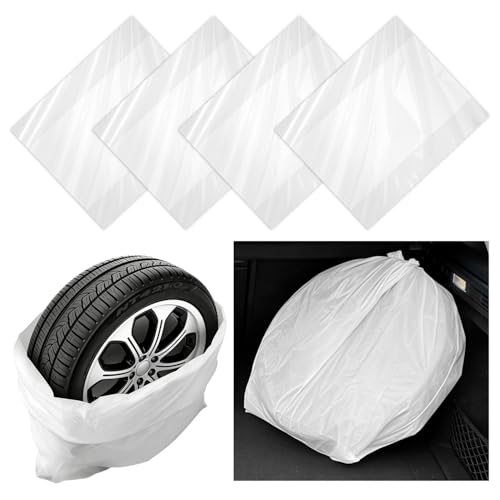
- Tire storage bags
- Cardboard sheet or a wooden pallet
- Floor jack, if you need to unload a vehicle
- Tire gauge for mounted tires
- Sturdy hooks or a rack for hanging mounted tires
- Labels or chalk for noting tire position
How should you prepare tires before storage?
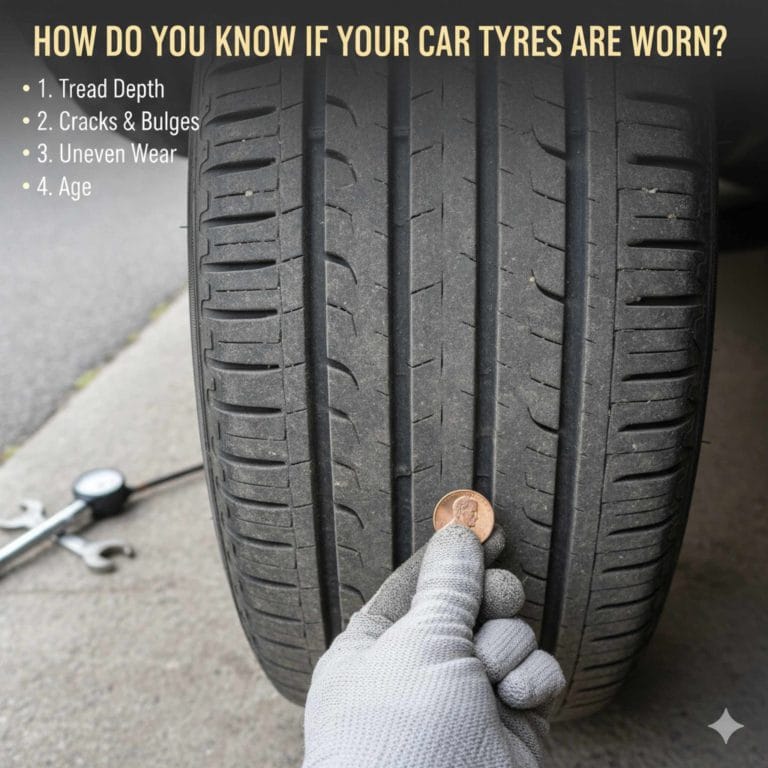
Wash tires with water, mild soap, and a soft brush, then dry them completely before they go away. Remove small stones from tread grooves and inspect sidewalls, tread depth, and the bead area for cuts, cracks, bulges, or uneven wear. Do not store wet tires or tires with oily residue.
- Rinse off road grime and brake dust.
- Scrub the tread and sidewalls with mild soap and a soft brush.
- Pick stones and debris from the tread grooves.
- Let the tires dry fully before bagging or stacking them.
- Check sidewalls, tread depth, bead area, cuts, cracks, bulges, and uneven wear.
Skip harsh cleaners with petroleum or strong solvents. They can attack the rubber surface instead of protecting it.
Where should you store tires at home?
Choose a cool indoor location such as a garage, basement, or storage room, with low humidity and no direct sunlight. Keep tires away from electric motors, welders, and other ozone-producing equipment. A cardboard or wooden pallet barrier helps separate the tires from damp floors and reduces moisture-related contact in humid spaces.
Tire storage bags help reduce dust and light exposure during long storage. They also give the rubber a better chance of sitting undisturbed when the set will not be touched for months.
Storage environment rules
- Use an indoor space with steady temperatures, not an outdoor shed.
- Keep tires away from sunlit windows and direct UV exposure.
- Do not park them beside electric motors, welders, or other ozone sources.
- Place cardboard or a wooden pallet under the tires if the floor tends to hold moisture.
How should mounted and unmounted tires be stored?
Mounted tires and unmounted tires do not sit the same way. Mounted tires can be stacked horizontally or hung on sturdy hooks, and they should stay at normal recommended pressure with periodic pressure checks. Unmounted tires should stand upright rather than lie flat, and they should be rotated occasionally so one side does not bear all the load for months.
Mounted tires
Keep mounted tires at normal recommended pressure, not underinflated. Low pressure makes flat spots more likely when the tire sits under load for too long. Check pressure every few months, and make sure the tires are supported evenly if they are stacked.
Flat spots can form during long storage, especially if the tire stays loaded and underinflated. Say your winter set is on 17-inch rims in a basement corner for three months; keeping them at normal pressure and checking them before the season helps prevent a rough first drive on reinstall.
Unmounted tires
Store unmounted tires standing upright, not piled flat under weight. A common first-timer mistake is laying a spare set on its side and stacking boxes on top of it. That can deform the casing and make the set harder to reuse cleanly later.
Suppose four off-rim summer tires are waiting in a garage for five months. Stand them upright, move their position occasionally, and keep them away from heavy items that can press into the sidewall or tread.
Tire storage checklist
| tire type | storage duration | exact actions |
|---|---|---|
| Mounted | Under 30 days | Clean with mild soap and water; dry fully; store at normal recommended pressure; stack horizontally or hang on sturdy hooks; keep away from sunlight and ozone sources; recheck pressure before reinstalling; inspect sidewalls, bead area, tread depth, cracks, cuts, bulges, and uneven wear if any damage appears. |
| Mounted | 1-3 months | Clean and dry; bag if possible; store in a cool indoor location; keep at normal recommended pressure; stack or hang; check pressure every few months; use a pallet barrier in damp areas; inspect before reuse and replace if cracks, bulges, or unusual wear are found. |
| Mounted | 3+ months | Clean and dry; bag for dust and light control; store indoors away from heat, UV, and ozone sources; keep at normal recommended pressure; stack or hang with even support; check pressure every few months; reinspect sidewalls, bead area, tread depth, cracks, cuts, bulges, and uneven wear before installation; do not reuse if structural damage is present. |
| Unmounted | Under 30 days | Clean and dry; stand upright; keep off direct sunlight; avoid stacked weight; use bags if dust is an issue; rotate position before the next use; inspect tread grooves, sidewalls, bead area, cracks, cuts, bulges, and uneven wear before mounting. |
| Unmounted | 1-3 months | Clean and dry; stand upright on a pallet or cardboard barrier; store in a cool indoor location; keep away from motors and ozone sources; rotate each tire occasionally; use bags for dust and light control; inspect before mounting and discard any tire with deep cracks, bead damage, bulges, or major wear mismatch. |
| Unmounted | 3+ months | Clean and dry; bag for long storage; stand upright; keep off damp concrete with a pallet or cardboard barrier; avoid compressed stacking; rotate occasionally; store away from sun, heat, and ozone sources; inspect sidewalls, bead area, tread depth, cracks, cuts, bulges, and uneven wear before reuse; replace if aging or damage is visible. |
This table gives the practical split readers usually need: mounted tires get pressure checks and support control, while unmounted tires get upright storage and occasional rotation. For long-term storage beyond about 90 days in desert conditions, the risk tends to climb faster, and reinspection before reuse matters more.
Common mistakes
Do not overinflate mounted tires for storage. Keep them at normal recommended pressure and recheck every few months instead. Overinflation is not the goal here; stable support is. Low pressure is the bigger problem because it allows flat spots to form when the tire sits under load.
Do not leave tires in direct sun or beside ozone-producing equipment. Rubber degradation is commonly driven by heat, UV exposure, and ozone exposure, so a bright window or an electric motor can matter more than people expect.
Do not stack unmounted tires under heavy weight for long periods. They should stand upright, not lie flat under pressure. If a tire shows sidewall cracking, bead damage, bulges, or uneven wear at the pre-install check, do not reinstall it.
Do not skip the final inspection. A tire that looked fine when stored can still be unfit for service if the tread depth is low, the bead area is damaged, or cracks have spread during storage.
How long can tires be stored?
Short storage under 30 days is usually simple: clean, dry, protect from sun and ozone, and check the set before use. Storage from 1-3 months calls for better placement, bags, and more attention to mounted-tire pressure. At about 3 months or more, reinspection becomes the main gate before reuse.
Summer tires, winter tires, spare tires, and off-rim seasonal sets all follow the same basic rules, but the details differ. Mounted seasonal tires need pressure attention. Unmounted spares and off-rim sets need upright support and occasional rotation.
Reinspection before reuse
- Check sidewalls for cracks, cuts, and bulges.
- Inspect the bead area for damage or distortion.
- Measure tread depth and compare all four tires in the set.
- Look for uneven wear that developed before or during storage.
- Reject any tire that shows structural damage or severe aging.
A tire should be replaced rather than reused if storage exposed hidden damage that affects the sidewall, bead area, or tread structure. That is the point where storage has moved from maintenance to replacement.
Frequently asked questions
How to store tires on rims
Mounted tires on rims should stay at normal recommended pressure and be supported evenly. Stack them horizontally or hang them on sturdy hooks, then check pressure every few months. Use bags if dust or light exposure is a concern, and inspect for flat spots, cracks, or bulges before reinstalling.
How long do tires last in storage?
That depends on condition, storage quality, and duration. Under 30 days is simple, 1-3 months needs periodic checks, and 3+ months calls for a full pre-use inspection. Heat, UV exposure, and ozone shorten the usable life much faster than a clean indoor storage setup does.
How to store tires in garage
Choose the coolest indoor corner, away from tools that create ozone and away from sunlight through the door or window. If the floor is damp, use cardboard or a wooden pallet beneath the tires. Mounted sets can be stacked or hung; unmounted sets should stand upright and be rotated occasionally.
How long can you store tires?
For a seasonal home setup, think in three bands: under 30 days, 1-3 months, and 3+ months. The longer the tires sit, the more important the final inspection becomes. Do not reinstall any tire with sidewall cracks, bead damage, bulges, or uneven wear, even if it was stored indoors.
Products related to this article
Sponsored / affiliate links. As an Amazon Associate I earn from qualifying purchases. I may earn additional commission from eligible campaigns.