Car Tire Pressure in Summer: What Changes and Why
Car tire pressure often rises about 1 psi for every 10°F of temperature increase, so a hot reading a few psi above the morning cold value is normal. Ignore that change, and you can overinflate, overload, or miss a puncture. This guide explains why summer pressure changes happen, what counts as normal, and when a hot reading points to a tire or load problem.
Why tire pressure rises in summer


Heat makes the air inside a tire expand, so pressure goes up as ambient temperature rises and as the tire flexes on the road. That is why a cold morning reading can climb after the car sits in sun or after a highway run. In summer, that rise is expected.
How heat changes air pressure inside the tire
Tire pressure is measured in PSI or bar, and the target belongs to the vehicle handbook or door placard, not the tire sidewall maximum. The number you want is the cold inflation pressure, which is the baseline used by automakers and tire makers. Measure it after the car has been parked for about 3 hours or more.
Ambient temperature changes that cold baseline before the car even moves. Then driving adds more heat. A common rule of thumb is about 1 psi per 10°F increase in internal air temperature, which is why a warm tire can read several psi higher than the same tire did earlier that morning.
Why parked-in-sun readings can differ from morning readings
A tire sitting on hot pavement or in direct sun can gain pressure without any road speed at all. That increase often shows up after parking for a while, even if the tire was set correctly in the morning. The difference is usually temporary and tied to heat absorption, not a leak or a bad valve.
Say your sedan was set to 35 psi cold before work. In the afternoon, the same tire may read 37 or 38 psi after the car has sat in sun. That is a normal hot reading, not a reason to bleed air.
Why summer pressure rise is usually normal
Driving heat makes tire pressure rise. Daily driving often creates a 2–6 psi rise from true cold, and highway use can sit near the upper end of that range because the tire flexes more and stays warm longer. The rise matters because the cold number is still the target when the tire cools again.
Cold inflation pressure explained
Cold inflation pressure is the pressure set after the vehicle has been parked long enough for the tires to cool, usually about 3 hours or more. That is the figure the handbook and door placard are written around. Hot running pressure should not be your set point, because it changes with speed, road surface, sun, and load.
Why the handbook and door placard set the target
The vehicle handbook lists the recommended front and rear tire pressures and may also give load-dependent guidance. The door placard is the manufacturer pressure reference point on the vehicle itself. Use those values for daily driving. Do not use the sidewall maximum as the normal target unless the handbook specifically calls for it.
That distinction matters in summer. If you lower pressure to make a hot reading match the placard, the tires can end up underinflated later when they cool. Underinflation raises heat, hurts wear, and can make the car feel sloppy in corners and braking.
Why hot running pressure should not be your set point
A hot tire does not give a stable baseline. A pressure that looks high after a freeway drive may settle back to the correct cold number overnight. If you bleed air from that hot reading, the tire can drop below the recommended pressure once it cools. That creates a real fault from a normal summer condition.
How much can tire pressure rise?
In normal daily use, summer pressure often rises by a few psi, and a 2–6 psi increase from true cold is commonly reported. The exact change depends on outside temperature, the amount of driving, speed, sun exposure, and how much weight the vehicle is carrying. The rise is expected unless one tire behaves differently from the rest.
Typical PSI change from temperature swing
A warm morning-to-afternoon swing can produce a modest increase before the car moves. A larger jump after several hours of driving usually reflects road heat and tire flex. The important point is pattern: a few psi above cold is normal, while a large or uneven change needs attention.
What highway driving does to tire pressure
Highway speed builds heat faster than stop-and-go traffic. That heat raises pressure in all four tires, often enough that a driver checking at the end of a trip sees every tire above the morning number. If the tires were set cold to the placard, that rise usually settles back down after cooldown.
What heavy cargo does to tire temperature
Vehicle load matters. Passengers, luggage, tools, and roof or trunk cargo increase tire deflection and heat buildup, and the handbook may call for a higher cold pressure when the vehicle is loaded. Use the load guidance if it is printed there. Do not guess from the hot reading.
| Starting condition | Expected PSI change range | Likely cause | Action |
|---|---|---|---|
| Parked in sun | +1 to +3 psi | Heat from pavement and direct sunlight | Compare again when cold; do not bleed air yet |
| Highway driving | +2 to +6 psi | Tire flex and sustained road heat | Ignore the hot rise if the cold setting matched the placard |
| Heavy load | +3 to +6 psi | More deflection and heat from added weight | Check the handbook for load pressure guidance and verify cold |
| One tire rising more than others | More than 2 psi above the others after similar driving | Gauge error, valve issue, brake drag, or tire fault | Recheck with a second gauge and inspect that wheel |
A common first-timer mistake is to compare a hot rear tire after a highway run with a cold front tire that has been sitting in shade. That comparison tells you almost nothing. Match conditions first, then decide whether the difference is normal.
Should you let air out when it is hot?
No, not from a normal hot reading. Bleeding hot tires can leave them underinflated once they cool, because the pressure you remove during peak heat is the pressure the tire needed to return to its cold target later. A hot reading should lead to a cold recheck, not an automatic adjustment.
Why bleeding hot tires can leave them low later
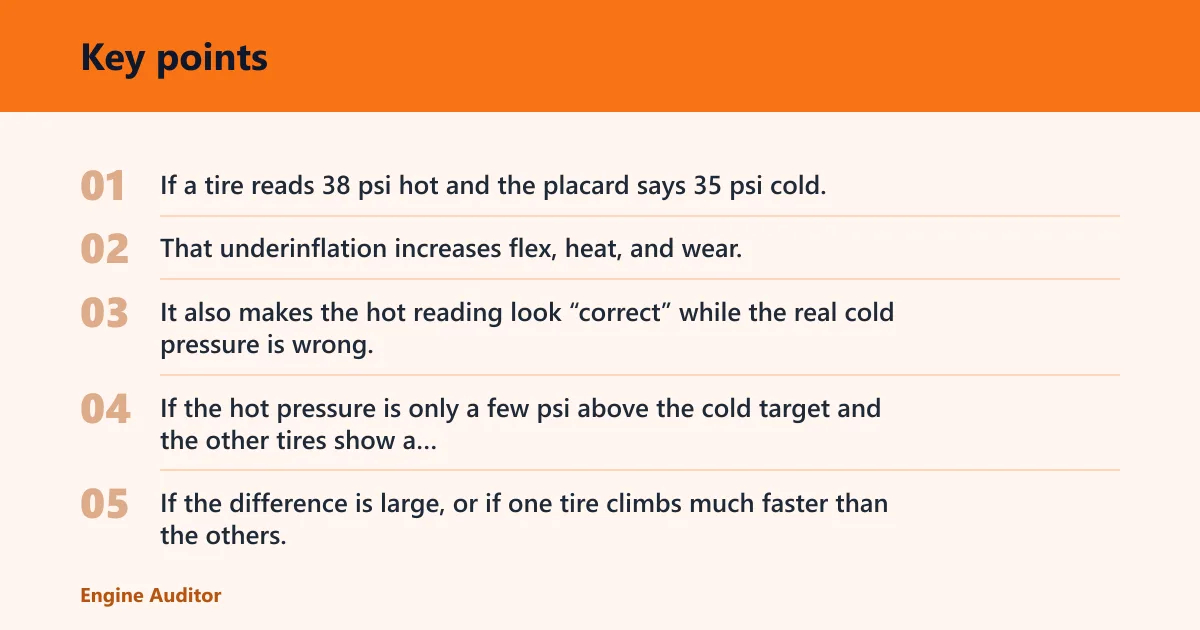
If a tire reads 38 psi hot and the placard says 35 psi cold, dropping it to 35 psi while hot can leave it several psi short when the temperature falls. That underinflation increases flex, heat, and wear. It also makes the hot reading look “correct” while the real cold pressure is wrong.
When a hot reading should still trigger a recheck
If the hot pressure is only a few psi above the cold target and the other tires show a similar rise, that is usually normal. Recheck the tire when cold. If the difference is large, or if one tire climbs much faster than the others, inspect for a fault, a sticking brake, damage, or an inaccurate gauge.
When to inspect for overload or a fault
Use the hot reading as a clue, not a final answer. A single tire that heats more than its pair on the same axle can point to low starting pressure, a bent wheel, a valve problem, tread damage, or brake drag. If the vehicle is heavily loaded, check whether the handbook calls for a higher cold setting before you assume a failure.
Use a reliable tire pressure gauge, digital or analog, because TPMS is a warning system, not a precision gauge. Check the tires when they are cold, compare the reading with the placard, and set front and rear pressures separately if the handbook lists different values. Monthly checks still matter in summer.
- Park the car and leave it for at least 3 hours, or check it before any driving that day.
- Find the door placard or vehicle handbook and note the front and rear target pressures.
- Measure each tire with the same reliable gauge.
- Adjust only to the cold target listed for the vehicle, not to a hot road reading.
- If the handbook gives a load setting, use that number when carrying passengers or cargo.
- Check again if one tire keeps reading higher or lower than the others.
TPMS can alert you to low pressure, but it does not replace a manual check. It may trigger after a seasonal drop, after a slow leak, or after a tire has cooled enough to fall below the warning threshold. It is useful. It is not exact.
Frequently asked questions
Why does my tire pressure go up in summer?
Summer heat makes the air inside the tire expand, so the pressure rises even when the tire is parked. Driving adds more heat through flex and road contact. That is why a tire that matched the placard in the morning can read a few psi higher later in the day.
How much can tire pressure rise in hot weather?
A common rule of thumb is about 1 psi per 10°F increase in internal air temperature. In daily driving, a 2–6 psi rise from true cold is common. A parked-in-sun tire may rise a little less than a tire that has just finished a highway trip.
Should I let air out of tires when it gets hot?
Usually no. If you bleed hot tires down to the placard number, they can end up underinflated when they cool. Only adjust from a cold reading that matches the vehicle handbook or door placard. If one tire stays much hotter than the others, inspect that wheel instead.
When should I check tire pressure in summer?
Check it at least monthly, and after a major temperature swing, a long highway trip, or a load change. The best reading comes after the car has been parked for at least 3 hours. That gives you the cold inflation pressure the manufacturer used when setting the placard.
Do I check tire pressure when the tires are hot or cold?
Check it when the tires are cold. Hot readings move with driving, sun, and load, so they are not the right baseline for setting pressure. Use a gauge, compare the result with the placard, and make the adjustment before any significant driving.
Is higher tire pressure in summer dangerous?
A small hot-weather rise is normal and not dangerous by itself. The problem is setting pressure from a hot reading or ignoring a pattern that points to overload, a valve issue, or brake drag. Underinflation and overinflation both hurt wear, grip, and ride quality.
Why do my TPMS lights come on in warm weather?
TPMS can light up if one tire falls below the warning threshold, and a seasonal pressure change can move a marginal tire across that line. The system is a warning tool, not a precise gauge. Verify the tires with a manual check when they are cold and compare them with the placard.
Products related to this article
Sponsored / affiliate links. As an Amazon Associate I earn from qualifying purchases. I may earn additional commission from eligible campaigns.
 Bullseye 12V DC Car Tire Inflator Portable Air Compressor - Rapid 2 Minute Inflation, Auto Shut-Off, Max 150 PSI, Easy Cord Storage, Digital Pressure Gauge, LED Display (Royal Blue) - As Seen on TV
 Bullseye 12V DC Car Tire Inflator Portable Air Compressor - Rapid 2 Minute Inflation, Auto Shut-Off, Max 150 PSI, Easy Cord Storage, Digital Pressure Gauge, LED Display (Yellow) - As Seen on TV