Car Engine Parts and Their Functions: Full Breakdown
A car engine’s core parts are commonly considered to include the block, cylinders, pistons, crankshaft, camshaft, valves, timing system, spark plugs or injectors, intake, and lubrication system. Miss a failing part, and you get hard starts, power loss, overheating, misfires, or engine damage that can get expensive fast. This guide maps each part to its job, its common failure symptom, and the quickest way to identify it under the hood.
How a car engine turns fuel into motion


An engine turns fuel into mechanical power by pulling in air, compressing it, burning the charge, and pushing exhaust out. That four-stroke cycle typically repeats in each cylinder. The parts you can see from above mostly manage air, fuel, spark, heat, oil, and valve timing; the parts inside the block turn that pressure into rotation.
Core parts grouped by job
Think in layers. The core combustion group is the block, cylinders, pistons, rings, rods, crankshaft, camshaft, valves, and timing set. The support group is the cooling and lubrication hardware, including the water pump and oil pan. The control group includes spark plugs on gasoline engines and injectors on many modern layouts.
Four-stroke operation is straightforward. Intake draws air in, compression squeezes it, power burns it, and exhaust clears the cylinder. A fault in any one part usually leaves a clear pattern: hard starting, rough idle, smoke, overheating, or loss of power under load.
Cylinder block and cylinder head
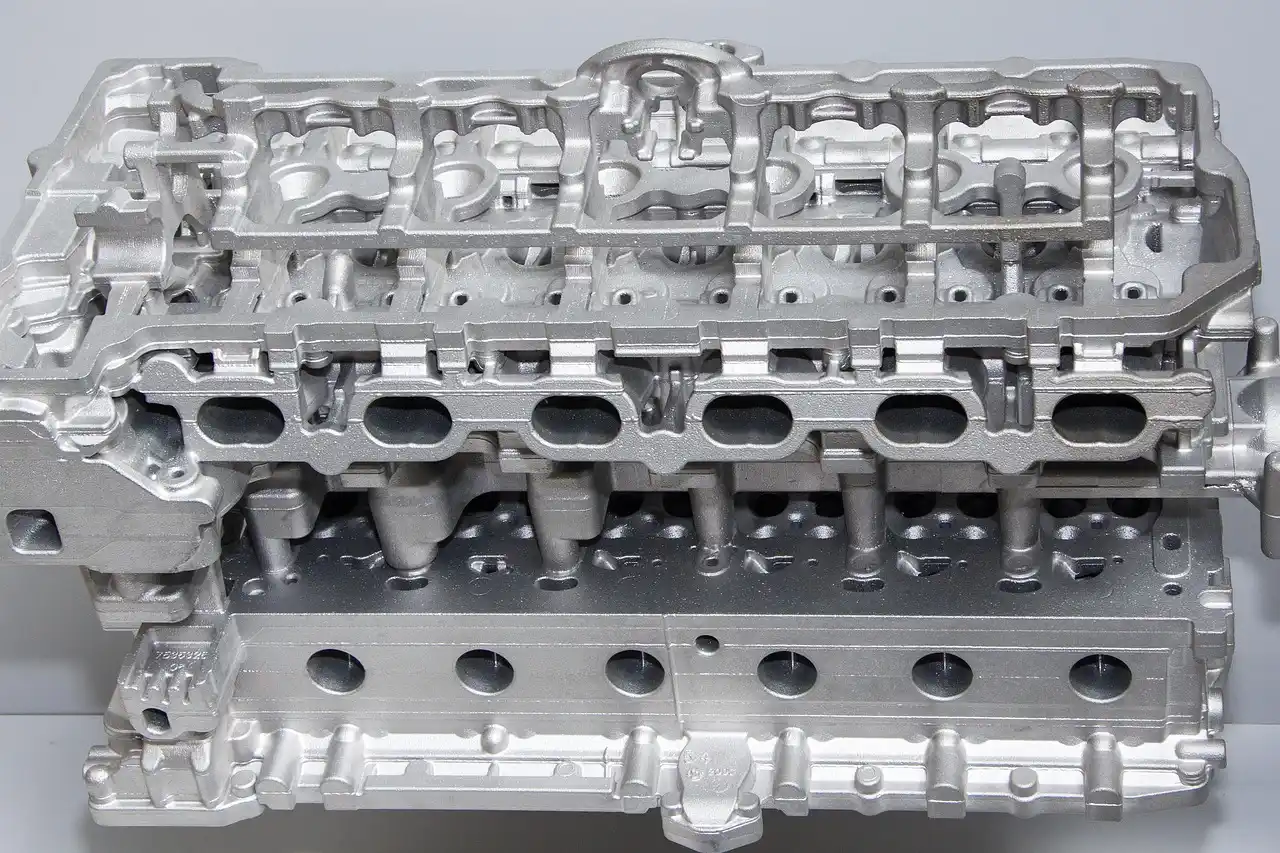
The cylinder block is the main structural housing. It holds the cylinders and internal components, and it is often cast iron or aluminum alloy. The cylinder head seals the top of the engine block and carries intake ports, exhaust ports, valves, camshafts, and often spark plugs or fuel injectors.
What the block holds
The block gives the engine its frame and keeps the cylinders aligned. It also forms the lower half of the combustion chambers in many layouts. Cracks, warped surfaces, or coolant leaks around the block usually point to overheating, freeze damage, or severe wear, not a minor accessory fault.
What the head seals and carries
The head closes off the cylinder tops so compression can build. Because it carries ports and valve gear, it often shows failure in the form of misfires, coolant loss, oil contamination, or white exhaust smoke. Head gasket failure sits between the two, but the head itself is the sealing surface above the block.
Why materials matter
Cast iron usually weighs more and handles heat well. Aluminum alloy is lighter and common on modern engines, but it can warp more easily if overheated. A quick visual cue: the block sits low and bulky, while the head sits above it with covers, hoses, and often the intake system attached to the top or side.
Pistons, rings, rods, and crankshaft
Inside the cylinders, the piston moves up and down, the connecting rod links the piston to the crankshaft, and the crankshaft turns that back-and-forth motion into rotation. Piston rings seal combustion pressure and regulate engine oil, which is why worn rings often show up as low compression, oil burning, and smoky exhaust.
How piston movement becomes rotation
During the power stroke, combustion forces the piston downward. The connecting rod carries that force to the crankshaft, and the crankshaft converts reciprocating motion into rotational motion. That rotation drives the flywheel and the rest of the powertrain.
What piston rings seal and control
Piston rings do three jobs: seal pressure, control oil on the cylinder walls, and move heat from the piston to the cylinder wall. When they wear, compression drops and oil control weakens. Common signs include blue exhaust smoke, oil use between services, poor throttle response, and low compression on one or more cylinders.
Suppose a 2.0-liter gasoline engine starts cleanly but idles rough after warm-up and leaves a blue haze on acceleration. That pattern points more toward worn rings or valve-seal issues than a dead battery or a bad air filter. The clue is oil entering the combustion space, not a fuel supply problem.
How rod and crank wear shows up
Rod wear often shows as knocking under load or after oil pressure drops. Crankshaft wear can produce deeper knocking, low oil pressure, or metal in the oil. The connecting rod has a small end at the piston pin and a big end at the crank journal, so wear at either point changes how smoothly the engine runs.
What do valves and camshaft do?
The intake and exhaust valves open and close to manage air-fuel entry and exhaust exit during the four-stroke cycle. The camshaft opens and closes those valves with timed lobes, and its motion must stay synchronized with the crankshaft. If timing drifts, the engine can misfire, lose power, or refuse to start.
Intake and exhaust valve timing
The intake valve opens to let air or air-fuel charge enter the cylinder. The exhaust valve opens on the exhaust stroke to let burned gas leave the cylinder. The exhaust stroke forces exhaust gas out, so a stuck valve quickly shows up as weak compression and poor running.
SOHC and DOHC basics
SOHC means one overhead camshaft per cylinder head. DOHC means two camshafts per head, usually one for intake valves and one for exhaust valves. DOHC layouts often give finer valve control and are common in modern engines, while some older engines use an in-block camshaft. The under-hood cue is simple: cam covers and timing covers high on the engine usually signal overhead cam design.
A common first-timer mistake is to call every top-mounted cover a valve cover fault. On many engines, that cover hides the camshaft area, but the real problem may be a worn timing chain, a sticking lifter, or low oil level that lets valve gear run noisily.
Spark plug, timing set, and combustion control
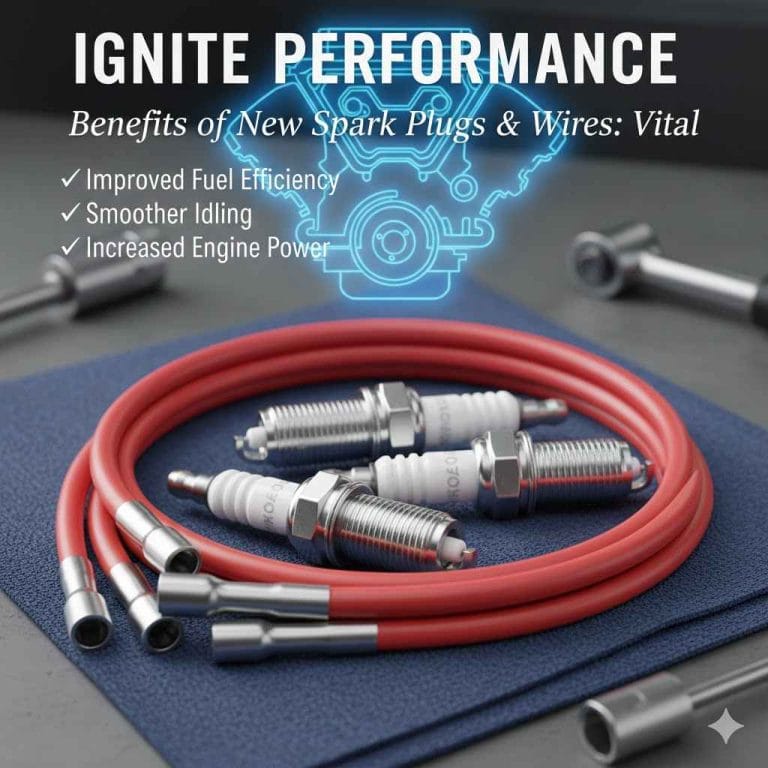
The spark plug ignites the air-fuel mixture in gasoline engines and starts the power stroke. The timing belt or timing chain connects the camshaft to the crankshaft and keeps valve timing in step with piston position. Diesel engines do not use spark plugs the same way because ignition happens from compression heat, not spark.
Spark plug function in gasoline engines
A gasoline engine needs spark at the correct moment. If a plug fouls, wears, or cracks, the cylinder may misfire, idle rough, or lose power under load. A quick visual cue is the threaded plug body at the cylinder head, usually reached through a coil-on-plug boot or ignition wire.
Timing belt or chain role
The timing belt or chain keeps crankshaft and camshaft motion aligned. If that relationship slips, valves open at the wrong time and the engine may run badly or not start at all. On interference engines, broken timing can also bend valves. That makes the timing set one of the most important wear items on the engine.
Why diesel engines differ
Diesel engines still need accurate valve timing, fuel delivery, and compression, but they ignite fuel differently. That changes the role of the plug area, the injection equipment, and some failure symptoms. A gasoline misfire often points toward spark or mixture issues; a diesel no-start usually leads you toward compression, fuel delivery, glow-system faults, or injector problems.
What is the function of the water pump in a car engine?
The water pump moves coolant through the engine to prevent overheating. It is part of the cooling system, and a weak pump can trigger temperature rise, coolant leaks, heater output loss, or bearing noise. The pump is usually driven by a belt or integrated with the timing system on some engines.
Cooling flow and overheating clues
When the pump moves coolant properly, heat leaves the block and head at a controlled rate. If the impeller slips, the seal leaks, or the bearing fails, the temperature gauge may climb at idle or in traffic. Coolant stains near the pump housing are a strong visual clue.
What is the function of the oil pan in a car engine?
The oil pan stores engine oil at the bottom of the engine and supports lubrication supply. Many layouts include a drain bolt in the pan for service. If the pan is dented, cracked, or leaking, oil level can drop fast enough to threaten bearings, cam surfaces, and the crankshaft.
Oil storage and lubrication supply
The oil pump draws oil from the pan and sends it through the engine. That supply protects the crankshaft, connecting rods, camshaft, and valve gear. A visual cue is simple: the oil pan is the lowest large metal or alloy housing under the block, often with a drain plug at its lowest point.
Engine parts matrix
This matrix gives a quick under-hood way to connect each major part with its job and the symptom you are most likely to notice when it fails.
| Part | Core function | Common failure symptom | Under-hood identification cue |
|---|---|---|---|
| Engine block | Main structural housing for cylinders and internal parts | Coolant leak, overheating, severe internal damage | Largest lower engine casting below the head |
| Cylinder head | Seals top of block and carries ports, valves, camshafts | Misfire, coolant loss, compression loss | Upper metal section under the valve cover |
| Piston | Receives combustion force inside the cylinder | Knock, low compression, smoke | Hidden inside cylinder bores |
| Piston rings | Seal pressure and control oil on cylinder walls | Oil burning, blue smoke, low compression | Not visible; symptoms show at tailpipe and oil use |
| Connecting rod | Links piston to crankshaft | Knock, loss of smoothness | Hidden inside block |
| Crankshaft | Converts reciprocating motion into rotational motion | Deep knock, oil pressure issues | Hidden low in the engine, above the oil pan |
| Camshaft | Opens and closes valves on schedule | Rough idle, no-start, valve noise | Under valve cover or in the block on older layouts |
| Intake valve | Lets air or air-fuel charge into the cylinder | Misfire, weak compression, poor power | Inside the cylinder head, under the cam area |
| Exhaust valve | Lets burned gas leave the cylinder | Popping, loss of power, misfire | Inside the cylinder head near exhaust ports |
| Spark plug | Ignites the mixture in gasoline engines | Misfire, rough idle, hard start | Threaded plug in the head with a coil or wire above it |
| Timing belt | Keeps camshaft and crankshaft in sync | No-start, bent valves if it breaks | Covered belt housing at the front of the engine |
| Timing chain | Keeps camshaft and crankshaft in sync | Rattle on start-up, timing drift | Inside a front cover, often heard before seen |
| Water pump | Moves coolant through the engine | Overheating, coolant leak, bearing noise | Near the front belt drive or timing cover |
| Oil pan | Stores engine oil at the bottom of the engine | Oil leak, low oil level | Lowest pan under the block, often with a drain bolt |
| Intake manifold | Distributes incoming air to the cylinders | Vacuum leak, rough idle, lean code | Plastic or metal runner assembly on the intake side |
| Exhaust manifold | Collects exhaust gas from the cylinders | Ticking, exhaust smell, power loss | Metal manifold bolted to the exhaust side of the head |
| Fuel injector | Delivers fuel in measured amounts | Hesitation, misfire, lean running | Mounted in the intake or directly in the head |
| Turbocharger | Uses exhaust energy to raise intake air pressure | Loss of boost, whine, oil smoke | Compact turbine-compressor unit near exhaust plumbing |
Which parts matter most for combustion?
The parts most important for combustion are the cylinders, pistons, rings, crankshaft, camshaft, valves, timing set, and the ignition or injection system. Those parts create compression, control airflow, and start the burn. Cooling and lubrication parts matter too, because combustion fails fast when heat or oil control goes off track.
Quick priority list for buyers
- Check for smooth cranking and even idle.
- Look for oil leaks at the pan, valve cover, and front cover.
- Check coolant level and signs of dried residue around hoses and the water pump.
- Listen for ticking, knocking, or timing-chain rattle on start-up.
- Look for smoke: blue for oil, white for coolant, black for excess fuel.
- Confirm whether the engine uses spark plugs, injectors, or both, depending on gasoline or diesel layout.
Picture a used sedan with a clean top end but oil wetness under the front cover and a brief metallic rattle for two seconds after start-up. That points you toward timing wear or low oil pressure at start-up, not a bad air filter. The symptom is tied to the timing and lubrication systems, so inspect those first.
Frequently asked questions
What are the main car engine parts and what does each one do?
The main parts are the block, head, pistons, rings, rods, crankshaft, camshaft, valves, timing set, spark plugs or injectors, intake and exhaust manifolds, water pump, and oil pan. The block holds the engine together, the head manages airflow and valve gear, and the bottom-end parts turn combustion force into rotation.
How do the piston, crankshaft, and connecting rod work together?
The piston moves up and down in the cylinder, the connecting rod carries that motion to the crankshaft, and the crankshaft converts reciprocating motion into rotational motion. If any one of those parts wears badly, you may hear knock, lose compression, or feel uneven power delivery under load.
What is the difference between the cylinder block and cylinder head?
The cylinder block is the main lower housing that carries the cylinders and internal moving parts. The cylinder head seals the top of the block and contains intake ports, exhaust ports, valves, camshafts, and often spark plugs or fuel injectors. A head problem usually affects compression and sealing more than structure.
What do the intake and exhaust valves do in an engine?
The intake valve lets the fresh charge into the cylinder, and the exhaust valve lets burned gas out. They open and close in step with the camshaft and crankshaft. If they stick, burn, or lose timing, the engine may misfire, idle roughly, or lose power because the cylinder cannot breathe properly.
What does the camshaft do in a car engine?
The camshaft controls valve timing. Its lobes open and close the intake and exhaust valves at the correct points in the four-stroke cycle. On SOHC engines one camshaft usually serves the head; on DOHC engines two camshafts divide intake and exhaust control, which can improve valve timing precision.
What is the function of the spark plug in a petrol engine?
The spark plug ignites the air-fuel mixture in a gasoline engine and starts the power stroke. A worn or fouled plug can cause misfires, rough idle, hard starting, and poor acceleration. Diesel engines do not rely on spark plugs for normal ignition because they use compression heat instead.
What parts of an engine are most important for combustion?
The most important combustion parts are the cylinders, pistons, rings, rods, crankshaft, camshaft, valves, timing set, and the ignition or fuel-injection system. Those parts set compression, airflow, and burn timing. Without good sealing, correct timing, and proper fuel delivery, combustion becomes weak or uneven fast.
Products related to this article
Sponsored / affiliate links. As an Amazon Associate I earn from qualifying purchases. I may earn additional commission from eligible campaigns.