How to Identify Engine Components Under the Hood
Identify under-hood engine components by checking three clues in order: location, shape, and labels; then confirm the system they belong to. Guessing wrong can mean topping off the wrong fluid, loosening the wrong cap, or buying the wrong part. This guide gives you a repeatable method for spotting major engine parts, fluid reservoirs, belts, hoses, and common non-engine items.
What the hood opens
The hood is the front panel that lifts to expose the engine bay. The bay holds the engine and the hardware around it, including electrical, cooling, and fluid-service parts. Start by separating the engine itself from the parts built around it.
Some modern engine diagrams list more than 50 parts, so a parts list alone is a poor starting point. First, scan the front of the car, then the belt side, then the corners where the battery and fluid tanks often sit. That order keeps you from chasing parts out of sequence.
Engine-only parts differ from under-hood service parts. The engine block, cylinder head, pistons, and crankshaft belong to the engine core. The battery, radiator, reservoirs, and belts sit around it and tie into other systems.
A fast first look at layout
- Open the hood and secure the prop or strut.
- Look at the front of the car first, near the grille.
- Find the belt side of the engine bay and trace the accessory drive.
- Check the corners for the battery and fluid reservoirs.
- Only then move in toward the engine core and covers.
Picture a compact car with a plastic engine cover in the center and the battery tucked into one front corner. The cover hides the top of the engine, but the battery, radiator, and reservoirs still reveal the layout. Those visible clues matter more than memorizing a full list.
What is the engine under the hood?
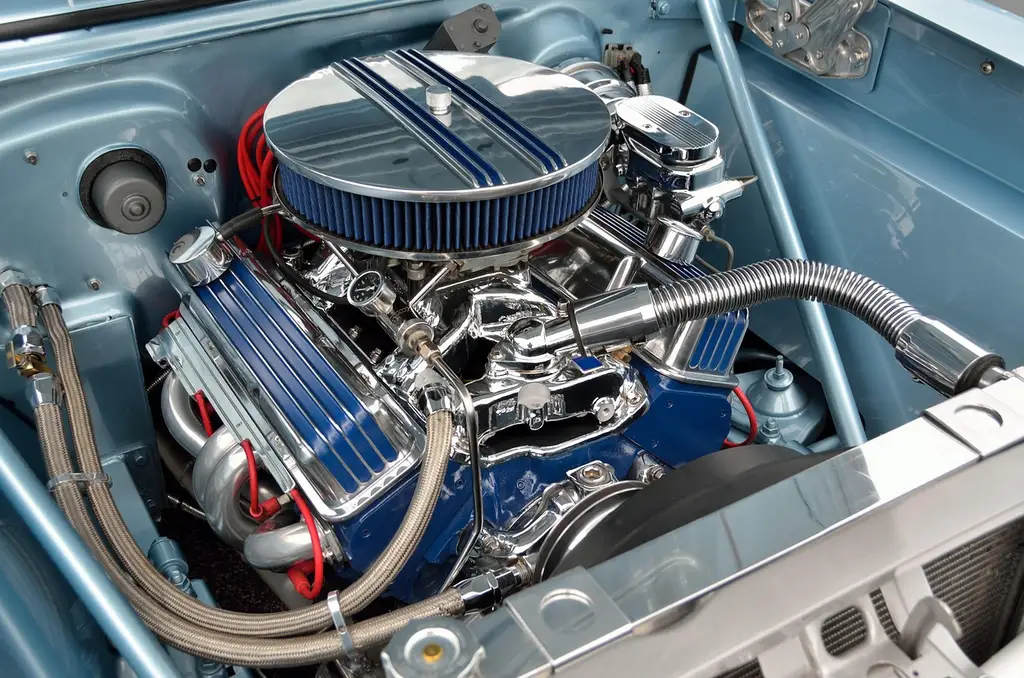
The engine under the hood is the main mechanical assembly that turns fuel energy into motion. The engine block is the core structure of the engine. It houses cylinders, crankshaft bearings, and a water jacket, and it encloses the cylinders where pistons convert energy into mechanical work.
Engine block, cylinder head, pistons, and crankshaft
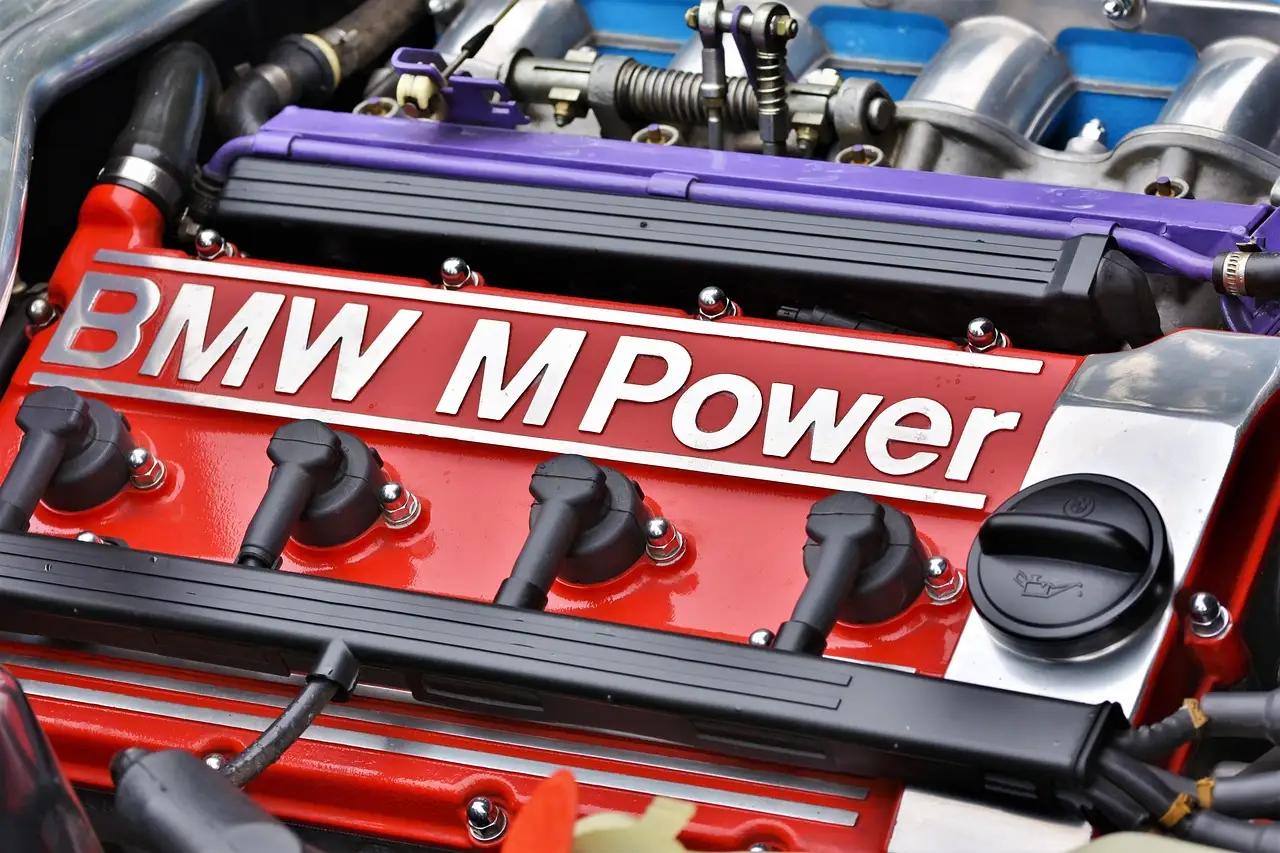
The engine block, also called the cylinder block, is usually the largest cast piece in the engine. Common engine-block materials named include cast iron, aluminum, and steel. The cylinder head sits on top of the block and contains valves and combustion-related passages, often paired with a head gasket. (Howacarworks)
Pistons move up and down in the cylinders. They convert combustion force into motion and work with piston rings and connecting rods. The crankshaft turns that piston movement into rotational energy, then connects to the drivetrain via the flywheel.
Even with a cover in place, you can still infer these parts from the shape of the engine mass below, the location of the oil cap, and the way intake, coolant, and belt components attach to it.
How covers can hide the core parts
Many newer cars often have a molded plastic engine cover that hides most of the top of the engine. That cover can hide the cylinder head and the upper intake area, but it does not hide the battery, radiator, reservoirs, or the serpentine belt path.
A cover should change your method, not your target. Use nearby parts as landmarks. The oil filler cap may sit in the cover, the dipstick may be off to one side, and hoses or wiring may exit at the edges.
What to notice when the engine is transverse
In a transverse layout, the engine sits across the car instead of front to back. That usually pushes the accessory drive, battery, and reservoirs toward one side of the bay, so the layout looks less symmetrical. A front-facing scan still works, but side-to-side clues matter more.
Do not assume the alternator, belt, or dipstick will be in the same corner on every car. The manual and labels are the final check when the layout is crowded or sideways.
Which parts should you spot first?
Start with the battery, radiator, alternator, serpentine belt, and the main fluid reservoirs. Those parts are usually the easiest to identify because their shape, location, and connections are visible from above. They also tell you where the engine sits and which systems are nearby.
Battery, radiator, alternator, and serpentine belt
The battery is often easy to spot because it is a rectangular box. The terminals are identified as red for positive and black for negative. The alternator produces electrical power that recharges the battery, and it is usually belt-driven and visible near the front or side of the engine bay.
Many modern cars use a single serpentine belt. That belt wraps around pulleys and drives accessories. If you can follow that belt, you can often find the alternator, tensioner, and sometimes the AC compressor.
The radiator is a heat exchanger used for cooling and regulating engine temperature. It usually sits upright behind the front grille of the car. Its flat face and finned core make it look different from hoses, tanks, and the engine itself.
Fluid reservoirs and service points
The coolant reservoir is often a translucent plastic tank used to monitor coolant level. The oil dipstick and oil filler cap are used to check and add engine oil. The dipstick should sit between the min and max marks.
Use cap icons and molded labels before touching anything. An oil can symbol on the dipstick or filler cap points to engine oil. Washer-fluid caps often show a windshield spray symbol, which helps separate them from coolant tanks.
Suppose you open the hood on a sedan and see two translucent tanks near the right side. One has a windshield icon on the cap and one is marked for coolant. That small label matters more than the shape alone, because both tanks can look similar at a glance.
Follow the visual clues
Use position, shape, and color together. Then confirm by tracing hoses, wires, and belts. Labels on caps, molded text on plastic, and stickers on the underside of the hood often give the final answer when the part itself is partly hidden.
Use position, shape, and color
Location comes first. Front-mounted parts usually sit close to the grille and radiator support. Corner-mounted items often include the battery and reservoirs. Tall, finned, or pulley-driven parts usually sit near the accessory drive.
Shape helps next. A rectangular box points you toward the battery or fuse box. A flat, wide heat exchanger points to the radiator or condenser. A round pulley-driven unit near a belt often points to the alternator or AC compressor.
Trace hoses, wires, and belts
Hoses usually connect to cooling and vacuum systems. Wires and heavy cables point to electrical parts. Belts tell you which accessories are driven by the engine. If one part connects to a pressurized hose and another sits behind a belt, they do not belong to the same system.
Follow the serpentine belt from pulley to pulley. That route is often the fastest way to identify the alternator and separate it from other nearby components.
Read stickers, caps, and molded labels
Under-hood stickers can identify the emissions system, fluid types, or component locations. The owner’s manual often includes an engine-bay diagram. Service diagrams are useful when the bay is crowded or the cover hides the top of the engine.
Read what the car gives you before you guess. A molded coolant marking, an oil can icon, or an emissions label can settle a comparison faster than any memory trick.
How do you tell similar parts apart?
Lookalikes are common because many under-hood parts are rectangular, translucent, or belt-driven. The fix is to compare what each part connects to and where it sits. A battery, for example, is a box with terminals; a fuse box is also a box, but it is usually a covered electrical distribution panel with no heavy battery cables.
Battery vs fuse box
The battery has visible positive and negative posts or terminals, usually red and black. Thick cables leave the battery and run to the starter, chassis ground, or power distribution. A fuse box is a covered electrical box with small fuses and relays inside, not big battery posts.
Radiator vs condenser
The radiator is part of the cooling system and usually sits upright behind the front grille. The condenser also sits at the front, but it belongs to the air-conditioning system and is often positioned ahead of, or very close to, the radiator. Both are flat heat exchangers, so follow the hoses and lines.
Alternator vs AC compressor
The alternator makes electrical power and recharges the battery. The AC compressor belongs to the air-conditioning system and connects to refrigerant lines rather than charging cables. Both can be belt-driven, but the alternator usually has a vented housing and a visible electrical connector.
Coolant reservoir vs washer fluid reservoir
The coolant reservoir is tied to radiator hoses and cooling-system plumbing. The washer fluid reservoir usually has a filler neck or cap marked with a windshield spray symbol and feeds washer hoses, not coolant hoses. If the tank is translucent, the label and hose size usually settle the ID.
Engine components ID checklist
Use this checklist when you want a quick, model-agnostic scan. It focuses on common parts, where to look, and the clues that matter most. Keep it next to the hood opening order, not as a memorized parts list.
| Part name | Where to look | Visible shape/color cues | What it connects to | One common mistake to avoid |
|---|---|---|---|---|
| Engine block | Center of the engine assembly, under or behind a cover | Large metal core; often partly hidden | Cylinder head, oil passages, coolant passages | Confusing the cover for the block |
| Cylinder head | Top of the engine block | Upper engine casting; may be hidden by plastic | Valves, intake, exhaust, head gasket | Calling the valve cover the head |
| Pistons | Inside the cylinders, not usually visible | Not directly seen; inferred from engine layout | Connecting rods, crankshaft | Expecting to see them from above |
| Crankshaft | Inside the block, low in the engine | Not directly seen; tied to rotating motion | Flywheel, pistons, drivetrain | Looking for it as an exposed part |
| Alternator | Front or side of engine, near the belt path | Rounded metal housing with openings or vents | Serpentine belt, electrical wiring, battery | Mixing it up with the AC compressor |
| Battery | Corner of the engine bay, often near a fender | Rectangular black or gray box; red and black posts | Starter, grounds, electrical system | Confusing it with the fuse box |
| Radiator | Front of bay, behind grille | Wide flat heat exchanger with fins | Upper and lower coolant hoses | Calling the condenser the radiator |
| Coolant reservoir | Near radiator or fender area | Translucent plastic tank with fluid marks | Cooling system hoses | Filling the washer tank by mistake |
| Oil dipstick | Near the engine block, often with a pull handle | Small handle or loop, often yellow or orange | Engine oil sump | Reading it without following the min and max marks |
| Oil filler cap | Top of engine or valve cover area | Round cap, often marked with an oil can icon | Engine oil fill opening | Removing the dipstick instead of the cap |
| Serpentine belt | Front or side of engine, around pulleys | Single black belt on many newer cars | Alternator, idlers, tensioner, other accessories | Thinking every black belt is a separate belt |
| AC compressor | Low on the front side of the engine | Belt-driven unit with refrigerant lines attached | Air-conditioning system | Identifying it as the alternator |
| Lookalike pair | Fast visual split | Best confirming clue |
|---|---|---|
| Battery vs fuse box | Battery has posts and heavy cables; fuse box has a cover and small fuses | Terminal size and cable thickness |
| Radiator vs condenser | Both are front heat exchangers; radiator is tied to engine coolant, condenser to AC | Hoses versus refrigerant lines |
| Alternator vs AC compressor | Both may be belt-driven; alternator has electrical output, compressor has refrigerant plumbing | Electrical connector versus AC lines |
| Coolant reservoir vs washer fluid reservoir | Both can be translucent tanks; coolant tank ties to radiator hoses, washer tank feeds spray nozzles | Cap icon and hose size |
Quick scan order for beginners
- Find the battery corner.
- Find the radiator at the front.
- Trace the serpentine belt.
- Locate the alternator on that belt path.
- Identify fluid reservoirs by cap icon and hose connection.
- Only then move to the engine block and cylinder head area.
What if the engine is covered or the car is a hybrid?
Plastic engine covers, turbocharged layouts, and hybrid systems can hide familiar parts, but the same method still works. Look at where the belts, hoses, electrical cables, and caps emerge. Then use the manual and under-hood labels to confirm anything unclear.
Plastic engine covers
If a cover hides the engine top, use the visible edges of the cover, the oil cap, and the dipstick handle as anchor points. Do not pry off covers unless the owner’s manual says they are meant to come off. Many are held in place by simple clips or grommets.
Turbocharged layouts
Turbocharged cars may add extra piping, heat shielding, and compact packaging near the back or side of the engine. That can crowd the alternator, belt, and coolant parts. Follow the charge pipes and intake hoses carefully; they often point to the turbo area, not the engine block itself.
Hybrid under-hood differences
Hybrids can place high-voltage cables, extra electronics, and different accessory layouts under the hood. The battery may still be there, but it may not be the only battery in the vehicle. Look for orange high-voltage cables and read the warning labels before touching anything unusual.
When to check the owner’s manual and emissions label
If the bay looks crowded, start with the owner’s manual, the emissions sticker, and any molded under-hood labels. Those sources often identify the engine family, fluid specifications, and emission-control parts. For a Honda or any other make, manual and label checks matter more than guessing by brand alone.
Frequently asked questions
What is the hood of the car?
The hood is the panel that opens to the engine bay. It gives access to the engine, battery, radiator, reservoirs, and other service parts. The hood itself is not the engine area; it is the cover that opens so you can inspect the bay safely.
How do I tell the battery from the alternator?
The battery is a rectangular box with positive and negative posts, usually red and black. The alternator is a belt-driven unit near the front or side of the engine bay and produces electrical power that recharges the battery. Look for heavy cables on the battery and a pulley on the alternator.
What fluids should I check under the hood?
Start with engine oil and coolant, since those are the main fluids beginners are expected to recognize. Use the dipstick marks for oil and the reservoir marks for coolant level. Do not open hot or pressurized cooling parts, and use the labels on the caps before adding anything.
What parts under the hood are most important to know first?
Know the battery, radiator, coolant reservoir, oil dipstick, oil filler cap, alternator, and serpentine belt first. Those parts are common, visible, and tied to starting, charging, cooling, and oil checks. Once you can find those, the engine block and cylinder head become easier to place.
Is there anything online that shows everything basically under the hood?
Yes, but the best online reference is usually a model-specific engine-bay diagram from the owner’s manual or service information, not a generic parts poster. Use it as a map, then verify by location, shape, and labels. That keeps you from confusing similar parts that look alike across different cars.
Products related to this article
Sponsored / affiliate links. As an Amazon Associate I earn from qualifying purchases. I may earn additional commission from eligible campaigns.