What Are the Main Engine Parts in a Car?
A car engine’s core parts are commonly grouped into three categories: structure, motion, and airflow. The block, head, pistons, crankshaft, camshaft, valves, intake, exhaust, and timing system do most of the work. If you mix them up, diagnosis goes sideways fast, repairs cost more, and warning signs get missed. This guide names the main parts and shows where each one sits under the hood.
What is a car engine?
A car engine turns fuel energy into mechanical work. In a gasoline or diesel engine, combustion pushes parts through a stroke, then the crankshaft turns that motion into rotation the drivetrain can use. The basic parts make more sense when you sort the engine into structure, motion, and airflow.
The engine block is the main framework. It holds the cylinders and supports the lower moving parts, and it often includes cooling and oil passages that help the assembly under load. That is why the block is the first place to check when you want the main engine parts, not the accessories mounted around it.
Main parts map
This table separates the core parts from supporting hardware. The last column tells you what you can usually spot from above without removing covers, so you can match names to shapes under the hood.
| Part group | Essential parts | Under-hood clue and visibility |
|---|---|---|
| Structure | cylinder block, cylinder head, crankcase, oil pan / sump | The block is the heavy center casting; the head sits on top; the oil pan is the lower cover. Block: usually partly visible. Head: often partly visible. Crankcase: not clearly visible. Oil pan: usually not visible from above. |
| Motion | pistons, piston rings, connecting rods, crankshaft, flywheel | These parts sit inside the engine. You do not see the pistons, rings, rods, or crankshaft without teardown. The flywheel sits at the rear of the engine and is usually hidden by the transmission housing. Visible without covers: no. |
| Airflow and valve train | camshaft, engine valves, intake manifold, exhaust manifold, timing belt / chain / gears | The manifolds bolt to the head and are often the easiest airflow parts to spot. The camshaft and valves are inside the head on most engines. Timing parts are visible only if a cover is removed. Manifolds: often visible. Camshaft and valves: no. Timing system: usually no. |
Which parts are inside the engine block?
The engine block houses the cylinders and cooling passages, and it also carries lubrication oil through drilled passages. Inside the block, you have the pistons moving in the cylinders, the crankshaft riding in main bearings, and the lower support area known as the crankcase. The oil pan bolts underneath as the oil reservoir.
Cylinder block, crankcase, and sump
The cylinder block is the main engine body and is often cast iron or aluminum alloy. It holds the cylinders and can include passages for cooling water and oil. The crankcase supports the crankshaft main journals and bearings, keeping them aligned under load. The oil pan, or sump, stores lubricating oil and has a drain plug for oil replacement.
Picture a front-wheel-drive four-cylinder engine with a plastic cover on top. You may see the upper block and the head, but the crankcase and sump sit lower, tucked behind splash shields and steering parts. That is normal. The lower assembly is there, but it is not meant to be seen at a glance.
What does the cylinder head do in a car engine?
The cylinder head closes the top of the block, and it often forms the combustion chamber above each cylinder and carries the parts that control intake and exhaust flow. It mounts to the block with a gasket, and the head itself contains valve guides, valve seats, and ports. In plain terms, it is the engine’s upper breathing section.
Valves, ports, and sealing
Engine valves live in the cylinder head. Intake valves let air or air-fuel charge enter the cylinder, and exhaust valves let burned gases leave. On many engines, cam followers, rocker arms, or pushrods help the camshaft open and close those valves at the right time. The gasket between head and block has a hard job: it must seal combustion pressure, oil, and coolant passages.
Suppose you see coolant bubbling in the reservoir and white smoke from the tailpipe after a long drive. That pattern can point to a head-gasket problem because the head must keep the combustion chamber sealed from the cooling system. The head is not just a lid; it is a sealed working chamber.
How do the rotating parts work together?
The motion group turns combustion force into crankshaft rotation. The piston moves inside the cylinder, the connecting rod links the piston to the crankshaft, and the crankshaft turns that up-and-down motion into usable rotary output. The flywheel smooths the rotation and stores rotational inertia at the rear of the engine.
Pistons, rings, rods, and crankshaft
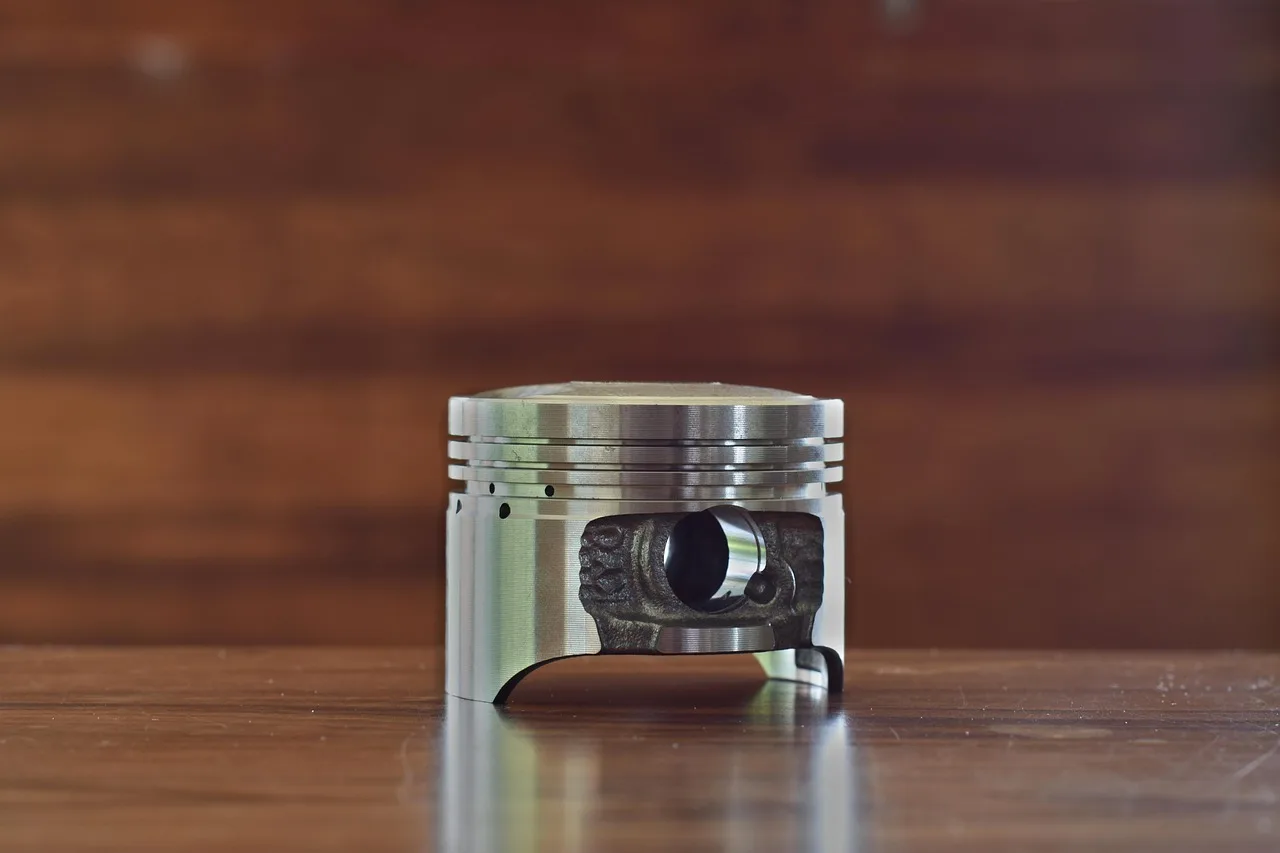
The piston moves up and down inside the cylinder. It takes combustion force and passes it to the connecting rod, and the rod sends that force to the crankshaft. The piston rings seal combustion gases, control oil consumption, and help move heat from the piston to the cylinder wall. The crankshaft then rides in main bearings and drives the flywheel and accessories.
What do piston rings, crankshaft, and camshaft do? The rings seal the cylinder and help manage oil. The crankshaft turns reciprocating motion into rotation. The camshaft opens and closes valves in time with the crank. Those three parts do different jobs, but they must stay synchronized for the engine to run cleanly.
Flywheel and smooth rotation
The flywheel is bolted to the rear of the crankshaft. It smooths the crankshaft’s rotation between power strokes and connects to the clutch or transmission. Without it, the engine would feel rougher at idle and harder to keep turning between combustion events.
How do valves and airflow parts work?
The airflow group controls how air enters and exhaust leaves the engine. The camshaft times the valves, the manifolds route gases to and from the cylinder head, and the timing system keeps the camshaft and crankshaft in step. That coordination is what lets the engine breathe at the right moment.
Camshaft timing and valve control
The camshaft is listed as a major engine part because it opens and closes the valves at the right time. It is timed to the crankshaft through a timing belt, timing chain, or timing gears. If that timing is off, valve opening no longer matches piston position, and the engine may misfire or refuse to start.
Intake and exhaust manifolds
The intake manifold routes air, or air-fuel mixture on some engines, into the head. The exhaust manifold collects exhaust gases from the cylinders and sends them toward the exhaust system. Both manifolds bolt to the cylinder head, which makes them some of the easiest airflow parts to identify from above.
What are the main parts of a car engine? For most beginners, the practical answer is block, head, pistons, rings, rods, crankshaft, camshaft, valves, manifolds, oil pan, flywheel, and timing system. The water pump belongs in the support group because it circulates coolant through the engine and radiator circuit.
How can I tell engine parts apart under the hood?
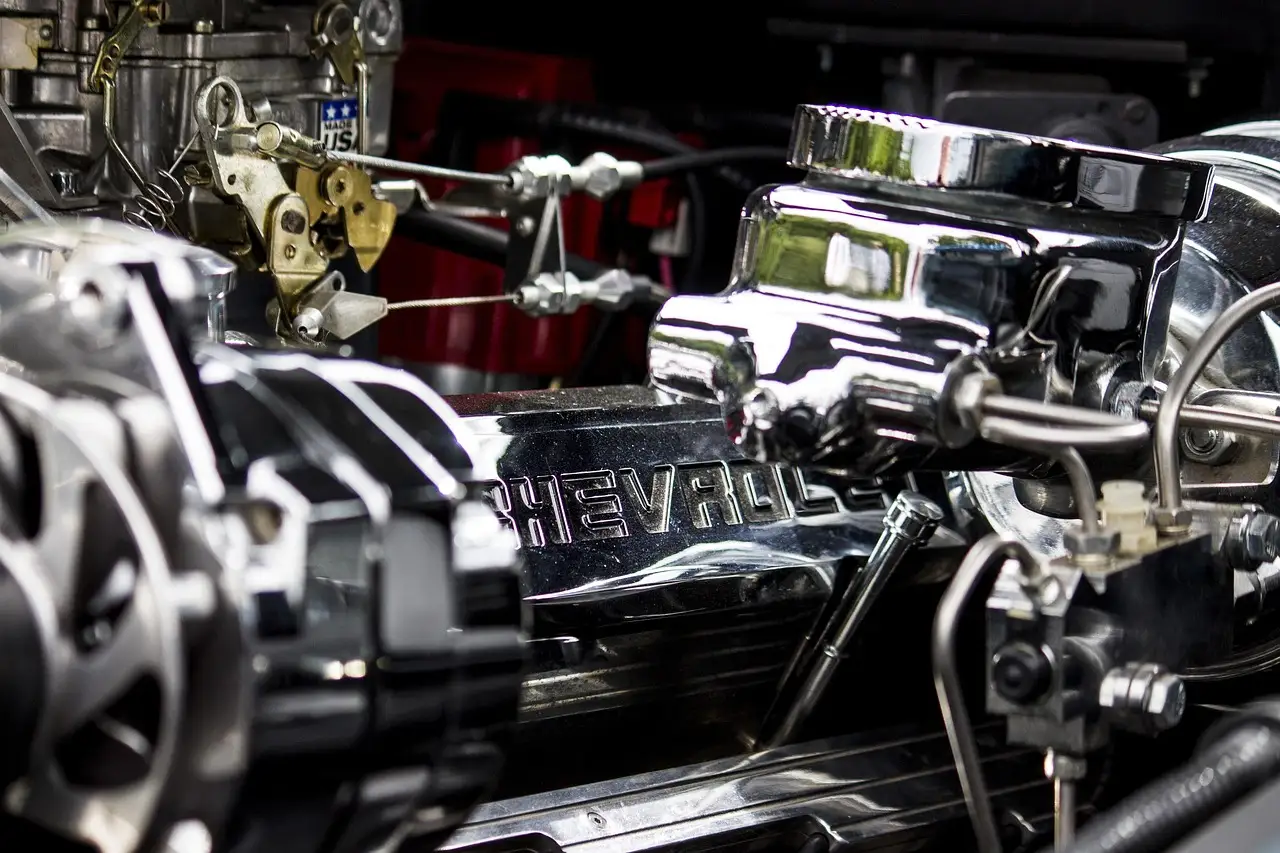
Start with size, location, and what each part connects to. The block is the large lower casting. The head sits on top of it. Manifolds bolt to the side of the head. The oil pan hangs underneath. Timing covers sit at the front of the engine, near the accessory belts.
- Find the tallest metal section in the middle. That is usually the cylinder head on top of the block.
- Look for the side bolted to the head with tubes or passages attached. That is likely the intake or exhaust manifold.
- Trace the front cover area. Timing belt or chain hardware sits there on many engines.
- Check the lowest metal pan. That is the oil pan or sump.
- Use the rear housing area to locate the flywheel side of the engine.
What engine parts are most important for basic operation? The block, head, pistons, rings, rods, crankshaft, camshaft, valves, and timing system are the pieces that make the engine produce power. Accessories matter, but if one of those core parts fails, the engine usually cannot run properly.
What are the major parts of a car engine? A good beginner answer keeps the list short and grouped: structure, motion, and airflow. That is easier to learn than a random inventory, and it matches the way the parts work together under the hood.
What are the parts in a car engine?
The main parts in a car engine typically include the cylinder block, cylinder head, crankcase, oil pan, pistons, piston rings, connecting rods, crankshaft, camshaft, engine valves, manifolds, flywheel, timing system, and water pump. Those are the parts most owners should know first because they explain how the engine holds together, moves, and breathes.
Frequently asked questions
What are the main parts of car engine?
The main parts are the block, head, pistons, rings, rods, crankshaft, camshaft, valves, manifolds, flywheel, oil pan, and timing system. If you want the shortest practical list, start with those. They explain the engine’s structure, motion, and airflow without dragging you into every bracket, sensor, or hose.
Which engine parts are inside the engine block?
Inside the engine block are the cylinders, pistons, connecting rods, crankshaft, and crankcase support area. The block also carries cooling and oil passages. You cannot see most of those parts from the outside because they are enclosed by the head, block casting, and lower oil pan assembly.
What do piston rings, crankshaft, and camshaft do?
Piston rings seal the cylinder, help control oil use, and move heat from the piston to the cylinder wall. The crankshaft turns piston motion into rotation. The camshaft opens and closes the valves in step with the crankshaft so air enters and exhaust leaves at the right time.
What are the major parts of a car engine?
The major parts are the same core groups: structure, motion, and airflow. That means the block and head, the pistons and crankshaft, and the camshaft with valves and manifolds. The water pump and timing system support those groups, but they do not replace them as the main engine parts.
Products related to this article
Sponsored / affiliate links. As an Amazon Associate I earn from qualifying purchases. I may earn additional commission from eligible campaigns.