What Is the Engine Block Made of and Why It Matters?
An engine block is usually cast iron or aluminum alloy, sometimes with iron liners or pressed-in sleeves; cast iron favors stiffness and bore wear resistance, while aluminum cuts weight and moves heat faster. Choose the wrong one, and you can face overheating, cracked bores, machining damage, or a rebuild bill that tops the car’s value. This guide explains what each material changes, how failure modes differ, and how to judge durability, repairability, and buying risk.
What the engine block does
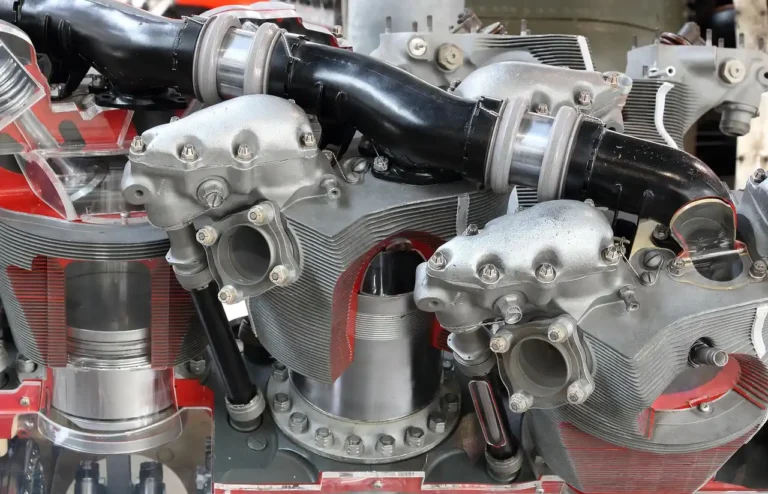
The engine block is the engine’s main structural casting. It holds the cylinders, supports the crankshaft through the main bearings, forms the crankcase, and provides the deck surface where the cylinder head seals. It also carries many coolant and oil passages, so its material and layout affect strength, temperature control, and service life.
Main structural casting and mounting points
The block does more than hold parts in place. It keeps the crankshaft aligned under combustion load, gives the head a flat sealing surface, and provides attachment points for accessories, the transmission interface, and sometimes motor mounts. If the casting flexes too much, sealing and bearing life suffer.
Cylinders, crankcase, and bearing support
The cylinder bores are the surfaces the pistons move in. Below them, the crankcase houses the rotating assembly and oil control passages. The main bearings sit in the lower block and cap assembly, so machining accuracy matters. Poor alignment here can shorten bearing life fast.
Deck surface and accessory interfaces
The deck surface must stay flat enough for the head gasket to seal combustion pressure, coolant, and oil. Overheating can warp that surface. On many engines, the block also carries coolant outlets, sensor bosses, and accessory brackets, which means cracking or corrosion can affect more than one system at once.
What is the engine block made of?
Most engine blocks are made from cast iron or an aluminum alloy. Cast iron stays common in engines that need high cylinder pressure support, long bore life, and stable dimensions under load. Aluminum alloy blocks are common where weight reduction and heat transfer matter more. Many aluminum blocks still use iron liners, coated bores, or other wear surfaces to handle piston and ring contact.
Cast iron: strength, wear resistance, and mass
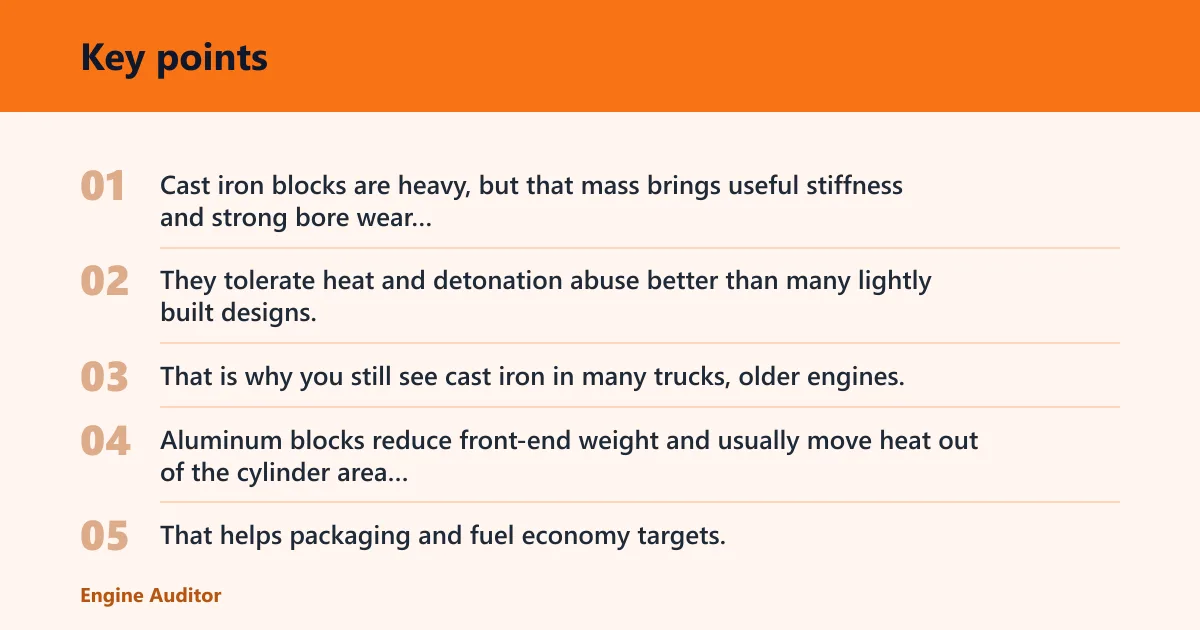
Cast iron blocks are heavy, but that mass brings useful stiffness and strong bore wear resistance. They tolerate heat and detonation abuse better than many lightly built designs, and they often stay dimensionally stable under load. That is why you still see cast iron in many trucks, older engines, and high-torque applications.
Aluminum alloy: lower weight and heat transfer
Aluminum blocks reduce front-end weight and usually move heat out of the cylinder area faster than cast iron. That helps packaging and fuel economy targets. The tradeoff is lower material hardness and more dependence on bore design, liner choice, and cooling control. A well-designed aluminum block can be durable; it just asks more from the rest of the engine.
Why many aluminum blocks still use liners
Aluminum bore surfaces wear faster than iron unless the design adds protection. Many blocks commonly use cast-in iron liners, pressed sleeves, or plated bores to provide the rings with a harder running surface. Without that protection, scoring, taper wear, and re-boring limits become more serious during a rebuild.
Why does block material matter?
Block material changes more than curb weight. It changes warm-up behavior, heat rejection under load, how much machining the block can accept, and whether a cracked or worn core can be repaired at a reasonable cost. That is why the same engine family can fit one job and fail the value test in another.
Weight and vehicle balance
Aluminum usually saves dozens of pounds over cast iron, though exact savings depend on the engine family and accessories. Less mass over the front axle can help handling and nose weight. Cast iron adds weight, but that extra mass can help durability in hard use if the rest of the package is designed around it.
Heat control and operating temperature
Aluminum moves heat faster, which can help stabilize temperatures during normal driving. Cast iron tends to hold heat longer, which can help some load conditions but can also work against you if cooling is marginal. A blocked coolant passage, corroded jacket, or cracked water jacket can turn either material into an overheating problem.
Machining, rebuild cost, and long-term durability
Rebuild cost rises when bores are worn beyond spec, the deck is warped, or main bore alignment is off. Cast iron is often easier to re-bore, while aluminum may need sleeving sooner. If a crack reaches a coolant passage, combustion chamber, or main web, repair may cost more than a replacement core.
How are engine blocks built and machined?
Engine blocks are usually cast with internal core passages that form the coolant jackets, oil galleries, and cylinder openings. After casting, the block is machined to final size: bores are finished, the deck is flattened, and the main bearing saddles are cut to precise alignment. The raw casting is only the starting point.
Casting and core passages
Foundries use sand cores to create internal cavities. Those cavities become the coolant passages and other internal routes once the casting cools and the cores are removed. If the core shift is off, wall thickness can vary, which matters for bore stability and crack risk around thin sections.
Cylinder bores, liners, and final machining
The cylinder bores may be cast in place, bored oversize, or finished around sleeves. A worn bore can sometimes be re-bored to an oversize piston if enough wall thickness remains. If not, sleeving becomes the repair path. Scoring from debris, oil failure, or overheating can force that decision sooner.
Main bearings and deck flatness
Main bearing bores are line-bored or line-honed so the crankshaft sits in a straight centerline. That precision is critical. If overheating distorts the block, the deck can warp and the main bores can lose alignment, which leads to gasket failure, bearing wear, or both.
Open-deck, closed-deck, and semi-closed-deck blocks
Block architecture changes how coolant moves around the cylinders and how much support the cylinders get. Open-deck blocks allow more coolant flow around the top of the bores. Closed-deck blocks give the cylinder area more support. Semi-closed-deck designs sit between those two and are common in engines that need a balance of cooling and rigidity.
Cooling flow versus rigidity
An open deck usually cools better because coolant can reach more of the cylinder wall. A closed deck adds material around the bores, which resists distortion and can help with high cylinder pressure. The tradeoff is straightforward: more support usually means less room for coolant flow.
Why architecture matters more than material alone
A cast iron open-deck block is not automatically stronger than an aluminum closed-deck block in every use case. Wall thickness, webbing, bore spacing, and coolant path design matter too. For boosted or high-rpm engines, architecture can matter as much as the base material.
Picture a 2.0-liter turbo sedan with an aluminum open-deck block and cast-in liners. If boost and detonation stay under control, it can last a long time. If cooling is weak and cylinder pressure spikes, the same block may show bore movement or head-gasket trouble long before the chassis wears out.
Engine block materials and use cases
Choose the block by job, not by brand loyalty. Daily drivers usually benefit from lower weight and tighter thermal control. Towing and heavy loads push toward stiffness and repair tolerance. Turbo and track use place extra stress on decks, bores, and coolant control. A used engine matters most when you need a rebuildable core.
Daily driver
For a normal commuter, aluminum often makes sense because it saves weight and helps temperature control. The best choice is usually the one with an intact cooling system, good bore condition, and a block design with known repair parts. A worn but clean cast iron block can still be the smarter buy if rebuild parts are cheaper.
Towing and heavy load use
Towing favors a block that tolerates heat, load, and long periods of stress. Cast iron often earns a nod here because it resists wear well and stays stable under heavy cylinder pressure. That said, a well-designed aluminum truck block can do the job if cooling, deck support, and maintenance are right.
Turbo and track builds
Turbo engines raise cylinder pressure, so bore support, deck design, and head-gasket sealing become more important. Closed-deck or semi-closed-deck blocks are common in higher-output applications. For track use, the repair plan matters as much as the material because repeated heat cycles can create warp, cracks, or bore distortion.
Used engine buying and rebuildable cores
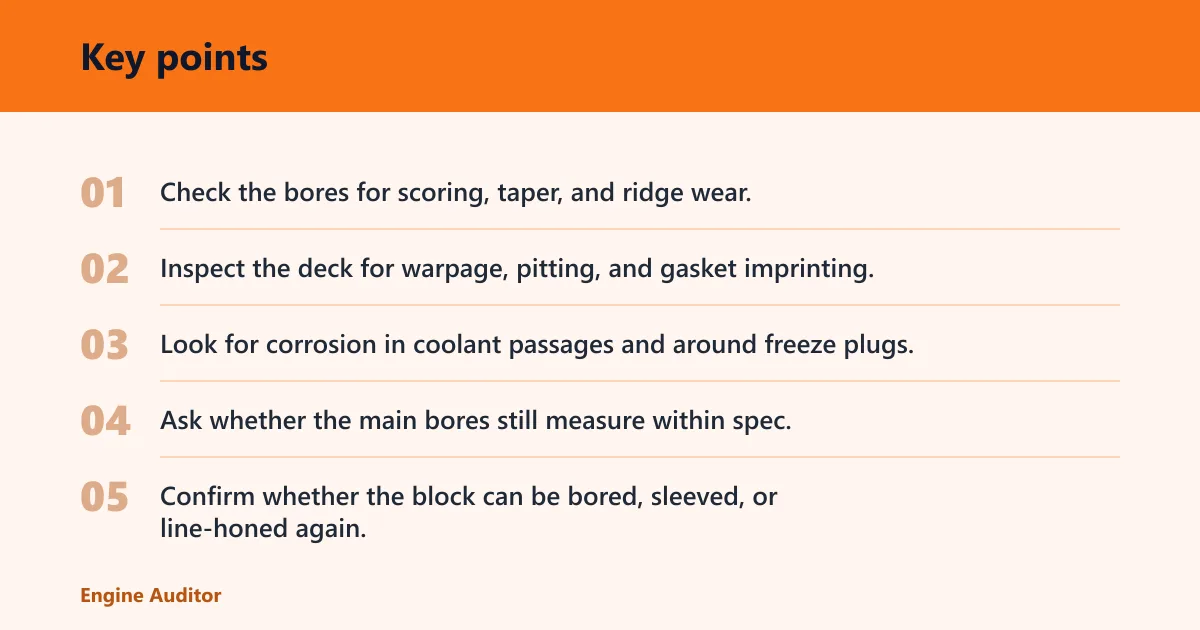
When buying a used engine, inspect the block as a core, not just a running assembly. Check for cracks near freeze plugs, between cylinders, around the deck, and at the main webs. A bargain block with thin bores, damage near a coolant passage, or a warped deck can become the most expensive option on the list.
- Check the bores for scoring, taper, and ridge wear.
- Inspect the deck for warpage, pitting, and gasket imprinting.
- Look for corrosion in coolant passages and around freeze plugs.
- Ask whether the main bores still measure within spec.
- Confirm whether the block can be bored, sleeved, or line-honed again.
Engine block materials and use cases decision table
| Use case | Typical block material / architecture | Weight | Heat handling | Strength | Typical repair path | Buyer red flags |
|---|---|---|---|---|---|---|
| Daily driver | Aluminum, often semi-closed deck with liners | Lightest of the two | Fast heat shedding, but depends on coolant health | Good for normal loads | Hone, re-bore if material allows, replace liners if worn | Overheating history, coolant corrosion, deck warp |
| Towing | Cast iron or heavily reinforced aluminum | Heavier | Slower to shed heat, but stable if cooling is sound | High rigidity and wear resistance | Standard bore work, line-hone, gasket surface machining | Cracks near exhaust-side decks, coolant leaks, main bore damage |
| Turbo build | Closed-deck or semi-closed-deck, often aluminum with liners | Moderate | Good if coolant flow is not restricted | Better cylinder support under boost | Sleeving, deck resurfacing, line-boring if needed | Thin bores, prior detonation, lifted head gasket, cracked webbing |
| Track car | Reinforced aluminum or cast iron, architecture matters most | Depends on platform | Needs strong cooling and stable oil control | High if the block was designed for abuse | Frequent inspection, surface machining, possible sleeves | Repeated overheating, deck pitting, bore scoring, cap walk |
| Rebuildable used engine | Either material, but inspect architecture and wear first | Not the key issue | History matters more than material label | Depends on crack location and bore thickness | Bore measurement, crack test, sleeve or replace core | Cracks into coolant passages, warped deck, unrepairable main bores |
Frequently asked questions
What material are engine blocks made from?
The two main materials are cast iron and aluminum alloy. Some blocks combine materials by using aluminum for the main casting and iron for the cylinder surface through liners or sleeves. The right choice depends on load, cooling, rebuild plans, and the engine’s intended use.
What does an engine block do in a car?
The block is the engine’s core structure. It houses the cylinders, supports the crankshaft through the main bearings, forms the crankcase, and provides the deck surface for the head gasket. It also contains coolant and oil passages that affect temperature control and durability.
What is true about the engine block?
What is true about the engine block is that material and architecture matter as much as displacement or horsepower. A block with good bore support, sound coolant passages, and a flat deck can survive hard use. Damage in those areas can make repair expensive or impossible.
How is an engine block made?
How its made engine block starts with a casting that uses internal cores to form coolant passages and other cavities. After cooling, the block is machined: bores are finished, main saddles are aligned, and the deck is cut flat. Final precision machining determines whether it can seal and survive load.
Can an engine block be repaired if it cracks?
Sometimes, yes. Repair depends on where the crack is, how deep it runs, and whether it reaches a coolant passage, cylinder bore, or main web. Small cracks may be repaired with welding or stitching, while major structural cracks or warped main bores often make replacement the better choice.
Is an aluminum engine block better than cast iron?
Neither is always better. Aluminum is usually better for weight reduction and faster heat transfer. Cast iron is usually better for bore wear resistance and high-load stability. The right answer depends on how the engine will be used, how much repair work it may need, and what the core is worth.
Products related to this article
Sponsored / affiliate links. As an Amazon Associate I earn from qualifying purchases. I may earn additional commission from eligible campaigns.