Car Piston Rings Explained: Common Failure Signs
Piston rings seal combustion gases, control oil on the cylinder wall, and move heat out of the piston; worn rings usually bring blue smoke, rising oil use, blow-by, and compression that improves by more than 10% on a wet test. Miss this diagnosis and you can spend money on a head gasket, valve job, or teardown that does not fix the fault. This guide explains what piston rings do, the common failure signs, and the low-cost checks that separate ring wear from lookalike faults.
What piston rings do in a car engine


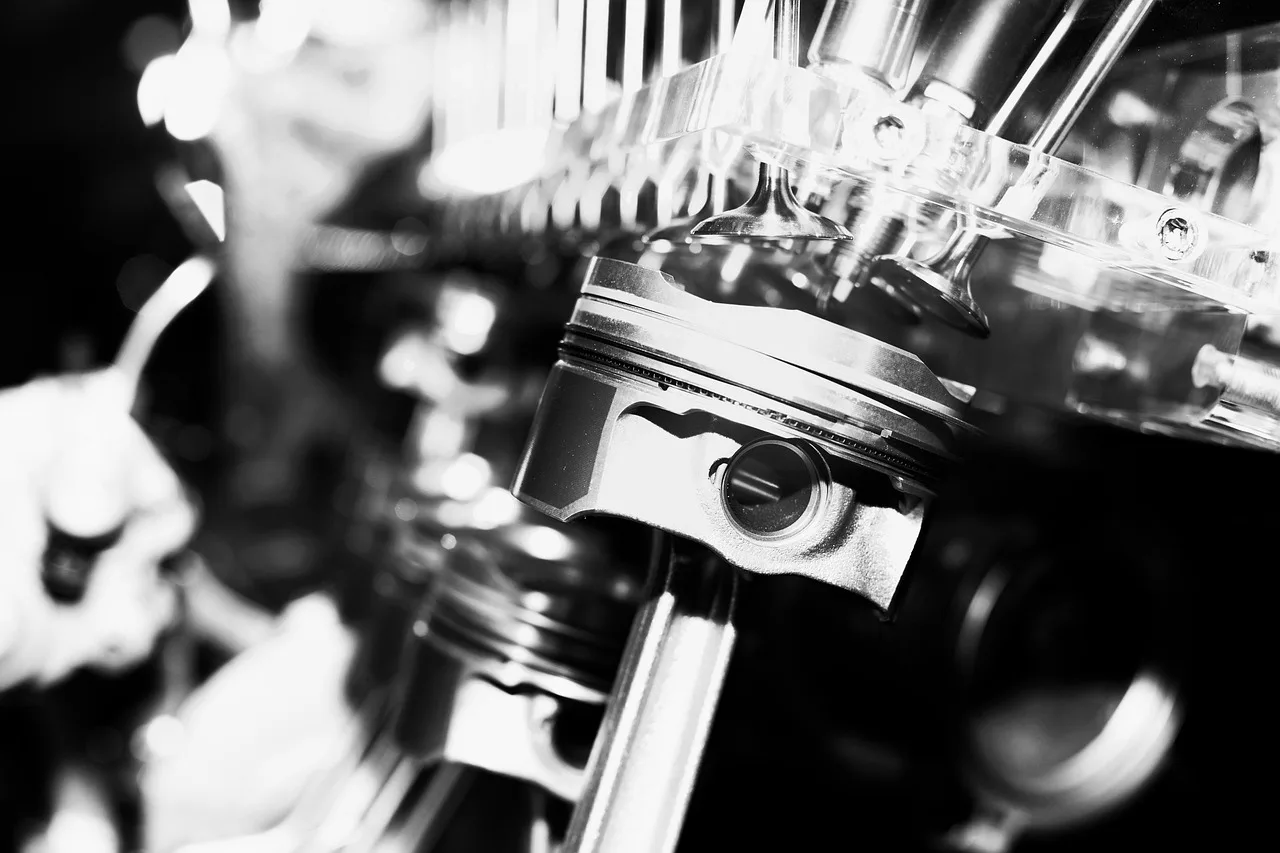
Piston rings do three jobs. They seal combustion pressure above the piston, control the oil film on the cylinder wall, and move heat from the piston into the cylinder wall. A typical piston uses three rings: two compression rings and one oil control ring.
The top compression ring handles most of the sealing load. The second ring helps with sealing and scrapes oil. The oil control ring meters oil so the cylinder wall keeps a thin film, not a heavy puddle that gets burned.
When a ring pack wears or sticks, the engine can lose sealing, burn oil, or build blow-by. Wear patterns include scuffing, loss of tension, sticking in the groove, cylinder wall scoring, glazing, and bore wear.
Common failure signs
The strongest clues are blue exhaust smoke, oil use, blow-by, low or uneven compression, and oil-fouled spark plugs. The pattern matters more than the symptom alone. Smoke that appears at startup points differently than smoke under hard acceleration or after long deceleration.
Blue smoke from ring trouble often shows up under load or after a long pull, when cylinder pressure is high and the oil film is stressed. By contrast, valve stem seal problems often smoke more after a cold start or after a long idle, then clear up.
Oil use is another clue, but you have to separate it from external leaks. A burned-quart complaint means little until you check for wet oil around the valve cover, oil pan, front cover, turbo oil lines if equipped, and the underbody.
Blow-by is combustion gas leaking past the rings into the crankcase. That can raise crankcase pressure, push oil vapor through the PCV system, and leave oily deposits in the intake or breather plumbing. Rough idle and a single oil-fouled spark plug can point to one damaged cylinder.
Piston ring symptom table
| Symptom | When it appears | Likely ring-related cause | Common false positive | Best low-cost test |
|---|---|---|---|---|
| Blue exhaust smoke | Hard acceleration, long uphill pull, or after a high-load shift | Oil control ring not wiping the cylinder wall clean; worn compression rings can add to the burn | Valve stem seals, overfilled oil, turbo seal leakage on turbocharged engines | Check oil level, inspect PCV hoses, then watch smoke during a wet and dry compression test |
| Blue smoke after startup | First start after sitting overnight | Oil leaking past stuck rings during soak, especially if the bore is glazed | Valve seals that leak while parked | Look at plug fouling and compare smoke timing after an overnight sit |
| Blue smoke on deceleration | Closed throttle downhill or long coast | Ring seal weak enough that high manifold vacuum pulls oil into the chamber | Valve stem seals | Leak-down test and plug comparison by cylinder |
| Oil consumption | Over 1,000 miles or 1,000 km of driving | Oil control ring wear, sticking, or cylinder wall glazing | External leak, PCV fault, overfilled crankcase | Check for fresh leaks, then measure top-up rate and inspect exhaust smoke |
| Blow-by | Idle, warm cruise, or after hard acceleration | Combustion gases escaping past worn rings | Restricted PCV valve or hose | Open the oil cap at idle and check for abnormal pressure, then inspect PCV function |
| Low compression in one cylinder | Cranking test, rough idle, misfire under load | Worn, stuck, or broken ring pack; scored bore on that cylinder | Burned valve, head gasket leak | Dry compression test, then wet test on the same cylinder |
| Oil-fouled spark plug | One cylinder misfires more than the others | Oil entering that chamber past rings | Valve seal leak, rich mixture, bad injector | Compare plug color and wetness across cylinders |
How do you tell rings from valve seals?
Use the smoke pattern first. Ring trouble usually shows up under load, during acceleration, or as steady oil use with blow-by. Valve seal leaks more often smoke after startup or after a long deceleration, because oil runs down the valve stem when vacuum is high and the engine is not under load.
A stuck PCV system can imitate both faults. If the PCV valve is restricted or a hose is collapsed, crankcase pressure rises and oil vapor gets pulled where it should not go. Overfilled oil can also be forced into the intake, especially on engines with an oily breather path.
Start with the cheap checks: verify the oil level, inspect the PCV valve and hoses, and look for external leaks. If those checks are clean and the smoke pattern still fits load-related oil burn, move to compression and leak-down testing before any teardown.
Say your 4-cylinder engine uses a quart every 800 miles and leaves blue haze during hard merging, but it does not smoke much at idle. That pattern fits ring or bore trouble better than valve seals. A valve-seal fault would usually leave a stronger puff after startup or after coasting downhill.
How do compression and leak-down tests help?
Compression and leak-down testing separate ring wear from valve and head gasket faults. A dry compression test checks how much pressure the cylinder builds while cranking. A wet test adds a small amount of oil to help seal the rings. If pressure rises by more than about 10% on the wet test, ring sealing is a stronger suspect.
Most gasoline engines should show fairly even readings cylinder to cylinder. A common rule of thumb is that compression readings should stay within about 10% to 15% across the engine. One cylinder far below the rest deserves more attention than a slightly low engine-wide result.
A leak-down test uses compressed air and shows where the pressure escapes. Air heard at the oil fill or breather points toward rings or the cylinder wall. Air at the throttle body or intake points toward an intake valve. Air at the tailpipe points toward an exhaust valve. Bubbling in the radiator points toward a head gasket or crack.
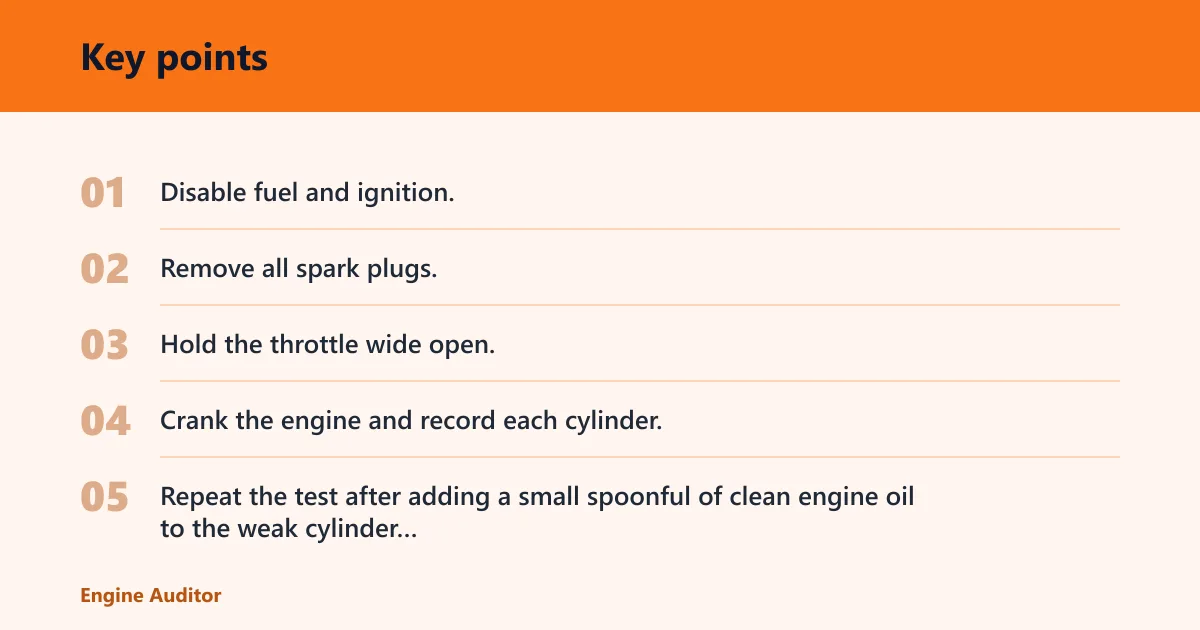
Compression test steps
- Disable fuel and ignition.
- Remove all spark plugs.
- Hold the throttle wide open.
- Crank the engine and record each cylinder.
- Repeat the test after adding a small spoonful of clean engine oil to the weak cylinder for a wet reading.
A dry test that shows one cylinder at about 125 psi while the others are near 170 psi needs more work. If the wet test lifts that weak cylinder to about 150 psi or more, the rings or bore sealing deserve close suspicion. If the number barely changes, valve sealing becomes more likely.
Leak-down clues
Leak-down testing is especially useful when compression is low but the cause is unclear. Rings tend to leak into the crankcase, so the oil filler neck, dipstick tube, or breather path often gives the clue. Valve faults leak through the intake or exhaust path, and a head gasket leak often shows up at the cooling system.
A single-cylinder misfire with a sooty plug and about 35% leak-down into the crankcase can point toward ring or bore damage. That cylinder likely has ring or bore damage, not a simple plug issue. If the same engine leaks mostly through the intake, the valve seal story gets weaker and intake valve sealing moves up the list.
What causes rings to fail early?
Heat, dirt, poor oil control, and bore damage shorten ring life. Scuffing from low oil level or overheated oil can damage the ring face and the cylinder wall. Glazing can leave the bore too smooth for the rings to seat. Bore wear and scoring can keep the rings from sealing even if the rings themselves are not broken.
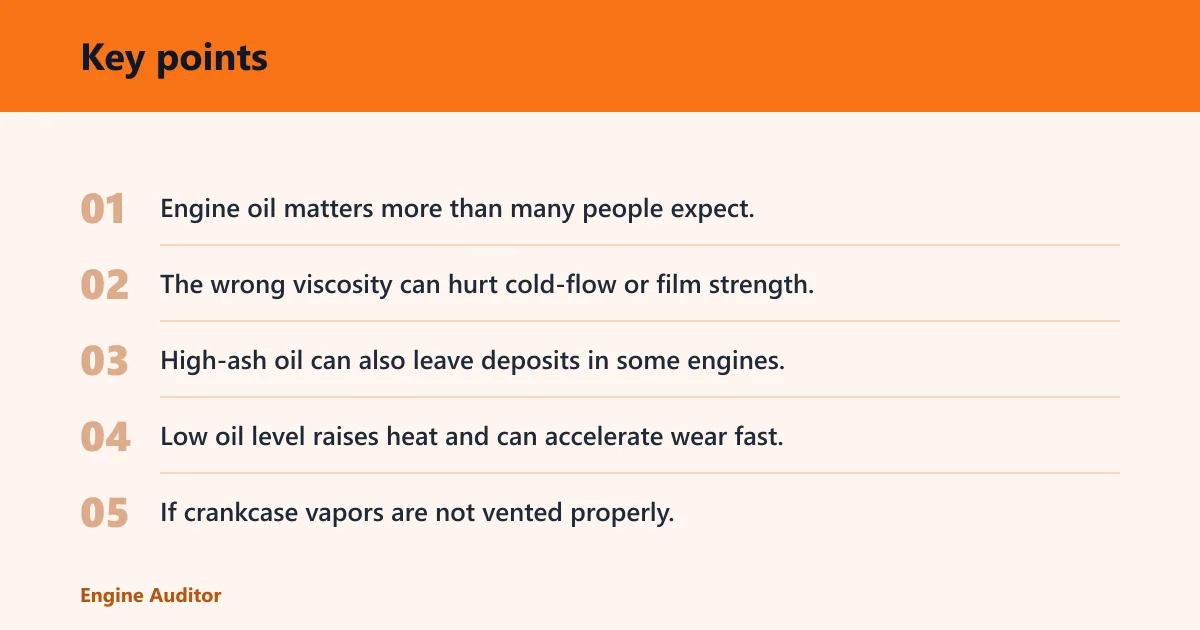
Engine oil matters more than many people expect. The wrong viscosity can hurt cold-flow or film strength, and neglected oil changes can leave deposits that stick the ring package in its grooves. High-ash oil can also leave deposits in some engines. Low oil level raises heat and can accelerate wear fast.
The PCV system matters too. If crankcase vapors are not vented properly, sludge and deposits can build around the ring lands and in the breather path. That can make rings stick long before they wear out.
Cleaning can help only when the rings are sticky, not when they are worn, broken, or running in a scored bore. A solvent cleanup may recover some sealing on a carboned-up engine, but it cannot restore lost ring tension or repair cylinder wall damage.
Can you drive with worn piston rings?
Sometimes, but only with caution. If the engine still runs smoothly, oil use is moderate, and compression is stable across cylinders, short-term driving to a repair facility may be reasonable. If the engine misfires badly, smokes heavily, or loses oil fast, stop driving and get it checked.
The warning signs that move from “monitor” to “stop” are strong crankcase pressure, a flashing check-engine light, severe misfire, knocking, or oil pressure loss. These signs can mean more than ring wear. They can also mean engine damage that will get worse quickly.
For a short-term decision, look for evidence instead of guesswork. A single weak cylinder with mild smoke may allow limited driving. Multiple weak cylinders, heavy blow-by, or oil-fouled plugs usually justify prompt diagnosis before the engine suffers more wear.
How much does it cost to replace piston rings?
Ring replacement is labor-heavy because the engine must be partly or fully disassembled. A partial rebuild that includes ring work, gaskets, and machine-shop cleaning or honing can often land in the low thousands of dollars. A full teardown or engine replacement can climb much higher, especially if cylinders are scored or the block needs machine work.
The labor is the main cost driver. Rings themselves are not expensive compared with the work needed to remove the engine, inspect the bores, measure wear, clean the pistons, and reassemble everything to spec. If the cylinders are damaged, new rings alone will not solve the problem.
That is why diagnosis matters before ordering parts. If leak-down and compression point to one damaged cylinder, the repair may be narrower. If the bores are glazed or worn across the engine, the job becomes more involved.
Frequently asked questions
What do piston rings do in a car engine?
Piston rings seal combustion pressure, control the oil film on the cylinder wall, and transfer heat from the piston into the cylinder wall. Most engines use three rings per piston. When the rings wear, stick, or lose tension, the engine can burn oil, lose compression, or build blow-by.
What are the common signs of bad piston rings?
The common signs are blue exhaust smoke, rising oil use, blow-by, rough idle, fouled spark plugs, and low or uneven compression. The timing matters. Smoke under acceleration or steady oil use points more toward rings than smoke only at startup, which often points toward valve seals.
Can bad piston rings cause blue smoke from the exhaust?
Yes. Worn or stuck rings can let engine oil enter the combustion chamber, especially under load or during high vacuum conditions. Blue smoke that appears during hard acceleration or after a long coast is a stronger ring clue than a brief puff right after startup.
How is ring wear diagnosed with a compression test?
Use a dry compression test first, then repeat the weak cylinder with a wet test. If the reading rises by more than 10% on the wet test, ring sealing becomes more likely. Compare all cylinders too. One low cylinder matters more than a slightly low engine-wide average.
Can piston rings be cleaned instead of replaced?
Sometimes, but only if the problem is sticking from carbon or varnish. Cleaning may help a stuck ring pack regain some movement. It will not fix worn rings, broken rings, scored cylinder walls, or a bore that has gone out of shape. Those problems need repair, not cleaning.
Will bad piston rings always cause low compression?
No. Rings can fail in ways that burn oil or create blow-by before compression drops far enough to stand out. A single worn bore, stuck ring, or glazed cylinder may show up first as oil use, smoke, or a foul plug. That is why leak-down testing matters.
Products related to this article
Sponsored / affiliate links. As an Amazon Associate I earn from qualifying purchases. I may earn additional commission from eligible campaigns.