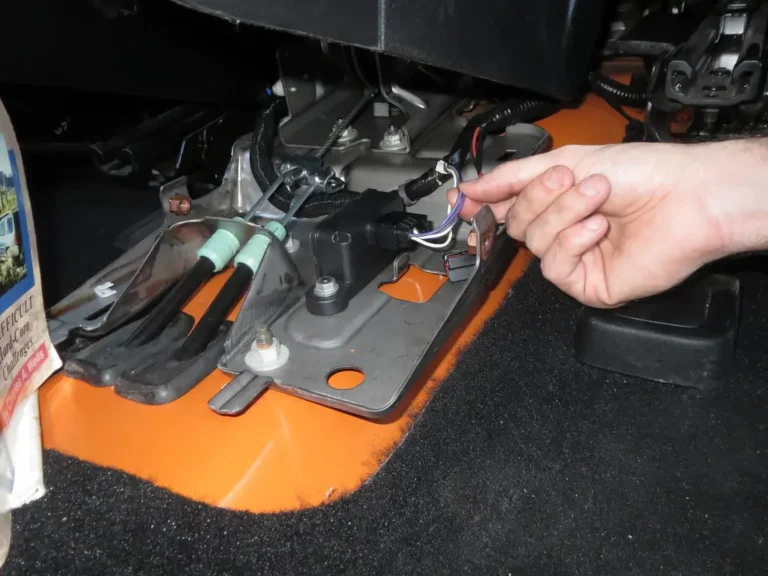
DIY car electrical repair vs mechanic: what makes sense
DIY car electrical repair makes sense for simple, measurable faults, battery, fuses, relays, bulbs, corroded terminals, and parasitic draw tests. Stop and use a mechanic when the fault involves airbag, CAN-bus, charging-system, or intermittent module communication issues. I have seen guessing burn connectors, flatten batteries, waste money on parts, and turn a small problem into a tow. This guide is a decision tree for common symptoms, with at-home tests you can do safely and the points where diagnosis should stop before parts swapping starts.
This guide is part of our Car electrical troubleshooting guide series.
Can I fix car electrical problems myself or should I go to a mechanic?


The clean rule is simple: if the fault is visible, repeatable, and testable with basic tools, start at home; if it needs circuit tracing, module data, or safety-critical access, stop early. Independent shops typically bill $80 to $130 per hour, while dealerships run $125 to $200 per hour, so the break-even point is not just the part price. It is the time, tools, and risk of being wrong.
| Decision factor | DIY car electrical repair | Mechanic: what makes sense | Winner |
|---|---|---|---|
| Up-front cost | Low for battery checks, fuse checks, and terminal cleaning; cost rises if a multimeter or crimp tools must be bought | Higher labor bill, but no tool buy-in and less chance of buying the wrong part | DIY for simple faults; mechanic for diagnosis-heavy faults |
| Diagnostic depth | Good for obvious failures and basic voltage testing | Better for wiring diagrams, scan data, and circuit isolation | Mechanic |
| Risk if wrong | Can waste parts, miss the real fault, or create new connector damage | Lower risk because the test path is wider and the tools are deeper | Mechanic |
| Speed | Fast when the failure is obvious; slow when the car needs repeated testing | Usually faster on intermittent or network faults | Mechanic |
Cost is only part of the bill
DIY can save labor, but only when the fault is already narrowed down. A battery replacement is usually straightforward on most vehicles, yet it still needs the correct battery group size and a quick note of radio presets before disconnecting anything. If the first test is inconclusive, the savings can vanish fast.
Diagnosis depth decides the winner
Modern vehicles use multiple control modules, and that makes electrical diagnosis slower when the fault is not obvious. A dead circuit may be a broken wire, a poor ground, a relay control issue, or a module command problem. Once the work turns into wiring-diagram tracing or scan-data interpretation, a shop earns its labor.
Risk changes the value equation
Wrong guesses on charging, ignition, starter, or airbag-related circuits are expensive. They can also be dangerous. A mechanic is the smarter choice whenever the next step involves a safety-critical circuit or a fault that refuses to present itself on demand.
📊 ASE G1 stands for Auto Maintenance and Light Repair. Source: Diy Car Repair Vs Mechanic Guide.
DIY car electrical repair vs mechanic: what each path is good at
DIY is best for short, direct jobs where the symptom points to one part, one connector, or one fuse. A mechanic is better when the symptom is vague, intermittent, or tied to several systems at once. The difference is not skill alone; it is access to test equipment, diagrams, and the time needed to isolate the fault without guessing.
Where DIY wins
Battery replacement, fuse checks, simple relay swaps, terminal cleaning, and bulb or connector repairs are the clearest home fixes. A multimeter helps diagnose battery issues, parasitic drains, and dead circuits, so the owner can confirm a fault before buying a part. That keeps repair work tied to evidence instead of hope.
Where the shop wins
Intermittent no-starts, charging-system faults, parasitic draw tracing, and network problems often need deeper isolation. Shops can follow the circuit with diagrams, load tests, and scan-tool data instead of replacing parts one by one. That matters because electrical parts often fail upstream of the visible symptom.
What electrical jobs are safe for beginners?
Beginner-safe electrical work is the kind that can be checked, repaired, and rechecked without opening up complex control systems. Battery replacement, fuse inspection, terminal cleaning, and simple connector repair are reasonable starts. ASE G1, which stands for Auto Maintenance and Light Repair, is a useful reference point for this lower-risk level of work.
Battery replacement and terminal cleaning
Battery replacement is straightforward on most vehicles, but it should still be done carefully. Note radio presets first, then confirm the replacement battery matches the vehicle’s group size. Loose or corroded terminals can mimic a bad battery, so cleaning the posts and clamps is often the first sensible check.
Fuses, relays, and visible connectors
Spare fuses and a fuse puller are cheap and save time when a circuit is clearly dead. If a matching relay test is available, a relay swap can confirm a simple relay failure. Cracked insulation, burned connectors, and loose plugs are also fair game when the damage is visible.
Ground cleaning and simple wire repair
Wire crimpers and strippers are necessary for secure, clean connections when a wire repair is actually needed. Clean metal-to-metal grounds can restore a dead circuit without replacing expensive parts. The work stays beginner-safe only when the repair point is obvious and the circuit is not safety-critical.
What tools do you need before you start?
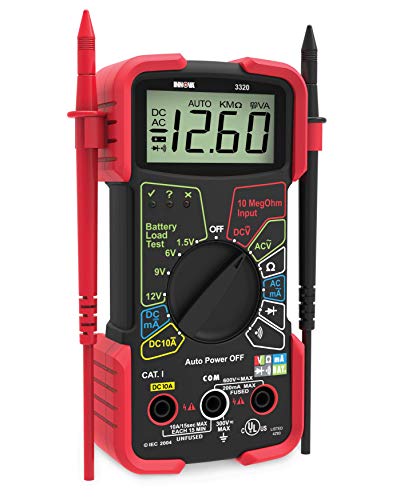
The basic kit is small, but each tool has a job. In my experience, a multimeter is the point where battery testing, parasitic drain checks, and dead-circuit testing become practical. A socket set handles bolts of all sizes, while a torque wrench keeps fasteners from being tightened too much, which matters on safety-related work.
Core garage tools
- Multimeter for voltage, continuity, and draw testing
- Socket set for battery hold-downs, brackets, and covers
- Torque wrench for controlled tightening
- Spare fuses and a fuse puller for fuse testing
- Wire crimpers and strippers for clean wire repair
Where the home toolkit stops
When diagnosis needs a scan tool, wiring diagrams, or load testing beyond basic checks, the home setup starts to run out of road. That is especially true when the fault appears only after the car sits overnight or only while driving. At that point, the issue is no longer a parts check; it is circuit isolation.
Symptom-to-decision table for common electrical complaints
Use the symptom first, not the part guess. The table below turns common electrical problems into a stop-or-continue decision. It shows the first safe DIY test, the minimum tools, the likely DIY cost, and the point where a mechanic becomes the smarter choice.
| Symptom | First safe DIY test | Minimum tools | Likely DIY cost | Stop point for a mechanic |
|---|---|---|---|---|
| Battery dead after sitting | Check battery voltage and inspect terminals for corrosion | Multimeter, socket set | Battery replacement only, if confirmed | If voltage is fine after charging, then drops again overnight |
| Car cranks slowly or clicks once | Check battery state and terminal tightness | Multimeter, socket set | Low if terminals are the issue; higher if battery must be replaced | If battery tests good but cranking stays weak |
| One circuit dead, like lights, windows, or radio | Inspect the fuse and the connector or switch feed | Fuse puller, spare fuses, multimeter | Low unless a damaged connector is found | If the fuse is good but power never reaches the circuit |
| Blown fuse keeps returning | Confirm the rated fuse and look for visible chafing | Fuse puller, spare fuses, multimeter | Low for inspection; higher if wiring repair is needed | If the same fuse blows twice after one careful replacement |
| Intermittent no-start | Check battery voltage and watch for repeatable triggers | Multimeter | Uncertain; parts swapping is a bad bet here | Get help promptly if the fault comes and goes without a clear pattern |
| Charging warning light or low-voltage symptoms | Measure battery voltage with the engine off and then with it running | Multimeter | Low for testing; parts cost rises fast if alternator or wiring is involved | If charging output is inconsistent or the warning returns |
| Battery drain overnight | Check for parasitic draw after basic battery and terminal checks | Multimeter | Low for testing, but diagnosis time can grow quickly | If the draw cannot be isolated to one circuit quickly |
| Starter or relay question with no clear visual fault | Check power, ground, and relay seating before replacement | Multimeter, socket set | Low for testing; avoid blind starter replacement | If testing points to circuit control, not the part itself |
Why dead batteries are not always dead batteries
A battery can be drained by a bad ground, a charging fault, or a parasitic draw. Swapping the battery without testing the circuit often buys a short delay, not a fix. That is the classic dead end: a new part installed on top of an unchanged problem.
Why recurring fuses change the diagnosis
A fuse that blows once can be simple. If a fuse blows again after a correct replacement, it often points to a downstream short, and that is where parts swapping can become wasteful. The next step is tracing, not guessing.
When is electrical diagnosis too complex for DIY?
Electrical diagnosis can be beyond DIY when the next step calls for wiring diagrams, scan data, or circuit isolation rather than a basic part check. That includes intermittent faults, module communication issues, charging-system behavior that does not match simple battery failure, and no-starts that do not reveal a visible cause. At that point, a mechanic is usually cheaper than buying the wrong parts.
Stop on safety-critical circuits
Airbags, ignition, starter circuits, charging circuits, and networked body modules deserve a hard stop unless the fault is already obvious and safe to test. These systems are not friendly to trial and error. A mistake can create a bigger electrical fault or a safety issue.
Stop when the problem does not repeat cleanly
Intermittent no-starts and random warning lights are the jobs most likely to eat time. If a fault cannot be reproduced, the diagnostic path stretches out fast. That is the point where shop labor often costs less than the tools and parts bought while chasing a guess.
When should I stop chasing a short circuit and call a shop?
Consider stopping if the same fuse blows again, if the fault is intermittent, or if the first test does not point to one obvious part. Stop sooner if the issue touches airbags, charging, ignition, starter circuits, or control modules. If the next step is diagram tracing rather than a simple check, the shop is the smarter move.
Dead ends that waste money
Common dead ends are battery replacement for a parasitic drain, alternator replacement for a bad ground, relay swapping for a broken wire, and fuse replacement for a repeated short. These errors happen because the visible part gets blamed first. The real fault is often one connector, one ground, or one control signal upstream.
What to document before a shop visit
- Note when the fault happens: cold start, hot restart, after rain, or after sitting overnight.
- Write down what fails together, such as no crank, dim lights, and dash warnings.
- Record battery voltage readings if a multimeter is available.
- List any warning lights and whether the problem is intermittent or constant.
- Note recent work, including battery replacement, stereo work, or fuse changes.
How much can I save by doing car electrical repairs myself?
DIY savings are usually strongest when the fault is confirmed and the repair is simple. If a mechanic charges $80 to $130 per hour, even a short diagnostic visit can cost more than a basic tool kit. Dealership labor at $125 to $200 per hour raises the stakes further, but the savings disappear if the owner buys the wrong part twice.
Simple math for the driveway
If the fix is a fuse, terminal cleaning, or battery replacement that is already confirmed, DIY usually wins on cost. If the job requires hours of circuit tracing, the value shifts toward a shop because labor buys diagnostic direction. That is the break-even point: not the cheapest sticker, but the cheapest correct answer.
Choose DIY car electrical repair if… / Choose mechanic: what makes sense if…
Choose DIY car electrical repair if the fault is visible, the test path is short, and the fix uses tools already in the garage. Choose DIY when the battery, fuse, relay, bulb, terminal, or connector can be confirmed with a multimeter and simple inspection. Choose a mechanic when the issue is intermittent, safety-critical, or tied to module data and wiring diagrams.
Choose DIY car electrical repair if…
The problem is a dead battery, a blown fuse, a corroded terminal, or a clearly damaged connector. The circuit is easy to access, the symptom is repeatable, and the next step is still a basic test rather than a deep trace. The repair should look obvious before any parts are bought.
Choose mechanic: what makes sense if…
The fault involves charging, ignition, starter circuits, airbags, or a body module. The same fuse keeps blowing, the vehicle has an intermittent no-start, or scan data is needed to see what the module is doing. At that point, the smarter move is to stop swapping parts and pay for diagnosis.
Frequently asked questions
What car electrical repairs are safe for beginners?
Battery replacement, terminal cleaning, fuse inspection, fuse replacement, and some relay swaps are the usual beginner jobs. Simple connector inspection and ground cleaning also fit, as long as the damage is visible and the circuit is not part of airbags, charging, ignition, or starter control. That is the safe end of the map.
What tools do I need to troubleshoot car wiring and battery issues?
A multimeter is the key tool for battery issues, parasitic drains, and dead circuits. Add a socket set, fuse puller, spare fuses, wire crimpers, strippers, and a torque wrench. If the diagnosis goes deeper than that, scan-tool access and wiring diagrams matter more than extra hand tools.
Is a dead battery easier to replace than diagnose?
Yes. Replacement is often straightforward on most vehicles, but diagnosis is the hard part because a weak battery can be caused by drain, charging faults, or poor connections. Before replacement, note radio presets and verify the battery group size. Otherwise, the new battery can hide the real fault.
Products related to this article
Sponsored / affiliate links. As an Amazon Associate I earn from qualifying purchases. I may earn additional commission from eligible campaigns.