Car electrical troubleshooting for beginners: Start here
Start with the symptom, then check the battery first: around 12.6 volts engine off is generally healthy, around 12.2 volts or lower suggests it may need charging or replacement, and running voltage below roughly 13.5 volts can point to charging trouble. Guessing wrong can waste money, drain a battery again, or leave you stranded with a no-start. This guide gives a beginner-safe, symptom-first sequence for lights, no-start, warning lamps, and parasitic drain, with simple test steps and what each reading means next.
This guide is part of our Car electrical troubleshooting guide series.
Start with the symptom, not the part
Most modern cars use a 12 V, negative ground system, so the complaint should steer the first test. Begin with the problem you can see, no power, no crank, slow crank, dim lights, one dead accessory, or a warning light.
If the car has no power at all, think battery, main connection, or ground first. If there is power but no crank, move toward starter, battery load, or ground. If one accessory is dead, think fuse, connector, or wiring on that circuit before touching the alternator.
What each symptom points to first
- No power at all: battery, battery terminals, main ground, or main power feed.
- Power but no crank: starter circuit, battery under load, or a bad ground.
- Slow crank: weak battery, high resistance at terminals, poor ground, or starter wear.
- Dim lights: low battery, charging problem, or bad connection.
- One dead accessory: fuse, connector, switch, or wiring on that circuit.
- Intermittent warning lamp or flicker: loose connector, corrosion, or an unstable ground.
Say your dash lights come on, but the starter only clicks once. That does not automatically mean the battery is bad. It can be a weak battery, but it can also be a bad ground or a starter that is not drawing current correctly.
📊 Modern cars commonly use a 12 V, negative ground system. Source: Hackaday.
What tools do you need to diagnose car electrical issues?
A multimeter is the main tool for battery and alternator checks, and a test light lets you see whether power is reaching electrical parts. Those two tools cover most beginner tests. A flashlight, a small brush, and basic hand tools also help with clean connector inspection.
Multimeter basics and the correct voltage setting
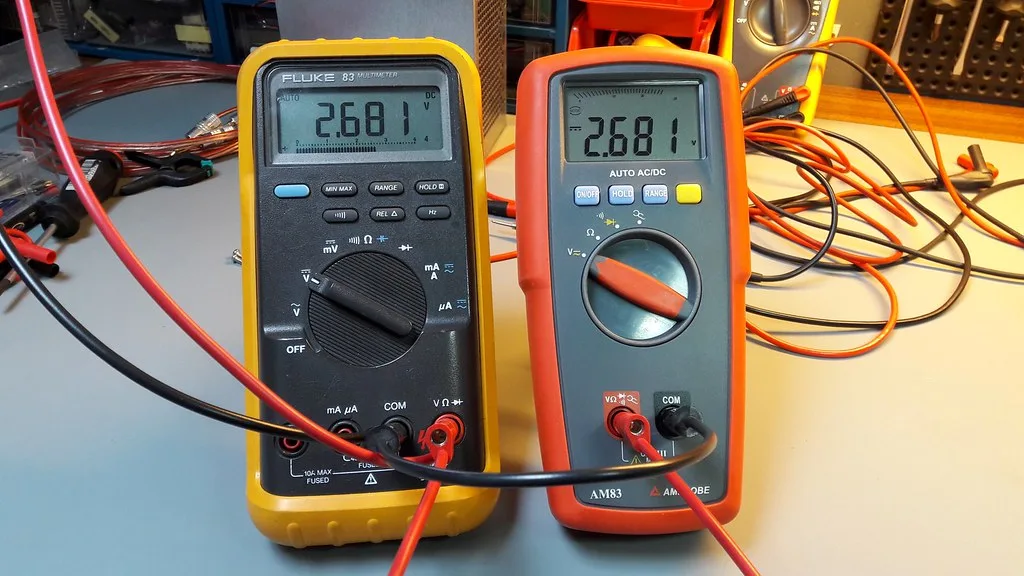
Set the multimeter to DC volts, not AC volts. On many meters that means the 20 V DC range, or the auto-ranging DC setting. Put the black lead in COM and the red lead in the voltage jack. For car batteries, probe the meter across the battery posts or clean terminal metal.
Use the meter for exact readings. A test light is faster for yes or no. If the bulb lights, power is present. If it does not, power is missing somewhere upstream.
Test light basics for quick go/no-go checks
A test light is best for checking fuses, lamp sockets, and simple power feeds. Clip it to a known good ground and probe the point you want to verify. If the light comes on, that point has power. If it stays dark, move upstream to the next connection.
Simple safety steps before you probe a circuit
- Turn the key off unless a test needs the engine running.
- Keep fingers and loose clothing clear of belts and fans.
- Use the meter probes on exposed metal, not random wire insulation cuts.
- Do not short battery positive to ground with a metal tool.
- Check one circuit at a time so the result stays clear.
How do you check a car battery first?
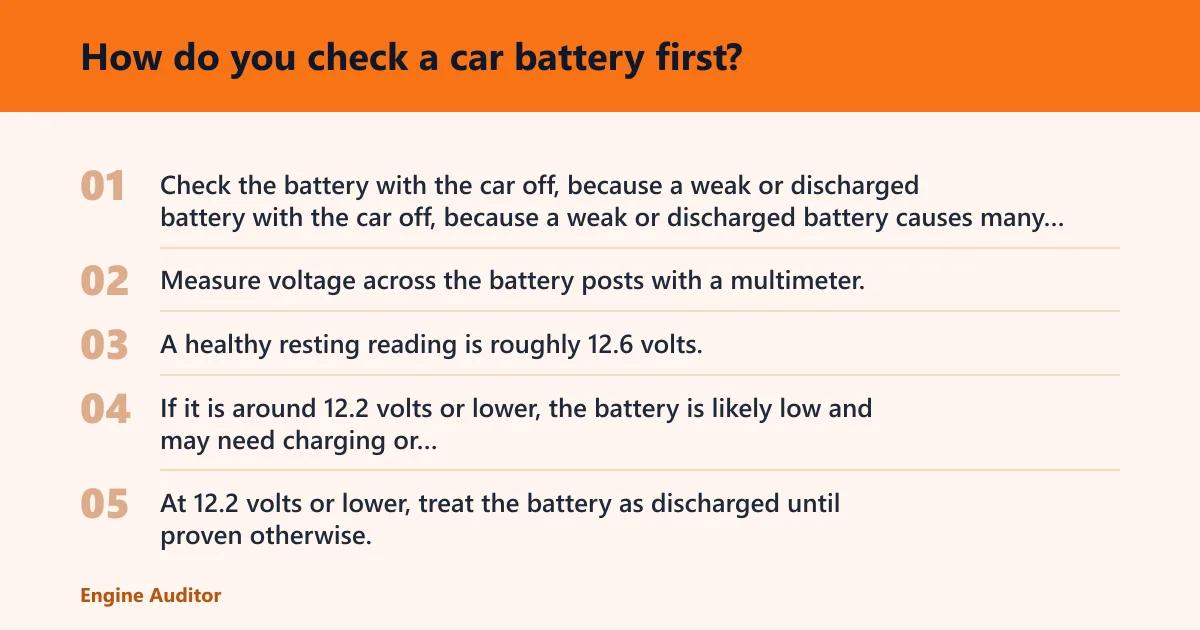
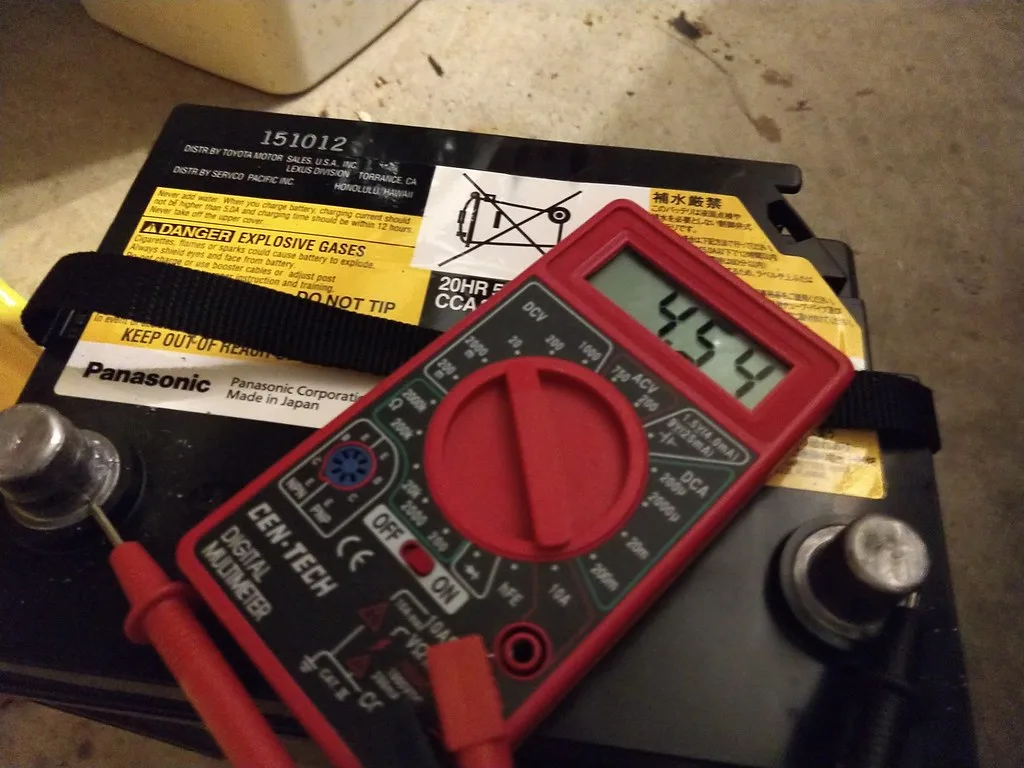
Check the battery with the car off, because a weak or discharged battery causes many no-start and dim-light complaints. Measure voltage across the battery posts with a multimeter. A healthy resting reading is roughly 12.6 volts. If it is around 12.2 volts or lower, the battery is likely low and may need charging or replacement evaluation.
Battery voltage with the car off
Resting voltage gives the first clue. Around 12.6 volts is a full battery. Around 12.4 volts suggests partial charge. At 12.2 volts or lower, treat the battery as discharged until proven otherwise. If the reading is near 12 volts, the battery is deeply low.
What jump-start results mean and what they do not mean
If the car starts after jump-starting, the battery may just need recharging. That result does not prove the battery is good. It only proves the engine could start with outside power. If the car dies quickly after starting, the battery may need replacing, or the charging system may not be recovering it.
When to suspect a bad battery versus a discharged one
A battery that tests low once may only be discharged. A battery that will not hold charge, drops fast after a jump, or fails again after a proper drive is more suspicious. Corroded terminals can copy battery failure, so clean contact points matter before you call the battery bad.
| Test point | Normal or likely meaning | Next step |
|---|---|---|
| Battery off: 12.6 V | Healthy resting charge | Move to charging or symptom branch |
| Battery off: 12.2 V or less | Low charge, possible weak battery | Charge, then retest |
| Running: under 13.5 V | Charging trouble likely | Test alternator output and connections |
| Running: 13.7 to 14.7 V | Alternator output usually healthy | Look elsewhere if symptoms continue |
| Jump-start works, then dies soon | Battery may need replacing | Check battery health and charging output |
How do you tell if the alternator is charging properly?
Start with a running-voltage check at the battery terminals using a multimeter on DC volts. A healthy alternator should output between 13.7 and 14.7 volts. That range shows the charging system is supplying current to run the car and recharge the battery. Lower readings point to charging trouble.
Running-voltage check with a multimeter
Start the engine, let it idle, and probe the battery posts again. Watch the reading with lights off and then with headlights or blower on. Small changes are normal, but the system should usually stay in the charging range. If it stays near resting voltage, the alternator may not be charging.
How the alternator, battery, and recharge cycle fit together
The battery starts the car. The alternator then supplies power and recharges the battery while the engine runs. If charging is weak, the battery slowly drains while driving. That is why a car can start once, then fail again later.
Suppose the battery reads 12.5 volts off, the engine starts with a jump, and running voltage stays at 12.4 volts. That points away from a fully healthy charging system. The battery may be low, but the alternator is not showing the expected rise.
Which fuses and wiring issues should you inspect first?
Inspect the fuse tied to the failed circuit first, not every fuse in the box. Fuses protect circuits, so a blown fuse usually affects one system or a small group of related parts. Check fuses when electrical components work intermittently, and inspect wiring and connectors for corrosion, wear, or looseness.
How to find the right fuse for the failed circuit
Use the owner’s manual or the fuse-box legend to match the symptom to the circuit. A dead radio points to its fuse, a dead power outlet points to that outlet circuit, and a failed interior light circuit points elsewhere. Random fuse pulling wastes time and creates new confusion.
Visual fuse checks and when to test with a meter or test light
Remove the fuse and look for a broken metal link, darkening, or melted plastic. Some blade fuses fail without obvious damage, so probe both test points on top with a test light or meter. In many cases, a good fuse should show power on both sides when the circuit is live.
Corrosion, broken insulation, and loose connectors
Look at terminals, plugs, and exposed wire runs near the battery, radiator support, and moving parts. Green or white corrosion, cracked insulation, and loose pins can cause intermittent faults or short circuits. A connector that works only when wiggled is a warning sign, not a fix.
What does a no-crank problem usually mean?

A no-crank problem means the engine does not turn over when you try to start it. That can be battery, starter motor, ground, or a control-circuit problem. The key is separating “no crank” from “no power,” because the next test is different for each case.
Starter motor clues versus battery clues
If lights are bright and accessories work, but the key gives only a click or nothing at all, the starter circuit moves higher on the list. If lights go very dim or everything dies during the start attempt, battery or cable resistance is more likely. A weak battery can still mimic starter trouble.
Bad ground symptoms that mimic a dead battery
Ground connections matter just as much as positive power. A bad ground can cause slow cranking, flickering lights, weird warning lamps, or a no-start that looks like a dead battery. Corrosion or looseness at the battery negative cable, engine block ground, or body ground can interrupt current flow.
Simple next-step checks before you replace parts
- Check battery voltage at rest.
- Watch voltage while a helper turns the key to start.
- Inspect battery terminals for tightness and corrosion.
- Check the main ground cable from battery to body or engine.
- Confirm power reaches the starter control circuit with a test light.
Build a simple beginner decision tree
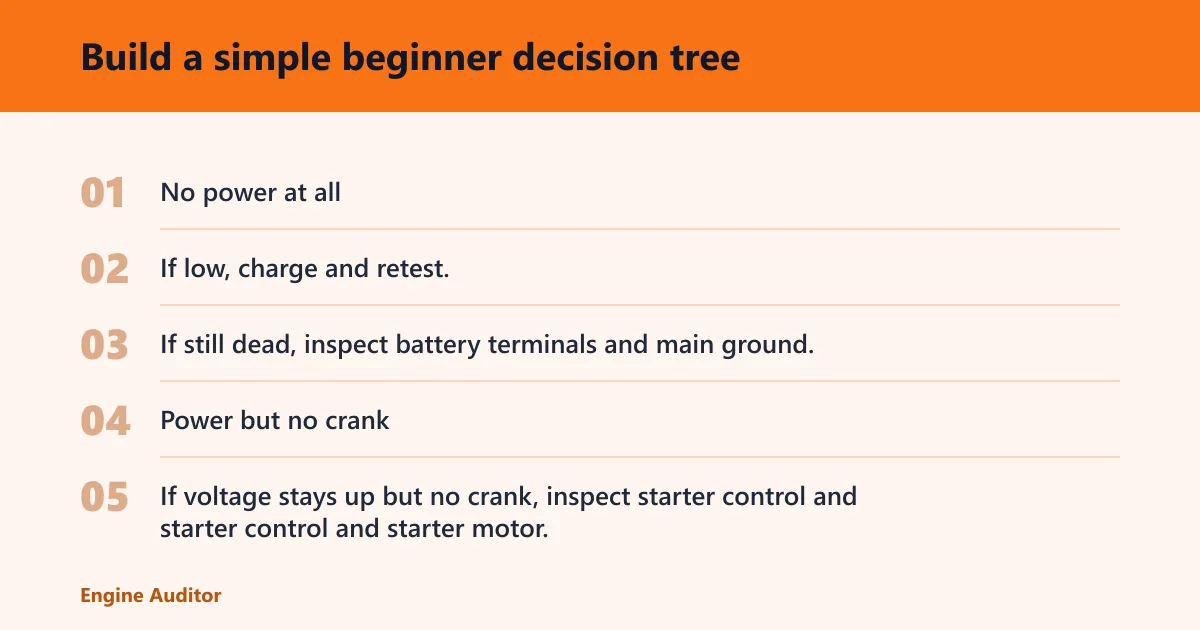
Follow the symptom branch, then the next test, then the reading. That stops random guessing and narrows the fault to battery, charging, fuse, ground, or starter. If a test result does not fit the symptom, move to the next branch instead of swapping parts.
One-page beginner diagnostic flowchart
- No power at all
- Check battery voltage: 12.6 V healthy, 12.2 V or less low.
- If low, charge and retest.
- If still dead, inspect battery terminals and main ground.
- Power but no crank
- Check battery voltage while starting.
- If voltage stays up but no crank, inspect starter control and starter motor.
- If voltage drops hard, suspect battery or cable resistance.
- Slow crank
- Inspect terminals, grounds, and battery state.
- Test running voltage after start if possible.
- Low charging output points back to alternator or wiring.
- Dim lights or battery warning
- Check running voltage at the battery.
- 13.7 to 14.7 V usually means charging is present.
- Under 13.5 V suggests charging trouble.
- One dead accessory or intermittent function
- Check the fuse for that circuit.
- Test for power on both sides of the fuse.
- Inspect connector corrosion, broken wire insulation, or looseness.
| Reading or result | Likely meaning | Next move |
|---|---|---|
| 12.6 V engine off | Battery is healthy at rest | Check symptom-specific circuit |
| 12.2 V or less engine off | Battery is low or weak | Charge, then retest |
| 13.7 to 14.7 V running | Alternator output is usually normal | Look at battery, grounds, or the failed circuit |
| Under 13.5 V running | Charging problem likely | Inspect alternator, belt drive, and wiring |
| Fuse has power on one side only | Fuse is blown | Replace once, then look for the cause of the short |
| Power present at a connector but device dead | Device, ground, or downstream wiring issue | Check ground and load side of circuit |
Beginner mistakes that waste time and money
Random fuse pulling is one of the biggest time sinks. Swapping parts before a test is another. The fastest way to a wrong answer is treating one symptom as proof of one bad part. Electrical faults often overlap, so each reading should decide the next step.
Random fuse pulling
Pulling fuses without a circuit reason can erase clues and create new faults. If a component works intermittently, inspect the fuse for that circuit and then the connectors and wiring that feed it. Do not treat the fuse box like a guessing game.
Swapping parts before a test
A battery, alternator, or starter can be expensive, and a wrong replacement does not solve poor connections or wiring faults. Test first, replace later. A reading that points elsewhere should stop the part-swapping habit immediately.
Missing intermittent faults and poor grounds
Intermittent problems often trace to corrosion, loose connectors, or a ground that opens and closes with vibration. If a fault comes and goes, wiggle tests and close visual inspection matter. Electrical problems can affect multiple systems, which is a reason to seek professional help when the pattern is broad or unstable.
When is an electrical problem too complex to fix myself?
Stop and get professional help when the fault affects multiple systems, keeps returning after basic tests, or involves melted wiring, repeated fuse failures, or control modules. Those cases can require deeper circuit tracing and repair methods that go beyond a beginner meter check. Safety and time matter here.
Signs to hand the job off
- Multiple unrelated systems fail at once.
- A fuse blows again immediately after replacement.
- Wiring insulation is melted or burnt.
- The battery drains overnight with no obvious cause.
- Tests do not match the symptom branch.
Frequently asked questions
Where do I start when troubleshooting car electrical problems?
Start with the symptom, then check the battery first. That means no-power, no-crank, slow-crank, dim-light, or one-dead-accessory complaints each follow a different path. A simple voltage check at the battery tells you whether the problem begins with power supply, charging, or the circuit itself.
What tools do I need to diagnose car electrical issues?
A multimeter and a test light cover most beginner checks. Use the multimeter for exact voltage readings and the test light for quick power-present checks. Add a flashlight and basic hand tools so you can inspect terminals, fuses, and connectors without forcing parts apart.
How do I check a car battery first?
Measure battery voltage with the engine off using a multimeter set to DC volts. Around 12.6 volts is healthy, while 12.2 volts or less means charge or replace. If the car starts after jump-starting, the battery may just need recharging, but that does not prove it is good.
How do I tell if the alternator is charging properly?
Start the engine and measure voltage across the battery terminals. A healthy alternator should output between 13.7 and 14.7 volts. If running voltage stays low, the battery may not be recharging. That can leave you with a car that starts once and then fails again later.
Which fuses or wiring issues should I inspect first?
Inspect the fuse for the exact failed circuit first, then check for power on both sides of the fuse. If the problem is intermittent, look for corrosion, loose connectors, broken insulation, or wire runs that move and change the fault. Those issues often explain one-system failures faster than parts swapping.
What are the most common beginner mistakes in electrical diagnosis?
The common mistakes are random fuse pulling, replacing parts before any test, and confusing battery symptoms with alternator or starter faults. Another miss is ignoring grounds. A corroded or loose ground can act like a dead battery, even when the battery itself is fine.
Products related to this article
Sponsored / affiliate links. As an Amazon Associate I earn from qualifying purchases. I may earn additional commission from eligible campaigns.
 Mighty Max Battery MM-G24 Start and Stop Car BCI Group Size 24 12V 70Ah, 120RC, 710 CCA Rechargeable AGM Car battery
 Kalttoy Car Electrical Air Compressor Portable Digital Electric Inflator Pump Inflatable for Auto Motorbike BicycleTire Air Compressor Portable for Car Tire Inflator Attachment Oil Caps Regulator Kit