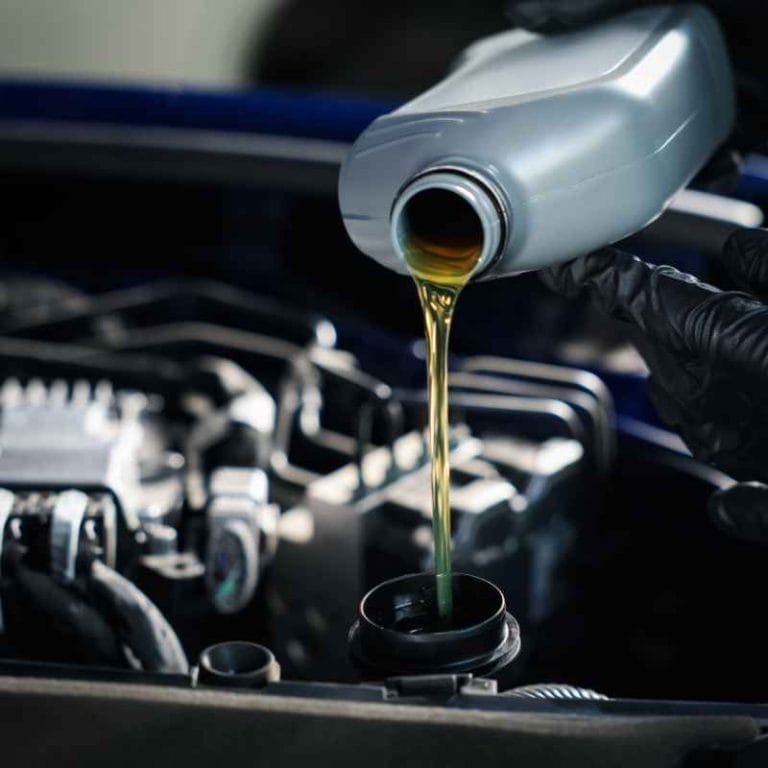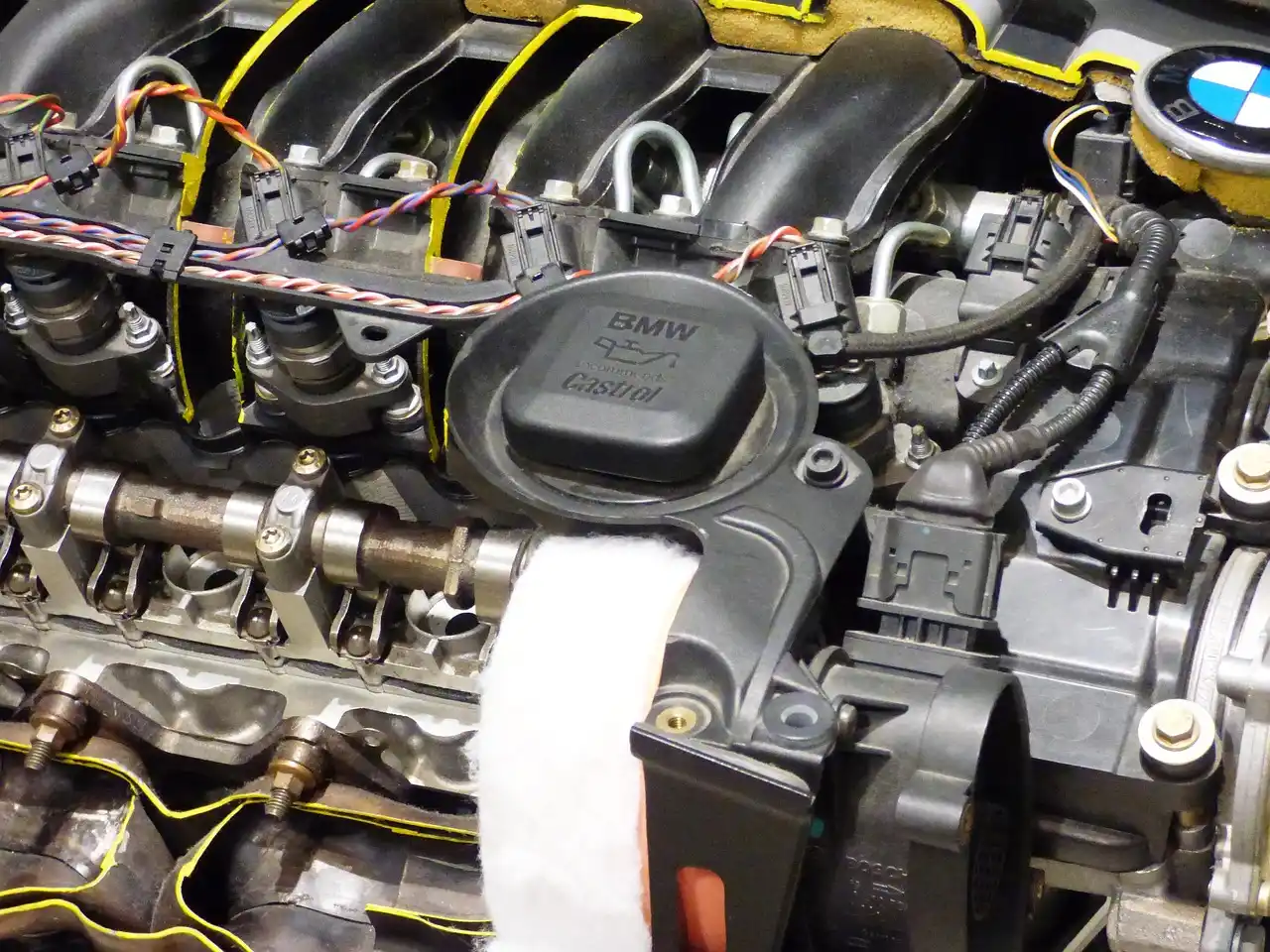
Why Is My Engine Oil Foaming? Causes and Risks
Engine oil foams when air or coolant gets into it, or when the crankshaft churns too much oil; if the foam stays after a short drive or the dipstick looks milky, stop and inspect. Ignoring it can starve bearings, drop oil pressure, and turn a minor seal or gasket fault into engine damage. This guide shows how to separate overfill, aeration, coolant intrusion, and pickup-side air leaks in minutes.
What foaming oil means
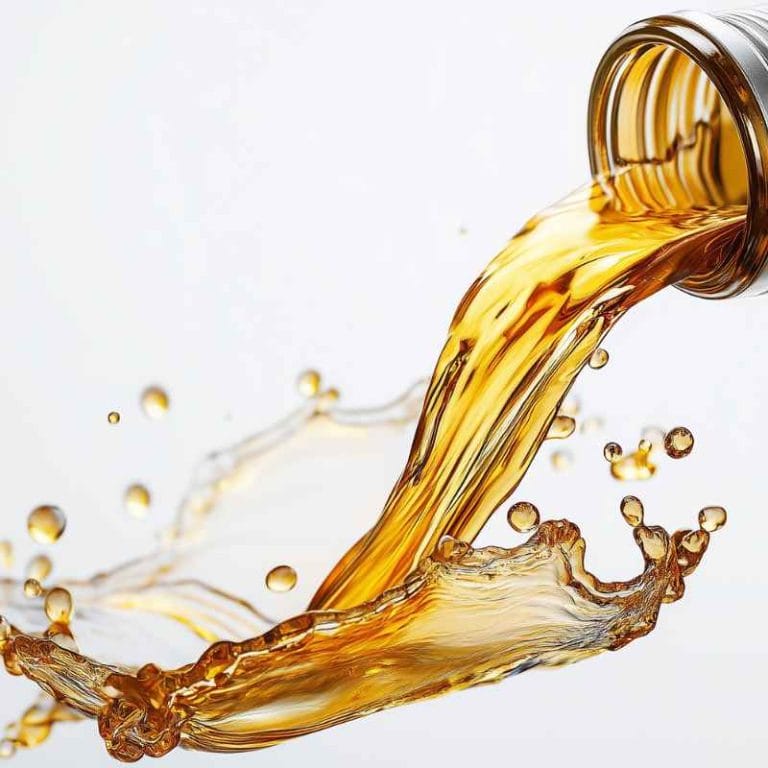
Foam in engine oil is not the same as a few bubbles. Healthy oil is thick and uniform, while foam means air or fluid is mixing into the sump, coating the dipstick, or collecting around the fill cap. A brief bubble film can show up after shutdown, but foam that comes back under load needs attention.
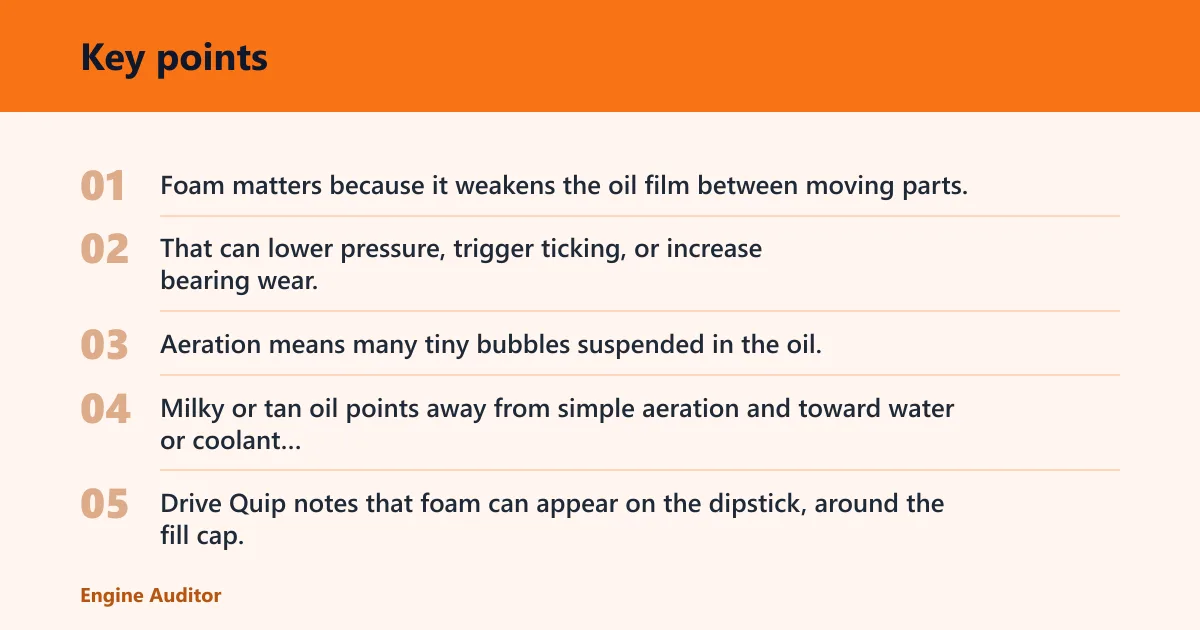
Foam matters because it weakens the oil film between moving parts. That can lower pressure, trigger ticking, or increase bearing wear, especially in turbocharged engines, tow rigs, track use, and engines that already have some wear.
Foam versus aeration versus milkiness
Aeration means many tiny bubbles suspended in the oil; they can release fast once the oil rests. True foam is thicker and more persistent. Milky or tan oil points away from simple aeration and toward water or coolant contamination.
Drive Quip notes that foam can appear on the dipstick, around the fill cap, or in oil level readings after a short interval. That means the first clue is often visual, not a warning light.
Why air in oil matters
Air lowers oil’s ability to carry load. The pump can move frothy oil, but the bearing surfaces do not get the same film strength they get from solid oil. If the foam stays under load, the risk rises fast.
Foam diagnosis matrix
Start with the first visible clue, then make the next check. That order helps separate a service error from a real fault.
| Symptom pattern | Most likely cause | First check | Next repair step |
|---|---|---|---|
| Foam only | Light aeration, temporary slosh, or a level check done too soon | Verify level on level ground after the engine sits a few minutes | Recheck before adding oil; inspect for pickup-side leak if it returns |
| Foam plus overfull dipstick | Overfilled crankcase | Compare the dipstick to the full mark with the car level and the engine off | Drain to the correct level |
| Foam plus milky oil | Coolant or water intrusion | Check coolant level and look for tan, milkshake-like oil | Test for gasket, head, block, or oil cooler failure |
| Foam plus gasoline smell | Fuel dilution | Sniff the dipstick and watch for rising oil level or thinning | Check injectors, cold-start pattern, and run a lab oil test |
| Foam plus low pressure | Pickup tube or suction-side air leak | Watch the gauge or warning light under acceleration or cornering | Inspect pickup tube, O-ring, and fittings before further driving |
| Foam after an oil change | Wrong fill level, wrong oil spec, or trapped air | Recheck the dipstick on level ground after a brief idle and rest | Correct the level; change the oil if the spec is wrong |
| Foam in short-trip cars | Water condensation | Look for light tan sludge under the cap and review trip length | Longer drives may dry the oil; persistent milkiness needs diagnosis |
| Foam under load | Aeration from overfill, pickup fault, or severe blow-by | Check level, pressure, and whether the foam grows with rpm | Stop hard use and inspect the oiling system |
Can too much engine oil cause foam?
Yes. An overfilled crankcase can whip oil into foam because the crankshaft slaps and churns the excess oil. Drive Quip and Motor Advises both point to overfill as a common cause, and the effect can appear right after service.
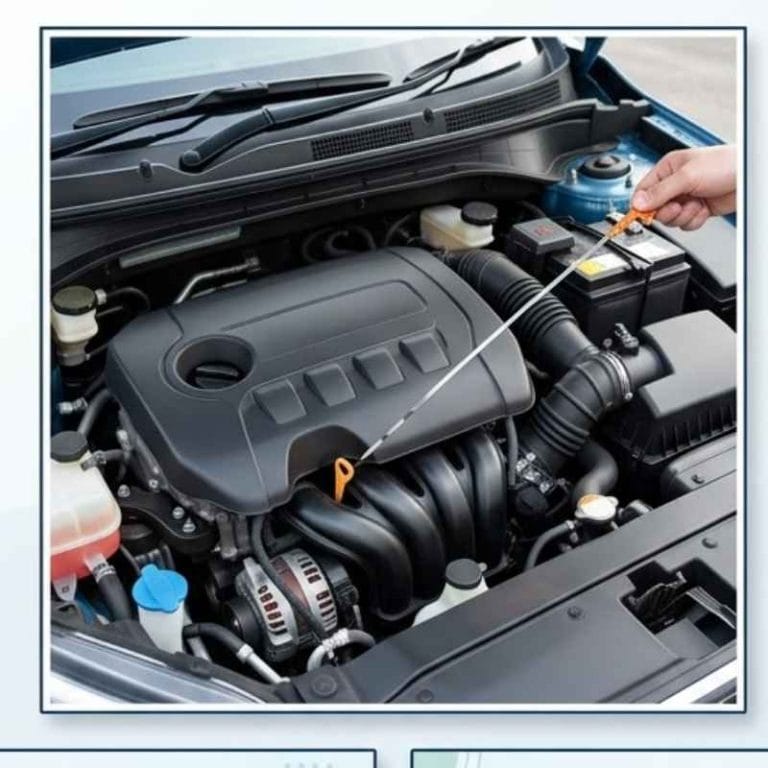
Why the dipstick can mislead: a hot engine, a slope, or a check made too soon after shutdown can shift the reading. A tilted car can read high or low. A warm engine can also leave oil clinging in passages, so the level looks different than it will after a short rest on level ground.
How to recheck the level correctly
- Park on level ground.
- Shut the engine off and wait a few minutes.
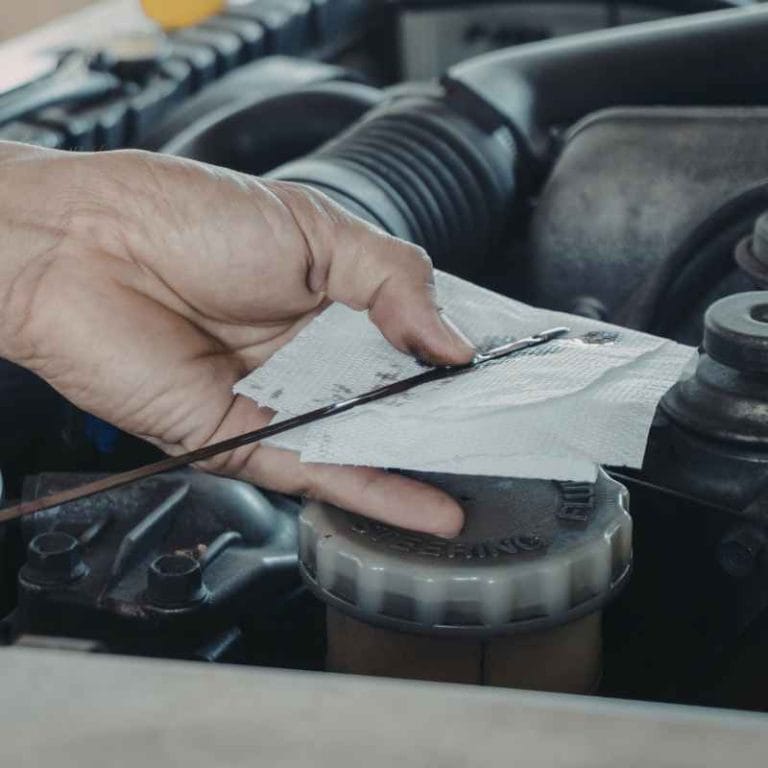
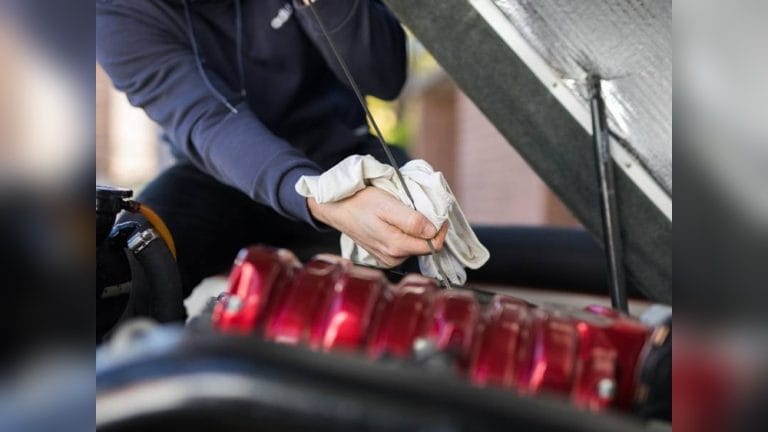
- Pull the dipstick, wipe it, and reinsert it fully.
- Pull it again and read both sides if the stick is marked that way.
- Confirm the oil sits at or just below the full mark, not above it.
If the level is above the full mark, do not keep adding oil. Drain the excess to spec and recheck. Motor Advises notes that overfill lets the crankshaft slap the oil like a mixer, which fits the foam pattern seen on a freshly serviced engine.
Say the engine takes a set amount of oil, but the stick sits about 1/2 inch above full after an oil change. That is a level problem first, not a mystery foam problem. Correct the fill before chasing sensors or buying additives.
Why does my oil foam after an oil change?
Foam after service usually points to an incorrect fill level, the wrong oil specification, or trapped air after the filter and passages were opened. If the foam shows up right away and the level is high, overfill leads the list. If the level is normal, recheck the oil spec and filter fitment.
Engine Oil Guide notes that foam after an oil change often comes from an incorrect fill level or wrong oil specification. That is why the next check should be the dipstick on level ground, not a guess from the filler neck.
What to do before adding or draining more oil
Wait long enough for the sump to settle, then read the stick again. If the level is good and the foam remains, look for aeration, a suction-side leak, or a PCV problem. If the level is high, drain to the correct mark before any other diagnosis.
Can a bad PCV valve cause foamy oil?
Yes. A stuck or clogged PCV valve, blocked hose, or misrouted hose can raise crankcase pressure and disturb oil control. The same source lists clogged PCV valves and hoses as a foaming cause, and Motor Advises says a stuck PCV valve or heavy blow-by can create the perfect storm for foaming.
PCV faults also fit sludge, oil leaks, and a dirty filler area. If crankcase pressure is high, vapors and blow-by stay trapped longer, and the oil can look more aerated than it should.
What a homeowner can inspect first
- Check that the PCV valve is not clogged or stuck.
- Inspect hoses for cracks, collapse, or loose ends.
- Make sure hoses are routed as the factory intended.
- Look for oil leaks around seals and gaskets.
- Check whether sludge is building under the cap.
A bad PCV valve does not usually make milk-colored oil by itself. If the oil is milky, think coolant or water first, then inspect the PCV system as a related contributor.
Foam causes that need repairs
Some causes need more than a level correction. Coolant intrusion, fuel dilution, and suction-side air leaks can keep foaming oil in play until the failed part is found and fixed.
Coolant contamination
Coolant in oil often looks milky, tan, or frothy, not just bubbly. That can come from a head gasket, cracked head, cracked block, or oil cooler failure. Check the coolant level at the same time; a drop supports the diagnosis.
Do not keep driving normally if the oil looks like a milkshake. Repair the fault first, then refill with clean oil and a new filter. That sequence matters because coolant ruins oil film strength fast.
Water condensation
Short trips and cold weather can leave moisture in the crankcase. The same source notes that condensation comes from short trips that prevent proper oil temperatures. The result can be light foam or tan sludge, especially in engines that never reach full operating heat.
This pattern often shows up in the cap or on the stick after repeated short drives. A longer run can dry out light moisture, but persistent milkiness or rising coolant loss points elsewhere.
Fuel dilution
Fuel dilution thins oil and can make it foam more easily. The same source notes that fuel-diluted oil becomes less viscous and foamy. Common triggers include injector leaks, repeated cold starts, and long idle periods.
Look for a gasoline smell on the dipstick and a level that creeps up without an oil top-off. Thin oil can also lower hot oil pressure, so a foamy dipstick plus a weak pressure reading deserves faster diagnosis.
Oil pickup tube and suction-side leaks
A cracked pickup tube, bad O-ring, or loose fitting can let air enter before the pump. That is different from overfill or coolant contamination. The clue is often a pressure drop under load, during cornering, braking, or higher rpm.
If the oil pressure light flickers or the gauge drops during hard driving, it’s a good idea to stop driving. The same source says not to continue driving normally if the oil pressure light is on. Ticking or knocking makes the warning more urgent.
Picture a high-mileage SUV that idles quietly but drops pressure on a freeway on-ramp. Foam plus low pressure points away from a simple service issue and toward a pickup or suction leak until proven otherwise.
How to tell aeration from coolant contamination
Aeration looks like bubbles or foam that may settle. Coolant contamination looks milky, tan, or like a milkshake. Aeration often ties to level, pickup, or PCV issues; coolant contamination often ties to coolant loss, overheating, or a known sealing fault.
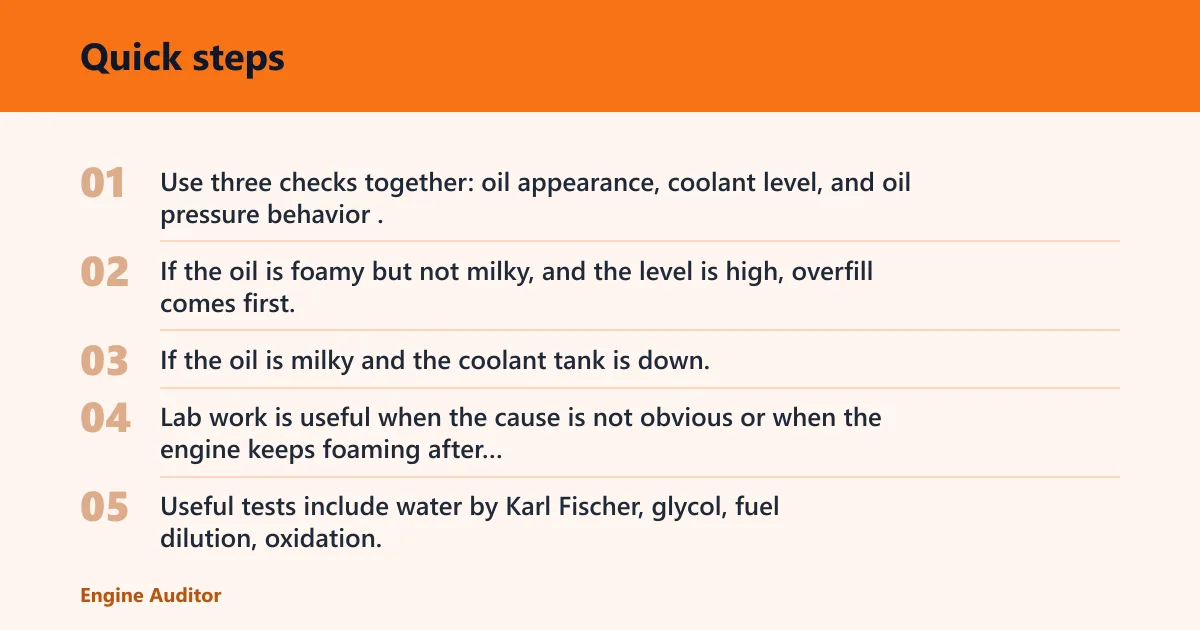
Use three checks together: oil appearance, coolant level, and oil pressure behavior. If the oil is foamy but not milky, and the level is high, overfill comes first. If the oil is milky and the coolant tank is down, repair the cooling-system fault before normal driving.
When to send oil for lab testing
Lab work is useful when the cause is not obvious or when the engine keeps foaming after basic corrections. Useful tests include water by Karl Fischer, glycol, fuel dilution, oxidation, and insolubles. Those results help separate condensation from coolant intrusion and fuel dilution from simple aeration.
ASTM D892 is used to judge foam tendency, and ASTM D3427 is used for air release. Those standards matter when comparing oil specifications, but they do not replace the field checks that tell you what failed first.
Frequently asked questions
What causes engine oil foaming?
Engine oil foams when air gets mixed into the oil or when another fluid contaminates it. Common causes include overfill, a bad PCV system, pickup-side air leaks, coolant intrusion, condensation from short trips, and fuel dilution from injector faults or repeated cold starts.
Why is my engine oil foamy on the dipstick?
Foam on the dipstick often means the oil is aerated, overfilled, or contaminated. Check the level on level ground after the engine sits briefly. If the oil is also milky, smells like gasoline, or the coolant level is falling, the cause is more than a simple level issue.
Is foamy engine oil dangerous to drive with?
It can be. Mild foam after shutdown may clear, but persistent foam under load can reduce film strength and oil pressure. If the oil pressure light is on, the gauge is dropping, or the engine ticks or knocks, stop driving and inspect the cause right away.
Does coolant in oil look foamy or milky?
Coolant in oil often looks milky, tan, or like a milkshake, though it can also look frothy. Foam alone does not prove coolant contamination. A falling coolant level, milky dipstick, or sludge under the cap makes coolant intrusion more likely than simple aeration.
Products related to this article
Sponsored / affiliate links. As an Amazon Associate I earn from qualifying purchases. I may earn additional commission from eligible campaigns.
 DongJinK Engine Oil Level Gage Dipstick Compatible with Toyota 4Runner 1984-1995 for Toyota Celica 1984-1985 for Toyota Pickup 1984-1995 Replace# 15301-35020 1530135020
 ACROPIX Engine Oil Level Indicator Dipstick for Ford Fusion 2010-2012 for Ford Escape 2010-2012 for Ford Fusion 2006-2007 No.6E5Z6750AC Car Parts