How to Fix an Oil Leak From the Valve Cover
Fix a valve cover oil leak by confirming the cover is the source first: clean the engine, run it, and check the perimeter, spark plugs, and PCV area; if oil starts at the cover seam, replace the gasket and torque to spec. Skip diagnosis and you can waste money on repeat gasket jobs while oil keeps reaching belts, exhaust, or plugs. This guide shows how to verify the leak, inspect the PCV system, decide on reseal versus gasket replacement, and know when a shop is the better call.
What a valve cover leak looks like


Oil on top of the engine points to the valve cover, also called the cam cover or rocker cover. A leak often shows up as wet residue along the cover edge, a burning oil smell after driving, oil in spark plug wells, or seepage at the back of the cylinder head where running oil can collect and drip unseen.
Inside the cover, oil is normal. Outside the cover, it is not. The distinction matters because oil can migrate from the valve cover, oil filler cap, timing cover, or a nearby seal, and a dirty engine can make all of them look guilty.
Oil on the valve cover edge
Fresh oil at the perimeter usually means the valve cover gasket is failing from heat hardening, cracking, or shrinkage. If the whole engine is oily, clean it first and recheck the seam after a short drive. A leak that starts exactly at the cover rail is the strongest clue.
Burning smell after driving
A burning oil smell is a classic valve cover leak sign. Oil can drip onto hot exhaust parts after shutdown and smell worse after a drive than at idle. If the smell comes with visible oil on top of the engine, the cover or gasket moves to the top of the list.
Oil in spark plug wells
Oil pooling in plug wells usually points to failed spark plug tube seals, often with the main gasket. This matters because oil in the wells can cause misfires and coil damage. If the wells are wet, treat the repair as more urgent than a dry perimeter seep.
Seepage at the back of the engine
Oil at the rear edge of the cylinder head can still be the valve cover, but it can also be cam seal or timing cover seepage. Gravity and airflow move oil rearward, so clean the area and trace the first fresh line. Rear seepage is a common place to misdiagnose.
What you’ll need
- Degreaser and shop towels
- Torque wrench
- Replacement valve cover gasket and spark plug tube seals, if your engine uses them
- RTV silicone sealant only where the manufacturer specifies gasketless joints
- UV leak-detection dye and a black light for slow or unclear leaks
- Basic hand tools and a drain pan
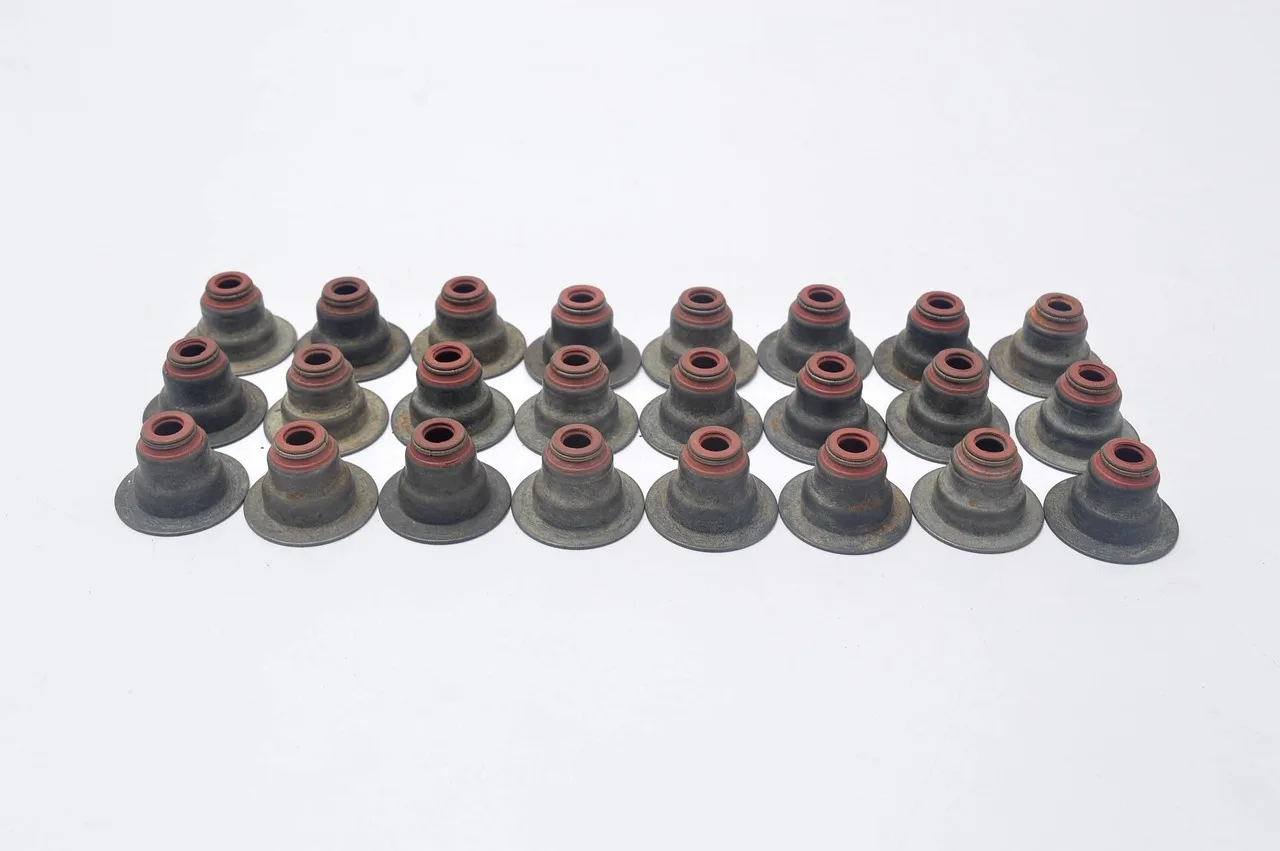
- Replacement grommets if the originals are brittle or flattened
Valve cover leak decision matrix
| Symptom | Likely source | Quick test | DIY confidence | Next action |
|---|---|---|---|---|
| Oil smell after driving | Valve cover gasket or rear edge seep | Inspect the cover rail and exhaust-side residue after a short run | Medium | Clean, recheck, then replace the gasket if the seam is wet |
| Oil in spark plug wells | Tube seals with the main gasket | Pull coil boots and inspect the wells with a light | Medium | Replace gasket and tube seals; inspect coils for damage |
| Oil on the valve cover edge | Valve cover gasket | Degrease, run the engine, and trace the first fresh line | High on simple engines | Remove cover, inspect rail, reinstall to spec |
| Seep only at the back of engine | Valve cover, cam seal, or timing cover | Use UV dye and a black light after cleaning | Medium | Confirm exact source before parts are ordered |
| Leak returns after a new gasket | PCV pressure, warped cover, or bad install | Check the PCV path and bolt torque pattern | Low to medium | Fix pressure or fitment issue before another gasket |
How do you confirm the leak source?
Clean the engine first, then look for fresh oil instead of old residue. Start with a spotless valve cover, plug wells, and nearby head surfaces, then run the engine and trace the first new oil line. A valve cover leak usually starts at the cover seam or the plug-well seals, while oil from the oil filler cap, timing cover, or cam seal starts elsewhere. If the source is unclear, UV dye is the cleanest way to trace it.
- Spray degreaser on the valve cover, plug wells, and nearby head surfaces.
- Wipe the area dry with shop towels.
- Drive or idle the engine until it reaches normal operating temperature.
- Inspect the cover edge, rear corner, and spark plug wells with a light.
- Check the PCV hose or valve for blockage and the oil level for overfill.
- If the leak is still unclear, add UV dye to the oil and inspect with a black light after a short run.
A common first-timer mistake is installing a new valve cover gasket before scraping off the old sealant and oil residue from the mating surfaces. Say your engine has a wet rear corner and a smoky smell after a 10-minute drive. If you clean it first, the fresh trail can show whether the valve cover is leaking or whether oil is coming from a higher or rearward source.
How do you fix the leak?
Replace the valve cover gasket only after you confirm the cover is the source. Valve cover gaskets are usually easy to replace, but access can change the job completely. Some engines need only a few fasteners; others require intake parts, ignition parts, or extra brackets to reach the cover safely.
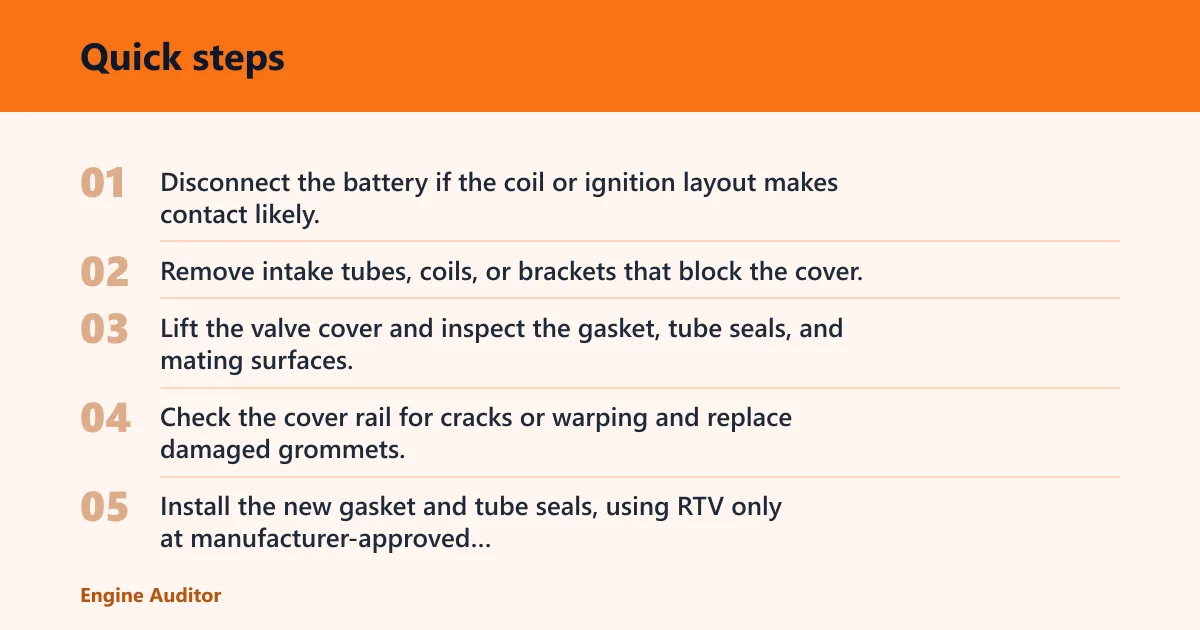
- Disconnect the battery if the coil or ignition layout makes contact likely.
- Remove intake tubes, coils, or brackets that block the cover.
- Lift the valve cover and inspect the gasket, tube seals, and mating surfaces.
- Check the cover rail for cracks or warping and replace damaged grommets.
- Install the new gasket and tube seals, using RTV only at manufacturer-approved gasketless joints.
- Set the cover in place and tighten bolts in the specified pattern with a torque wrench.
- Recheck after a short drive for fresh oil at the seam and plug wells.
Use an accurate torque wrench and follow manufacturer torque recommendations. Overtightening can crush the gasket or distort the cover. An uneven tightening order can do the same thing, leaving one area sealed and another one leaking.
What the tightening pattern changes
Most valve covers seal best when bolts are snugged gradually from the center outward or in the pattern the service information gives. Skipping the pattern can bow the cover rail, especially on light plastic or thin metal covers. That leaves a leak path even with a new gasket.
Suppose a four-cylinder engine has oil only in one spark plug well after a new gasket. If the tube seals were reused because they “looked fine,” that well can stay wet while the outer edge looks dry. The gasket job is not complete unless the tube seals and cover condition are checked too.
Why does a new gasket leak again?
A repeat leak usually means the gasket was not the only problem. A clogged PCV system can build pressure inside the engine and cause leaks, and a restricted PCV system is also linked to engine oil sludge. Replacing the gasket without checking the PCV system can repeat the failure.
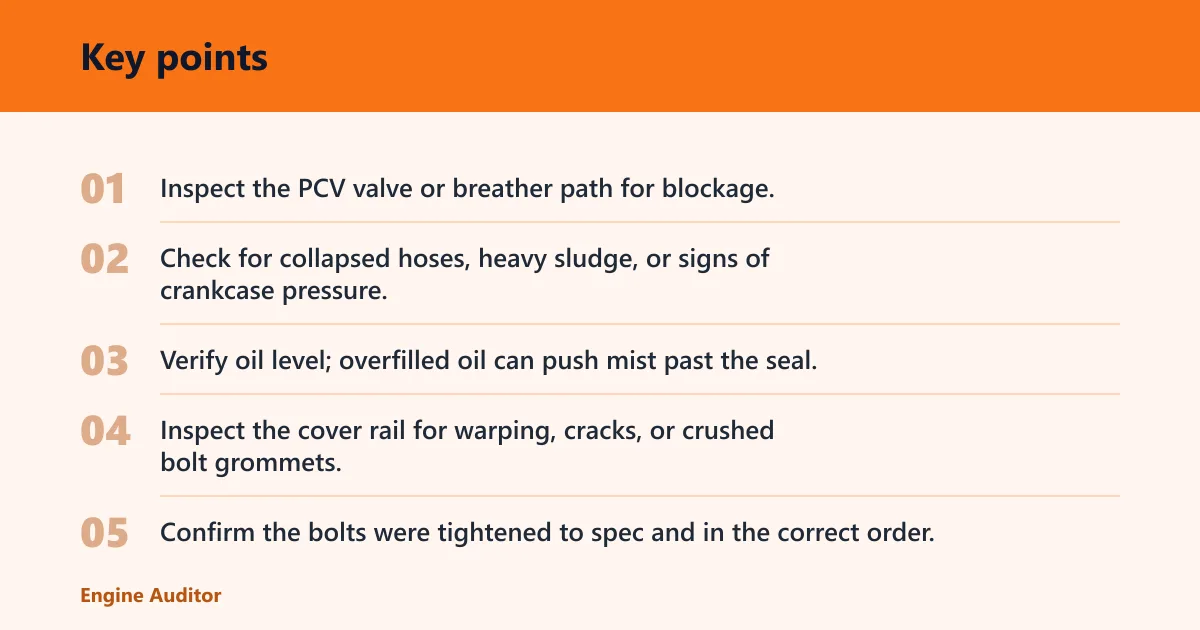
- Inspect the PCV valve or breather path for blockage.
- Check for collapsed hoses, heavy sludge, or signs of crankcase pressure.
- Verify oil level; overfilled oil can push mist past the seal.
- Inspect the cover rail for warping, cracks, or crushed bolt grommets.
- Confirm the bolts were tightened to spec and in the correct order.
If the cover is warped or cracked, another gasket will not hold. Some engines also use gasketless joints where RTV silicone sealant is specified. In those spots, clean mating surfaces matter more than bead size, and some silicones are approved for oxygen sensors.
If that didn’t work, try this next
If the leak returns after a correct gasket job, move down the list: check the PCV path, then the cover rail, then the oil level, then the tightening pattern. If the cover itself is cracked or badly warped, replace the cover instead of reusing it. High-mileage oil can reduce minor seepage, but it is not a repair for a major leak.
What does the repair cost?
DIY cost is often limited to the gasket, tube seals, sealant where specified, and any brittle grommets. Shop cost rises when access is tight or the intake, coil packs, or fuel hardware must come off. A straightforward valve cover gasket job is one of the simpler oil-leak repairs; a cramped V-engine or a cover buried under intake parts is not.
As a practical rule, simple DIY jobs can stay in the low hundreds in parts and supplies, while shop bills can climb into the several-hundred-dollar range once labor and access time are added. Add more if the cover, coils, or plugs need replacement after oil contamination.
Common mistakes
- Skipping degreasing before diagnosis, which hides the fresh leak path
- Reusing hardened seals or brittle grommets
- Overtightening the bolts or skipping the tightening pattern
- Using RTV where a gasket is required instead of only at approved joints
- Ignoring oil in spark plug wells and the ignition damage it can cause
- Replacing the gasket without checking the PCV system or oil level
Frequently asked questions
Is it safe to drive with a valve cover oil leak?
A small seep is usually less urgent than oil reaching the exhaust, belts, or spark plug wells. Burning smell, smoke, misfires, or oil near ignition parts raise the risk. If the leak is active enough to drip onto hot parts or contaminate coils, park it until the repair is done.
Why is oil pooling in my spark plug wells?
That usually means the spark plug tube seals have failed, often with the main valve cover gasket. Oil in the wells can damage ignition coils and cause misfires, so do not ignore it. Clean the wells, replace the gasket and tube seals, and confirm the cover is not warped before reassembly.
Do I need to replace the PCV valve when fixing a valve cover leak?
You should at least inspect it and the full crankcase ventilation path. A clogged PCV system can build pressure and cause leaks, and replacing the gasket without checking it can repeat the problem. If the valve is restricted, stuck, or sludge-filled, replace it and verify the hoses are clear.
Products related to this article
Sponsored / affiliate links. As an Amazon Associate I earn from qualifying purchases. I may earn additional commission from eligible campaigns.