Why Is My Oil Pressure Light On? Causes and Quick Fixes
If the oil pressure light comes on while driving, stop as soon as it’s safe, shut the engine off, and check the dipstick. If the level is full or the light stays on after topping up, do not keep driving. True oil pressure loss can wipe out bearings and seize the engine fast. This guide shows how to tell low oil from a real pressure fault or a bad sensor, and what to do next.
Why is my oil pressure light on?
What the light is warning you about
An oil pressure warning light is not a service reminder. It warns that the engine may not be getting enough oil pressure to keep moving parts apart and cooled. A red light usually indicates an urgent issue. A yellow light usually suggests a minor issue, but it still needs a proper check.
The warning can come from low oil level, oil leaks, a clogged filter, wrong oil grade, overheating, a failing oil pump, or a bad sensor or switch. The job is to sort those by symptom and timing before parts are replaced.
When to stop the engine immediately
If the light is red, stop the engine as soon as it is safe. If it flickers red at idle, sounds change, or the light stays on under load, the safest move is to shut down and inspect, not to “drive it home.” Driving with the oil warning light illuminated can cause severe engine damage in minutes.
What should I check first?
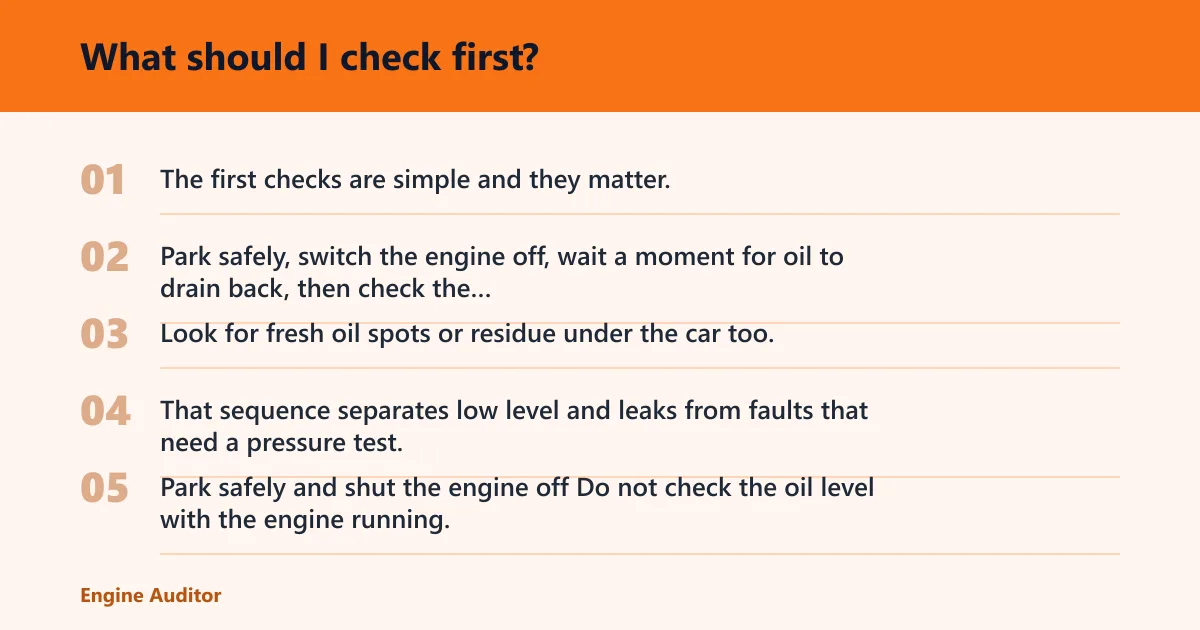
The first checks are simple and they matter. Park safely, switch the engine off, wait a moment for oil to drain back, then check the dipstick. Look for fresh oil spots or residue under the car too. That sequence separates low level and leaks from faults that need a pressure test.
Park safely and shut the engine off
Do not check the oil level with the engine running. Heat, motion, and low pressure warnings all point to the same rule: stop first. If the light came on at speed, pull over in a safe place before doing anything else.
Check the dipstick for level and condition
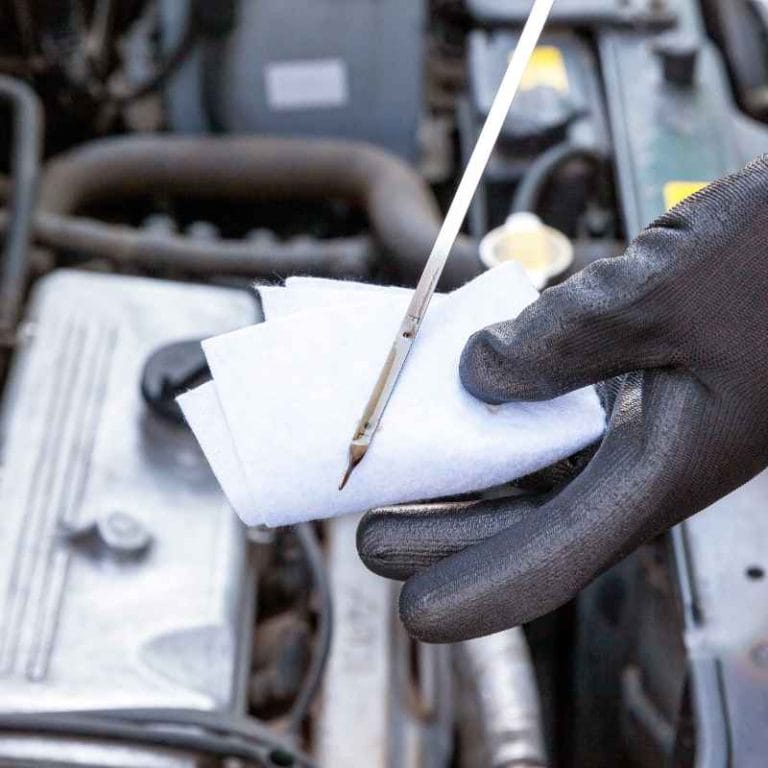
Pull the dipstick, wipe it, reinsert it fully, then remove it again to read the level. Oil should be between the minimum and maximum marks. Below the minimum mark often points to low oil. Above maximum can also cause trouble, because too much oil can foam and affect pressure. Dark oil alone is not the issue; the level is.
Look under the car for fresh leaks
Check the ground and the underside for wet spots, drips, or oily residue. Common leak points include the sump, drain plug, oil filter, and seals. Oil leaks are a common cause of pressure drop. If the level is low and there are fresh spots, that is a stronger clue than any guess from the dashboard.
Use this symptom-to-next-step triage table
| Scenario | Most likely cause | Next DIY check |
|---|---|---|
| Red light at idle | True oil pressure loss, low oil level, or hot thin oil | Shut the engine off, check the dipstick, then inspect for leaks before restarting |
| Light after topping up | Overfill, wrong oil, sensor fault, or pressure loss that topping up did not fix | Recheck level on the dipstick, confirm it is between the marks, and look for overfill signs or a persistent warning |
| Light only when hot | Oil thinning from overheating, worn engine clearances, weak pump, or wrong viscosity | Check the oil level, inspect coolant temperature history, and confirm the oil grade matches the engine spec |
| Light after an oil change | Wrong filter, loose filter, low fill, wrong oil grade, or wiring disturbed during service | Verify the filter is seated, check the dipstick, and confirm the correct oil was used |
| Light with a normal dipstick level | Sensor, switch, wiring fault, clogged filter, or real pressure loss not visible on the dipstick | Check the connector and wiring, then arrange a pressure test if the warning returns |
Can low oil cause the oil pressure light to come on?
Yes. Low oil level can drop pressure enough to trigger the warning light, and low oil can cause rapid engine wear. If the level is below the dipstick minimum mark, that is a direct next step: top up with the correct oil, then recheck for leaks and see whether the light clears. If it does not, there is more to find.
Low oil level and pressure drop
The oil pump moves oil through galleries, bearings, camshafts, and other parts that need a steady supply. When the sump level is low, the pump can draw air on corners, braking, or hard acceleration. That is why some lights show up during turns or when stopping at lights after a long drive.
Overfilled oil and foaming
Too much oil can also trigger the warning. An overfilled sump can whip oil into foam, and foamy oil does not hold pressure well. If the dipstick is above the maximum mark, do not keep adding more. Drain it to the proper level before running the engine again.
Leak spots, residue, and the usual leak points
Leaks often leave clues before the light appears. Check the sump, drain plug, filter housing, and seals for wetness or streaks. A slow leak can drop the level enough to create a warning long before a puddle forms. That is why a quick look under the car is worth doing right away.
Could the filter, oil grade, or overheating be the cause?
Yes. A clogged oil filter can restrict flow and drop pressure, wrong oil can circulate poorly if it is too thick when cold or too thin when hot, and overheating can thin the oil enough to reduce pressure. These issues often show up after service, in hot weather, or after a long highway drive.
Clogged or blocked oil filter
A clogged oil filter can cut flow, and a blocked or damaged filter reduces flow and lowers pressure. If the warning appeared after recent service, the filter is one of the first things to inspect. A loose filter, wrong filter, or a filter that was never seated correctly can mimic a more serious fault.
Wrong oil grade for the engine
The engine oil grade should match the maker’s specification. Oil that is too thick can struggle on cold start. Oil that is too thin can lose pressure when hot. Either one can create a warning light without any obvious leak. If the warning started after a service, this check moves up the list fast.
Hot oil thinning and pressure loss
Engine overheating raises oil temperature, and hot oil becomes thinner. Thinner oil can lower pressure at idle first, which is why a warning may appear after a long drive or while waiting at a traffic light with the fan running. That pattern points toward heat, viscosity, or a worn engine condition rather than a simple level problem.
Can a bad oil pressure sensor turn the light on?
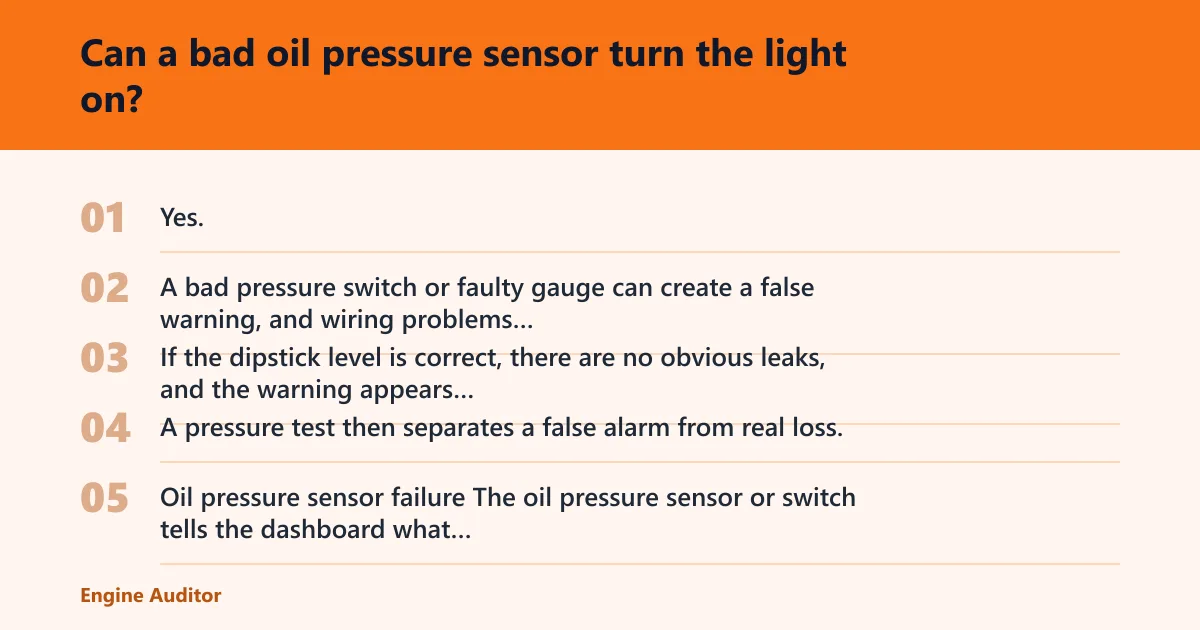
Yes. A bad pressure switch or faulty gauge can create a false warning, and wiring problems can do the same. If the dipstick level is correct, there are no obvious leaks, and the warning appears and disappears without a clear pattern, the sensor circuit becomes a strong suspect. A pressure test then separates a false alarm from real loss.
Oil pressure sensor failure
The oil pressure sensor or switch tells the dashboard what pressure it sees. When it fails, it can report low pressure even if the engine is fine. That is why a warning with a normal oil level is not enough to condemn the pump. The next step is testing, not guessing.
Wiring, connector, and switch faults
Corroded connectors, damaged wires, and loose plugs can interrupt the signal. A light that changes when the wiring is moved, or one that appears after recent work near the engine, may point to an electrical fault. After an oil change or repair, connector damage is a real possibility.
When a pressure test is needed
If the level is correct and the warning persists, a mechanical oil pressure test is the cleanest next step. That test separates sensor trouble from actual pressure loss. It is the point where a workshop can stop replacing parts at random and measure what the engine is really doing.
What if the pump is the problem?
The oil pump circulates oil through the engine, so a failing pump can cause pressure loss across the whole system. This is one of the more serious causes. It is usually not the first thing to replace, because level, filter, oil grade, leaks, and sensor faults need to be ruled out first.
Signs that point past the easy checks
If the oil level is correct, the filter is known good, the oil grade is right, the engine is not overheated, and the warning still appears with a confirmed pressure drop, the pump moves up the list. A red light at idle, noisy top-end operation, or pressure loss that worsens as the engine warms all deserve that level of attention.
Why this needs a mechanic
Diagnosing a pump issue usually means measuring oil pressure and sometimes removing components for inspection. That is beyond a simple driveway check. A faulty oil pump is described as one of the more serious causes, and it should not be replaced until the basic checks have failed.
Can I drive with the oil pressure light on?
Only long enough to stop in a safe place if the light is red. If it is yellow and the engine sounds normal, the car may still need to be parked and checked before any more driving. Do not treat the warning as a normal service reminder, and do not continue if the light stays on after topping up.
Red light versus yellow light
A red oil light means the oil pressure has dropped to a dangerous level. A yellow oil light usually suggests a minor issue. That difference matters. Red means stop as soon as it is safe. Yellow still needs attention, but it often points first to level, sensor, or service-related issues rather than immediate shutdown.
Why driving can cause fast damage
Low oil pressure starves bearings and valvetrain parts of the film that keeps metal apart. Damage can begin quickly, and the engine may seize if the fault is ignored. That is why the first response matters more than the dashboard wording alone.
How do I tell if it is a false warning?
A false warning is more likely when the dipstick level is normal, there are no leaks, the engine sounds normal, and the light changes without a matching change in driving load. Sensor, switch, or wiring faults can trigger that behavior. The clean way to sort it out is by checking level, then testing pressure if the light stays on.
Look for timing clues
Light after an oil change points toward service errors, filter issues, or the wrong oil. Light only when hot points toward thinning oil, overheating, or a worn engine. Light after topping up points toward overfill, the wrong grade, or a warning that was never caused by level in the first place.
Do not skip the pressure test
If the warning remains after the first checks, a pressure test is often the next step before replacing sensors or pumps. That test tells whether the warning is false or whether the engine really has low pressure. It saves time and keeps the diagnosis on the right track.
Frequently asked questions
Why is my oil pressure light on?
Most often, the light is on because oil level is low, oil pressure has fallen, or the sensor circuit is giving a false reading. Start with the dipstick, then look for leaks and service mistakes. If the light is red or stays on, stop driving and inspect the car.
Can I drive with the oil pressure light on?
Driving with the light on is risky. If it is red, stop as soon as it is safe and shut the engine off. If it is yellow, do not assume it is harmless; check the oil level and look for obvious leak signs before restarting.
What does a red oil light mean?
A red oil light means the oil pressure has dropped to a dangerous level. That is a stop-now warning, not a “check later” message. Shut the engine off, check the dipstick only after it is safe, and do not keep driving if the warning remains.
What does a yellow oil light mean?
A yellow oil light usually suggests a minor issue. It can still come from low oil, a sensor fault, or a service problem, so it should not be ignored. Check the dipstick first, then inspect for leaks or recent maintenance errors before deciding what to do next.
Can a bad oil pressure sensor turn the light on?
Yes. A bad pressure switch or faulty gauge can create a false warning, and wiring faults can do the same. If the oil level is correct and the warning persists, the next step is usually connector inspection and a pressure test, not immediate pump replacement.
Does the wrong engine oil trigger the oil light?
Yes. Oil that is too thick can struggle when cold, and oil that is too thin can lose pressure when hot. If the warning started after a service, check that the oil grade matches the engine maker’s recommendation and that the filter was installed correctly.
WHY Definition & Meaning – Merriam-Webster — The meaning of WHY is for what cause, reason, or purpose. How to use why in a sentence.
In this guide, why means the cause behind the warning light, not just the fact that it is on. The useful question is “what changed?” Oil level, filter condition, temperature, sensor signal, and pump output each point to a different next check.
Products related to this article
Sponsored / affiliate links. As an Amazon Associate I earn from qualifying purchases. I may earn additional commission from eligible campaigns.