Oil Pressure Gauge Reads Low? What It Means, Causes, Fixes
A low oil-pressure reading can point to a bad sender, bad wiring, low oil level, worn bearings, or a failing pump; if the light is on, many mechanics would avoid driving until pressure is checked with a mechanical gauge. Severe low pressure can damage bearings and the engine very quickly. Start with the checks that take minutes, not hours. This guide shows what to check first, what to test next, and how to tell a false reading from a true oiling problem.
What a low oil pressure gauge reading can mean
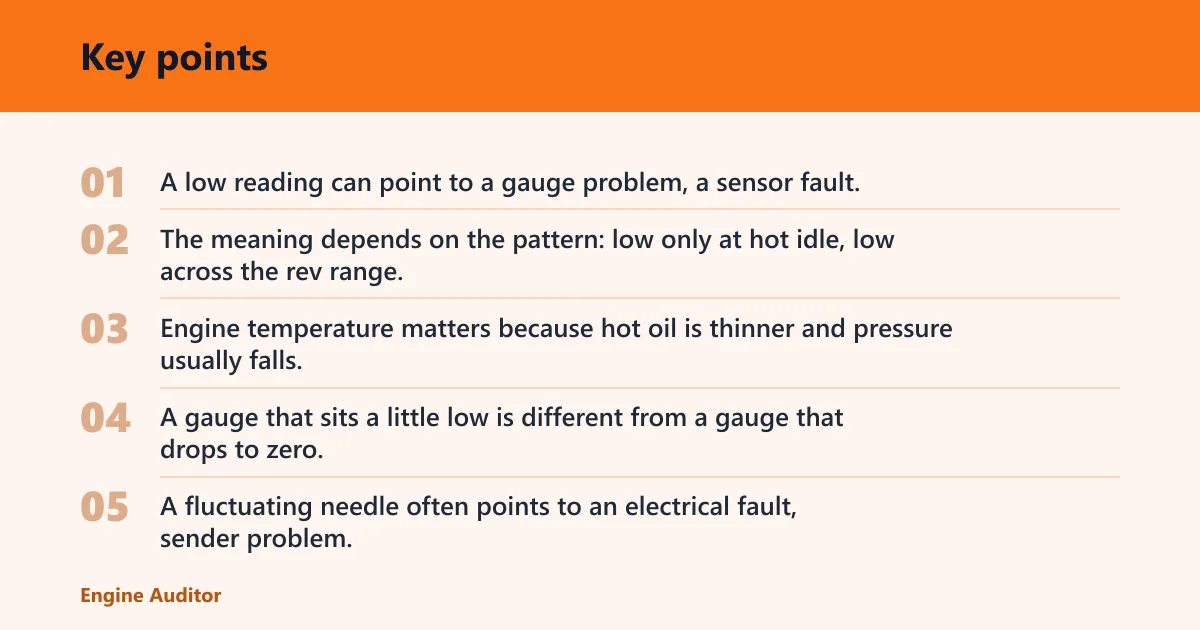


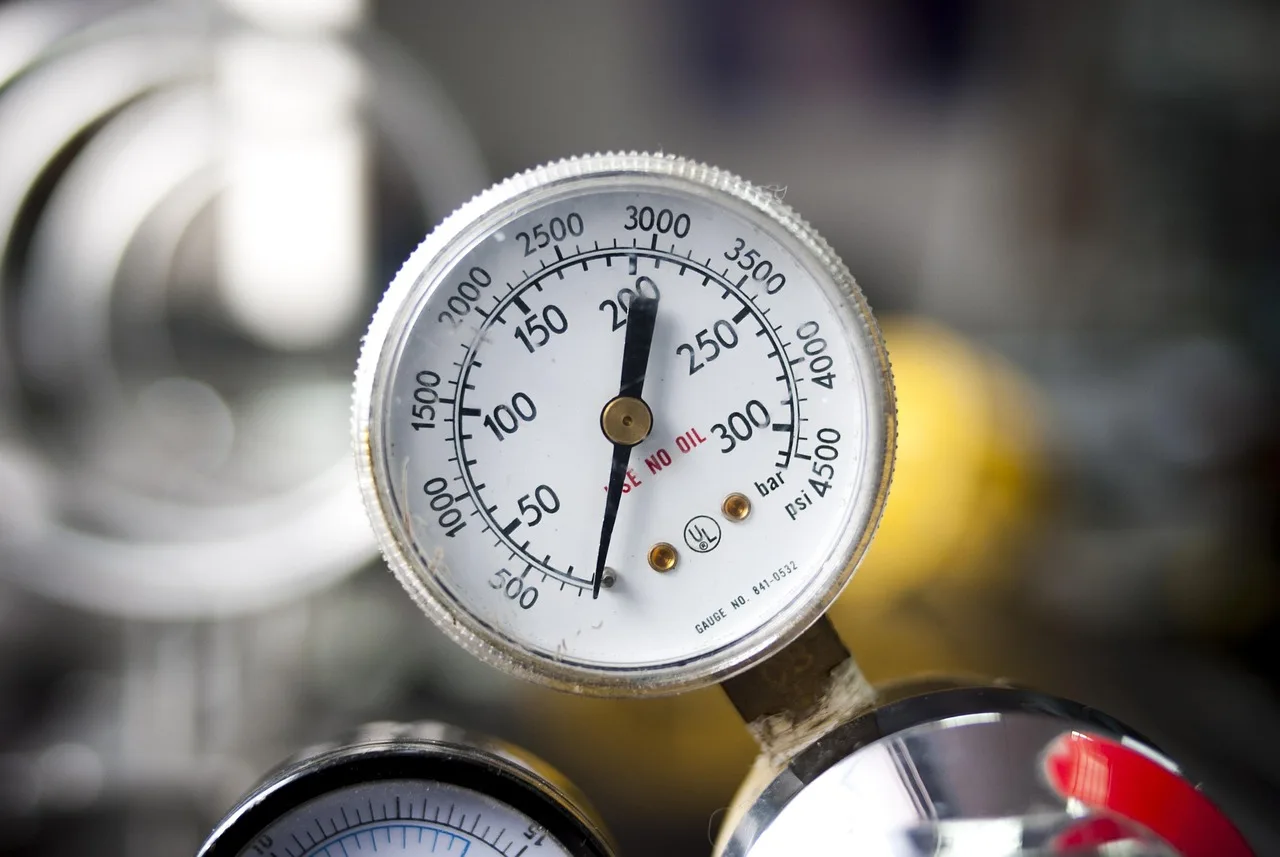
A low reading can point to a gauge problem, a sensor fault, or a real lubrication issue inside the engine. The meaning depends on the pattern: low only at hot idle, low across the rev range, fluctuating, or showing no pressure at all. Engine temperature matters because hot oil is thinner and pressure usually falls.
Low reading versus no pressure versus a fluctuating needle
A gauge that sits a little low is different from a gauge that drops to zero. A fluctuating needle often points to an electrical fault, sender problem, air in a mechanical gauge line, or a pickup issue that exposes the pump briefly. No pressure is a stop-driving situation until a mechanical test proves otherwise.
Why engine temperature changes the reading
Cold oil is thicker, so pressure is usually higher after startup. As the engine warms, oil viscosity drops and the gauge often falls to its normal hot range. If pressure only turns low after the engine is hot, that pattern can point to worn clearances, thin oil, or a relief valve that is bleeding pressure off.
is a low oil pressure gauge reading always a real problem?
No. A low reading is not always a real lubrication failure, because the oil pressure gauge, sender, wiring, or cluster can lie. But you should treat it as real until a quick check proves otherwise. If the warning light is on or the reading is near zero, stop driving and verify pressure with a mechanical gauge.
When the gauge or sender is at fault
A faulty sensor can make pressure appear low even when it is normal. Loose connectors, corroded terminals, damaged wiring, and poor grounds can create the same effect. Electric gauges can also drift or fail, especially on older vehicles, so a dash reading alone is not proof of engine damage.
When the engine really has low pressure
True low pressure usually follows a pattern: low oil level, hot-idle pressure that falls too far, pressure loss with rpm, or pressure that drops after a long drive. Low engine oil pressure can cause severe engine damage if not diagnosed in time. If the reading changes with heat and load, suspect a real mechanical issue until proven otherwise.
what should your oil pressure gauge read?
There is no single normal oil-pressure value that fits every engine. The correct reading depends on engine design, oil temperature, idle speed, and oil viscosity. You need the factory oil pressure specification for your exact engine, then compare the gauge or test-gauge result against that range at idle and at the test rpm listed by the manufacturer.
Why normal pressure varies by engine and temperature
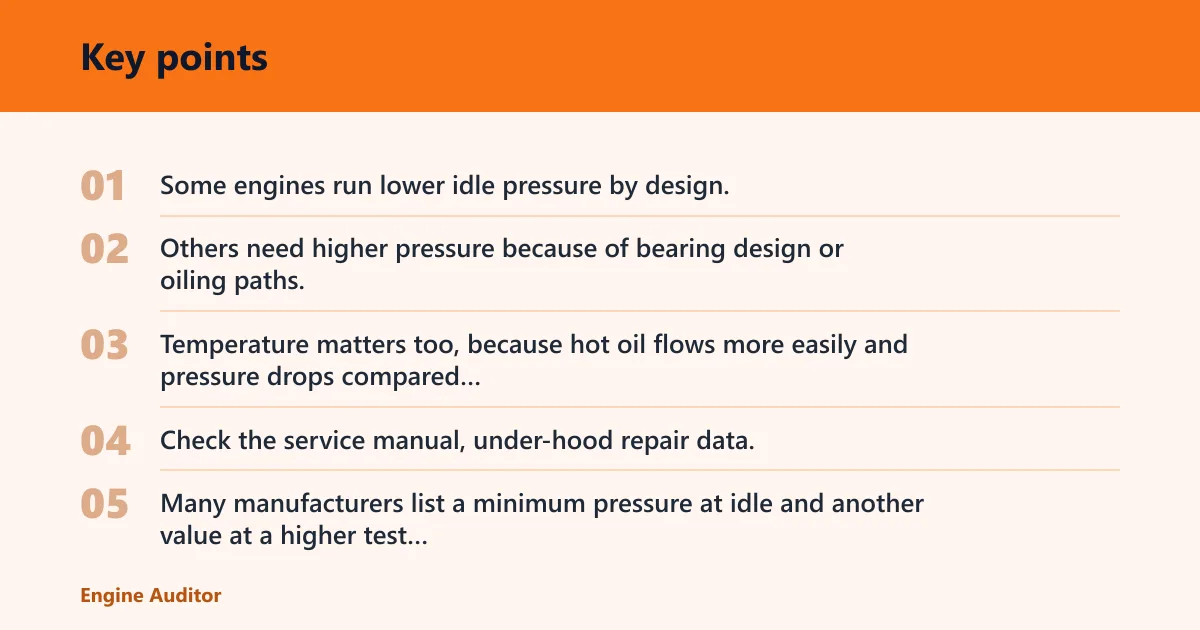
Some engines run lower idle pressure by design, especially modern engines with tighter oiling strategies and electronically controlled pumps. Others need higher pressure because of bearing design or oiling paths. Temperature matters too, because hot oil flows more easily and pressure drops compared with a cold start reading.
How to find the factory pressure spec
Check the service manual, under-hood repair data, or a trusted database for the engine’s specified range. Many manufacturers list a minimum pressure at idle and another value at a higher test speed. Compare your reading to those numbers, not to a generic “normal” value from another vehicle.
| Gauge behavior | Likely causes | First checks | Tools needed | Stop-driving threshold |
|---|---|---|---|---|
| Cold start low or normal, then drops hot | Thin oil, low level, worn bearings, relief valve issue | Check dipstick, oil grade, leaks, hot idle behavior | Dipstick, service spec, mechanical oil pressure gauge | Stop if the warning light comes on or pressure falls near zero when hot |
| Hot idle only low | Normal on some engines, worn pump, bearing wear, thin oil | Compare to factory hot-idle minimum, confirm oil level | Mechanical gauge, scan tool if equipped | Stop if pressure is below the specified minimum |
| Low on acceleration or under load | Restricted pickup, pump wear, clogged filter, pickup air leak | Check oil level, filter history, listen for noise | Mechanical gauge, basic hand tools | Stop if pressure drops with rpm instead of rising |
| Low or unstable at steady cruising | Sender fault, wiring fault, relief valve sticking, internal wear | Verify with scan data and mechanical test | Mechanical gauge, scan tool, wiring tester | Stop if the gauge swings to zero or the light flashes |
How to check the obvious causes first
Start with the checks that take minutes, not hours. Low oil level is listed as one of eight common causes of low engine oil pressure. Fuel or coolant contamination can dilute oil and lower pressure, and a clogged filter can restrict oil flow. These are simple faults, and they are common enough to check before any teardown.
Engine oil level and visible leaks
Check the dipstick on level ground with the engine off and cooled briefly, following the owner’s manual. A low level can come from leaks, oil consumption, or both. If the engine is one quart low on a small sump, pressure can fall enough to show on the gauge, especially during hard cornering or long highway runs.
Look for fresh oil around the oil pan, valve covers, drain plug, filter, and cooler lines. A leak that seems minor can still lower pressure if the sump spends time below the pickup screen. Top up only with the correct grade, then recheck the reading.
Oil condition, dilution, and viscosity
Using oil that is too thin can reduce pressure. Using oil that is too thick can also cause a pressure drop. The oil must match the manufacturer recommendation, because the wrong viscosity changes how fast oil moves through the engine and how the gauge responds when hot.
If the oil smells strongly of fuel or looks thin and overfull, dilution is possible. Coolant contamination can also weaken oil film strength. In either case, the oil pressure gauge can read low even before the engine makes obvious mechanical noise.
Oil filter condition and service history
The oil filter can clog with dirt and sludge, restricting oil flow. A neglected filter can cause a pressure drop across the filter, especially at higher rpm or when cold oil thickens. Replace it at the service interval, and replace a questionable filter before chasing deeper faults.
- Check the dipstick and confirm the oil is at the correct mark.
- Inspect for leaks around the filter, drain plug, and oil pan.
- Verify the oil grade against the engine’s service spec.
- Look for fuel or coolant contamination signs.
- Review the last oil and filter change interval.
How do I know if my oil pressure sensor is bad?
Suspect the oil pressure sensor when the reading changes without matching engine behavior, when the gauge needle jumps, or when the light flickers only over bumps. A bad sender, wiring fault, or gauge fault can mimic real low pressure. The fix is verification, not guessing: compare scan data, wiring condition, and a mechanical gauge test.
Signs of sender, wiring, or gauge faults
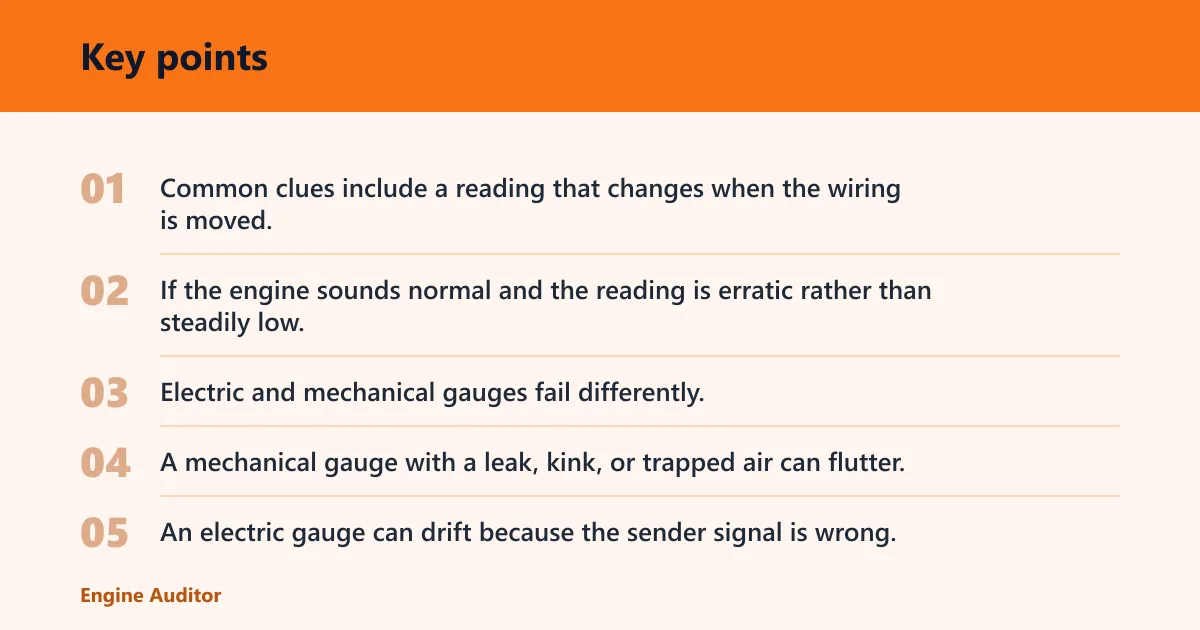
Common clues include a reading that changes when the wiring is moved, a gauge that pegs high or low after startup, or an oil light that comes and goes with vibration. If the engine sounds normal and the reading is erratic rather than steadily low, the electrical side deserves attention first.
Electric and mechanical gauges fail differently. A mechanical gauge with a leak, kink, or trapped air can flutter. An electric gauge can drift because the sender signal is wrong. Either way, the dash display is only a starting point.
When a manual mechanical test is needed
Use a manual oil pressure test when the dash reading does not match the symptoms, when the light is on with no noise, or when the vehicle has an engine-management fault code for the pressure circuit. The usual tools are a mechanical test gauge, the correct adapter for the engine, and basic hand tools to reach the sender port.
Remove the sender, install the test gauge, and read pressure at cold start, hot idle, and the recommended test rpm for that engine. That test separates an electrical fault from real engine pressure loss. If the mechanical gauge shows normal pressure, focus on the sensor, wiring, or cluster.
What causes true low oil pressure inside the engine?
True low pressure comes from a system that cannot build or hold pressure. A failing oil pump can cause low pressure because it cannot push oil effectively. A stuck-open relief valve can let too much oil flow back to the sump. High-mileage or poorly maintained engines often develop wear that lowers pressure.
Oil pump wear or installation issues
Oil pump wear, a damaged pickup, or a poor installation can reduce output. Debris in the pickup screen can starve the pump. On engines with recent work, a misinstalled pickup tube or a loose seal can pull air into the system and cause pressure loss under load.
Stuck-open pressure relief valve
The oil pressure relief valve regulates system pressure. If it sticks open, oil bypasses too early and pressure drops. That fault can mimic pump wear, and it often shows up as pressure that never reaches the factory range even after the engine warms up.
Internal engine wear or bearing clearance
Worn rod bearings, main bearings, or cam bearing surfaces open up the clearances that hold pressure. The pump may still move oil, but the engine leaks that pressure internally. This is one reason a hot engine with high mileage may read lower at idle than a tight low-mileage engine.
Blocked pickup or restricted oiling path
Sludge, debris, or gasket material can restrict the pickup screen or oil galleries. That restriction often shows up first under acceleration or during long, hot drives. If the pickup is partly blocked, the gauge can fall when the oil sloshes away from the inlet or the pump draws air.
Say your turbocharged 2.0L shows normal pressure cold, then drops below the factory minimum after ten minutes in traffic. That pattern points away from a harmless gauge quirk and toward hot thin oil, a relief valve fault, or clearance wear. A turbo engine should never be dismissed just because it still runs smoothly.
A common first-timer mistake is blaming the oil pressure gauge when the real issue is a clogged pickup screen starving the engine at idle. That can hide the real problem for a day, then the warning returns. The faster path is level, viscosity, leak check, then mechanical pressure verification.
What should you do if the gauge shows no pressure?
If the gauge shows no pressure or the warning light comes on, it is best to stop driving. Shut the engine off, then check the oil level and look for a major leak before any restart. No pressure is an emergency until a mechanical gauge proves that the dash reading is false. Low engine oil pressure can cause severe engine damage if not diagnosed in time.
Stop-driving thresholds
Do not keep driving if the needle sits at zero, the warning light is on steady, or the reading falls sharply as the engine heats up. Also stop if pressure is normal cold but disappears at hot idle, because that can indicate a failing pump, relief valve, or bearing wear that can worsen quickly.
What to check before restarting
Check the dipstick, inspect for leaks, confirm the oil cap is installed, and listen for ticking or knocking after a brief restart only if the level is correct and the warning is off. If the gauge still shows no pressure, do not keep running the engine. Tow it or use a mechanical gauge test at the sender port first.
Frequently asked questions
how to read oil pressure gauge
Read the gauge in context, not as a stand-alone number. Compare it with engine temperature, rpm, and the factory pressure specification for your engine. A low reading at hot idle can be normal on some engines, while the same number at cruise or under load can point to a problem.
what should your oil pressure gauge read
Your gauge should read within the manufacturer’s specified range for your exact engine. There is no universal normal value. The correct reading changes with oil temperature, idle speed, and oil viscosity, so always compare cold-start, hot-idle, and test-rpm readings to the service spec.
why is my oil pressure gauge reading low
A low reading can come from low oil level, thin or diluted oil, a clogged filter, a faulty sensor, worn bearings, a failing pump, or a stuck-open relief valve. The pattern matters. Low only when hot points differently than low all the time or low only during acceleration.
is a low oil pressure gauge reading always a real problem
No, but you should treat it as real until proven false. A bad sender, wiring fault, or gauge fault can mimic a lubrication issue. If the warning light is on, pressure is near zero, or the reading falls with heat and rpm, stop driving and verify with a mechanical gauge.
what causes oil pressure gauge to fluctuate
A fluctuating needle can come from loose wiring, a failing sender, a mechanical gauge line with air, or a pickup that uncovers oil during cornering or braking. If the engine is quiet and the gauge swings erratically, test the sensor circuit and confirm actual pressure before replacing major parts.
can low oil level cause low oil pressure
Yes. Low oil level is one of the common causes of low engine oil pressure. If the sump is low enough, the pump can draw air, pressure can drop during turns or hard braking, and hot idle pressure can fall below the factory minimum. Check the dipstick first every time.
Products related to this article
Sponsored / affiliate links. As an Amazon Associate I earn from qualifying purchases. I may earn additional commission from eligible campaigns.