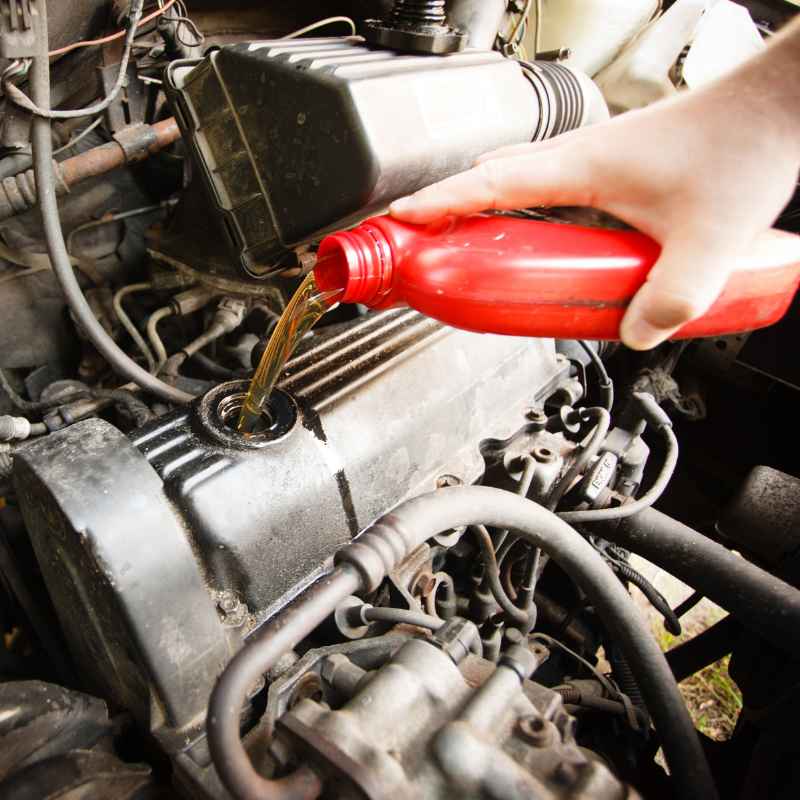
Is Car Engine Oil Suitable For Motorcycles? Read Before Using
Motorcycle engines often require different oil types than car engines. This is due to variations in lubrication systems, clutch designs, and gearboxes. Using the wrong oil can harm your motorcycle’s engine and clutch. Always check your owner’s manual for the recommended oil specifications.
Why Motorcycle Oil is Special
Motorcycle engines work in ways that are quite different from car engines. This is the main reason why they need their own special kind of oil. Think of it like needing a specific tool for a specific job.
You wouldn’t use a hammer to screw in a bolt, would you? It’s the same idea with engine oil.
In most cars, the engine oil’s main job is to lubricate the engine parts. It also helps keep the engine cool and clean. But cars have separate systems for their transmission and clutch.
These parts get their own lubrication or work differently. Motorcycles, however, often share the same oil for three key areas: the engine, the clutch, and the gearbox. This is where things get tricky.
Because the oil has to do so much in a motorcycle, it needs special additives. These additives help it perform well under all these different conditions. Car oil is designed for a car’s engine, and that’s it.
It doesn’t have to worry about a wet clutch slipping or a gearbox grinding away. This shared lubrication system is the biggest clue as to why car oil is usually not a good fit for motorcycles.
Understanding the Motorcycle’s Needs
Let’s break down why a motorcycle’s engine, clutch, and gearbox are so demanding on oil. Each part has a job, and the oil helps them do it without problems. Knowing these needs helps explain why generic car oil just won’t cut it.
Engine Lubrication
Like in a car, the oil in a motorcycle engine is super important. It coats all the moving metal parts. This coating stops metal-on-metal contact.
Without this layer, parts would rub together. This causes friction, heat, and wear. Over time, this can ruin the engine.
Motorcycle engines also tend to run hotter than car engines. They often have less airflow around them. So, the oil needs to handle that extra heat and keep everything cool.
The Wet Clutch Challenge
This is a big one. Many motorcycles use a “wet clutch.” This means the clutch plates sit inside the engine and are constantly bathed in oil. The oil’s job here is to help the clutch engage smoothly.
It also needs to prevent slipping. Car oils often contain special additives called “friction modifiers.” These are great for cars. They help reduce friction in the engine.
But in a motorcycle with a wet clutch, these same additives can make the clutch slip. Imagine trying to grab something, but your hands are too slick. That’s what happens to a motorcycle clutch with the wrong oil.
A slipping clutch means less power gets to the wheel. It also causes the clutch to wear out much faster.
Gearbox Demands
Motorcycles have a gearbox that handles all the different gears. This gearbox is also often lubricated by the same engine oil. The gears move at high speeds and put a lot of pressure on the oil.
The oil needs to be tough enough to protect the gear teeth from damage. It needs to withstand high pressure. Car transmission fluids are designed for this, but they are different from engine oil.
Regular car engine oil might not have the right “extreme pressure” additives needed for the motorcycle gearbox. This can lead to premature wear on the gears.

Car Oil vs. Motorcycle Oil: The Key Differences
Now that we know what a motorcycle engine needs, let’s look at how car oil falls short. The differences aren’t just minor; they are critical for your bike’s health.
Additives Matter
The biggest difference is in the additives. Car oils are formulated with friction modifiers to improve fuel economy. They aim to reduce all possible friction.
This is great for cars but terrible for motorcycle wet clutches. Motorcycle oils, on the other hand, are often designed to prevent clutch slip. They use different additive packages.
These packages ensure smooth clutch engagement and protect the gearbox under pressure.
Another point is the viscosity index improvers. These help oil maintain its thickness over a range of temperatures. Motorcycle oils might have different types or amounts of these.
They need to work well in both very hot engine conditions and cooler gearbox conditions. Car oils are optimized for cars.
Viscosity Ratings Explained
You’ll see numbers like 10W-40 on oil bottles. These are viscosity ratings. They tell you how thick the oil is.
’10W’ means it flows well when cold. ’40’ means it’s a certain thickness when hot. While you might find car oils and motorcycle oils with the same viscosity rating (like 10W-40), the internal formulation is different.
The ‘W’ stands for ‘Winter.’ It indicates how the oil flows at cold temperatures. A 10W oil is thinner when cold than a 20W oil. This helps the engine start easier in cold weather.
The second number, like 40, relates to the oil’s viscosity at operating temperature. Higher numbers mean thicker oil. Motorcycle oils must maintain their protective properties at very high engine temperatures.
They also need to maintain proper viscosity for the clutch and gearbox. A car oil might break down or become too thin at motorcycle engine temperatures, leading to poor protection.
The JASO Standard
This is a really important standard to look for on motorcycle oil. JASO stands for Japanese Automotive Standards Organization. They have specific standards for motorcycle oils.
You’ll often see JASO MA or JASO MB. JASO MA is for motorcycles with wet clutches. It ensures the oil meets certain standards for clutch performance.
JASO MB is for scooters or motorcycles with automatic transmissions that don’t have a wet clutch. If you see an oil labeled “Energy Conserving” or with similar claims for cars, it almost certainly has friction modifiers that will harm your motorcycle’s wet clutch.
Using an oil that meets JASO MA standards is a strong indicator that it’s formulated for your motorcycle’s needs. Car oils will never have a JASO rating because they are not designed for motorcycles. Always check your motorcycle’s owner’s manual for the specific JASO rating it requires.
Key Oil Differences: Car vs. Motorcycle
Car Oil:
- Focuses on engine lubrication and fuel economy.
- Contains friction modifiers to reduce wear and boost MPG.
- Not designed for wet clutches or shared gearbox lubrication.
- Lacks JASO certification.
Motorcycle Oil:
- Lubricates engine, wet clutch, and gearbox.
- Formulated to prevent clutch slippage.
- Contains specific additives for gear protection.
- Often carries JASO MA or MA2 certification.
When Can You Maybe Get Away With It? (Spoiler: Rarely!)
The honest answer is: very, very rarely. There are specific situations where a car oil might not cause immediate catastrophic failure, but it’s still not recommended. And even in these rare cases, there are significant risks.
Dry Clutch Motorcycles
Some older or specific types of motorcycles have a “dry clutch.” This means the clutch plates are not bathed in engine oil. They operate in a dry environment. In this specific case, the friction modifiers in car oil might not be as much of an issue for the clutch itself.
However, the oil still needs to protect the gearbox. Many car oils are still not formulated for the extreme pressures found in motorcycle gearboxes. So, even with a dry clutch, using car oil is a gamble.
Shaft-Driven Motorcycles
Some motorcycles are shaft-driven, meaning they use a driveshaft instead of a chain. These bikes often have a separate gearbox oil, which is different from the engine oil. If your motorcycle has a separate gearbox oil, then the car oil you use for the engine might be less of an issue for the clutch (if it’s a dry clutch).
But you still need to ensure the car oil is suitable for the high temperatures of your motorcycle’s engine. It’s a complex system, and mixing things up can still cause problems.
The “Emergency Only” Mentality
Let’s say you are stranded in the middle of nowhere. Your bike is on fumes of oil. The only thing you can find is car oil.
In a true, life-or-death emergency to get you to safety, adding a bit of car oil might prevent immediate engine seizure. This is purely to get you moving again, not to use as a long-term solution. You would then need to drain that car oil and
Even in this emergency scenario, you are risking clutch damage, potential overheating, and gearbox wear. It’s a calculated risk to avoid a worse immediate problem. Once you’re safe, the priority is getting the correct oil in your bike.
When Using Car Oil is (Almost) Never Okay:
- Wet Clutch Systems: High risk of clutch slippage and damage.
- High-Performance Engines: These demand precise lubrication.
- Air-Cooled Engines: They run hotter and need specialized oil.
- Long-Term Use: Any extended use of car oil will cause damage.
Real-World Consequences of Using Car Oil
I remember a friend, let’s call him Mark, who was trying to save a few bucks. He had a sporty Yamaha sportbike. He’d heard from a buddy that car oil was “basically the same stuff.” So, he swapped out his expensive motorcycle oil for a cheap jug of synthetic car oil.
Within about 500 miles, he started noticing his clutch felt… weird. It wasn’t grabbing as firmly as it used to. He dismissed it at first.
Then, one day, he was trying to accelerate hard, and the engine would rev up, but the bike wasn’t picking up speed much. The clutch was slipping badly.
He took it to a mechanic, who immediately spotted the problem. The oil was clearly not designed for a wet clutch. The friction modifiers had essentially glazed over the clutch plates.
Replacing the clutch plates and then refilling with proper motorcycle oil was a costly repair. Mark learned a hard lesson that day. The money he “saved” on oil ended up costing him much, much more in repairs and lost riding time.
He said the feeling of the bike losing power during acceleration was unsettling, almost like a boat losing its connection to the engine. It was a clear sign something was wrong.
Another scenario I’ve seen, more often on older air-cooled bikes, is premature engine wear. Car oil might not have the same high-temperature stability or wear protection needed. Over time, this leads to increased oil consumption, noisy engines, and eventually, major internal damage.
The engine parts just don’t get the robust protection they need.
The sad part is, these issues often don’t appear overnight. They creep up. You might not notice anything for a few hundred miles.
Then, things start to go wrong. By the time you realize the mistake, the damage might be significant and expensive to fix. It’s a classic case of “pay a little now or pay a lot later.”
Signs Your Motorcycle Might Have The Wrong Oil:
- Clutch Slippage: Engine revs up, but bike doesn’t accelerate properly.
- Overheating: Engine temperature gauge (if equipped) reads higher than normal.
- Noisy Engine: Ticking, knocking, or grinding sounds from the engine or gearbox.
- Increased Oil Consumption: Engine burns through oil faster than usual.
- Difficulty Shifting Gears: Gears don’t engage smoothly.
What You Should Be Using: The Right Oil for Your Bike
So, if car oil is a no-go, what’s the right choice? It’s all about finding the oil specifically designed for your motorcycle. This usually means looking for motorcycle-specific oil.
There are a few key things to check:
Read Your Owner’s Manual
This is your bible. Every motorcycle owner’s manual will tell you exactly what kind of oil to use. It will specify the viscosity grade (like 10W-40) and the required standards (like JASO MA or MA2).
Don’t guess. Don’t assume. Check the manual.
Look for JASO Certification
As mentioned, JASO MA or MA2 is crucial for most motorcycles with wet clutches. It guarantees the oil won’t make your clutch slip. If your bike has a dry clutch or a separate gearbox oil, you might look for different specifications, but always confirm with your manual.
Consider Synthetic vs. Conventional
Motorcycle oils come in conventional, synthetic blend, and full synthetic varieties. Full synthetic oils generally offer better protection at extreme temperatures (both hot and cold), longer life, and better overall performance. While they cost more upfront, they can be worth it for the protection they offer, especially for high-performance or air-cooled engines.
The Right Viscosity
The viscosity grade your manual recommends is based on the typical operating temperatures where your motorcycle is designed to be used. Using an oil that’s too thin in hot weather can lead to wear. Using oil that’s too thick in cold weather can strain the starter and lead to poor lubrication on startup.
Quick Oil Selection Guide:
Step 1: Consult your motorcycle’s owner’s manual.
Step 2: Note the recommended viscosity grade (e.g., 10W-40).
Step 3: Identify the required standard (e.g., JASO MA, MA2).
Step 4: Choose a reputable brand of motorcycle-specific oil.
Step 5: Decide between conventional, synthetic blend, or full synthetic.
Frequently Asked Questions About Motorcycle Oil
Can I use any oil with a 10W-40 viscosity rating in my motorcycle?
No. While 10W-40 might be the correct viscosity, the oil must also meet specific motorcycle oil standards like JASO MA or MA2. Car oils with the same viscosity rating often contain additives that are harmful to motorcycle wet clutches and gearboxes.
What happens if I put car oil in my motorcycle for just a short time?
Even a short period can be detrimental. The friction modifiers in car oil can start to affect your wet clutch immediately, causing slippage. It can also lead to increased wear in the gearbox and engine, especially if the oil overheats or breaks down.
Is synthetic motorcycle oil better than conventional?
Generally, yes. Full synthetic motorcycle oils offer superior protection against heat, shear, and wear. They also tend to last longer.
However, always check your owner’s manual to see if synthetic is recommended or required for your specific model.
How often should I change my motorcycle’s oil?
This varies greatly by motorcycle and the type of riding you do. Your owner’s manual will have the most accurate recommendation. As a general rule, many riders change their oil and filter every 3,000 to 5,000 miles or once a year, whichever comes first.
Hard riding or dusty conditions may require more frequent changes.
What does the JASO MA/MA2 rating mean for motorcycle oil?
JASO MA and MA2 are standards for motorcycle oils that indicate they are suitable for use in motorcycles with wet clutches. MA2 is a higher performance rating than MA, offering even better clutch performance and friction control. Oils with these ratings are designed to prevent clutch slippage.
Can I use truck oil in my motorcycle?
No, truck oil is formulated for diesel engines, which have very different needs than motorcycle engines. They often have different additive packages and may not meet the requirements for a motorcycle’s engine, clutch, or gearbox. Always use oil specifically labeled for motorcycles.
Conclusion: Protect Your Ride
The convenience of having a general-purpose oil around is tempting. But when it comes to your motorcycle, sticking to purpose-built motorcycle oil is non-negotiable. The shared lubrication system of most bikes means that the wrong oil can cause a cascade of problems, from a slipping clutch to serious engine wear.
Always consult your owner’s manual for the exact specifications. Look for the correct viscosity and the crucial JASO MA or MA2 rating. By using the right oil, you’re not just keeping your motorcycle running; you’re ensuring its longevity, performance, and your safety on the road.
It’s a small investment that pays off hugely in protecting your machine.