How to Find an Engine Oil Leak Fast at Home
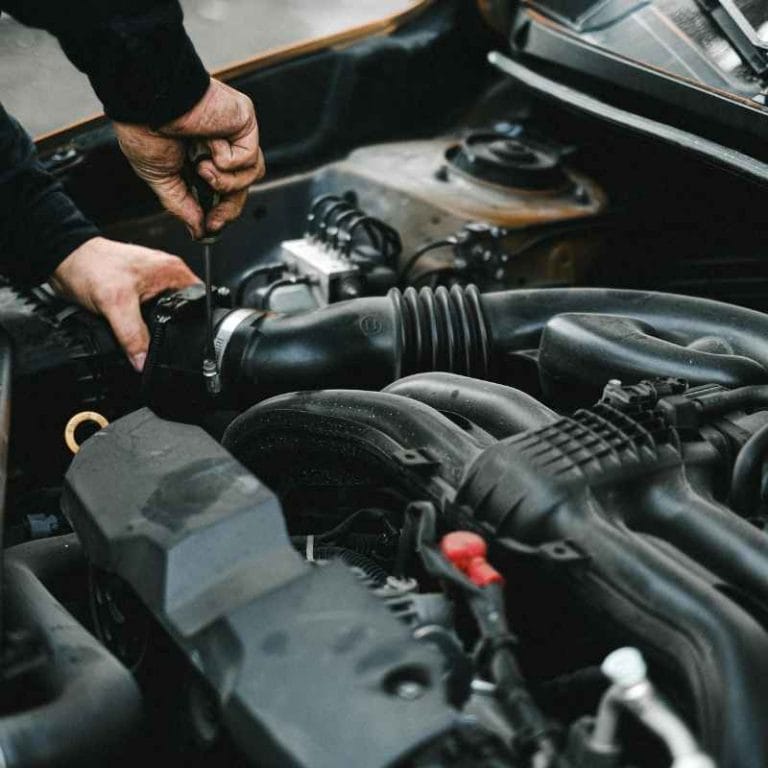
Clean the engine, run it about 5–10 minutes, then inspect with a bright light and cardboard underneath. That usually narrows an oil leak to the top, front, bottom, or rear. Miss the source and you can waste money on the wrong parts, or let a small leak turn into low oil and engine damage. This guide gives you a quick home method for narrowing the leak zone safely.
This guide is part of our Engine oil troubleshooting guide series.
What you’ll need

- Oil dipstick
- Cardboard or clean paper
- Bright flashlight
- Degreaser or brake cleaner
- Gloves and shop towels
- UV dye leak detection kit
- UV flashlight and glasses
- Jack stands or ramps
- Wheel chocks
How do you find the leak fast?
Start with the dipstick, then sort the leak by zone: top, front, bottom, or rear. Clean only the likely area, drive briefly only if the oil level is safe, and recheck with cardboard underneath. That order saves time and separates a fresh leak from old residue.
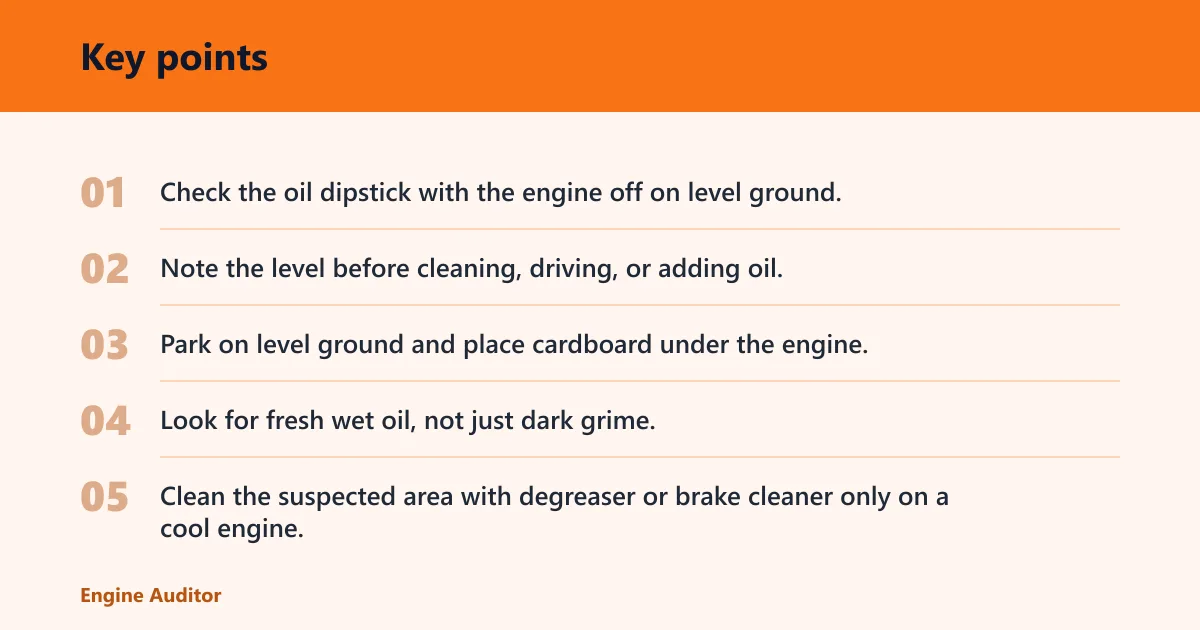
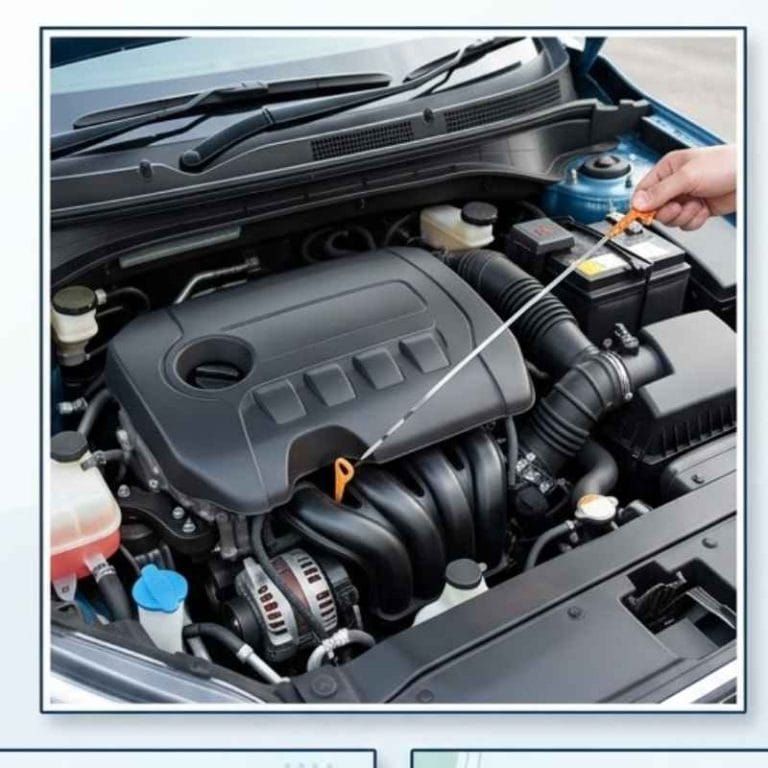
- Check the oil dipstick with the engine off on level ground.
- Note the level before cleaning, driving, or adding oil.
- Park on level ground and place cardboard under the engine.
- Look for fresh wet oil, not just dark grime.
- Clean the suspected area with degreaser or brake cleaner only on a cool engine.
- Drive 5–10 minutes only if the dipstick still shows safe level, then recheck.
- Inspect top, front, bottom, then rear in that order.
- Use UV dye, UV flashlight, and glasses if the path is still unclear.
Oil leak matrix
This matrix gives you the next check after you identify the zone and severity. Use it after cleaning, because old oil can hide the true path. If the leak changes from seep to drip after a short drive, stop testing and move to repair or towing.
| Zone | Seep | Drip | Stream |
|---|---|---|---|
| Top | Check valve cover perimeter and PCV hoses; safe for short drive if level is stable. | Inspect valve cover gasket and oil running onto exhaust-adjacent parts; limit driving. | Stop driving and tow; likely valve cover, PCV pressure issue, or a top seal failure. |
| Front | Trace around front cover edges and pulley area; safe only if dipstick stays steady. | Check for oil spray around a pulley area and front crankshaft seal path; avoid more testing. | Stop driving; likely front crankshaft seal or front cover leak. |
| Bottom | Inspect filter base, drain plug, washer, and pan seam; short drive only if level holds. | Check loose filter, damaged seal, crushed washer, or stripped plug threads; driving is limited. | Stop driving and tow; likely filter, drain plug, oil pan, or gasket failure. |
| Rear | Inspect back of engine and bellhousing area; safe only if no drop in level. | Check rear main seal area and oil tracking down the transmission side; avoid driving if worsening. | Stop driving; likely rear main seal or rear-side engine leak. |
How do you tell where the oil starts?
The starting point is usually higher than the wet spot you see. Oil can spray around a pulley area and make the engine look wet above the actual source, so follow the cleanest edge of fresh oil upward. Then separate top, front, bottom, and rear patterns.
Top-of-engine clues
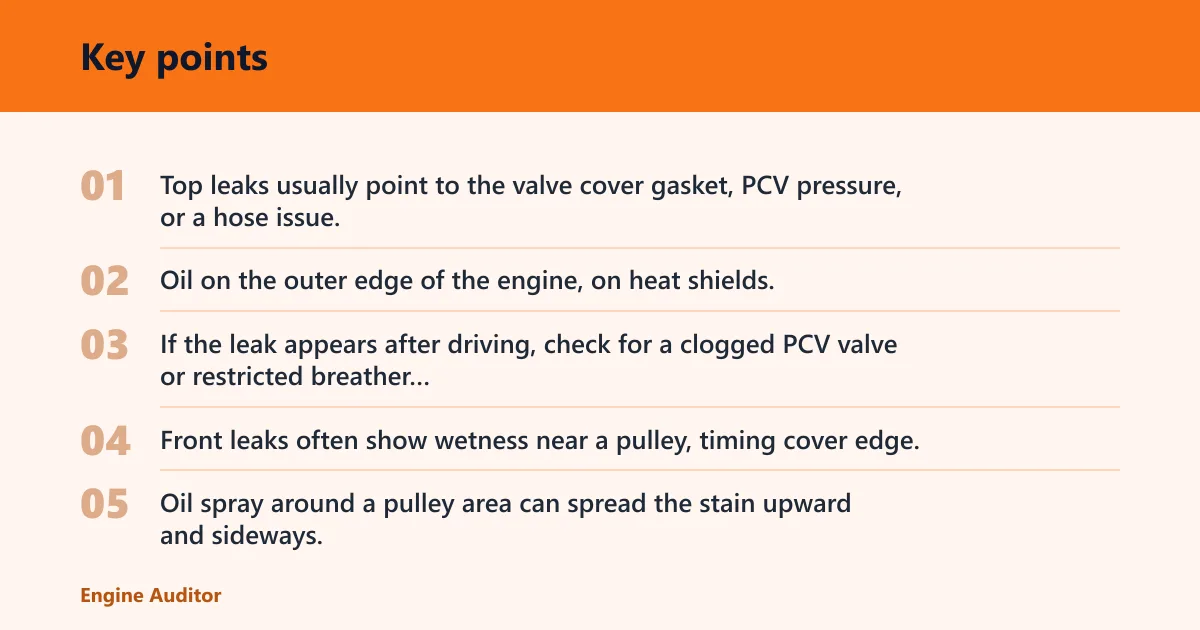
Top leaks usually point to the valve cover gasket, PCV pressure, or a hose issue. Oil on the outer edge of the engine, on heat shields, or on exhaust-adjacent parts often starts at the valve cover perimeter and runs down. If the leak appears after driving, check for a clogged PCV valve or restricted breather hoses.
Front-of-engine clues
Front leaks often show wetness near a pulley, timing cover edge, or the front crankshaft seal. Oil spray around a pulley area can spread the stain upward and sideways, which is why the true source may sit below the mess. The front crankshaft seal is a likely leak point on this engine, including the Zetec front crank seal leak.
Bottom-of-engine clues
Bottom leaks usually come from the oil filter, drain plug, or oil pan. Check for a loose filter, damaged seal, double-gasket installation, crushed washer, stripped threads, and oil pooling under the center or rear of the engine. Verify hand-tight plus correct torque if the filter or plug is accessible.
Rear-of-engine clues
Rear leaks show up at the back of the engine and can track down the bellhousing area. That pattern often points to a rear main seal or a back-of-engine gasket path, not the oil pan. If the wet area starts high at the rear and runs down, avoid guessing at the pan first.
Can you drive with an oil leak?
You can drive short-term only if the leak is a small seep, the dipstick stays stable, and there is no smoke or burning smell. Stop and tow if oil is dripping onto hot parts, the dipstick drops quickly, or you see a stream. If the leak worsens after a short drive, stop further testing.
- Check the dipstick before moving the car again.
- Add exactly 0.5 qt if the level is near the low mark, then recheck.
- Start the engine and idle 5–10 minutes only if the level is safe.
- Watch for fresh wet oil, smoke, or burning smell.
- Stop driving if oil reaches exhaust hot spots or drips rapidly.
Say your driveway shows one 2-inch spot after a 10-minute drive and the dipstick stays steady. That points to a seep worth tracing, not an emergency. Suppose the spot becomes three fresh drops after the same drive and a burning smell starts; that is a stop-driving result.
How do you stop oil leaking from your car onto the driveway?
The practical way to slow it long enough to diagnose it is to cut the drip rate, not hide the leak. Top up only enough to keep the dipstick in range, park on cardboard, and clean the suspect area so fresh oil stands out. If the leak is active and reaches hot parts, stop driving.
- Top up to the safe zone on the dipstick.
- Place cardboard under the engine centerline.
- Clean the likely source area on a cool engine.
- Run the engine briefly, then inspect fresh wet oil.
- Use UV dye if the source is still hidden by grime.
Common mistakes
Cleaning the wrong area first wastes time. Start where the oil is freshest, not where the grime looks worst. A leak at the filter or drain plug can mimic a valve cover leak after it runs down the block.
Another mistake is treating every oil smell as an external leak. Burning oil can come from oil on hot exhaust parts, while consumption shows up as a low dipstick without a visible drip. Those need different checks.
Do not crawl under the car without support. Use jack stands or ramps on level ground, and set wheel chocks before you inspect the underside. Do not use brake cleaner on a hot engine.
Use the evidence log: where the drip lands, whether there is smell, and how much the dipstick falls after a short drive. A common first-timer mistake is seeing oil at the rear and assuming the rear main seal, when the filter above it is the real source.
Frequently asked questions
How do I stop engine oil leaking long enough to diagnose it?
Top up only to the safe dipstick mark, clean the likely leak zone, and park on cardboard so new drops show fast. That does not fix the leak, but it keeps oil level stable long enough to identify whether the source is top, front, bottom, or rear.
How do I fix a leaking oil spot at home?
First identify the exact source. Then fix the part that matches the zone: valve cover gasket at the top, filter or drain plug at the bottom, or a seal at the front or rear. If the leak is a stream, do not keep testing; tow it or repair it immediately.
How do I check my engine oil before I start looking for a leak?
Park on level ground, shut the engine off, wait a few minutes, then pull the dipstick, wipe it, reinsert it fully, and read it again. Record that number before cleaning or driving, because it tells you whether the issue is loss, consumption, or both.
How can I find where engine oil is coming from without a lift?
Use level ground, wheel chocks, ramps or jack stands, and a bright light. Clean the engine, then inspect from above and below with cardboard under the car. If the source stays unclear, add UV dye and inspect with a UV flashlight in a darkened area after a short drive.
How do I tell if the leak is from the valve cover, drain plug, or filter?
Valve cover leaks start high and leave oil on the engine exterior and nearby hot parts. Drain plug and filter leaks start low, often at the base or side of the filter or around the plug washer. Oil pooling under the center or rear points lower than a top gasket.
Why is my car leaking oil only after I drive?
Heat and pressure can open a seep that stays hidden at idle. That pattern often points to the PCV system, a valve cover gasket, or a seal near the front of the engine. Recheck immediately after a short drive, because the oil path may disappear once the engine cools.
Why is my engine leaking oil from the top or bottom?
Top leaks usually come from the valve cover gasket or crankcase pressure that pushes oil past a seal. Bottom leaks usually come from the oil filter, drain plug, or oil pan. The fix starts with location, because the wrong zone leads to wrong parts and wasted time.
How do I fix leaking oil?
Find the zone first, then replace or reseal the part that matches the pattern. Clean the engine, confirm the fresh path, and verify the dipstick before and after the repair. If the leak appears only under driving heat, inspect the PCV system and front or rear seals next.
Products related to this article
Sponsored / affiliate links. As an Amazon Associate I earn from qualifying purchases. I may earn additional commission from eligible campaigns.
 DongJinK Engine Oil Level Gage Dipstick Compatible with Toyota 4Runner 1984-1995 for Toyota Celica 1984-1985 for Toyota Pickup 1984-1995 Replace# 15301-35020 1530135020
 ACROPIX Engine Oil Level Indicator Dipstick for Ford Fusion 2010-2012 for Ford Escape 2010-2012 for Ford Fusion 2006-2007 No.6E5Z6750AC Car Parts