When to Get a Wheel Alignment for Car Tires
Get a wheel alignment now if the car pulls, the steering wheel sits off-center, or tire wear is uneven; book it soon after a pothole, curb hit, suspension work, or new tires. Ignore it, and tire life can drop fast while handling turns less predictable. This guide shows when to act now, soon, or only after a repair.
What a wheel alignment changes


Wheel alignment sets steering and suspension angles to the vehicle maker’s specs. The key angles are camber, toe, and caster. When they are right, the wheels track straight, wear more evenly, and the car stays easier to control on straight roads and in corners.
Alignment is not tire balancing. It corrects how the wheels sit relative to the ground and to each other. Even small angle errors can change steering feel, speed up tread wear, and make the car less stable at speed.
Common signs include uneven tire wear, pulling, an off-center steering wheel, and vibrations. Those symptoms do not always point to the same repair, so timing depends on what changed and how the problem appears.
Why factory specifications matter
Factory specifications give the technician a target for how the wheels should sit and track. If camber, toe, or caster is outside spec, the vehicle may still drive, but it can scrub the tires and drift or pull during normal use.
That is why a visual check is not enough. Some shops offer free visual alignment checks, but those do not replace machine measurements. A full alignment uses specialized computers and laser equipment to measure the angles precisely.
How alignment affects tire wear and handling
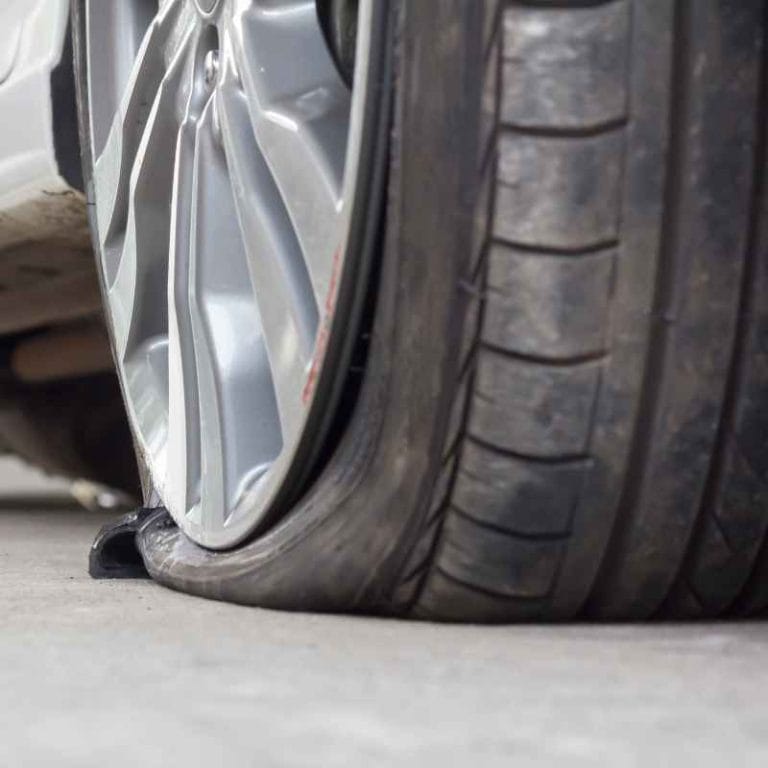
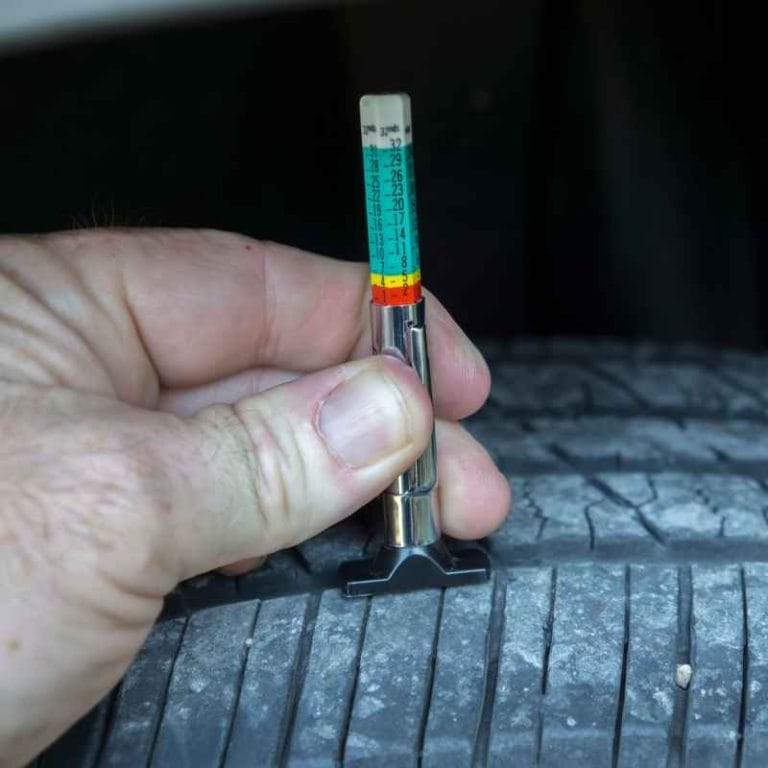
Misalignment can shorten tire life, cut fuel economy, and change stability and stopping. The wear pattern often shows up first on the tread, where one edge can wear faster than the rest, especially on the front tires.
Picture a sedan that tracks straight on the freeway but shows feathered wear on the inner shoulders after about 6,000 miles. Straight-line feel does not rule out alignment trouble. Uneven wear may be the only clue.
Wheel alignment decision table
Use this table to sort symptoms into three actions: align now, book soon, or wait until after a specific repair. A strong pull, fresh impact, or rapid wear belongs in the first column. Mild or uncertain signs usually belong in the second.
| Symptom | Likely cause | Urgency | Next step |
|---|---|---|---|
| Car pulls left or right on a level road | Toe or camber outside spec, or a tire issue masking the pull | Align now | Schedule a full alignment check and inspect tire pressures and tire condition |
| Steering wheel sits off-center when driving straight | Front toe mismatch or steering wheel not centered after prior work | Align now | Book alignment and request steering wheel centering |
| Uneven inner-edge wear on one or both front tires | Excess negative camber or toe out of specification | Align now | Do not wait for the next rotation; check alignment and tires together |
| Rapid tread loss after a pothole hit | Wheel angle change or bent suspension parts | Align now | Inspect for damaged parts first, then align if the hardware is sound |
| Vehicle feels fine, but tires show slight edge wear after rotation | Rotation exposed a preexisting alignment issue | Book soon | Schedule an alignment at the next available service visit |
| No pull, but rear tires wear unevenly on one edge | Rear toe or thrust angle issue | Book soon | Have the full vehicle checked, especially on a four-wheel alignment setup |
| Recent suspension or steering repair | Control arm, tie rod, strut, or related geometry changed | Align after repair | Finish the repair first, then realign immediately |
| New tires installed on a vehicle with no current symptoms | Preventive maintenance timing | Align after installation | Get the alignment with the new tires or soon after installation |
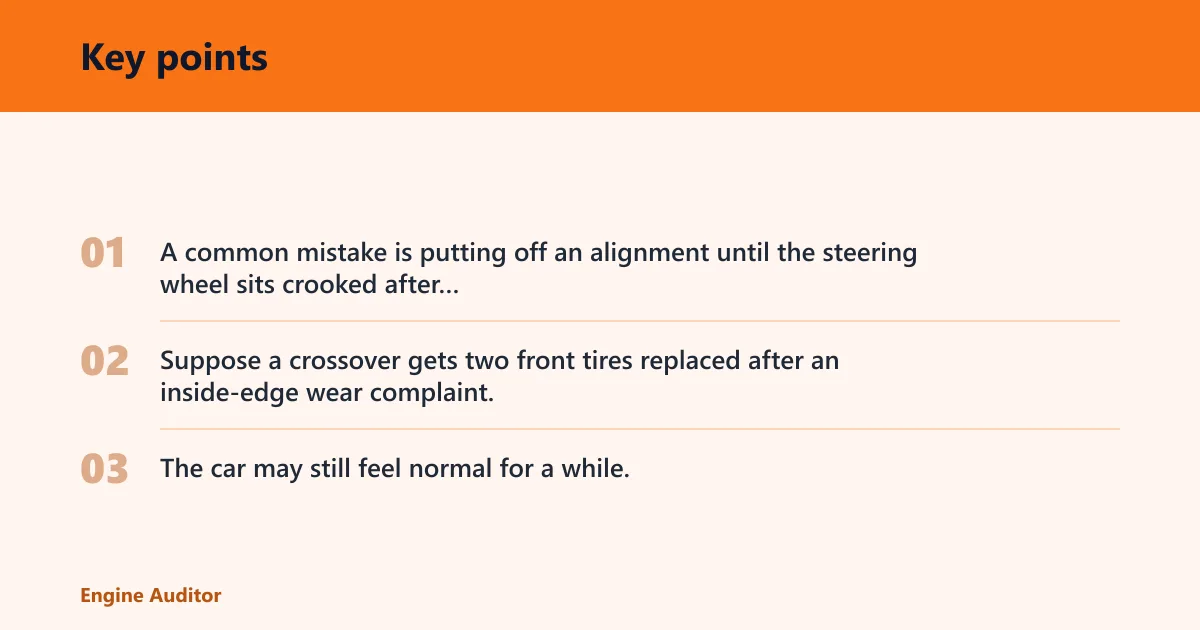
A common mistake is putting off an alignment until the steering wheel sits crooked after every straight road. Suppose a crossover gets two front tires replaced after an inside-edge wear complaint, but the rear axle was never checked. The car may still feel normal for a while, yet the new tires can wear early if the angle problem remains.
When should you get one now?
Get a wheel alignment now if the car pulls left or right, the steering wheel is off-center, or the tread is wearing unevenly. These are active symptoms, not maintenance reminders. If the wear is fast or the pull is obvious, treat it as a same-week service item.
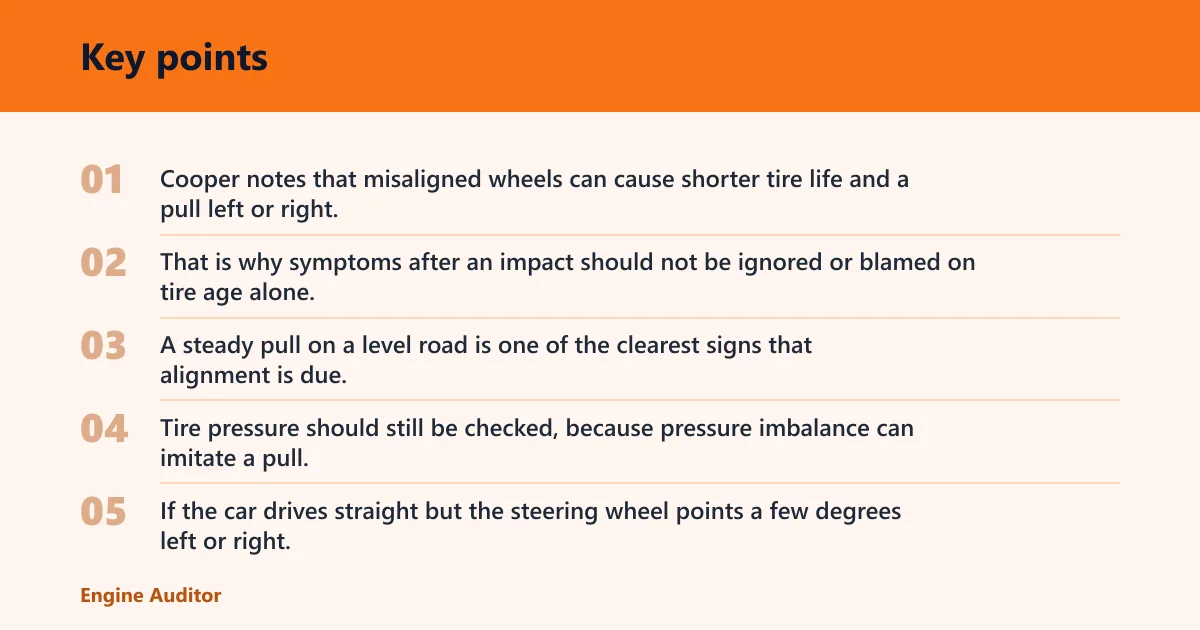
Cooper notes that misaligned wheels can cause shorter tire life and a pull left or right, and that potholes, curbs, and debris can knock alignment out. That is why symptoms after an impact should not be ignored or blamed on tire age alone.
Steering pulls left or right
A steady pull on a level road is one of the clearest signs that alignment is due. Tire pressure should still be checked, because pressure imbalance can imitate a pull, but a true alignment problem needs machine measurements and an adjustment.
Wheel sits off center on straight roads
If the car drives straight but the steering wheel points a few degrees left or right, the alignment may be out even if the vehicle does not wander. That often points to a toe issue or a wheel that was not centered during prior service.
Uneven inner-edge wear or rapid tread loss
Uneven inner-edge wear is a reason to act now. It can mean the wheels are scrubbing the road instead of rolling cleanly. If the wear is already visible, do not wait for the next oil change. The tire may be damaged beyond recovery.
When can it wait a little?
It can wait a little when the signs are mild, the car still tracks straight, and the wear pattern is only starting to show. Even then, do not let it slide for months. Book it at the next service visit or within a short maintenance window.
Rotation can also mask symptoms. A tire rotation may move the noisy or worn tire to another position, which can briefly change how the car feels. That does not fix a bent part or a bad angle.
Recent tire rotation masked the symptoms
If a recent rotation changed the steering feel, that can hide the underlying issue. Watch for the same pull or wear pattern to return on the new tire positions. The problem may be more obvious after a few hundred miles.
You notice no pull, but wear is uneven
Even without a pull, uneven wear deserves attention soon. A vehicle can drive straight and still wear tires from the inside edge or outer shoulder. That is common when camber or toe is off just enough to avoid obvious steering symptoms.
You want a check at your next service visit
That is reasonable if there are no strong symptoms and the tires are wearing normally. A yearly check is a sound interval for many drivers, and some shops recommend an alignment check in early spring and fall.
After what repairs should you realign?
Realign after new tires, after a pothole or curb impact, and after suspension or steering work. Those are event-based triggers. The repair should come first when parts are bent or replaced, then the alignment should be set to spec.
Les Schwab recommends an alignment after installation of new tires, and a free annual alignment check. Those are practical timing points, especially if the vehicle sees rough roads or the tires are costly to replace.
New tires or tire replacement
Get the alignment with new tires or soon after installation. That helps protect the new tread from immediate edge wear. If the old tires wore unevenly, the new set can suffer the same fate unless the angles are corrected.
Pothole, curb, or road debris impact
Can potholes or curbs knock the alignment out? Yes. A hard hit can change wheel angles or bend a component, especially after a sharp impact at speed. If the steering changed after the hit, inspect the suspension and get the alignment checked.
Suspension or steering work
Any repair that changes ride height or steering geometry can affect alignment. Tie rods, control arms, struts, and related parts often call for a follow-up alignment. Do not align before the repair if the parts still need replacement.
How often should it be checked?
Check alignment yearly, or twice yearly if the vehicle sees rough roads, frequent potholes, or heavy mileage. The same source recommends a free annual alignment check, and it also notes early spring and fall as good times to inspect alignment.
Front-wheel drive, all-wheel drive, and most passenger vehicles often benefit from a four-wheel alignment because all four wheels are checked against spec. Larger trucks and SUVs may be better served by a thrust angle alignment, especially when the rear suspension is not adjustable.
Yearly or twice yearly checks
A yearly check is a practical baseline even without symptoms. Twice yearly is better for drivers who regularly hit rough pavement or who want to catch slow wear before it shortens tire life. Seasonal checks fit well before winter and after thaw season.
When four-wheel alignment is the better fit
A four-wheel alignment checks all four wheels against spec and is commonly used on front-wheel drive, all-wheel drive, and most passenger vehicles. It is often the best choice when you want the steering and tracking relationship set as one system.
When thrust angle alignment is the better fit
Thrust angle alignment is common for many larger trucks and SUVs, especially vehicles without adjustable rear suspension. It aims to align vehicle tracking so the rear wheels point the vehicle straight and the steering wheel can be centered correctly.
Frequently asked questions
When to get a wheel alignment?
Get one now for pulling, an off-center steering wheel, or uneven tread wear. Get one soon after a pothole, curb strike, suspension repair, or new tires. If none of those apply, a yearly check is still a sensible interval for most drivers.
When is wheel alignment needed?
Wheel alignment is needed when the car no longer tracks straight, the steering wheel is not centered, or the tires are wearing unevenly. It is also needed after parts that affect steering geometry are replaced, because the angles can shift out of spec.
What is an alignment for tires?
It is a service that adjusts wheel angles so the tires roll straight and wear evenly. The work focuses on camber, toe, and caster. Done correctly, it supports tire life, handling, and fuel economy.
Should I get an alignment before or after new tires?
After new tires is the safer choice, and many shops recommend it immediately after installation. If the old tires wore unevenly, the alignment should be checked right away so the new set does not inherit the same wear pattern.
How do I know if my tires are wearing unevenly?
Look for inner-edge wear, outer-edge wear, feathering, or one tire losing tread faster than the others. Uneven wear may show up before a pull or steering change. If you see it, schedule an alignment check instead of waiting for the next rotation.
Can potholes or curbs knock my alignment out?
Yes. A pothole, curb, or debris strike can change wheel angles or damage suspension parts. If the hit was hard enough to jolt the steering or leave a new vibration, get the vehicle inspected and aligned if the hardware is still sound.
Products related to this article
Sponsored / affiliate links. As an Amazon Associate I earn from qualifying purchases. I may earn additional commission from eligible campaigns.