Car Pulls Left or Right While Braking: Alignment or Brakes?
If the car pulls only while braking, start with the brakes first; if it pulls all the time, a common first check is tire pressure, tire wear, or alignment. Ignoring it can overheat a brake, lengthen stopping distance, and hide a tire or suspension fault. This guide shows the fastest symptom checks to separate brake faults from alignment and tire problems.
Brake pull decision table


| Symptom pattern | Likely cause | Quick test | Next action |
|---|---|---|---|
| Pulls left on light and hard braking | Right-front brake drag, uneven pad wear, or a sticky caliper | After a short drive, compare front wheel temperatures by hand near the rotor hat area; the hotter side often points to drag | Inspect pads, caliper slides, piston movement, and hose condition on the hotter side |
| Pulls right on light and hard braking | Left-front brake drag, uneven pad wear, or a sticky caliper | Repeat the same temperature check on both front wheels | Check the left-front caliper, pads, rotor surface, and hose |
| Pull appears only on hard stops | Rotor thickness variation, uneven friction surface, or ABS intervention | Compare a gentle stop with a firm stop on a straight, flat road | Inspect rotors for heat spots and measure thickness variation; scan for ABS faults if the warning light is on |
| Pull gets worse after repeated stops | Heat-related caliper drag, hose restriction, or fade from contaminated pads | Do three to five moderate stops, then repeat the same brake test | Check for one wheel running hotter than the other and inspect fluid, pads, and hoses |
| Pull is present cold, then changes when hot | Brake hose restriction, pad glazing, or rotor heat spots | Note whether the pull changes after a few stops or a longer drive | Treat the side that heats faster as the first inspection point |
| Pull happens all the time, even off the brakes | Tire pressure mismatch, tire conicity, alignment, or suspension wear | Check all four tire pressures and do a straight-road coast test | Correct tire pressure first, then inspect alignment and suspension |
| Strong, sudden, or repeatable pull with warning light or soft pedal | Unsafe brake fault, possible hydraulic or ABS problem | Do not keep testing on public roads | Tow it or arrange a brake inspection before more driving |
Why does my car pull while braking?
If the pull shows up only when you press the brake pedal, the brake system is the first place to look. A sticking caliper, uneven pad wear, rotor variation, or a brake hose that holds pressure on one wheel can create a side-to-side imbalance under braking force.
Brake-side imbalance on one wheel
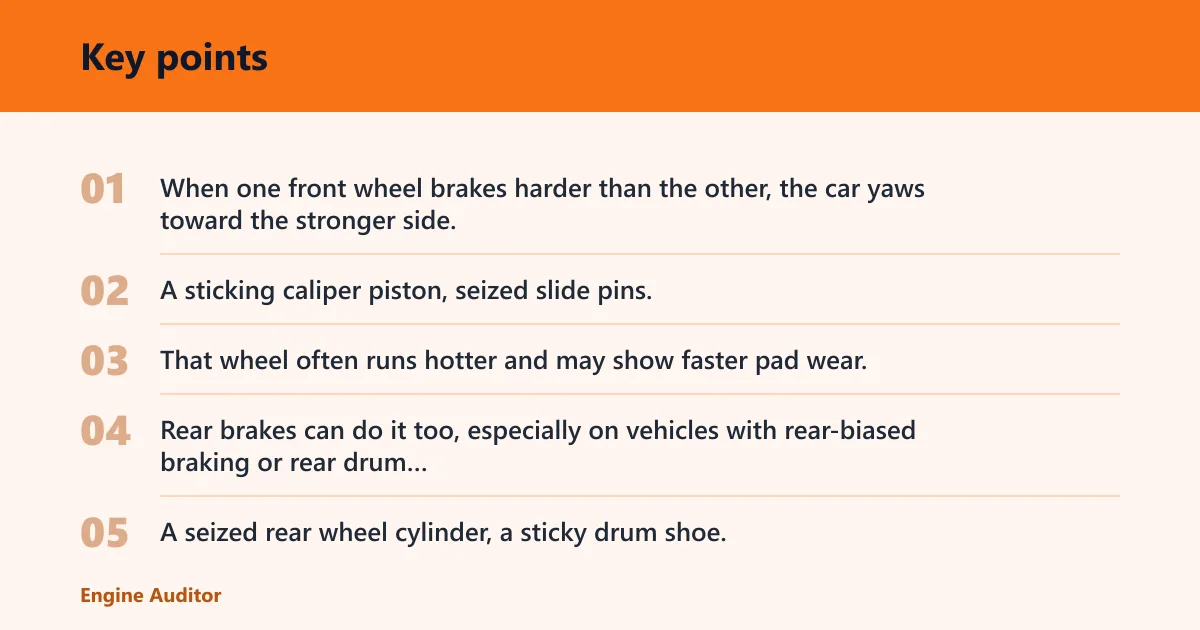
When one front wheel brakes harder than the other, the car yaws toward the stronger side. A sticking caliper piston, seized slide pins, or a hose that restricts fluid return can leave one pad dragging after the pedal comes up. That wheel often runs hotter and may show faster pad wear.
Rear brakes can do it too, especially on vehicles with rear-biased braking or rear drum hardware. A seized rear wheel cylinder, a sticky drum shoe, or a restricted rear hose can shift the car under deceleration. Front brakes still get the first look because they carry more braking load on most vehicles.
Tire and road feel that mimic brake pull
Uneven tire pressure can make the car drift, and that drift can become more obvious during braking. A side-to-side psi mismatch or tire conicity can produce a pull that feels like a brake fault. Road crown can add to the effect, which is why a flat, straight test road matters.
Say your left-front tire is 5 psi lower than the right-front tire, and the car drifts left during cruising. That same car may still pull left under braking, even if the brakes are healthy. Correct the pressure first, then retest before naming the brakes.
Why the pull often points to the front axle first
The front brakes do most of the work in a normal stop, so a front-side problem shows up quickly. That is why a pull under braking often points to the front calipers, pads, rotors, or hoses first. A rear fault is less common, but it should stay on the list if the front checks out.
Is it alignment or brakes?
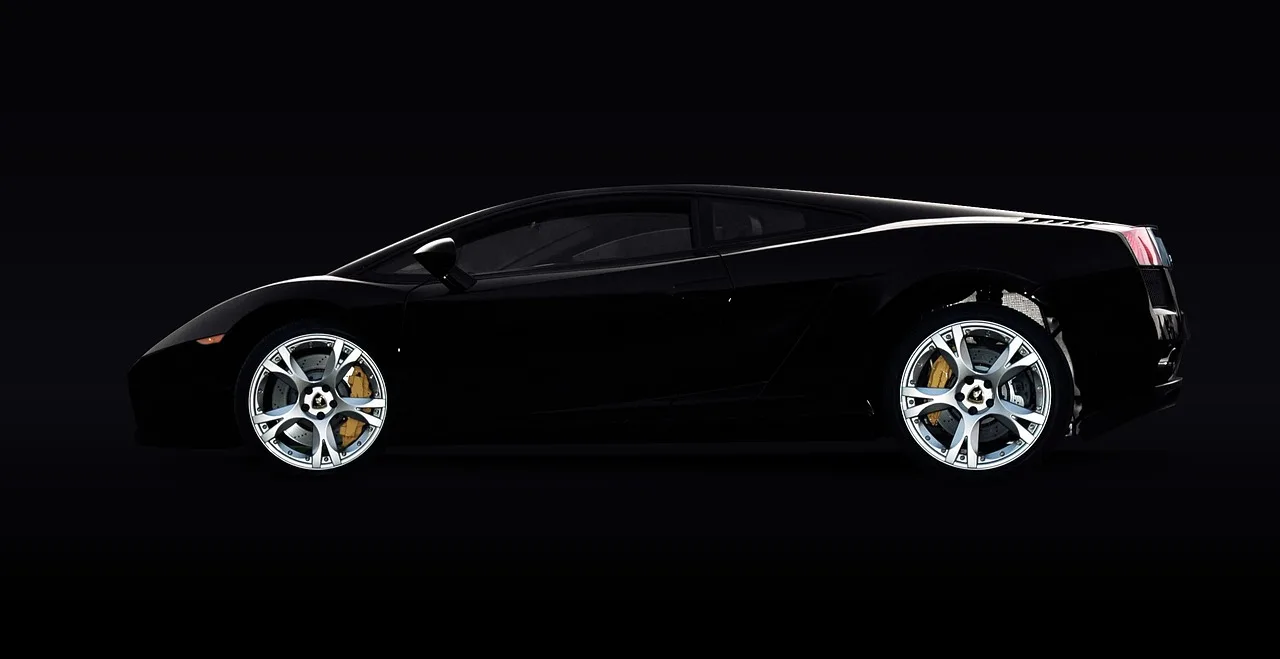
Brake pull is often a brake problem rather than an alignment problem, especially if the symptom appears only during braking. Alignment usually changes straight-line tracking all the time, while toe, camber, caster, or loose suspension parts can mimic brake pull when weight shifts forward under deceleration.
Toe, camber, and caster basics
Toe affects how the tires point, camber changes the tire’s lean, and caster helps straight-ahead stability. If one side is out of spec, the car can drift or feel nervous. Those issues usually show up while cruising, then become more noticeable when you brake and transfer weight forward.
When alignment can mimic braking pull
Alignment can look like a brake issue after suspension work, after a curb hit, or when a worn control arm bushing, ball joint, or steering linkage lets geometry shift under load. Tire conicity can also act like a brake pull if the tire itself wants to steer to one side under rolling load.
A common first-timer mistake is to book an alignment first because the wheel points left under braking. If the pull disappears when the brakes are not applied, the brake checks should still be done first. Alignment is a second step unless the car also wanders, steers poorly, or changed after suspension work.
Why alignment usually shows up while cruising too
A true alignment problem tends to affect the car beyond the brake pedal. You may see drift, an off-center wheel, or a need to steer constantly on level pavement. If the vehicle tracks straight until you brake, the pattern leans toward a brake-side imbalance rather than toe or camber alone.
Check tires before you inspect brakes
Start with tire pressure. A side-to-side psi mismatch is fast to check and can imitate a brake pull. Then look at tread wear, tire conicity, and any damage that could bias the car to one side before deeper brake work begins.
Set all four tire pressures correctly
Use the door placard, not the sidewall maximum, and set all four tires cold. A few psi difference from left to right can change straight-line behavior enough to confuse the diagnosis. If one tire is underinflated, fix it and repeat the road test before moving on.
Look for uneven wear or tire conicity
Tires do not always wear evenly. A conical tire can roll with a built-in steer tendency, and that can show up during braking as a pull toward one side. Swap front tires side to side if the tread pattern and wear allow it, then repeat the same brake test.
Use a quick side-to-side pressure check
- Check all four tires with the same gauge.
- Set each tire to the placard pressure when cold.
- Look for uneven wear, cupping, or a damaged sidewall.
- Drive on a straight, flat road and note whether the pull remains.
Brake caliper and rotor faults
A sticking brake caliper is a commonly reported cause of brake pull. Uneven pad wear, a dragging piston, warped or uneven rotor surfaces, and heat spots can all create a left-right braking imbalance that gets worse under load or after several stops.
Sticking piston or slide pins
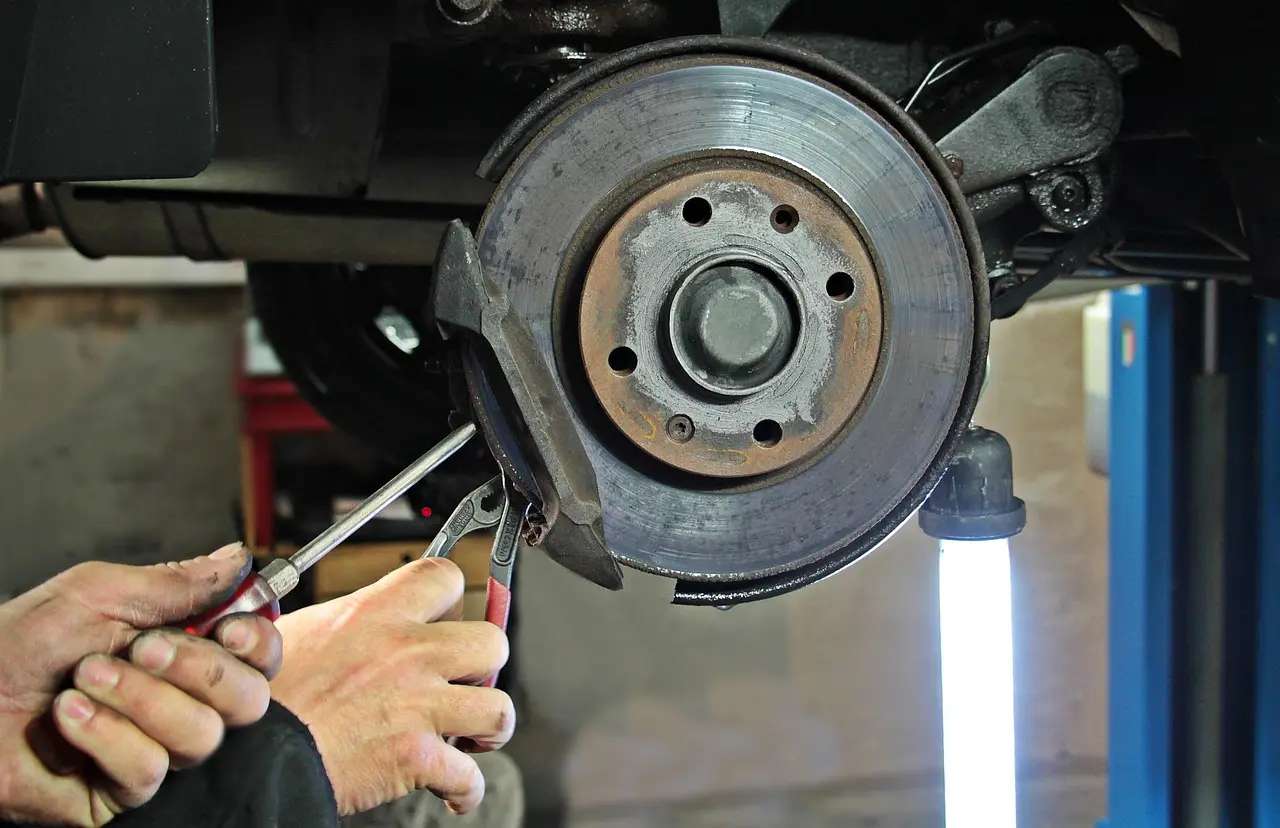
A caliper piston that does not retract, or slide pins that seize, can hold a pad against the rotor. The dragged wheel may be hot, may smell sharp after a drive, and may show one pad worn much thinner than the matching pad on the other side.
Uneven pad wear and pad contamination
Brake pads should be replaced in pairs on the same axle. If one side is much thinner, glazed, oil-soaked, or contaminated with brake fluid, that side may not clamp the rotor evenly. Pad material that has overheated can also lose bite and change the way the car stops.
Rotor thickness variation and heat spots
Rotor problems include thickness variation, uneven friction surfaces, and hot spots that change brake force from one wheel to the other. Drivers often call that a warped rotor. The steering wheel may shake more than the car pulls, but a bad rotor can still add a pull, especially under harder stops.
Suppose the car stops straight with gentle pedal pressure, then pulls right during a firm stop from 35 mph. That pattern points more toward rotor variation, pad transfer, or ABS action than a simple alignment fault. If the same right-front wheel is hotter after the drive, caliper drag climbs higher on the list.
Brake hose, fluid, and ABS checks
A brake hose can fail internally without leaking outside. Older rubber hoses can collapse and act like a one-way valve, trapping pressure on one wheel after the pedal is released or after heat builds. Brake fluid level, moisture, and ABS faults also deserve a look when the pull is hard to pin down.
Internal hose collapse and pressure retention
If a hose collapses inside, fluid may move into the caliper when you press the pedal but not return freely after release. That leaves one wheel dragging. The fault can be more obvious after the brakes heat up, which is why a cold check may miss it.
Brake fluid level, contamination, and moisture
Check the reservoir level and look for dark or dirty fluid. Low fluid can point to worn pads or a leak, while moisture-laden fluid can lower boiling margin and change pedal feel. If brake parts are replaced, the system often needs bleeding so trapped air does not distort the diagnosis.
ABS warning lights and wheel-speed faults
ABS is a less common cause, but it can affect stopping feel if a wheel-speed sensor input is wrong or if the system pulses unexpectedly during a stop. A warning light makes that path more likely. ABS faults usually do not mimic a simple caliper pull, but they can add irregular braking on some vehicles.
What a road test should show
A proper road test separates a true brake pull from a tire or alignment symptom. Use a straight, flat road, keep the test short, and compare light braking with harder braking. Repeat the stops so you can see whether the pull stays steady, changes with heat, or only appears after several runs.
Straight, flat road procedure
Pick a safe, level road with little traffic. Drive straight, then coast without braking to see whether the car drifts on its own. Next, apply light brake pressure and note the direction of the pull, then repeat with a firmer stop. Keep the steering wheel centered and do not test hands-off unless the road is empty and safe.
How to compare light and hard stops
A pull that appears only on hard stops points toward brake-force imbalance, rotor variation, or ABS action. A pull that shows up at light pedal pressure and stays consistent across several stops points more toward drag on one side. If the direction changes from cold to hot, focus on calipers, hoses, and heat behavior.
What repeated braking tells you
Repeated stops are a simple heat test. If the car pulls more after about three to five stops, one side may be building heat faster because of a sticky caliper, restricted hose, or contaminated pad. If the pull fades after the brakes cool, that heat pattern matters and should be reported to the shop.
Frequently asked questions
Why does my car pull left or right when I brake?
A pull during braking usually means one wheel is doing more work than the other. The common causes are a sticking caliper, uneven pads, rotor variation, or a hose that holds pressure on one side. Tire pressure and suspension wear can mimic it, so they should be checked too.
Is a pull under braking more likely alignment or brakes?
It is more likely brakes, especially if the car tracks straight until you touch the pedal. Alignment more often affects cruising behavior as well. Toe, camber, caster, and loose suspension parts can imitate the symptom, but they are not the first place to start unless the car also drifts off-brake.
Can bad brake calipers make a car pull to one side?
Yes. A sticking piston or seized slide pins can keep one caliper clamping harder than the other side. That creates uneven pad wear and a one-wheel drag that shows up as a pull. If one front wheel is much hotter after a drive, the caliper on that side moves up the list.
How do I test whether the front brakes are dragging?
After a short drive, stop safely and compare the front wheel temperatures by hand near the rotor area, staying clear of hot metal. Then jack up the front safely and spin each wheel by hand if the vehicle setup allows it. A wheel that resists turning or feels much hotter than the other deserves inspection.
Could uneven tire pressure cause pulling while braking?
Yes, a side-to-side psi mismatch can create a pull that feels like a brake fault. Check all four tires cold and set them to the placard pressure before deeper diagnosis. If the pull changes after the correction, tire pressure or tire conicity may have been part of the problem.
Is it safe to keep driving if the car pulls when I stop?
If the pull is mild and consistent, a short drive to a shop may be reasonable after checking tire pressure and confirming the brakes are not smoking, grinding, or leaking. If the pull is strong, sudden, repeatable, or paired with a soft pedal or warning light, tow it instead of driving.
How do I tell if a stuck caliper or hose is the problem?
A stuck caliper often shows uneven pad wear, heat, and a wheel that drags after a stop. A collapsed hose can feel similar but may trap pressure more after the brakes get hot. If one side stays tight after pedal release, inspect the hose, caliper slide action, piston movement, and fluid return.
Should I get an alignment before checking the brakes?
No. Check tire pressure and the brake parts first if the pull happens only during braking. Alignment comes after those checks unless the car also wanders off-brake or recently had suspension work. If the problem remains after brake inspection, then toe, camber, caster, and worn suspension parts deserve attention.
Products related to this article
Sponsored / affiliate links. As an Amazon Associate I earn from qualifying purchases. I may earn additional commission from eligible campaigns.