How to Choose the Right Car Tires for Your Vehicle Type
Simply put, choosing the right car tires means matching size, type, load rating, and speed rating to your vehicle’s specifications and your daily driving conditions. Start with your owner’s manual, then factor in climate, driving habits, and budget to narrow your options.
Key Takeaways
- How to choose the right car tires begins with checking your vehicle’s owner manual for recommended size, load index, and speed rating.
- Tire type selection — all-season, winter, summer, or all-terrain — depends on your local climate and typical road conditions.
- Tire size markings like P225/65R17 contain critical information about width, aspect ratio, and rim diameter that must match your car.
- Ignoring load index and speed ratings can compromise safety and vehicle handling, especially for trucks and SUVs.
- Proper tire maintenance, including regular pressure checks and rotation, extends tire life and improves performance regardless of which tires you choose.
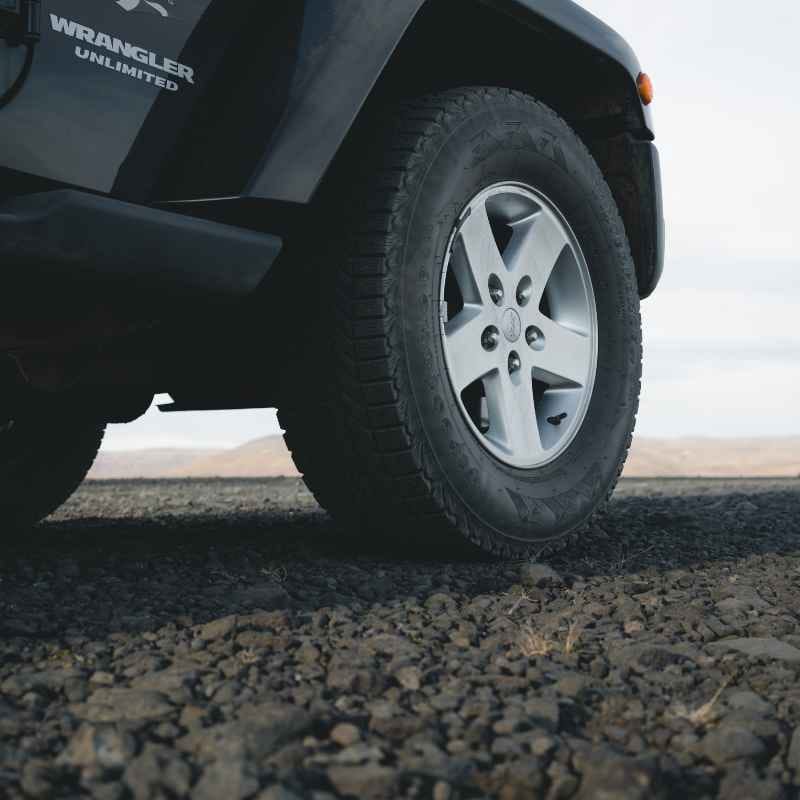
What Makes Tire Selection So Important for Your Vehicle?
Tires are the only part of your vehicle that touches the road. Every acceleration, braking, and steering input travels through four small patches of rubber, each about the size of your hand. Getting the selection wrong affects everything from stopping distance to fuel consumption.
The National Highway Traffic Safety Administration reports that roughly 11,000 tire-related crashes occur each year in the United States alone. Many of these incidents stem from using the wrong type of tire or driving on worn-out rubber. Your choice directly influences how your car handles wet roads, sharp curves, and emergency maneuvers.
Beyond safety, the right tires improve fuel efficiency. Rolling resistance — the energy required to keep a tire spinning — varies significantly between models. Low-rolling-resistance tires can improve gas mileage by 3 to 4 percent according to the U.S.
Department of Energy. That adds up over 50,000 miles of driving.
- Correct tires reduce stopping distance on wet pavement by up to 30 percent compared to worn or mismatched tires.
- Properly matched tires improve ride comfort and reduce road noise inside the cabin.
- Tires designed for your vehicle type prevent uneven wear and extend suspension component life.
- The wrong tire size can trigger dashboard warning lights and interfere with ABS and traction control systems.
- Using tires with incorrect load ratings can lead to overheating and sudden failure at highway speeds.
- Tire selection affects your vehicle’s resale value — mismatched or inappropriate tires lower inspection scores and buyer confidence.
- Insurance companies may deny claims if tires not rated for your vehicle contributed to an accident.
How to Decode Tire Size and Sidewall Markings
Every tire has a string of numbers and letters printed on its sidewall. This code tells you the exact dimensions and capabilities of that tire. Learning to read it removes the guesswork from how to choose the right car tires for your specific vehicle.
Take the example P225/65R17 102H. The “P” stands for passenger vehicle tire. “225” is the section width in millimeters measured from sidewall to sidewall at the widest point.
“65” is the aspect ratio — the sidewall height expressed as a percentage of the width. So a 225mm wide tire with a 65 aspect ratio has a sidewall height of about 146mm.
The “R” means radial construction, which is standard on almost all modern tires. “17” is the rim diameter in inches that the tire fits. “102” is the load index (1,874 pounds per tire in this case), and “H” is the speed rating (up to 130 mph).
Mixing up any of these numbers can lead to poor fitment or dangerous driving conditions.
| Marking | Meaning | Why It Matters |
|---|---|---|
| P | Passenger vehicle | LT = Light Truck, T = Temporary spare |
| 225 | Section width (mm) | Too wide may rub on fenders; too narrow reduces grip |
| 65 | Aspect ratio (%) | Lower number = shorter sidewall, stiffer ride, better cornering |
| R | Radial construction | Standard for modern vehicles; bias-ply used only for specialty applications |
| 17 | Rim diameter (inches) | Must match your wheel size exactly |
Always check the placard on your driver’s side door jamb or your owner’s manual for the exact tire size recommended by the manufacturer. Doing so is the most reliable step in how to choose the right car tires that fit correctly and perform as intended.
What Are the Different Tire Types and Which Is Right for You?
Tires fall into distinct categories based on the conditions they are designed to handle. Selecting the wrong type for your climate or driving style is one of the most common mistakes drivers make.
All-season tires are the default choice for most passenger cars in moderate climates. They offer a balance of dry, wet, and light snow performance. However, they are not ideal for extreme conditions.
In regions with heavy snowfall, winter tires provide superior traction below 45°F because their rubber compound stays flexible, and their deeper tread patterns grip snow and ice effectively.
Summer tires prioritize dry and wet performance at higher temperatures but lose grip in cold weather. All-terrain tires suit trucks and SUVs that occasionally venture off-road, while highway-terrain tires favor on-road comfort and low noise. Performance tires offer sharper handling for sports cars but wear out faster than standard touring tires.
| Tire Type | Best For | Trade-Offs |
|---|---|---|
| All-Season | Daily driving in mild climates | Moderate snow performance; not for extreme cold or heat |
| Winter / Snow | Temperatures below 45°F, snow, ice | Softer compound wears fast in warm weather; reduced fuel economy |
| Summer / Performance | Warm climates, sporty driving, dry/wet grip | Dangerous below 45°F; shorter tread life |
| All-Terrain | Off-road use, trucks, SUVs | Noisier on pavement; lower fuel economy |
| Highway-Terrain | Pavement driving, long highway trips | Limited off-road capability |
Tip: If you live in a region that sees more than a few inches of snow each winter, invest in a dedicated set of winter tires on separate rims. The added safety during icy months far outweighs the upfront cost.
How Does Your Driving Climate Affect Tire Choice?
Your local weather patterns are arguably the biggest factor in how to choose the right car tires. A tire that performs beautifully in Arizona would be dangerous in Vermont during January. Temperature, precipitation, and road surface conditions all influence which tire compound and tread pattern you need.
Rubber compounds soften and harden with temperature changes. All-season tires balance cold and warm performance but begin to lose grip around 45°F. Below that temperature, winter tires remain pliable and maintain traction.
Summer tires, by contrast, actually harden in cold weather and lose significant grip on dry roads.
- Check the average winter low temperature in your area — if it drops below 45°F for more than a few weeks, consider winter tires.
- Assess annual rainfall totals — regions with heavy rain benefit from tires with deeper circumferential grooves to resist hydroplaning.
- Evaluate road conditions — gravel roads and rural routes require stronger sidewalls and more robust tread patterns than smooth city pavement.
- Factor in daily driving distance — long highway commutes at sustained speeds demand tires with heat dissipation capabilities and lower rolling resistance.
- Consider sun exposure — constant UV radiation in sunny climates accelerates rubber degradation, so look for tires with UV-resistant compounds.
- Account for altitude changes — mountain driving with steep grades and switchbacks requires tires with strong sidewall stability and heat handling.
- Think about seasonal transitions — regions with rapid spring and fall weather shifts may benefit from all-weather tires that hold a three-peak mountain snow rating.
Important: The three-peak mountain snowflake symbol on a tire sidewall means it meets severe snow service standards. This is different from the M+S (mud and snow) marking, which only indicates a basic tread design and does not guarantee winter performance.
Why Tire Load Index and Speed Rating Matter
Load index and speed rating are two specifications that many drivers overlook when learning how to choose the right car tires. These numbers determine how much weight each tire can support and the maximum speed it can sustain safely.
The load index is a number from 0 to 150 that corresponds to a specific weight capacity. For example, a load index of 95 means the tire can carry 1,521 pounds at maximum inflation pressure. Exceeding this rating causes excessive heat buildup, which can lead to tread separation or a blowout.
Heavier vehicles like SUVs, trucks, and minivans require higher load index tires than compact cars.
Speed ratings range from L (75 mph) to Y (186 mph). Most passenger car tires carry an S (112 mph), T (118 mph), or H (130 mph) rating. Using a tire with a speed rating lower than your vehicle’s capability is dangerous.
However, using a higher speed rating than you need is generally fine and often indicates a tire built with stronger construction materials.
| Speed Rating | Max Speed (mph) | Common Vehicle Types |
|---|---|---|
| T | 118 | Family sedans, minivans |
| H | 130 | Sport sedans, coupes |
| V | 149 | Performance cars, luxury sedans |
| W | 168 | High-performance sports cars |
| Y | 186 | Exotic and supercars |
Your vehicle’s original equipment load index and speed rating are listed on the tire placard inside the driver’s door. These are the minimum requirements. Going above them provides a safety margin but going below them is never acceptable.
What to Consider When Choosing Between New, Used, or Retread Tires
Budget plays a major role in how to choose the right car tires, and many drivers weigh the option of buying used or retread tires to save money. Each option comes with distinct trade-offs that affect safety, longevity, and performance.
New tires offer full tread depth, fresh rubber compounds, and complete manufacturer warranties. They provide predictable performance and the longest service life. The upfront cost is higher, but the total cost per mile driven often works out lower because they last significantly longer than used alternatives.
Used tires cost less but come with hidden wear, potential internal damage, and no warranty. The tread depth may look adequate, but microscopic cuts, dry rot, or previous impact damage can cause sudden failure. The Rubber Manufacturers Association strongly advises against buying used tires unless you can verify their full service history.
- New tires from reputable brands (Michelin, Bridgestone, Goodyear, Continental) offer the best safety and longevity.
- Retread tires (recapped with new tread on existing casing) are common for commercial trucks but less recommended for passenger vehicles.
- Used tires should only be purchased from a trusted source who can show the tire’s age (look for DOT date code) and verify no previous repairs.
- Always check the uniform tire quality grading (UTQG) ratings on new tires — treadwear, traction, and temperature grades help compare models.
- Consider the total cost of ownership including installation, balancing, alignment, and disposal fees when comparing options.
Warning: Never buy a tire with a DOT date code older than six years, even if the tread looks new. Rubber degrades over time, and age-related failure cannot be predicted by visual inspection alone.
How to Match Tires to Your Driving Habits and Vehicle Type
Your daily driving patterns matter just as much as your vehicle model when learning how to choose the right car tires. A commuter who drives 50 highway miles daily has different needs than someone who makes short trips in stop-and-go traffic.
For sedans and hatchbacks, all-season touring tires offer a comfortable ride, low road noise, and long tread life. These tires prioritize passenger comfort and fuel efficiency over aggressive cornering grip. Popular options in this category include the Michelin Defender 2, Bridgestone Turanza QuietTrack, and Continental TrueContact Tour.
Trucks and SUVs require tires with higher load ratings and more robust construction. Light truck (LT) tires have stronger sidewalls and deeper tread patterns than passenger tires. If you tow trailers or carry heavy cargo, LT tires are necessary even if the vehicle came with P-rated tires from the factory.
- Sports cars benefit from ultra-high-performance summer tires that maximize dry grip and steering response.
- Crossovers and SUVs used primarily on pavement should use highway-terrain or grand-touring all-season tires for the best balance of comfort and capability.
- Off-road enthusiasts need all-terrain or mud-terrain tires with aggressive tread patterns and reinforced sidewalls to resist punctures.
- Electric vehicles demand tires with low rolling resistance to maximize range, plus reinforced construction to handle the extra weight of the battery pack.
- Fleet vehicles and commercial vans require tires specifically rated for heavy-duty use with high load indexes and durable tread compounds.
- Vehicles with all-wheel drive should have tires with matching tread depth on all four corners to prevent drivetrain binding and component damage.
- Classic cars often require specialty tires that maintain authentic appearance while incorporating modern rubber compounds for better grip.
Common Mistakes When Buying Car Tires and How to Avoid Them
Even experienced drivers make errors when selecting new tires. Recognizing these pitfalls is a critical part of how to choose the right car tires that serve you well for thousands of miles.
One frequent mistake is buying tires solely based on price. Budget tires often use harder rubber compounds that last longer but provide poor wet traction and longer stopping distances. According to Consumer Reports, the most expensive tires are not always the best, but the cheapest options consistently rank lowest in performance tests.
Another common error is mixing tire types or brands across axles. Using different tread patterns on front and rear wheels can cause unpredictable handling, especially in rain or snow. If you must replace only two tires, the new ones should always go on the rear axle to maintain stability, regardless of whether your vehicle is front-wheel or rear-wheel drive.
Ignoring tire pressure monitoring system (TPMS) compatibility is another oversight. Some replacement tires require specific TPMS sensors to function properly. Installing tires without compatible sensors means the warning light stays on, and you lose the ability to monitor pressure in real time.
Tip: Schedule a wheel alignment at the same time you install new tires. A proper alignment ensures even wear from day one and can add thousands of miles to the life of your tires. Most shops offer alignment packages at a discount when purchased with new tires.
Frequently Asked Questions
What tire size do I need for my car?
Check the placard on your driver’s side door jamb or your vehicle owner’s manual. The placard lists the exact tire size, load index, and recommended inflation pressure from the manufacturer. Never guess the size based on what was previously installed, as previous owners may have used the wrong fitment.
Can I use a different tire size than what my car came with?
You can use a different size as long as the overall diameter stays within 3 percent of the original and the load rating meets or exceeds the original spec. Going plus-one or plus-two (larger rims with lower-profile tires) is common, but always consult a tire professional to ensure clearance and speedometer accuracy.
How long do car tires typically last?
Most passenger car tires last between 40,000 and 60,000 miles depending on the compound, driving habits, and maintenance. High-performance tires may wear out by 30,000 miles, while some touring tires can reach 80,000 miles. The NHTSA recommends replacing tires when tread depth reaches 2/32 of an inch, which you can check with a penny inserted upside down into the tread.
Is it okay to replace only two tires at a time?
Yes, but always install the new tires on the rear axle, even if your car is front-wheel drive. New tires on the rear provide better stability and reduce the risk of oversteer in wet conditions. The two older tires move to the front axle.
Ensure the new tires match the existing ones in type, size, and speed rating.
What is the difference between all-season and all-weather tires?
All-season tires carry the M+S (mud and snow) marking and perform adequately in light snow. All-weather tires carry the three-peak mountain snowflake symbol, meaning they meet severe snow service standards. All-weather tires use a winter-grade rubber compound that remains flexible in cold temperatures while still performing well in warmer months, making them a true four-season choice.
Final Thoughts
Understanding how to choose the right car tires is a skill that pays off in safety, comfort, and cost savings. Start with your vehicle’s specifications, then factor in your local climate, driving habits, and the tire type that best suits your needs. Investing time in research before you buy ensures you get the best performance and value from your next set of tires.
See also do cars drive better with new tires honest performance truth.
Products related to this article
Sponsored / affiliate links. As an Amazon Associate I earn from qualifying purchases. I may earn additional commission from eligible campaigns.