What Is Tire Balancing and Do You Need It?
Tire balancing fixes weight mismatch in the wheel-and-tire assembly so the tire spins evenly. If you feel vibration at about 50–70 mph, or after a tire swap, balance is commonly a first check. Ignore it and you can get steering shake, cupped tread, and faster suspension wear. This guide explains what balancing fixes, which symptoms point to it, and when vibration points to alignment, bent wheels, or a damaged tire instead.
How balancing machines detect and fix imbalances
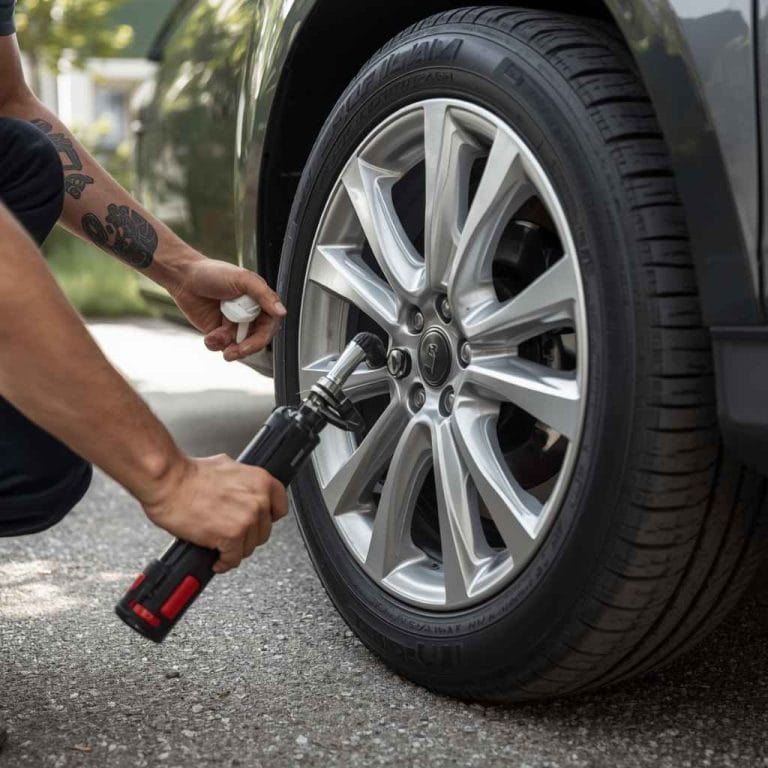
Tire balancing fixes uneven weight in the tire-and-wheel assembly. A technician mounts the assembly on a balancing machine, which spins the tire and wheel together to find the heavy spot, then adds small metal, clip-on, or adhesive weights to the wheel edge so the assembly rotates more evenly.
Balancing does not change steering geometry. It corrects how the wheel and tire spin. That is why a balanced tire can still pull if alignment is off, and an aligned vehicle can still shake if the wheel assembly is out of balance.
How the balancing machine finds heavy spots
The machine spins the tire and wheel together and measures where imbalance sits around the circumference. That lets the technician place weights where they counter the heavy area instead of guessing.
Modern balancing can address both static and dynamic imbalance. Static imbalance is the up-and-down hop that comes from one heavy spot. Dynamic imbalance can create a side-to-side wobble because weight is uneven across the wheel width.
Where balancing weights go
Balancing weights are usually placed on the wheel after the spin analysis shows where correction is needed. Clip-on weights fasten to the rim edge. Adhesive weights stick to the wheel surface. Either type is used to counter the heavy spots on the assembly.
What are the signs your tires need balancing?

The main clue is vibration at a specific speed range, often on the highway. The shake may show up in the steering wheel, seat, or floorboard, and it often gets more obvious as speed rises. Patchy, cupped, or scalloped tread wear can also point to imbalance.
Where the vibration is felt helps narrow the source. A steering wheel shake often points to the front assembly. A shake in the seat or floor can point to the rear. That is not a perfect rule, but it is a useful starting point before you book any repair.
Steering wheel, seat, or floorboard shake
Firestone notes that balancing helps when you feel vibration in the floor, seat, or steering wheel. BFGoodrich says imbalance can cause bouncing or wobbling at speed. Midas also says tire imbalance often shows up around highway speed.
Suppose your sedan feels smooth at 35 mph, then the steering wheel starts trembling at 60 mph. That pattern fits imbalance better than a brake problem, because the symptom appears as speed rises rather than only during braking.
Uneven tread wear patterns
Unbalanced tires can wear in a patchy pattern or develop cupping and scalloping. That wear pattern is not proof on its own, but it matters because imbalance can leave a repeating high-and-low wear pattern around the tread.
A common first-timer mistake is to notice cupping and assume alignment alone caused it. Alignment can contribute to wear, but balance problems can create their own uneven pattern, especially if the shake has been present for a while.
Front tire symptoms vs rear tire symptoms
Front imbalance often shows up in the steering wheel. Rear imbalance is more likely to show through the seat or floor. BFGoodrich specifically notes that rear tire imbalance can show through the seat and floor, which makes that location clue worth using.
Do not treat that as a rule that always holds. Vehicle layout, suspension design, and tire size can change how the shake feels. Still, the location of the vibration gives a useful hint about where to inspect first.
Is tire balancing the same as wheel alignment?
No. Wheel alignment adjusts steering and suspension angles. Tire balancing fixes uneven weight in the rotating assembly. They are related because both affect ride quality and tire wear, but they solve different problems and use different equipment.
Alignment problems usually show up as pulling, a steering wheel that sits off-center, or tread wear that leans more on one edge. Balancing problems usually show up as vibration at speed, especially after a tire service or a road impact.
Which symptoms point more toward alignment?
If the car pulls left or right on a straight road, the steering wheel does not sit centered, or the tread wears more on one edge than in the middle, alignment is a stronger suspect than balance. If the complaint is speed-related vibration, balance moves higher on the list.
That distinction matters because balancing will not fix steering angle errors. If the vehicle also hit a pothole or curb, you may need both a balance check and an alignment inspection.
When should you balance tires?
Balance tires after a new tire install, after rotation, after flat repair, or if a balance weight was lost or moved. A common service interval cited by some sources is every 5,000 to 6,000 miles, or as the manufacturer recommends, often alongside tire rotation. (Firestonecompleteautocare)
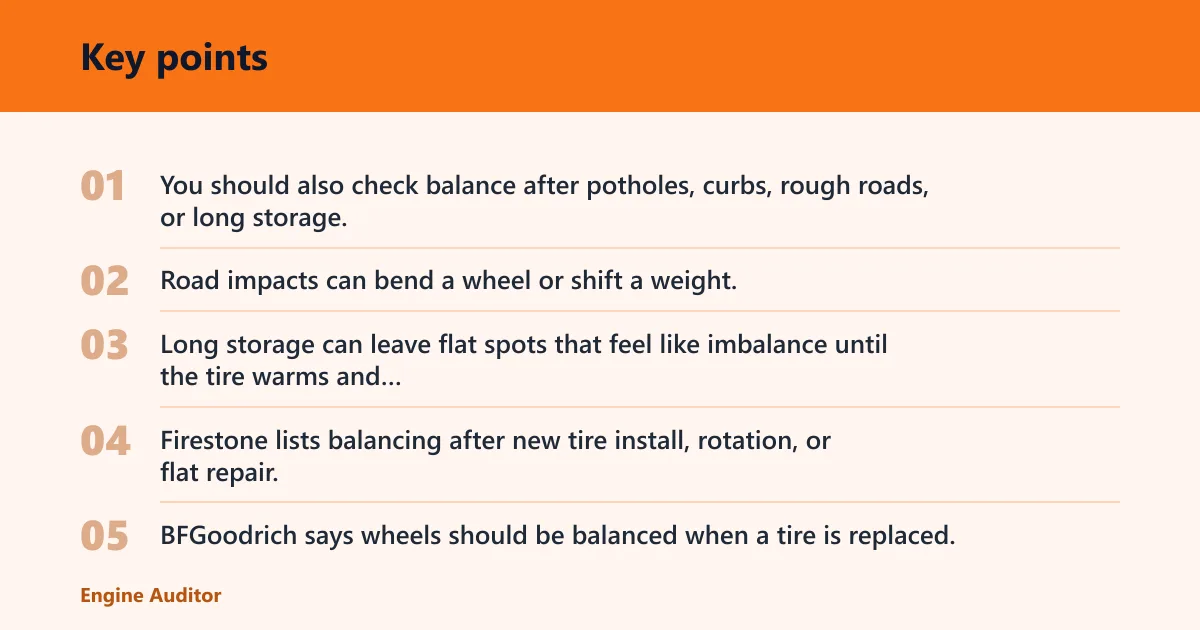
You should also check balance after potholes, curbs, rough roads, or long storage. Road impacts can bend a wheel or shift a weight. Long storage can leave flat spots that feel like imbalance until the tire warms and rounds out, or until it is inspected.
After new tires, rotation, or flat repair
Firestone lists balancing after new tire install, rotation, or flat repair. The same source says wheels should be balanced when a tire is replaced. That makes sense because any mount, dismount, or repair can change the assembly’s weight pattern.
Midas recommends complimentary maintenance every 5,000 miles or 8,000 km, and Firestone says balancing can help at every 5,000 to 6,000 miles. Those numbers are maintenance guides, not universal rules. Follow the vehicle maker if it gives a different interval.
After potholes, curbs, rough roads, or storage flat spots
Road impacts can knock off a weight or bend a wheel lip. Curbs and potholes do not always create a balance problem, but they can create one, and they can also create damage that balance alone will not fix.
Suppose a compact SUV sits for two months and then shakes at 55 mph for the first few miles. A flat spot from storage may be part of the complaint, but a missing weight or wheel damage can produce a similar feel. That is why inspection matters.
Balance, align, or inspect something else?
Use this checklist when the symptoms are vague. It helps you separate a balance issue from alignment, wheel damage, tire damage, or a maintenance history problem. Answer yes or no to each line, then follow the outcome at the bottom.
| Decision checklist | Yes or no |
|---|---|
| 1. Does the shake appear mostly around highway speed? | |
| 2. Is the vibration felt in the steering wheel, seat, or floorboard? | |
| 3. Did the problem start after new tires, rotation, or flat repair? | |
| 4. Did the vehicle hit a pothole, curb, or rough road recently? | |
| 5. Is the steering wheel centered and the car not pulling? | |
| 6. Is tread wear patchy, cupped, or scalloped rather than one-sided? | |
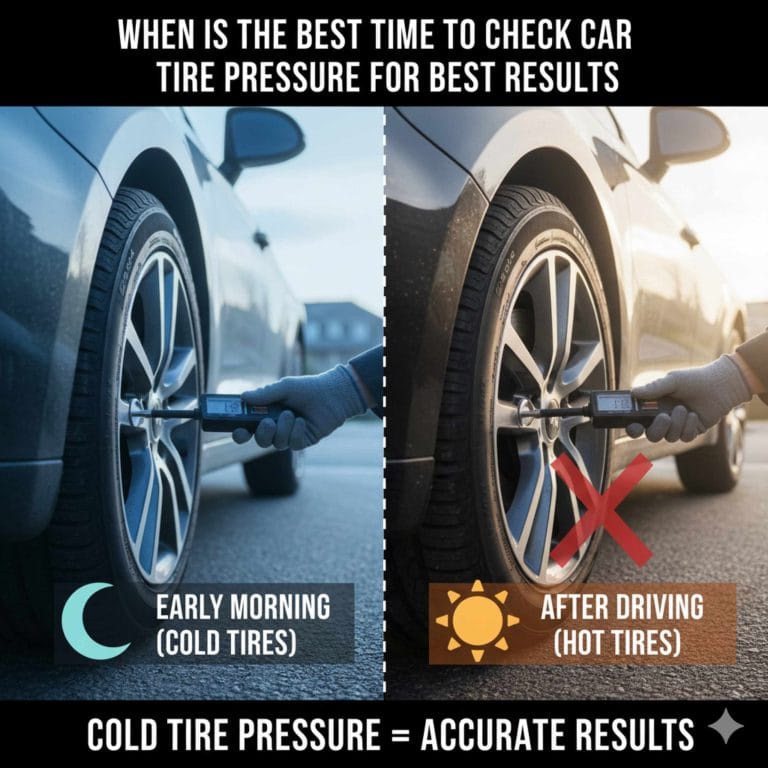
| 7. Are tire pressures set to the door placard value? | |
| 8. Has any balance weight been lost, moved, or removed? | |
| 9. Is there a visible bend, dent, bulge, or crack in the wheel or tire? | |
| 10. Has the tire sat for a long time and developed a flat spot? |
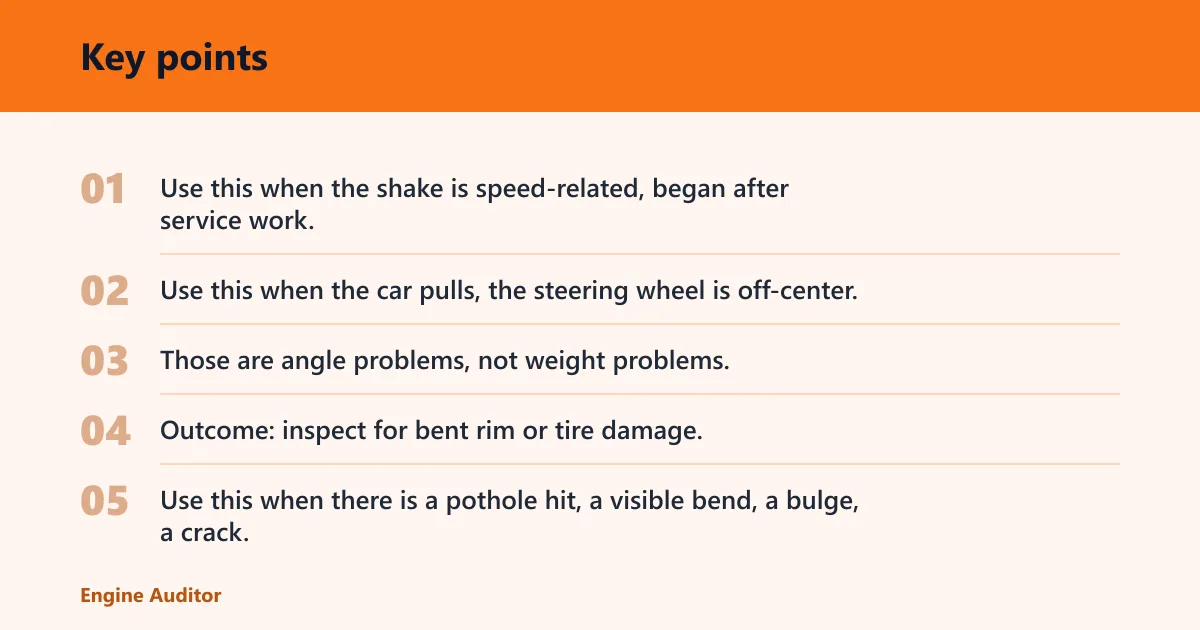
Outcome: balance tires. Use this when the shake is speed-related, began after service work, or follows a missing weight. That pattern most often points to imbalance.
Outcome: check alignment. Use this when the car pulls, the steering wheel is off-center, or wear is mainly on one edge. Those are angle problems, not weight problems.
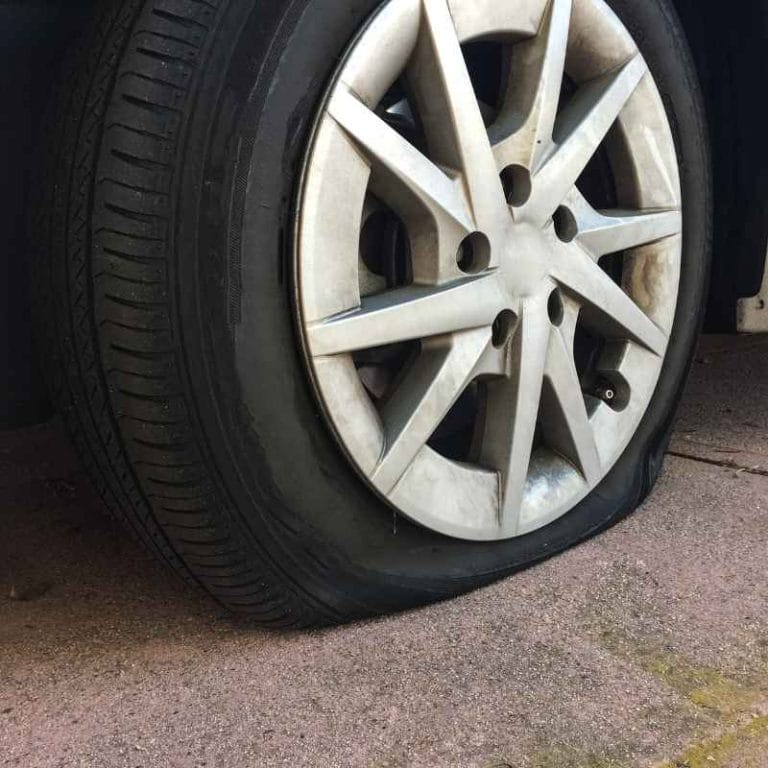
Outcome: inspect for bent rim or tire damage. Use this when there is a pothole hit, a visible bend, a bulge, a crack, or a shake that stays strong after balancing. Balance cannot correct damaged hardware.
Outcome: recheck inflation and rotation history. Use this when pressures are off, the tires have not been rotated on schedule, or the wear pattern suggests the problem has been building for a long time. Incorrect pressure and uneven wear can mimic balance trouble.
Can unbalanced tires damage your car?
Yes. Unbalanced tires can wear faster, make the ride harsher, and may put extra stress on suspension and steering parts. Firestone says unbalanced tires can damage suspension, and BFGoodrich says continuous vibration can stress wheel bearings and shock absorbers.
The bigger cost is often not the balance service itself, but what happens when the problem is ignored. A balance check is usually far cheaper than replacing tires early or chasing vibration after it has worn other parts.
Effect on tires and tread life
Imbalance can create uneven or premature tread wear. If the tread begins to cup or scallop, the tire may get noisy and rough before it reaches the normal wear limit. That means balance is partly a tire-life issue, not only a comfort issue.
Effect on ride quality and vibration
Balancing can improve ride quality by reducing shake and bounce at speed. That is the immediate benefit most drivers notice. It also makes the vehicle easier to judge when you are trying to separate tire trouble from brake or suspension trouble.
Effect on suspension and steering parts
Continual vibration puts repeated load into the suspension and steering system. Over time, that extra load can wear parts sooner than expected. The parts do not usually fail from one drive, but long-term vibration is not harmless.
What to check if balancing is not the answer
If a balance service does not cure the problem, inspect the wheel, tire, pressure, and service history before chasing another balance. A bent rim, damaged tire, or wrong inflation can mimic imbalance, and those problems need different repairs.
- Check tire pressure against the vehicle placard.
- Look for a missing balance weight on each wheel.
- Inspect the wheel lip for dents or bends.
- Check the sidewall for bulges, cuts, or cracks.
- Ask whether the tire has been rotated, repaired, or replaced recently.
Wheel and tire damage can make a machine report imbalance even when the real issue is physical damage. If the rim is bent, the tire is separated, or a flat spot does not round out, the next step is repair or replacement, not another balancing pass.
Frequently asked questions
What is tire balancing and do I need it?
Tire balancing fixes uneven weight in the tire-and-wheel assembly. You need it when vibration shows up at speed, after new tires, after rotation or flat repair, or when a weight has been lost. It is a common first step before deeper suspension work.
Is tire balancing necessary?
It is necessary when symptoms point to imbalance, or when service work has changed the wheel assembly. It is not required after every drive. Checking every 5,000 to 6,000 miles, but the vehicle maker’s schedule should decide the interval.
What does tire balancing do?
It lets a machine find the heavy spot in the tire and wheel, then a technician adds clip-on or adhesive counterweights to offset that spot. The goal is smoother rotation, less vibration, and more even tread wear.
How do I know if my tires need balancing?
Look for vibration that appears at highway speed, especially if it is felt in the steering wheel, seat, or floorboard. Patchy or cupped wear also points in that direction. If the problem began after a tire service or pothole hit, balance moves higher on the list.
How often should tires be balanced?
There is no universal mileage rule for every vehicle. Use that only as a guide and follow manufacturer advice first.
Can unbalanced tires damage my car?
Yes. Unbalanced tires can stress suspension parts, including wheel bearings and shock absorbers, and can shorten tire life through uneven wear. The problem usually starts as vibration, then becomes a wear and durability issue if it is left alone.
Products related to this article
Sponsored / affiliate links. As an Amazon Associate I earn from qualifying purchases. I may earn additional commission from eligible campaigns.