What Is an Economy Car? Who It’s Best For Car Buyers
An economy car is a small, low-cost car built for low fuel use, low purchase price, and low running costs. It suits commuters, city drivers, and first-time buyers who want savings over space and power. Pick badly, and fuel, insurance, tires, and depreciation can outrun the sticker price. This guide explains what qualifies, who benefits most, and how to compare small sedans, hatchbacks, and subcompact SUVs.
At its core, an economy car is a car built for low-cost purchase and operation. Economy cars are usually small and lightweight to keep costs down, and they are built to get good gas mileage. That mix sets them apart from larger, heavier vehicles that may cost less used but often cost more to own. (en.wikipedia.org)
What is an economy car?

The label is about fit, not a badge. A vehicle can be inexpensive and still not be an economy car if it is heavy, thirsty, or expensive to insure and maintain. A common first-timer mistake is focusing on the sticker price alone and ignoring the rest of the bill.
Why fuel economy matters, but does not stand alone
Fuel economy is a major buying criterion because it affects weekly costs, not just the purchase decision. Combined mpg is the simplest number to compare across trims, but power and all-wheel drive can reduce mpg. A low-mpg small SUV may still make sense for cargo or bad-weather traction, yet it is not automatically the better economy choice.
📊 U.S. News says its listed economy cars are priced below $27,000. Source: Usnews.
Is an economy car the same as a compact car?
No. The terms overlap, but they are not identical. Compact and subcompact describe size classes, while economy car describes a use-case category centered on low purchase price, low operating cost, and good fuel mileage. Many economy cars are compact or subcompact, but not every compact is economy-focused.
MotorBiscuit says economy cars are smaller than midsize or full-size cars, and compact or subcompact is the most common economy-car body style. Wikipedia notes the term mostly refers to cars in the United States. That matters because the label is more about market position than a strict global size code.
Where the term fits in the market today
Compact cars are a common daily-driving fit because they are smaller than midsize cars, easier to park, and usually less costly to run. Subcompact cars sit below them and are generally the smallest mainstream economy-car class. They are easy to place in tight city spaces, but rear-seat and cargo room are limited.
Some small SUVs and crossovers now sit near the edge of the category. They add ride height and utility, but more mass and taller shapes often hurt fuel economy. If the model is priced higher, weighs more, and returns weaker mpg, it may still be practical, but it is no longer an ideal economy pick for every buyer.
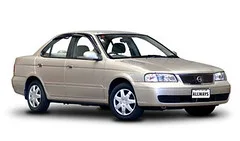
What body styles can economy cars have today?
Modern economy cars can be sedans, hatchbacks, crossovers, or small SUVs. The body style changes how useful the car feels day to day, even when the vehicle stays on the affordable end of the market. MotorBiscuit notes that a two-door hatchback was the traditional design, while today’s economy cars are far more varied.
That variety matters because the best body style depends on parking, cargo, and commute length. A shopper who only needs a commuter may want the lightest, most efficient setup. A shopper who loads strollers, groceries, or weekend gear may give up some mpg for cargo flexibility.
Sedan
A sedan is a common modern economy-car body style. It has four-door practicality and a separate trunk, which helps keep luggage out of the cabin and reduces noise from loose cargo. For buyers who value simple daily use and a lower price than many SUVs, a sedan often makes the most sense.
Hatchback
A hatchback gives more cargo flexibility than a sedan because the rear opening is larger and the cargo area can usually expand by folding the rear seats. That makes it useful for city errands, home-improvement runs, and travelers who want an affordable car with more usable space than a trunk-only design.
Crossover and subcompact SUV
Crossover and subcompact SUV body styles add a higher seating position and easier step-in height. They can be practical, especially for small families or drivers who dislike sitting low. The tradeoff is clear: extra size and weight often mean lower fuel economy, and that can weaken the economy-car case.
What do economy cars usually give up to stay affordable?
Economy cars usually trade away acceleration, rear-seat room, cargo capacity, sound insulation, and some convenience features. MotorBiscuit says they are often built with less expensive materials and fewer luxury features. That does not make them bad vehicles. It simply means the money goes toward basic transport rather than refinement.
Acceleration is often the first compromise. Smaller engines and lower curb weight help efficiency, but passing power can be modest. On a merge lane or two-lane highway, that may matter more than the brochure suggests. Rear seats can also feel tight, especially in subcompact cars, and trunk openings may limit bulky cargo.
Ownership costs beyond fuel
Fuel is only part of the total cost. Insurance can be lower on some economy cars and higher on others, depending on safety equipment, repair costs, and theft risk. Tires are usually smaller and cheaper than those on larger vehicles, but depreciation still matters, especially when a buyer overpays for a trim with features that do not add resale value.
Suppose your daily drive is 18 miles each way with one highway stretch and you carry one backpack plus a lunch bag. A compact sedan may be enough. If you regularly haul a stroller, sports gear, and a week’s groceries, the cargo shape of a hatchback may matter more than a slightly better mpg number.
Who is an economy car best for?
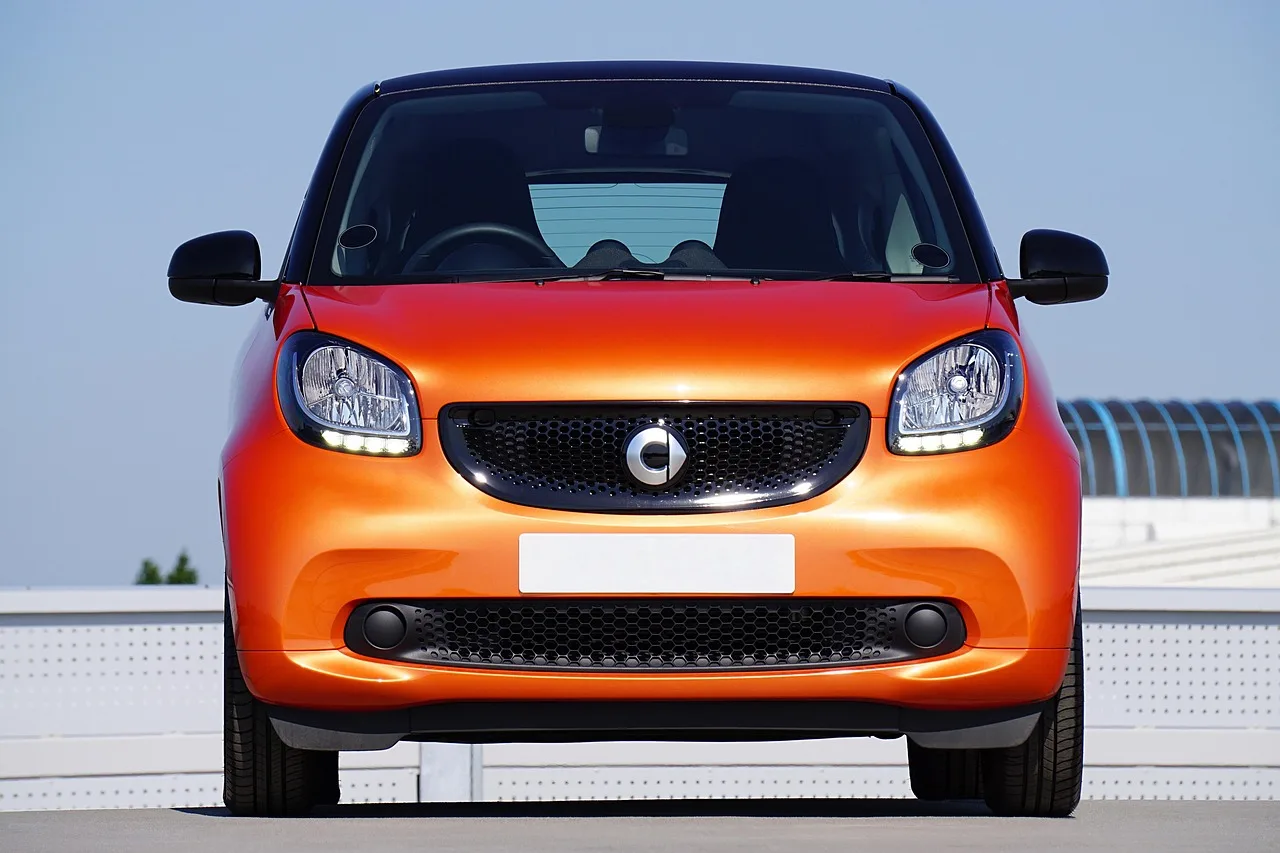
An economy car is often a good fit for buyers who care more about total running cost than size, power, or image. That usually includes commuters, apartment dwellers, first-time buyers, city drivers, and small families with light cargo needs. The best match is a vehicle that fits the routine without paying for space you will rarely use.
For many shoppers, the appeal is simple. Easy parking, better fuel economy, and lower upkeep fit real budgets. Safety ratings also matter here, and economy cars can still score well in IIHS and NHTSA testing. Low-cost does not have to mean low protection.
City drivers and apartment parking
Small and lightweight cars are easier to fit into narrow garages, crowded streets, and tight apartment lots. Subcompact models shine here because they take up less space and are less stressful to place in parallel parking spots. If curb space is scarce, a smaller footprint can be worth more than a bigger cargo opening.
Commuters who care about total running cost
Commuters often benefit most from economy cars because repeated trips magnify mpg differences. A few extra mpg on a daily route can change annual fuel spending, and the lower tire size and simpler maintenance needs can help too. If your drive is mostly solo and routine, an economy sedan or hatchback is often the cleanest fit.
First-time buyers and budget shoppers
First-time buyers usually need predictable costs, simple controls, and a manageable size. Economy cars fit that brief well, especially when value score is strong. U.S. News says its listed economy cars are priced below $27,000 and have a Value score of 8.0 or above. That price-and-value pairing helps buyers compare affordable options more objectively.
Small families with light cargo needs
Small families often need enough rear seat space for child seats and enough cargo room for daily life. A compact sedan or hatchback usually works better than a subcompact car here. If the family routinely hauls larger items, a small SUV may be easier to live with, though the mpg penalty should be part of the decision.
How should I compare an economy sedan, hatchback, and small SUV?
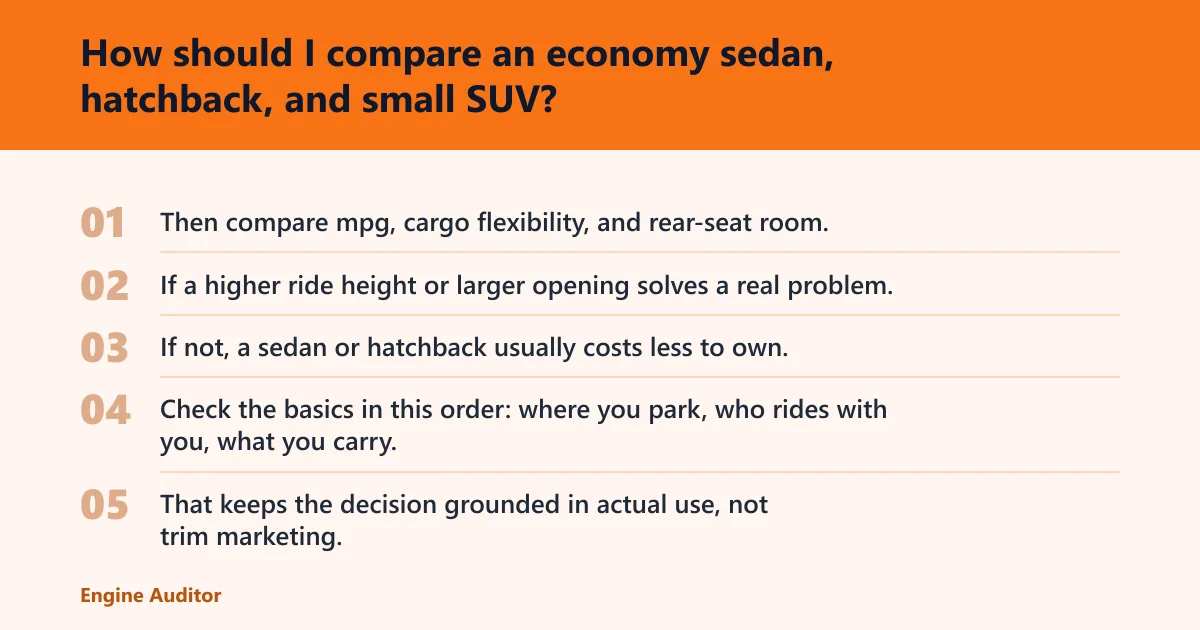
Start with daily use and parking space. Then compare mpg, cargo flexibility, and rear-seat room, because those are the tradeoffs that change ownership satisfaction. If a higher ride height or larger opening solves a real problem, a small SUV can make sense. If not, a sedan or hatchback usually costs less to own.
Check the basics in this order: where you park, who rides with you, what you carry, and how often you drive on highways. That keeps the decision grounded in actual use, not trim marketing. A vehicle that looks versatile on paper can still be awkward if it is hard to park or expensive to fuel.
Buyer-fit matrix: which economy car body style fits which use case?
| Body style | City driving | Long-distance comfort | Cargo flexibility | Rear-seat room | Typical mpg | Budget fit | Best use case |
|---|---|---|---|---|---|---|---|
| Subcompact sedan | Excellent | Fair | Low | Low | High | Strong | Solo commuters who want the lowest running cost and easiest parking |
| Compact sedan | Very good | Good | Moderate | Moderate | High to moderate | Strong | Daily drivers who want a better balance of comfort, mpg, and price |
| Hatchback | Excellent | Good | High | Moderate | High to moderate | Strong | Drivers who need flexible cargo space without moving to an SUV |
| Subcompact SUV | Very good | Good | High | Moderate | Moderate | Mixed | Buyers who want a taller seat and more utility, and can accept lower mpg |
Short recommendation: choose a subcompact sedan if parking and price matter most, a compact sedan if you want the broadest everyday balance, a hatchback if cargo flexibility is the main need, and a subcompact SUV only if the taller seating position justifies the fuel and weight tradeoff.
Can an economy car still be safe and reliable?
Yes. MotorBiscuit says economy cars can still have high safety ratings and reliability. That is why IIHS and NHTSA ratings matter so much for budget buyers. A lower purchase price does not automatically mean weaker protection, and a small car can still be a smart buy when crash scores and reliability records are strong.
Safety and reliability should be checked trim by trim, not just by nameplate. Some economy models include driver-assistance features on higher trims, while others keep them optional. Reliability also varies by engine, transmission, and model year, so a careful buyer should compare the exact version being considered rather than assuming every small car is equal.
What features do economy cars usually skip to stay cheap?
Economy cars often skip premium materials, large touchscreens, heated and ventilated seats, stronger sound deadening, and more powerful engines. Some trims also leave out convenience items that buyers of larger or pricier cars take for granted. That is the tradeoff that keeps purchase prices and running costs in check.
Those omissions are not always a problem. If the car is mainly a commute tool, basic controls and good mpg may matter more than soft-touch trim. The key is to avoid paying for an image package when the car’s actual job is simple transport.
Which cheap car is best for long drive?
The best cheap car for long drives is usually a compact sedan or a hatchback with solid mpg, a supportive seat, and enough cabin space to avoid feeling cramped. Small SUVs can work too, but they often return weaker mpg and more wind noise, which matters more when highway miles pile up.
For long-distance use, the winner is not always the smallest car with the highest mpg. It is the one that balances seat comfort, noise, passing power, and fuel use. Among affordable models, a compact sedan can often feel better than a subcompact on the open road because it usually gives a little more breathing room without a big cost jump.
The 2027 Toyota Corolla on U.S. News is rated 8.6 out of 10 and listed at 35 mpg combined. That kind of number is a useful benchmark for long-drive shoppers because it pairs strong value with fuel efficiency. Similar value-oriented compacts can be a better fit than very small cars if highway comfort matters.
What body styles can economy cars have today?
Economy cars today can be sedan, hatchback, crossover, or small SUV body styles. The main difference is how each one balances space against fuel economy. The more a body style adds height, mass, and complexity, the more it tends to chip away at the classic economy-car advantage.
Frequently asked questions
What is an economy car?
An economy car is a vehicle built for low-cost purchase and operation. It is usually small, lightweight, and built for good gas mileage with lower maintenance and operating costs. The term points to total ownership cost, not just a low sticker price.
Who is an economy car best for?
Economy cars are best for commuters, city drivers, first-time buyers, and budget shoppers who want dependable transportation with lower running costs. They also fit small households that do not need much cargo room or strong acceleration. If space and power matter more, a larger car may fit better.
Is an economy car the same as a compact car?
No. Compact car is a size class, while economy car is a cost-and-efficiency category. Many economy cars are compact or subcompact, but the labels are not interchangeable. A compact car can be roomy and well equipped without being especially economy-focused.
What body styles can economy cars have today?
Modern economy cars can be sedans, hatchbacks, crossovers, or small SUVs. Sedans are simple and efficient, hatchbacks add cargo flexibility, and small SUVs add a higher seat and more space. The tradeoff is that taller, heavier models usually give up some mpg.
Are economy cars good for long drives?
Some are, especially compact sedans and hatchbacks with decent seat support and strong combined mpg. Subcompact cars can feel cramped and noisy over long highway miles. If long-distance comfort matters, choose the body style with the best balance of cabin room, fuel economy, and passing power.
Can an economy car still be safe and reliable?
Yes. Economy cars can earn strong IIHS and NHTSA results, and they can also be reliable when the model and trim are chosen carefully. Safety and reliability depend on the exact vehicle, not the category label. Check crash ratings and known repair history before buying.
which cheap car is best for long drive
The best cheap car for long drives is usually a compact sedan with good combined mpg and enough cabin room to stay comfortable. A hatchback is a close second if you need cargo flexibility. Subcompact cars are cheaper to run, but they are usually less relaxing on the highway.
Products related to this article
Sponsored / affiliate links. As an Amazon Associate I earn from qualifying purchases. I may earn additional commission from eligible campaigns.