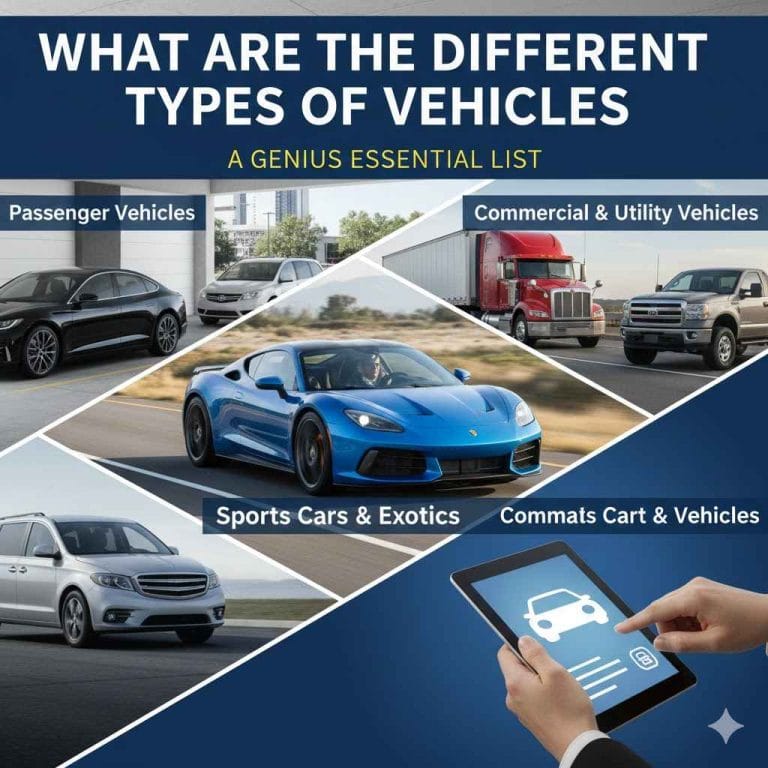
What is a Minivan Body Style? Best Uses and Features
A minivan is a vehicle body style built to move people and cargo, often with sliding doors, a low floor, and three rows; it can suit large households, shuttle work, and mobility-access needs. If the wrong body style is chosen, loading kids, strollers, wheelchairs, or luggage gets harder and space gets wasted. This guide covers best uses, common features, and the situations where an SUV, wagon, or van makes more sense.
What is a minivan body style?


A minivan is a passenger-first van body style built around space efficiency, easy entry, and flexible seating. Most minivans use a two-box or one-box body design, with a taller roof, upright sides, and a flatter floor than a typical SUV. That shape is not about style. It is about fitting people, bags, and daily gear with less friction.
One-box and two-box packaging
In body-style terms, the minivan keeps the cabin and cargo volume as one purpose-built unit, instead of splitting passenger and cargo space around a long hood and raised stance. That is why minivans are designed to make the most of interior room for passengers and cargo. The footprint can look modest from outside, yet the cabin works hard inside.
Why the tall roof and flat floor matter
The tall roof gives headroom for child seats, tall adults, and easy movement inside the cabin. The flatter floor makes it easier to walk across the cabin, manage bags, and place child seats without fighting wheel well bulk. High-H-point seating also puts passengers up high enough for good outward visibility and easier entry.
How minivans differ from vans and SUVs
Minivans are smaller and more road-focused than full-size cargo vans, which are built mainly for commercial hauling. They are also different from SUVs, because the minivan trades ground clearance and rough-road hardware for interior packaging. That trade is deliberate. It helps in school pickup lanes, grocery runs, and airport shuttles.
📊 U.S. News lists the 2026 Honda Odyssey as a roomy and safe three-row minivan. Source: Usnews.
What are the best uses for a minivan?
The best minivan jobs are the ones that mix people, gear, and frequent loading or unloading. Family hauling, school runs, airport trips, and rideshare duty all fit that pattern well. A minivan usually beats an SUV when daily life involves doors opening in tight parking spaces, bags that change by trip, and more than five occupants.
Family hauling and school runs
Up to eight passengers can fit in some minivans, and that matters for carpools, larger families, and kids with friends in tow. The sliding-door layout helps when a child is buckled in next to another child seat, or when the parking space is narrow. School-run duty is where a minivan often feels easiest to live with.
Airport trips, carpools, and rideshare duty
For airport work, the rear liftgate and wide cabin opening make luggage handling less awkward. For carpools, the easy rear access saves time in drop-off lines. For rideshare or shuttle use, the cabin height and rear-door access reduce the scramble that comes with people entering and exiting quickly, especially at curbs or in bad weather.
Cargo-plus-passenger use for active households
Minivans are strong when the same vehicle must move people on weekdays and bulky cargo on weekends. Fold-flat seats, a low floor, and a wide rear opening help with strollers, sports bags, folding tables, and home-improvement runs. They are a practical answer when the cargo load changes every day.

What common features do minivans have?
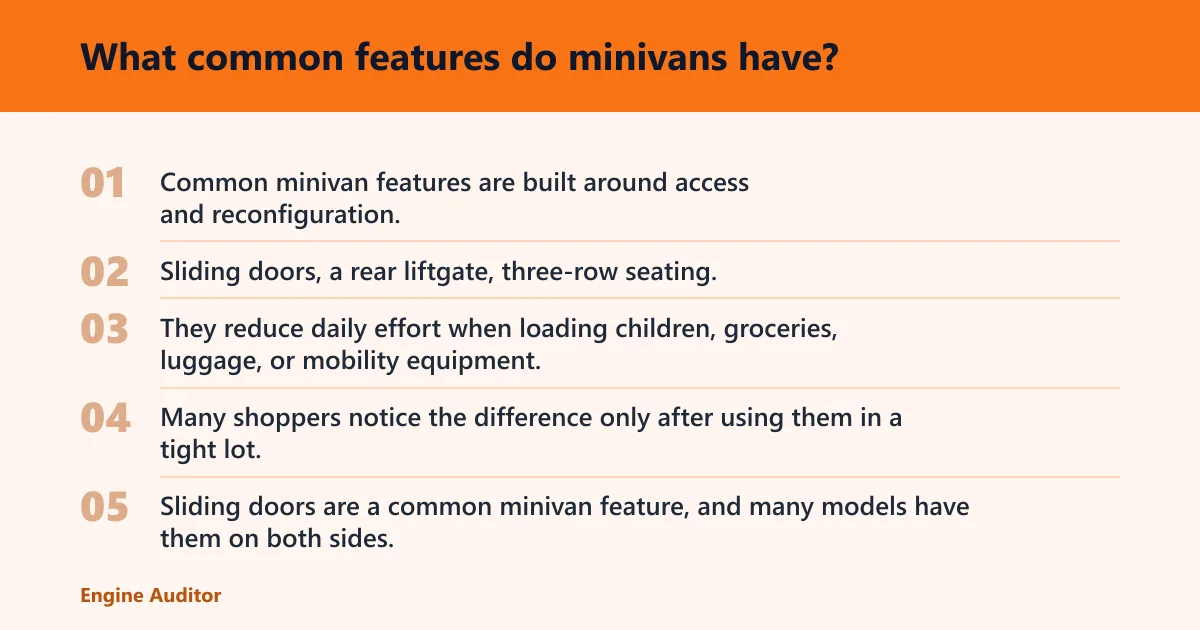
Common minivan features are built around access and reconfiguration. Sliding doors, a rear liftgate, three-row seating, and fold-flat seats are the core elements. These are not luxury extras. They reduce daily effort when loading children, groceries, luggage, or mobility equipment. Many shoppers notice the difference only after using them in a tight lot.
Sliding doors and why they help in tight spaces
Sliding doors are a common minivan feature, and many models have them on both sides. That matters in tight parking spaces because the door moves along the body instead of swinging into the neighboring car. It also helps when a child seat, stroller, or walker has to pass through a narrow gap.
Rear liftgate access and load handling
A rear liftgate is the normal cargo access point, and it gives a wide opening for groceries, luggage, coolers, and bulky items. That opening is especially helpful when loading awkward things that do not stack neatly. The minivan body style is built to make that rear access simple and repeatable.
Three-row seating and flexible interiors
Minivans can have two, three, or four rows of seats. Common minivan seating layouts include 2+3+2 and 2+3+3, and many models use fold-flat or reconfigurable seats. The point is not just capacity. It is the ability to shift from passenger duty to cargo duty without a major wrestling match.
| Feature | What it does in daily use | Why it matters |
|---|---|---|
| Sliding doors | Open without a wide outward swing | Useful in tight parking spaces and busy drop-off lanes |
| Rear liftgate | Creates a wide cargo opening | Makes groceries, strollers, and luggage easier to load |
| Fold-flat seats | Expand cargo space when seats are not needed | Supports changing family and hauling duties |
| Low floor | Reduces step-in height | Helps kids, older adults, and mobility equipment |
| High roof | Adds headroom and cabin space | Improves comfort for long trips and seat installation |
How is a minivan different from an SUV?
A minivan usually gives up ground clearance and trail hardware to gain more usable cabin room, easier access, and better cargo flexibility than many SUVs. SUVs can look tougher and may offer stronger towing or rough-road ability. Minivans usually win when the job is moving people comfortably and loading them quickly.
Passenger room and cargo space
Minivans provide more space for passengers and cargo than sedans and SUVs. That does not always mean a larger exterior footprint. It means the interior is organized more efficiently, with less wasted space around the drivetrain and body shape. Families feel that difference every time a third row is actually usable.
Ground clearance, towing, and off-road limits
Minivans have less ground clearance, towing capacity, and off-road capability than SUVs. That is the wrong tool for rocky trails, deep ruts, or regular boat-trailer duty. Buyers who need those abilities should look at an SUV or truck-based vehicle first. A minivan is built for pavement and practical loading. (en.wikipedia.org)
When an SUV is the better pick
An SUV makes more sense when the household regularly faces snowpack, rough driveways, steep campsite access, or a towing need that sits above typical family errands. It also makes sense when image or high seating position matters more than sliding-door convenience. The key question is not which body style looks stronger. It is which one fits the job.
How many seats can a minivan have?
Minivans can have two, three, or four rows of seats, and common layouts include 2+3+2 and 2+3+3. Seating count is only part of the story. The real value is how those seats fold, slide, or stow. A minivan with seven seats and useful cargo space can outwork a larger SUV.
Captain’s seats versus bench seating
Captain’s seats in the second row make a minivan easier to walk through and can improve comfort for older kids or adults. A bench seat can raise total passenger count and sometimes helps for school carpools. The right choice depends on whether access or seating maximum matters more.
What changes when seats fold flat or stow away
Fold-flat and stow-away seats change the vehicle from people mover to cargo hauler in minutes. That flexibility matters when the same minivan must carry six people one day and flat-pack furniture the next. This is where the body style earns its keep. It adapts without needing a trailer for routine jobs.
Do minivans come with AWD or hybrid options?
Most modern minivans use front-engine, front-wheel drive layouts, but some minivans offer all-wheel drive as an option. Hybrid variants also exist. Those choices matter for winter grip and fuel use, yet they do not define the body style. The minivan remains a packaging-first vehicle even when the powertrain changes.
Front-wheel drive as the common setup
Front-wheel drive is the normal baseline for most minivans because it supports efficient packaging and predictable road manners. That layout also helps keep the floor low. For many buyers, it is enough when paired with good tires and sensible winter driving habits.
Where AWD appears
Some minivans offer all-wheel drive for buyers who want extra traction in wet or snowy conditions. It is useful for driveway grip and bad-weather commuting, but it does not turn the vehicle into an off-roader. AWD adds confidence. It does not erase the minivan’s road-focused design.
Why hybrids matter for fuel use
Hybrid minivans matter because they help large family vehicles use less fuel in stop-and-go driving. The Toyota Sienna is listed with 35–36 combined MPG, which is a strong number for a vehicle of this size. The point is practical: fewer fuel stops on school weeks and road trips. (caranddriver.com)
Minivan-fit checklist and SUV decision matrix
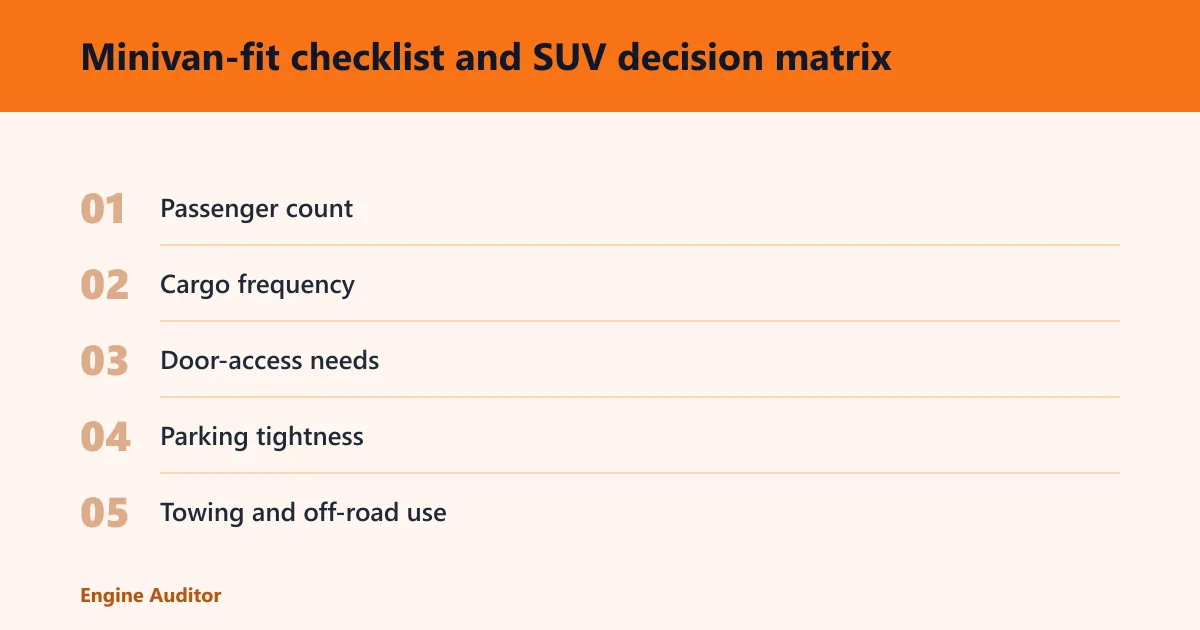
Use this checklist when the body style choice is still open. It ties the vehicle to daily tasks, not just dimensions or badges. The best answer comes from matching real use patterns to the strengths of a minivan. If several of the “yes” answers land on the minivan side, the choice becomes clearer fast.
- Passenger count: Choose a minivan if you regularly carry six to eight people, or if child seats reduce usable seating in a smaller vehicle.
- Cargo frequency: Choose a minivan if you often carry strollers, sports gear, luggage, groceries, or folding items with passengers in the cabin.
- Door-access needs: Choose a minivan if passengers load in tight parking spaces, busy school lanes, or curbside pickup zones.
- Parking tightness: Choose a minivan if door swing space is limited and side access matters more than body style image.
- Towing and off-road use: Choose an SUV if frequent towing or rough-road travel is part of normal use.
- Accessibility priorities: Choose a minivan if easy entry, low step-in height, or mobility device loading matters.
| Use case | Minivan fit | SUV fit | Better choice |
|---|---|---|---|
| Large family with child seats | High | Medium | Minivan |
| Frequent airport runs with luggage | High | Medium | Minivan |
| Frequent towing | Low | High | SUV |
| Snowy commute with no towing | Medium | High | AWD SUV or AWD minivan |
| Wheelchair or mobility loading | High | Low | Minivan |
| Frequent rough-road travel | Low | High | SUV |
Practical fit scoring
Score each category from 0 to 2. Add the totals. A result near the top of the scale points strongly toward a minivan.
- Passenger count: 0 for five or fewer, 1 for six, 2 for seven or eight
- Cargo frequency: 0 for rare, 1 for weekly, 2 for daily or near-daily
- Door-access needs: 0 for wide spaces, 1 for mixed, 2 for tight parking or curb loading
- Parking tightness: 0 for roomy, 1 for mixed, 2 for cramped
- Towing/off-road: 0 for regular use, 1 for occasional, 2 for frequent need
- Accessibility priorities: 0 for none, 1 for some, 2 for major need
Frequently asked questions
What is a minivan body style?
A minivan body style is a passenger-focused van design built around interior space, easy entry, and flexible seating. It usually has a tall roof, a low floor, and a boxier shape than many SUVs. Sliding doors and a rear liftgate are common because they make people and cargo easier to load.
What are the best uses for a minivan?
The best uses are family hauling, school runs, airport trips, carpools, and cargo-plus-passenger errands. A minivan works well when seating and load space have to change from day to day. It is especially useful when passengers, child seats, and bags all need to fit at once.
What common features do minivans have?
Common features include sliding doors, a rear liftgate, three-row seating, and fold-flat or reconfigurable seats. Many models also have a low floor and a high seating position. Those features are practical, not decorative. They reduce the effort of loading kids, groceries, luggage, and bulky items.
How is a minivan different from an SUV?
A minivan usually gives up ground clearance and off-road ability in exchange for more passenger and cargo space, easier access, and better packaging. An SUV may be better for towing or rough surfaces. A minivan is better when the daily job is carrying people and gear with less loading hassle.
Do minivans usually have sliding doors?
Yes. Sliding doors are a common minivan feature, and many models use them on both sides. They are especially useful in tight parking spaces because the door does not swing far outward. That makes child seats, strollers, and mobility devices easier to manage beside other cars.
Do minivans come with AWD or hybrid options?
Some minivans offer all-wheel drive, and hybrid variants exist, but neither feature is standard across the segment. Most modern minivans use front-engine, front-wheel drive layouts. Buyers who want winter traction can look for AWD, while buyers who want lower fuel use should compare hybrid versions first.
Products related to this article
Sponsored / affiliate links. As an Amazon Associate I earn from qualifying purchases. I may earn additional commission from eligible campaigns.