Wagon vs SUV: Which Vehicle Type Is More Practical?
A wagon is usually more practical for road-trip cargo, parking, and fuel use; an SUV wins if you need a higher seat, easier child loading, or more ground clearance on broken roads. Pick the vehicle for the job, or you carry extra size you do not use and give up daily convenience. This guide compares cargo, seating, visibility, ride, economy, and real-world use cases.
This guide is part of our Vehicle types guide series.
| Decision factor | Wagon | SUV: Which vehicle type is more practical | Winner |
|---|---|---|---|
| Daily parking and city use | Lower roof, shorter visual bulk, easier to fit in garages and tighter curbside spaces | Bulkier footprint, higher hood line, more careful parking in tight urban spaces | Wagon |
| Child loading and step-in height | Lower seat and cargo floor, but more bending for adults | Higher seating position and easier in-and-out for many adults and child seats | SUV |
| Cargo loading height | Lower lift-over and easier to reach deep into the cargo area | Higher floor, more lift effort, often better for bulky gear | Wagon |
| Fuel use | Usually lighter and slipperier through the air | Usually heavier and less efficient, especially with all-wheel drive | Wagon |
| Winter driving and rough-road use | Fine with winter tires and available all-wheel drive, but less ground clearance | Higher ride height and common all-wheel drive help on snow, ruts, and broken pavement | SUV |
| Road-trip comfort | Calmer body control, easier lane placement, less wind drag | Higher seating and a better outward view, but more motion and drag | Wagon |
| Light towing | Can tow in some trims, but usually not the first choice | More likely to be rated and equipped for towing | SUV |
Wagon vs SUV: the practical trade-off in one sentence
A wagon is a car-based body style with the roof extended rearward over a cargo area behind the rear seats, while an SUV generally sits higher and often offers more seating flexibility, a higher load floor, and more trim options. On pavement, a wagon often feels closer to a passenger car; an SUV gives easier entry, a better eye-level view of traffic, and more winter-capable options.
What a wagon is
A station wagon is built on passenger-car packaging, not truck-like proportions. It keeps the low ride height and typical driving manners of a car, then adds a long roof and a hatch for cargo behind the rear seats. In some datasets, wagons are counted with passenger cars, which can skew shopping comparisons if the shopper is looking only at SUV totals.
What an SUV is
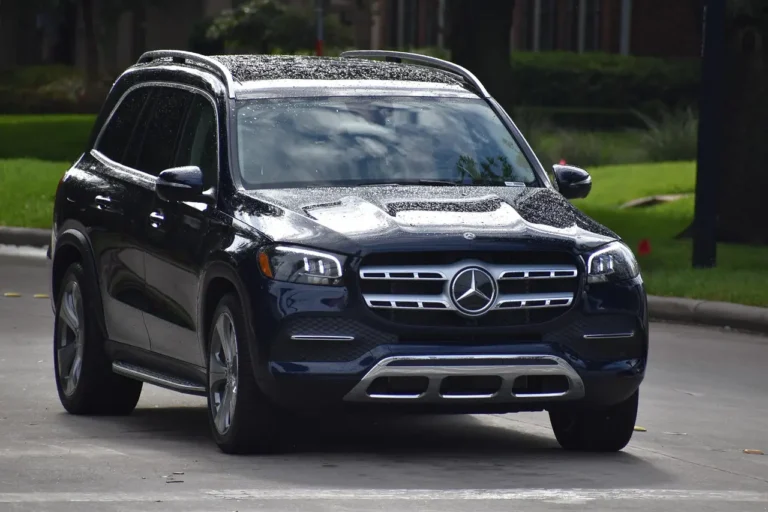
An SUV is a higher-riding family-hauler with more upright seating and a broader spread of trims. The higher position helps with step-in ease and sightlines, and all-wheel drive is commonly offered. That extra height also means more loading effort and, in many cases, more fuel use.
The short version of where each one fits
If the job is school runs, downtown parking, and long highway miles, a wagon often makes more sense than people expect. If the job involves snow, steep driveways, rough access roads, or frequent child-seat lifting, the SUV’s higher package starts to pay for itself.
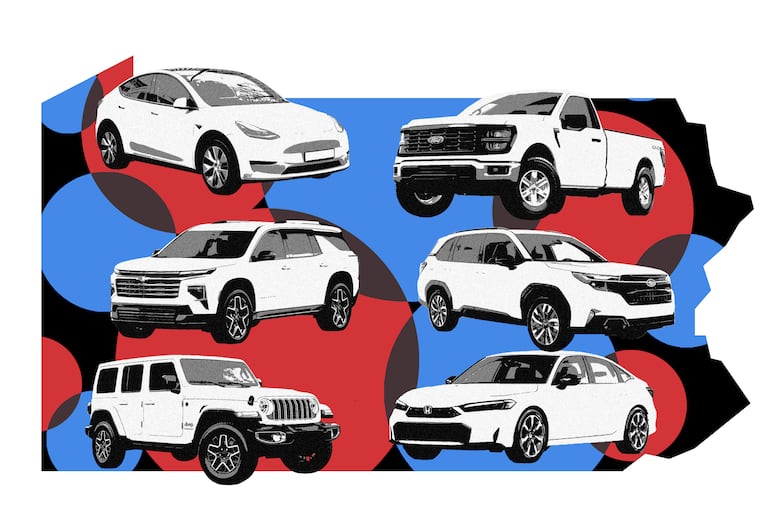
According to Which Vehicle Type is the Most Popular in Each State? – iSeeCars… — SUVs are the most popular vehicle type in 48 of 50 states.
Which is more practical for daily driving?
For daily driving, a wagon is usually more practical in dense cities because it is easier to park, easier to place in traffic, and less cumbersome in garages. An SUV is more practical when a higher seat and easier access matter more than a compact footprint, especially for drivers who get in and out often.
Parking in tight spaces
The wagon’s lower roofline and smaller visual mass reduce parking stress. That matters in apartment garages, tight parallel spots, and crowded grocery lots. SUVs can fit, but they ask for more attention at the curb and in multi-level structures.
Step-in height and cabin access
SUVs win if the driver or passengers want less bending at entry. The higher seat makes a noticeable difference for many adults and for child-seat installation, especially when loading kids repeatedly through the week. Wagons ask for a lower step and more reach.
Visibility in traffic
An SUV’s seating height gives a broader view over surrounding traffic and parked cars. That can cut stress in mixed traffic and on busy arterials. A wagon still sees well enough for most drivers, but it does not sit as high above the flow.
Which is better for cargo space and family use?
For family use, a wagon often wins on usable cargo access, while an SUV wins on loading height and seating flexibility. Cargo volume alone does not decide this. The shape of the opening, the height of the floor, and how often the rear seat is used matter just as much.
Usable cargo volume with seats up
A wagon usually gives a long, flat load area behind the rear seats because the roof extends farther rearward. That makes it efficient for suitcases, grocery runs, pet crates, and strollers. SUVs may post bigger headline volume in some trims, but tall sidewalls do not always make packing easier.
Load floor height and lift effort
Lower lift-over is one of the wagon’s strongest points. Heavy coolers, folded strollers, and luggage go in with less vertical lifting. An SUV asks for more hoisting, though that same height can help when the cargo is tall, bulky, or dirty.
Child seats, strollers, and school runs
SUVs often feel easier when buckling children because the seats sit higher off the ground. That reduces crouching and awkward torso twist. Wagons can still handle families well, but repeated loading is more of a bend-and-reach job.
How do they compare on driving feel and comfort?
A wagon usually feels calmer on pavement because it sits lower, carries less body roll, and has a more car-like chassis tune. An SUV trades some of that composure for a higher seating position and a view that many drivers prefer. The best choice depends on whether the commute or the access matters more.
Ride height and body control
The lower center of gravity in a wagon helps it settle into corners and lane changes with less lean. That pays off on winding roads and in gusty crosswinds. SUVs move more in response to quick inputs, though many drivers accept that for the taller cabin and easier entry.
Road-trip comfort on pavement
On long highway trips, wagons often feel quieter and more relaxed because they push less air and usually ride closer to a passenger car. SUVs can be comfortable too, but the extra height and drag usually mean more noise and less efficiency at speed.
Why wagons often feel calmer at speed
The wagon’s shape tends to be friendlier to airflow, and the lower driving position makes the vehicle feel more tied down. That can cut fatigue on long interstate stretches. If the trip is mostly paved, the wagon’s manners are hard to ignore.
Do SUVs get worse fuel economy than wagons?
Usually yes, because SUVs are often heavier, less aerodynamic, and more likely to use all-wheel drive. A wagon usually returns better fuel economy in real use, especially on highway miles. The gap narrows if the wagon is powerful or if the SUV is a lighter two-wheel-drive model.
Weight and aerodynamics
Weight matters at stoplights, but body shape matters on the highway. A wagon’s lower roof and cleaner profile usually cut drag better than a taller SUV. That means less fuel burned to maintain speed, especially on long commutes and road trips.
Drivetrain choice and mpg
All-wheel drive is a common SUV advantage, but it adds mass and mechanical drag. If the buyer chooses AWD on either body style, fuel use usually rises. That is one reason wagons often stay ahead on efficiency when the comparison is fair.
Why a wagon often uses less fuel
The wagon starts with a passenger-car base, so it often keeps the lighter structure and more efficient packaging. SUVs must move a taller body through the air and often carry a larger shell around the same number of passengers. That penalty shows up at the pump.
How do winter driving and light towing compare?
SUVs are usually better when snow, slush, rough driveways, or light towing are part of the job. All-wheel drive is common, the higher ride height helps over drifts and ruts, and the extra body clearance reduces scrape anxiety. A wagon can still work well in winter, especially with winter tires and AWD.
All-wheel drive availability
AWD availability is wider in the SUV market, and it is often offered across more trims. That matters because the shopper is less likely to get trapped in a single equipment level. Wagons may offer AWD too, but often in fewer configurations.
Snow traction and unpaved roads
AWD helps both body styles move in slippery conditions, but height still matters. An SUV is more forgiving on deeper snow, rutted lanes, and broken gravel. A wagon can be perfectly usable in winter, but it is less comfortable when clearance is the limiting factor.
When an SUV is the better tool
If the vehicle must climb a steep driveway, haul gear to a cabin, or tow a small trailer regularly, the SUV usually makes more sense. It is the more forgiving tool when the road stops behaving like a normal street.
Decision checklist: score wagon vs SUV by task
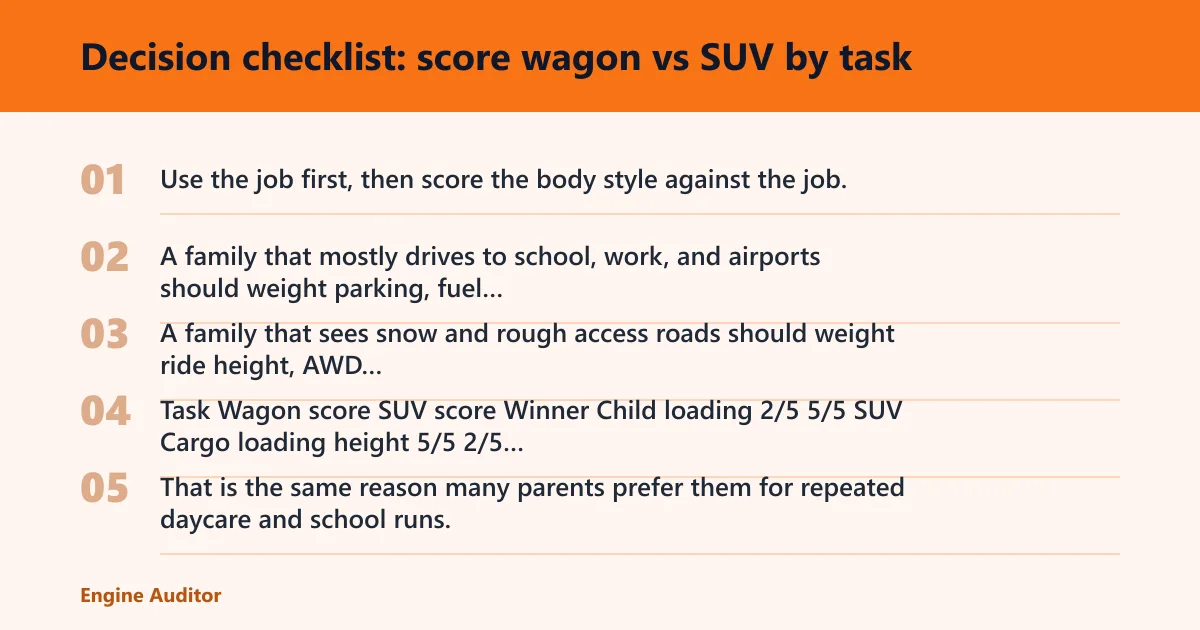
Use the job first, then score the body style against the job. A family that mostly drives to school, work, and airports should weight parking, fuel use, and cargo loading. A family that sees snow and rough access roads should weight ride height, AWD availability, and towing more heavily.
| Task | Wagon score | SUV score | Winner |
|---|---|---|---|
| Child loading | 2/5 | 5/5 | SUV |
| Cargo loading height | 5/5 | 2/5 | Wagon |
| Urban parking | 5/5 | 3/5 | Wagon |
| Winter driving | 3/5 | 5/5 | SUV |
| Road-trip comfort | 5/5 | 4/5 | Wagon |
| Fuel use | 5/5 | 3/5 | Wagon |
| Light towing | 3/5 | 5/5 | SUV |
Child loading
The higher SUV seat makes buckling and unbuckling less awkward. That is the same reason many parents prefer them for repeated daycare and school runs. A wagon still works, but the lower hip point means more bending.
Cargo loading height
This is where the wagon quietly wins. A lower floor means less strain when loading bags, boxes, or a folded stroller. The SUV can carry big items too, but the lift is higher and more tiring.
Urban parking
Wagons are easier to live with in crowded neighborhoods. They are less imposing in small garages and usually easier to place accurately at the curb. SUVs can fit urban life, but they usually ask for more attention.
Winter driving
For winter and rough streets, the SUV gets the nod because clearance matters as much as traction. AWD helps both, but the higher body reduces scraping and keeps the vehicle more usable when snow piles up.
Road-trip comfort
Wagons tend to settle down better on long paved stretches. Their lower stance and car-based tuning make highway miles feel less floaty. SUVs can still be comfortable, but they usually give up some composure for height.
Fuel use
The wagon usually wins here because it is shaped and packaged more like a car. Lower drag and lower mass matter on every tank. If the owner drives a lot, that gap becomes real money over time.
Light towing
If towing is part of the job, the SUV is more often the practical answer. It is more likely to be built and rated for it, and buyers have more choices across the lineup. A wagon can tow, but it is rarely the first tool for the task.
When does an SUV make more sense than a wagon?
An SUV makes more sense when access, clearance, and seating position matter more than efficiency or easy parking. It is the better tool for snowier climates, rougher roads, child-seat lifting, and buyers who want more trim choice and a wider AWD menu. If those are the priorities, the SUV earns its size.
When an SUV is the smarter pick
Choose an SUV if the vehicle will regularly handle toddlers, grandparents, steep driveways, or snow-packed roads. Choose it if you need higher roof clearance for loading or if your area makes ground clearance a daily concern. Choose it if the market simply does not offer the wagon you want.
When a wagon is the smarter pick
Choose a wagon if you drive mostly on pavement, want lower fuel use, and care about cargo access more than ride height. Choose it if garage fit, city parking, and highway composure matter. Choose it if you prefer a car that feels smaller without giving up the hatchback-style cargo opening.
Where Volvo V60 Cross Country fits
The Volvo V60 Cross Country is a useful middle case. Volvo presents it as a wagon with added ride height, protective cladding, and all-wheel drive, built on the Scalable Product Architecture. It is a good example of how a wagon can borrow some SUV traits without becoming a full-size SUV.
Frequently asked questions
What is the real difference between a wagon and an SUV?
A wagon is a passenger-car body with the roof carried rearward over a cargo area behind the rear seats. An SUV sits taller, usually gives a higher driving position, and often comes with broader AWD availability and more trim spread. The difference shows up most in access, parking, and ride feel.
Is a wagon or SUV more practical for daily driving?
For daily driving in a city or suburb, a wagon is often more practical because it is easier to park, easier to load low cargo, and usually easier on fuel. An SUV is more practical if repeated step-in height, snow access, or a higher driving position matters more than size.
Which is better for cargo space, a wagon or an SUV?
A wagon is often better for real cargo use because the load floor is lower and the rear opening is easier to work through. An SUV may have more height and a larger quoted volume in some trims, but that does not always make it easier to pack. The shape matters.
Are wagons safer or easier to drive than SUVs?
Wagons are usually easier to place on the road because they sit lower and feel more car-like in corners, parking, and lane changes. Safety depends more on the specific vehicle than the body style, but the lower stance can help confidence. SUVs still win on step-in and visibility.
Do SUVs get worse gas mileage than wagons?
Usually they do, because SUVs tend to be heavier, taller, and less aerodynamic. Many also use AWD, which can add drag and weight. A wagon often uses less fuel in real driving, especially on highway miles and in mixed commuting.
Which is better for families: a wagon or an SUV?
Families that value easier child loading, higher seating, and rough-road comfort usually prefer an SUV. Families that value easy parking, lower fuel use, and simpler cargo loading often prefer a wagon. The better family choice is the one that fits the daily routine, not the biggest shell.
Products related to this article
Sponsored / affiliate links. As an Amazon Associate I earn from qualifying purchases. I may earn additional commission from eligible campaigns.