Brake Pedal Feels Spongy: Air, Fluid, or Master Cylinder?
A spongy brake pedal usually points to air if pumping firms it up, to fluid loss if the pedal slowly drops during a 30-second hold, and to master-cylinder bypass if it still sinks after bleeding. Ignore that pattern, and you can lengthen stopping distances, repeat bleeding jobs, and replace parts without fixing the fault. This guide uses the static hold test, pump test, and clues from recent brake work to sort the cause.
Brake pedal diagnostic matrix
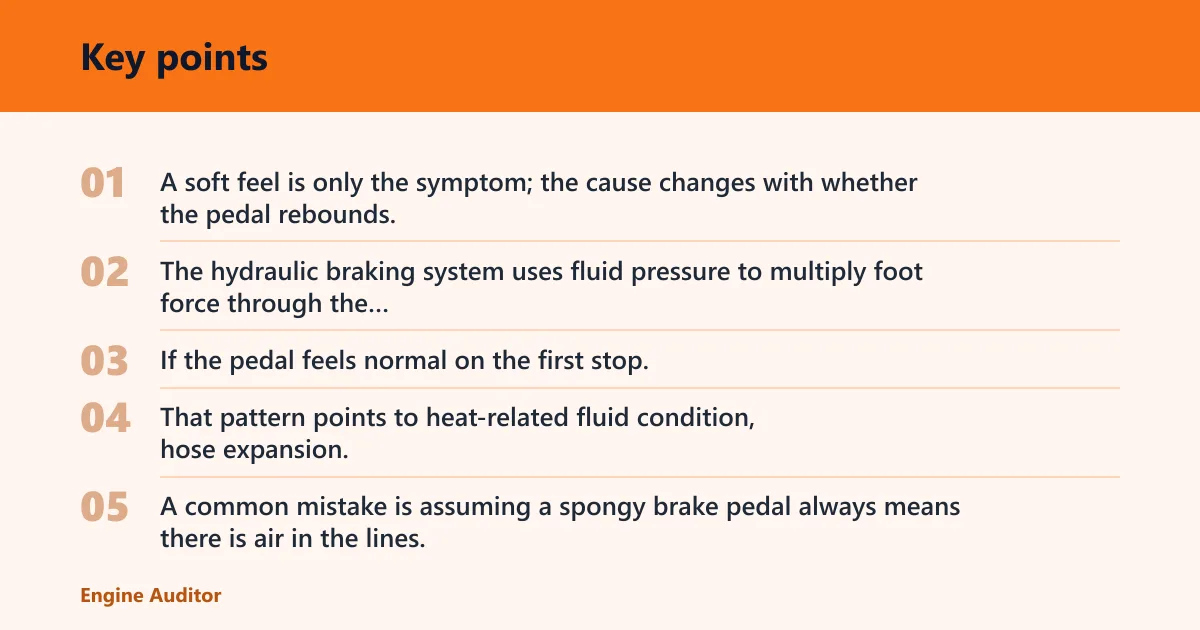


Start with pedal behavior. A soft feel is only the symptom; the cause changes with whether the pedal rebounds, sinks, or stays long after recent service. The hydraulic braking system uses fluid pressure to multiply foot force through the master cylinder, lines, calipers or wheel cylinders, and fluid reservoir. Air compresses. Brake fluid does not.
| Pedal behavior | Likely cause | Next check | Urgency |
|---|---|---|---|
| Spongy, then firms up with pumping | Air in the hydraulic system | Inspect recent brake work, then bleed the brakes at each caliper bleed valve | Inspect quickly |
| Slowly sinks under steady pressure | Master-cylinder bypass or external fluid loss | Check reservoir level, fittings, hoses, calipers, and wheel cylinders for wetness | Stop-driving warning if it keeps sinking |
| Long pedal after recent brake work | Air left in the system or a component installed dry | Confirm bleeding order, check caliper replacement, and bench-bleed if the master cylinder was replaced | High priority |
| Soft only when hot | Fluid boiling, hose swell, or ABS-related feel change | Check fluid age, hose condition, and whether the symptom appears after repeated stops | Inspect quickly |
If the pedal feels normal on the first stop, then turns long after three quick stops downhill, the problem is not simple pad wear. That pattern points to heat-related fluid condition, hose expansion, or air still trapped in the hydraulic circuit.
A common mistake is assuming a spongy brake pedal always means there is air in the lines, even when a leaking master cylinder or worn fluid is the real cause. A pedal that sinks under constant pressure is a different fault than a pedal that rebounds after a quick pump.
Why does my brake pedal feel spongy?
A spongy brake pedal means you need extra pedal travel before braking force builds. The usual reason is compressible air somewhere in the hydraulic system, because trapped air compresses while brake fluid does not. That is why air makes the pedal feel springy and vague instead of firm.
What a soft pedal means in the hydraulic system
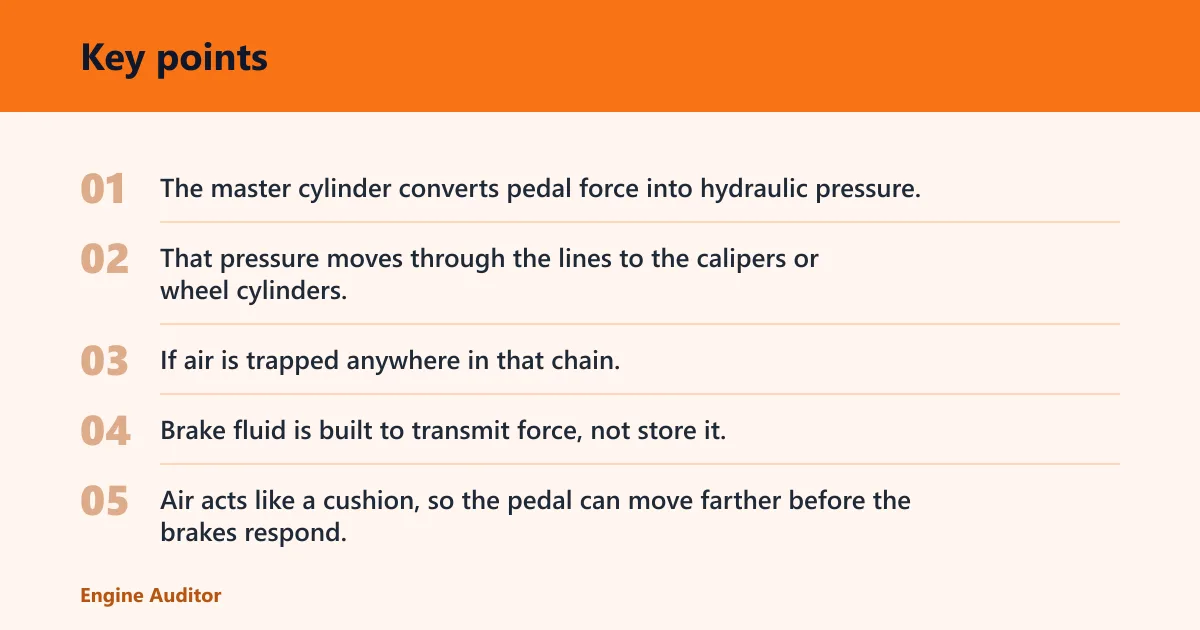
The master cylinder converts pedal force into hydraulic pressure. That pressure moves through the lines to the calipers or wheel cylinders, then clamps the pads or shoes. If air is trapped anywhere in that chain, some pedal travel goes into compressing the air instead of moving the brakes.
Why air changes pedal feel more than fluid does
Brake fluid is built to transmit force, not store it. Air acts like a cushion, so the pedal can move farther before the brakes respond. That is why the same system can feel soft after a line is opened, a caliper is replaced, or bleeding is incomplete.
Air in the lines or a fluid leak?
If pumping improves the pedal, air is a strong suspect. If the reservoir is low, or the pedal keeps dropping during a static hold, think fluid loss first. A leak creates two problems at once: fluid leaves the system, and air enters through the same opening.
Where air enters after a leak or open line
Air can enter at line fittings, calipers, wheel cylinders, hoses, or any opened connection during repair. That matters after recent brake work, because a system that was opened and not fully bled can act like a leak without showing a wet spot.
How to spot wet fittings, calipers, wheel cylinders, and hoses
Look for dampness at hard-line fittings, around caliper bodies, near wheel cylinders on drum brakes, and along flexible hoses. Wet spots near a wheel or under the engine bay are a warning sign. A hose can also crack or leak externally, and brake hose failure can create a soft pedal that does not improve with pumping.
Why low reservoir level matters
Low brake fluid is not harmless. It can point to pad wear, an external leak, or both. Severe pad wear pushes the caliper pistons farther out, which can lower reservoir level. That is why the reservoir should be checked before bleeding anything.
Brake fluid condition and level
DOT 3 and DOT 4 are common brake-fluid specifications. Brake fluid absorbs moisture over time, so old or contaminated fluid can lower boiling point and change pedal feel after heat buildup. Brake fluid replacement is commonly recommended every 2–3 years or 30,000 miles.
Moisture, color, and service history checks
Check service history first. If the fluid has not been changed in years, contamination becomes more likely. Dark fluid, debris, or a low reservoir with no obvious external leak all point toward a system that needs closer inspection. DOT 3 fluid boiling point can drop from 401°F to 284°F when contaminated. DOT 4 fluid boiling point can drop from 446°F to 311°F when contaminated.
When old fluid points to flush service
Old fluid is a maintenance issue, but it can also mask another fault. A flush may improve heat resistance, yet it will not fix a leaking fitting, worn master-cylinder seals, or a damaged hose. Brake fluid flush pricing is stated at $80–$120, which is often less than replacing the wrong part first.
Is the master cylinder failing?
A bad master cylinder often shows up as a pedal that slowly sinks while steady pressure is held. Internal seal wear lets fluid bypass inside the cylinder instead of holding pressure in the brake circuits. If the pedal still sinks after bleeding, master-cylinder failure moves up the list fast.
Pedal sink during a static hold
Use about a 30-second hold with the engine off. If the pedal starts firm and then drops, that is a different pattern from air, which usually feels springy and may improve with pumping. A sinking pedal points to internal bypass or an external leak that is still active under pressure.
Why a bad master cylinder can mimic air in the system
Both faults can feel soft at first. The difference is response to pumping and to steady pressure. Air often responds to bleeding and repeated pedal strokes. Master-cylinder bypass can survive both, because the pressure is escaping past worn seals inside the cylinder.
Why a sinking pedal after bleeding is a red flag
If the brakes were bled correctly and the pedal still sinks, do not keep assuming trapped air. That result is a classic clue for internal master-cylinder wear. Master cylinder replacement costs are stated at $200–$400 including parts and labor.
After brake work, what changed?
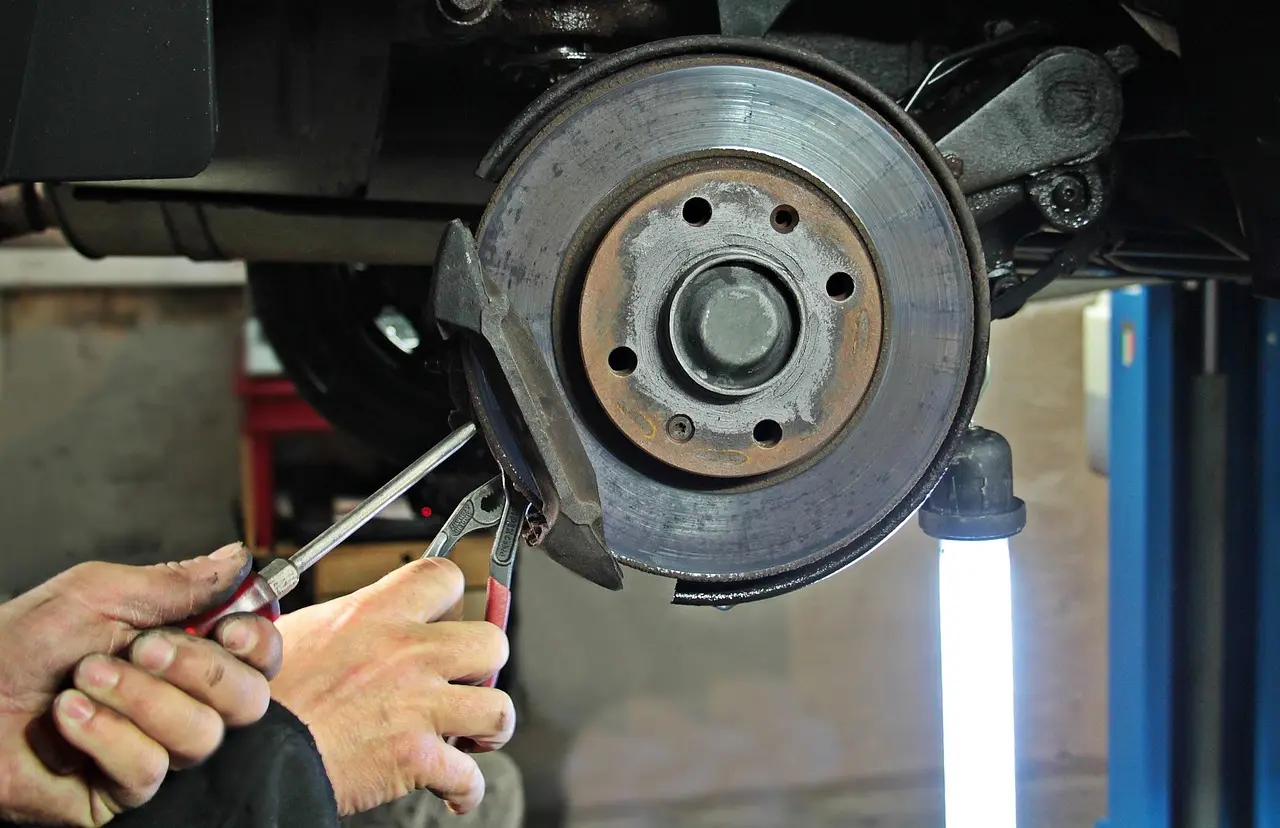
Recent repair history matters. A long pedal after caliper replacement, hose replacement, or master-cylinder replacement often comes from air trapped in the new part or an incorrect bleeding sequence. ABS components can also change pedal feel, especially when the hydraulic unit has been opened or the system has been run low.
Caliper replacement and trapped air
A caliper that was installed dry can hold air in the high points of the circuit. That can leave the pedal long even though no leak is visible. If the symptom began immediately after front or rear brake work, the repair sequence is part of the diagnosis, not a side note.
When bench bleeding is needed
Bench bleeding is often needed after master-cylinder replacement so air is removed before the cylinder goes on the car. Brake bleeding removes air by opening bleed valves at each caliper. If air remains trapped in the master cylinder, wheel bleeding alone may not cure the pedal.
ABS modules and scan-tool checks after repairs
ABS components are part of the hydraulic braking system and can contribute to pedal feel issues. If the basic hydraulic checks do not fit, or the problem starts after ABS-related repair, a scan tool may be needed to look for stored faults or trapped air in the ABS unit.
Brake pedal troubleshooting steps
Follow the sequence in order. Start with the reservoir, then look for external leaks and pad wear, then move to bleeding and master-cylinder checks. That order prevents the common mistake of bleeding a system that is still leaking or chasing air when the real issue is a bypassing cylinder.
- Check the reservoir level and the fluid condition.
- Look for wet spots at fittings, calipers, wheel cylinders, hoses, and under the engine bay.
- Measure pad thickness. New brake pads are listed at 10–12 mm thickness, and pads below 2 mm are described as dangerous and needing immediate replacement.
- Inspect hoses for cracks, swelling, or collapse. Internal swelling can restrict flow and alter pedal feel.
- If the pedal firms with pumping, bleed the brakes in the correct sequence.
- If the pedal still sinks after bleeding, test the master cylinder and consider ABS diagnostics.
Drum brakes, rear adjustment, and special cases
On vehicles with rear drums, a leaking wheel cylinder can lower fluid level and draw in air. Poor rear shoe adjustment can also create extra pedal travel that feels like hydraulic trouble. That is why drum-brake hardware belongs in the inspection, not only the fluid circuit.
Frequently asked questions
Is a spongy brake pedal air in the lines or a bad master cylinder?
If pumping firms the pedal, trapped air is more likely. If the pedal slowly sinks while held steady, master-cylinder bypass moves higher on the list. A sinking pedal after bleeding is a strong warning that internal seals may be worn, even if the system looks full.
Can low brake fluid make the pedal feel soft?
Yes. Low fluid can let air enter the system, and it can also signal pad wear or a leak. Do not add fluid and stop there. Check why the level dropped, because a refill without fixing the source can leave the pedal soft again.
How do I know if my master cylinder is failing?
Watch for a pedal that sinks slowly under constant pressure, especially after the system has been bled. A master cylinder can also fail internally without leaking outside. If the pedal continues to drop and no external wet spot is found, the cylinder deserves close attention.
Will bleeding brakes fix a soft pedal?
Bleeding often fixes a soft pedal when trapped air is the cause. It will not fix a leaking hose, worn pads that have pushed the pistons out too far, or a master cylinder that bypasses internally. If the pedal returns to soft after bleeding, the cause is still present.
Is it safe to drive with a soft brake pedal?
A soft pedal should be inspected quickly, and a pedal that sinks under steady pressure is a stop-driving warning. You need predictable braking, not a pedal that changes shape after each press. If the car still stops only after extra travel, have it checked before driving farther.
Products related to this article
Sponsored / affiliate links. As an Amazon Associate I earn from qualifying purchases. I may earn additional commission from eligible campaigns.