What Is a Compact SUV? Size, Benefits, and Drawbacks
A compact SUV is typically a two-row, five-passenger vehicle that is often described as sitting between a subcompact SUV and a midsize SUV. It usually gives you more cargo utility than a car-sized hatchback, but less rear-seat room and towing headroom than a larger SUV. Pick the wrong size and you pay for height and mass without getting the room you need.
What is a compact SUV?
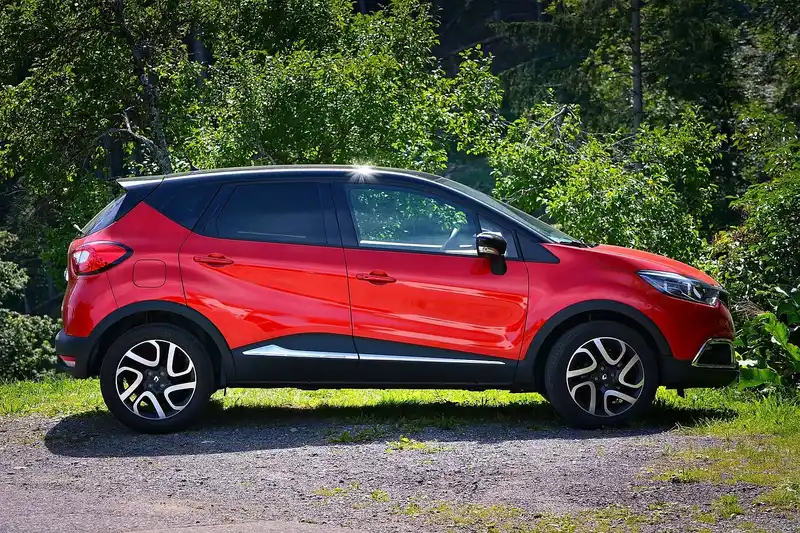
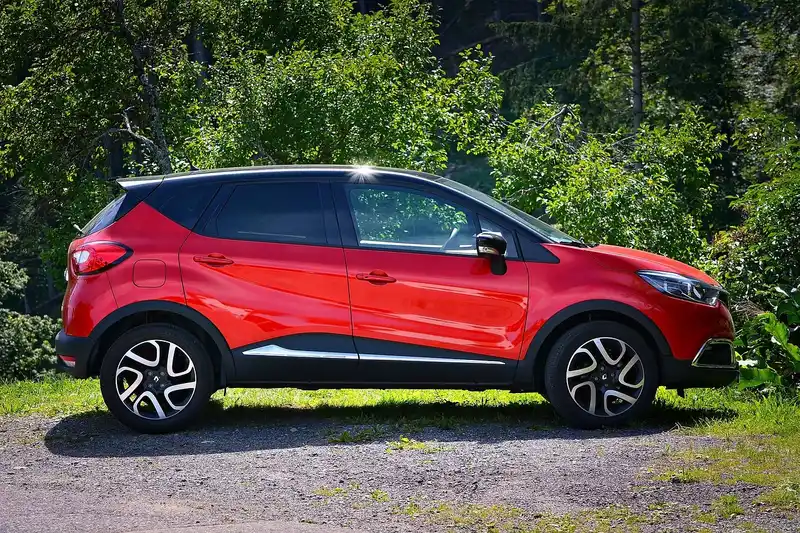
A compact SUV is the middle step in the small-SUV class ladder. It is larger than a subcompact SUV but smaller than a midsize SUV, and most are built on small-car architecture with a monocoque body rather than a truck frame.
That construction matters. A monocoque body usually keeps weight down and makes packaging easier, which is why many compact SUVs feel closer to a tall car or compact crossover than to a body-on-frame off-roader. GoAuto notes that most are front-wheel drive or can be two-wheel drive, with four-door wagon-like body styles.
Compact SUV vs compact crossover
In everyday shopping, compact SUV and compact crossover often overlap. A compact crossover is typically car-based, usually seats five, and is built for urban driving and mixed-use duty. That is why many compact SUVs feel easy to place in traffic and parking lots without giving up a higher seat height.
Buick describes compact SUVs as blending the utility of a larger SUV with the agility and fuel efficiency of a smaller car. That is the central tradeoff: better day-to-day utility than a compact car, but not the same room or towing confidence as a midsize SUV.
Monocoque body and platform basics
Most compact SUVs are not traditional body-on-frame SUVs. The same source says they are usually based on small-car architecture and use monocoque bodies. That helps explain why many are lighter and easier to maneuver than larger truck-based SUVs, even though they still sit higher than a sedan or hatchback.
For shoppers, the practical takeaway is simple. If you want easier entry, a higher seating position, and fold-flat rear seats, a compact SUV fits the brief. If you need true off-road hardware or heavy towing, this class is usually the wrong starting point.
How big is a compact SUV?
A compact SUV is small enough to work in dense parking lots, but large enough to handle daily family duty. Most compact SUVs can comfortably seat up to five passengers, and they have enough cargo space for weekend trips or hefty grocery hauls. (Caranddriver)
The same source says most compact SUVs range from under four metres to under five metres long. That size band is one reason the class works so well as an all-purpose vehicle: it gives you useful cabin space without moving into the bulk of a midsize SUV.
Typical seating and cargo space
Five-passenger seating is the norm. Rear seats are usually fine for adults on shorter trips and for children on longer runs, but the second row is not as generous as what you get in many midsize SUVs. Cargo room is usually enough for luggage, a stroller, or several grocery bags with the rear seats upright.
That said, cargo utility is still a compromise. Fold the rear seats and a compact SUV becomes far more useful for weekend gear or flat-pack boxes, but it still gives up space to a midsize SUV with a longer body and larger load area.
Ground clearance and ride height
The same source lists compact SUV ground clearance from about 175mm to around 220mm. That is high enough to help with driveways, rough parking lots, and light snow, but it is not a substitute for real off-road hardware or careful tire choice.
Higher ride height also changes how a vehicle feels. You sit above most cars, which helps visibility, but the taller body can feel less settled in quick lane changes than a lower compact car.
Compact SUV size ladder
Use the size ladder to place the class correctly. A compact SUV is larger than a subcompact SUV, smaller than a midsize SUV, and usually more practical than a compact car if you need a higher seating position or easier loading.
| Class | Typical position | Typical seating | Practical takeaway |
|---|---|---|---|
| Subcompact SUV | Smaller than compact SUV | Usually five | Best when parking ease matters more than rear-seat room |
| Compact car | Lower and shorter than compact SUV | Usually five | Often better for fuel use, price, and highway efficiency |
| Compact SUV | Between subcompact and midsize | Most can seat up to five | Balanced fit for daily use and light family hauling |
| Midsize SUV | Larger than compact SUV | Often five, sometimes more | Better when rear-seat space and cargo room are the priority |
This ladder is the cleanest way to compare classes. A compact SUV is not the same as a compact car, and it is not the same as a midsize SUV with the third row folded away. The differences show up in passenger space, cargo flexibility, and how much vehicle you have to park every day.
What are the benefits and drawbacks?
The main benefit of a compact SUV is a workable middle ground. You get a higher seating position, useful cargo space, and easier parking than a larger SUV, while often keeping efficiency and maneuverability close to a small car.
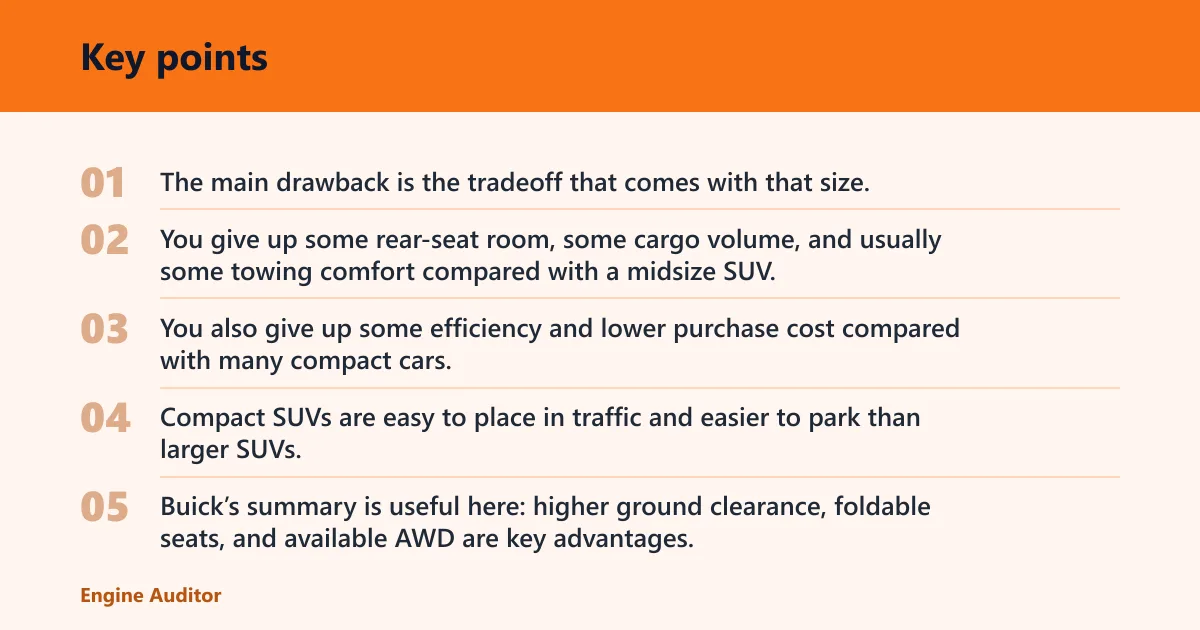
The main drawback is the tradeoff that comes with that size. You give up some rear-seat room, some cargo volume, and usually some towing comfort compared with a midsize SUV. You also give up some efficiency and lower purchase cost compared with many compact cars.
Benefits
Compact SUVs are easy to place in traffic and easier to park than larger SUVs. The higher driving position can help with visibility, and available AWD can help you pull away with more control in rain, snow, and slush.
Buick’s summary is useful here: higher ground clearance, foldable seats, and available AWD are key advantages. Those features make the class appealing for shoppers who want everyday utility without stepping up to a bigger vehicle than they can comfortably live with.
Drawbacks
Rear-seat space is the first compromise many buyers notice. Taller adults may find legroom and headroom adequate but not generous, especially compared with a midsize SUV. Cargo space is also more limited once child gear, sports equipment, or luggage starts piling up.
There are also limits on towing and hauling. Compact SUVs can handle light-duty use, but if you regularly tow a trailer or carry bulky cargo, a midsize SUV is usually the better fit. A compact car may also beat a compact SUV on price, fuel use, and highway efficiency.
Say your commute includes a tight garage and frequent curbside parking. A compact SUV helps because the higher seating position makes traffic easier to read, yet the footprint is still manageable. Add a second child seat and a stroller, and the rear bench begins to feel less generous than a midsize SUV’s.
A common first-timer mistake is choosing the class for the driving position alone. A taller seat is useful, but it does not create extra knee room, cargo length, or towing margin. If those are the real needs, the class label should change too.
When is a compact SUV the better buy?
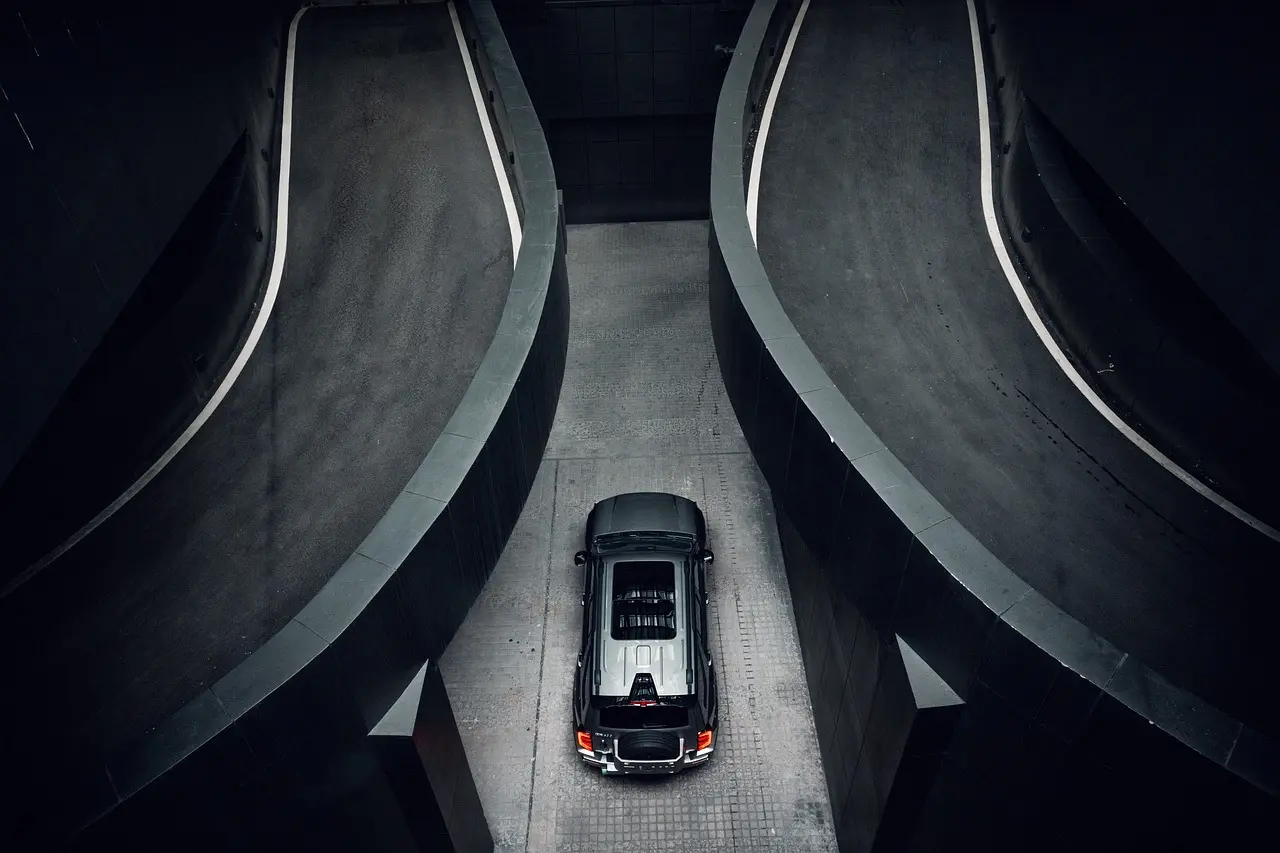
A compact SUV makes the most sense when you want one vehicle to handle city use, occasional family duty, and variable weather. It is especially attractive if you need more flexibility than a compact car but do not want the size penalty of a midsize SUV.
City parking
For city parking, a compact SUV is often the sweet spot. It gives you a higher seat and easier entry than a car, but it is still short and narrow enough to fit in many apartment garages, curb spaces, and crowded lots more easily than a midsize SUV.
Family hauling
For school runs, errands, and weekend outings, the class works well when you usually carry four or five people and a moderate amount of cargo. If you routinely need three rows, long cargo items, or a wide second row, a midsize SUV is the better buy.
Winter traction
For winter traction, AWD can be a useful option, especially on unplowed roads or during frequent rain and snow. It helps with getting moving and adds confidence, but it does not replace winter tires or proper driving habits.
Highway commuting
For highway commuting, a compact car may be the better buy if fuel use and road feel matter most. A compact SUV still works well, but the taller body and added weight can make it less efficient and sometimes noisier than a comparable car.
Light towing
For light towing, a compact SUV can handle modest jobs if the manufacturer allows it, but this is where the compromise starts to show. If towing is frequent or close to the vehicle’s rated limit, a midsize SUV or a more truck-oriented model is usually the safer match.
| Scenario | Compact SUV fit score | Better alternative | Why the alternative wins |
|---|---|---|---|
| City parking | 9/10 | Compact car | Smaller footprint and easier squeeze parking |
| Family hauling | 7/10 | Midsize SUV | More rear-seat room and cargo flexibility |
| Winter traction | 8/10 | Compact SUV with AWD | AWD and higher ground clearance help in bad weather |
| Highway commuting | 6/10 | Compact car | Usually quieter and more efficient at speed |
| Light towing | 5/10 | Midsize SUV | More towing margin and better stability when loaded |
-
List your real use cases. Write down how often you park in tight spaces, carry passengers, drive in winter, or tow. The right class follows the use pattern, not the badge.
-
Check rear-seat needs. Sit adults or child seats in the back and judge knee room, headroom, and access. A compact SUV is fine for many buyers, but rear-seat comfort is where the compromise becomes obvious.
-
Compare cargo shape, not just volume. Fold the rear seats and look at the load floor, opening height, and whether the cargo bay fits your largest items. Weekend-trip luggage and grocery runs are usually easy; large boxes are a different test.
-
Match drivetrain to climate. FWD is common and efficient, while AWD is often worth considering in snow, rain, or steep driveways. Follow the vehicle manual, never exceed the vehicle’s rated roof/hitch/tow limit, keep items out of airbag zones and the driver’s view, and check local laws.
Compact SUV vs compact car or midsize SUV?
If you are stuck between a compact car, a compact SUV, and a midsize SUV, the right answer depends on what you use most. A compact car is usually better for efficiency and highway commuting. A midsize SUV is better for rear-seat comfort, cargo room, and towing margin.
Compact car vs SUV
A compact car usually wins on price, fuel efficiency, and easy highway behavior. A compact SUV wins when you want a higher seating position, easier step-in height, and more flexible cargo loading. If you rarely carry bulky items, the car is often the smarter buy.
Midsize SUV vs compact SUV
A midsize SUV is bigger, roomier, and usually more forgiving for families that carry people plus gear on the same trip. A compact SUV is easier to park and often cheaper to live with, so it makes more sense when you need the shape of an SUV more than the full amount of SUV space.
Frequently asked questions
Is a compact SUV bigger than a small SUV?
Yes. A compact SUV is larger than a subcompact SUV, which is the smaller class often called a small SUV. The larger body usually gives you more rear-seat room and cargo space, though not as much as a midsize SUV.
SUV vs compact SUV: what’s the difference?
An SUV is the broader category, while compact SUV names a size class within it. The compact version is smaller, usually easier to park, and usually less spacious than a midsize or full-size SUV, but more useful than a compact car for mixed-duty use.
Is a compact SUV or midsize SUV bigger?
A midsize SUV is bigger. It usually gives you more rear-seat comfort, more cargo capacity, and more towing margin, while a compact SUV stays easier to maneuver and park. Choose the bigger class if people and luggage matter more than street-friendly size.
Compact car vs SUV: which one fits my needs?
Choose a compact car if you want lower fuel use, lower parking stress, and better highway efficiency. Choose a compact SUV if you want a higher seat, easier loading, and more flexible cargo space. The better fit depends on how often you carry people and gear.
What are the drawbacks of a compact SUV?
The biggest drawbacks are rear-seat space, cargo room, and towing headroom compared with a midsize SUV. A compact SUV can also cost more to fuel and park than a compact car. It is a compromise, so the tradeoffs show up when the load gets larger.
What are the benefits of a compact SUV?
The benefits are easy parking, a higher driving position, useful cargo space, and available AWD for poor weather. Buick also points to higher ground clearance, foldable seats, and the mix of SUV utility with smaller-car agility and fuel efficiency.
Compact suv vs small suv
A compact SUV is the larger class. Compared with a small or subcompact SUV, it usually offers more room for passengers and luggage, but it may be a little less easy to thread through tight parking spaces. If you need more family utility, compact is the better step up.
Suv vs compact suv
“SUV” is the umbrella term; “compact SUV” is the size-specific version. When shoppers say SUV, they may mean anything from a subcompact to a full-size model. The compact class is the middle-ground choice when you want SUV shape without oversized footprint or bulk.
Products related to this article
Sponsored / affiliate links. As an Amazon Associate I earn from qualifying purchases. I may earn additional commission from eligible campaigns.
 Half Car Cover Top, Snow Car Cover for Compact SUV with Cotton Liner, Sunroof & Windshield Cover for Ice and Snow, All Weather Vehicle Body Cover for Sun, Rain, Dust, Fit SUV 178-189 inchs
 Swing‑Away 2 Inch Hitch Adapter, Heavy‑Duty 120 Degree Pivot, 260 Lbs Load Capacity, Hitch Mount Bike Rack Extension for Standard 2" Receiver, Fits Most 2‑inch Hitch Racks