Transmission Control System Won’t Engage Reverse: Causes
Transmission Control System Won’t Engage Reverse: Causes, Codes, and Repairs
A transmission control system may not engage reverse for a few common reasons: external linkage problems, hydraulic pressure loss, electronic command faults, or internal reverse-clutch damage. Ignore it, and you can end up stranded, burn clutch material, and turn a simple fix into a rebuild. This guide walks through a reverse-only fault tree so you can confirm the cause before replacing parts.
Reverse needs the same basic ingredients as every other gear: the selector must move the transmission into the correct range, fluid must create hydraulic pressure, the control system must command the shift, and the internal reverse circuit must hold. If forward gears still work, that narrows the search, but it does not point to one part by itself.
| Symptom pattern | Likely cause category | Quick test | Next repair step |
|---|---|---|---|
| Reverse missing, forward gears still normal, selector feels loose | External linkage | Inspect for looseness, wear, or misadjustment at the shifter and transmission lever | Adjust, tighten, or replace worn linkage parts |
| Reverse missing after low fluid, leak, or burnt smell | Hydraulic fluid problem | Check level and fluid condition using the transmission’s specified procedure | Repair leaks, correct level, and service contaminated fluid if needed |
| Reverse missing with a P0700 or other transmission code | Electronic control fault | Scan the transmission module for stored codes and inspect connectors | Check solenoids, sensors, and the TCM before replacing hardware |
| Reverse missing with fluid and linkage correct, plus harsh or delayed engagement | Valve body or internal reverse circuit damage | Hydraulic tests and deeper diagnosis by a qualified shop | Repair valve body faults or plan for rebuild-level work |
| Vehicle revs but will not move in reverse, sometimes with broader no-move symptoms | Torque converter or major internal fault | Compare reverse with Drive and note whether all ranges are affected | Confirm internal damage before teardown |
Why won’t it go into reverse?
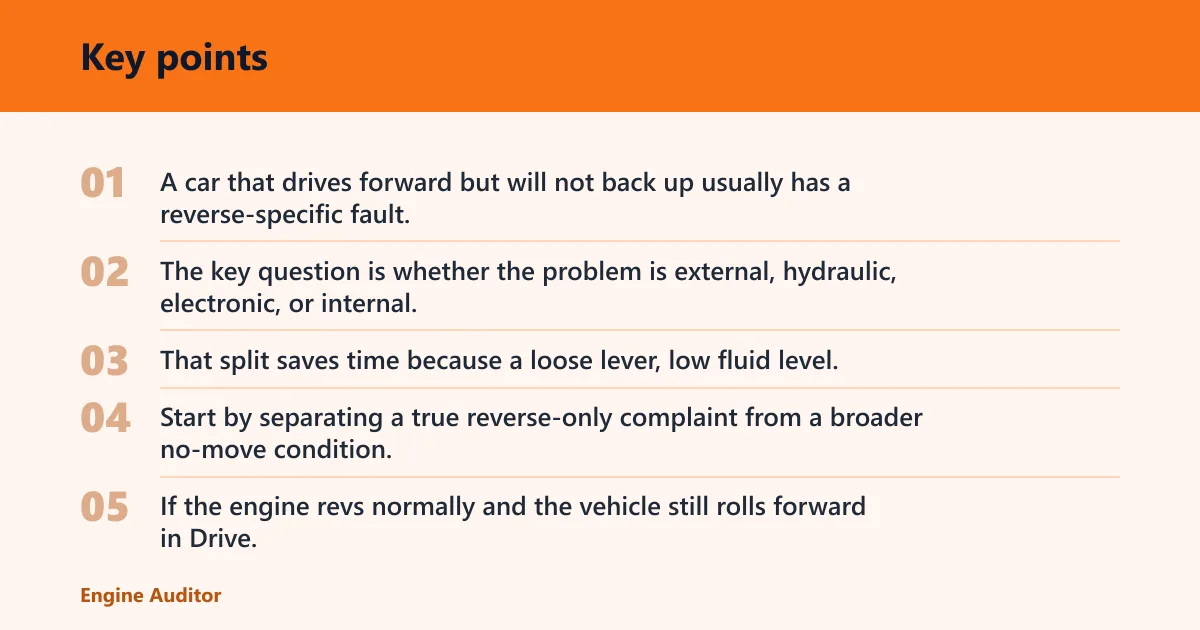


A car that drives forward but will not back up usually has a reverse-specific fault, not a total transmission failure. The key question is whether the problem is external, hydraulic, electronic, or internal. That split saves time because a loose lever, low fluid level, or failed solenoid can mimic major damage.
Start by separating a true reverse-only complaint from a broader no-move condition. If the engine revs normally and the vehicle still rolls forward in Drive, the transmission is partly working. That makes reverse circuit failure, linkage misadjustment, or a control fault more likely than a complete loss of transmission function.
If the selector feels loose and reverse never engages, but the car still pulls away in first gear, a linkage or range-selection problem is a likely possibility. That pattern points first to linkage or range selection, not an automatic rebuild. The opposite pattern matters too: if reverse and forward both slip or fail, hydraulic or internal damage moves higher on the list.
Can low fluid stop reverse?
Yes. Low automatic transmission fluid can stop reverse because fluid provides the hydraulic pressure needed for gear engagement. If the fluid is low enough, reverse may not apply even while some forward function remains. Check the level first, and inspect for leaks before chasing electrical parts. OEM service information for the specific transmission is the best reference for the correct fluid-check procedure, because the method varies by make and model.
Fluid condition matters too. Burnt fluid suggests internal wear and may require future repairs. Contaminated fluid can also interfere with hydraulic control, especially if debris is affecting the valve body or clutch passages. A bad smell or dark, dirty fluid is a warning, not a cosmetic issue.
Look for fresh spots under the vehicle, wet case seams, or a history of topping off. A leak does not need to be dramatic to cause a no-reverse complaint. A small seep over time can lower pressure enough that reverse is the first gear to disappear. OEM service bulletins and maintenance schedules can also help confirm whether the unit has a known fluid-related reverse issue or update requirement.
Fluid checks that matter
- Check the level with the correct procedure for the transmission.
- Confirm the reading before assuming internal failure.
- Inspect for burnt odor, dark color, or contamination.
- Find and repair leaks before adding more fluid.
- Do not keep forcing reverse if the fluid is clearly overheated.
Could the shift linkage be out of adjustment?
Yes. For a transmission that will not engage, the shift linkage should be checked for looseness, wear, and adjustment before the transmission is blamed. A disconnected or misaligned lever can leave the cabin selector in one position while the transmission manual valve sits between ranges or misses reverse entirely.
Linkage faults often feel simple: the shifter may move too easily, the detent may feel vague, or the car may start in the wrong range. That can mimic a failed transmission because the symptom appears at the wheels, not at the lever. The fix may be an adjustment, a bushing, or a worn cable end.
Picture a driveway scenario where Park and Drive seem normal, but Reverse sits dead and the shifter has extra play near the gate. That is a classic reason to inspect the external selector hardware before opening the transmission. If the lever on the transmission does not match the cabin position, the issue is outside the case.
Linkage clues that point external
- The shifter feels loose or imprecise.
- The indicator does not line up with the selected gear.
- The transmission lever and cabin shifter do not move together correctly.
- Reverse fails, but the issue changes when the lever is manually positioned.
Electrical faults that block reverse
Computer-controlled transmissions can lose reverse when a sensor, solenoid, or transmission control module sends the wrong command or no command at all. Many automatic transmissions use electronic control modules, electrical sensors, and solenoids to control shifting. That means reverse can fail from an electrical problem even when fluid and linkage look normal.
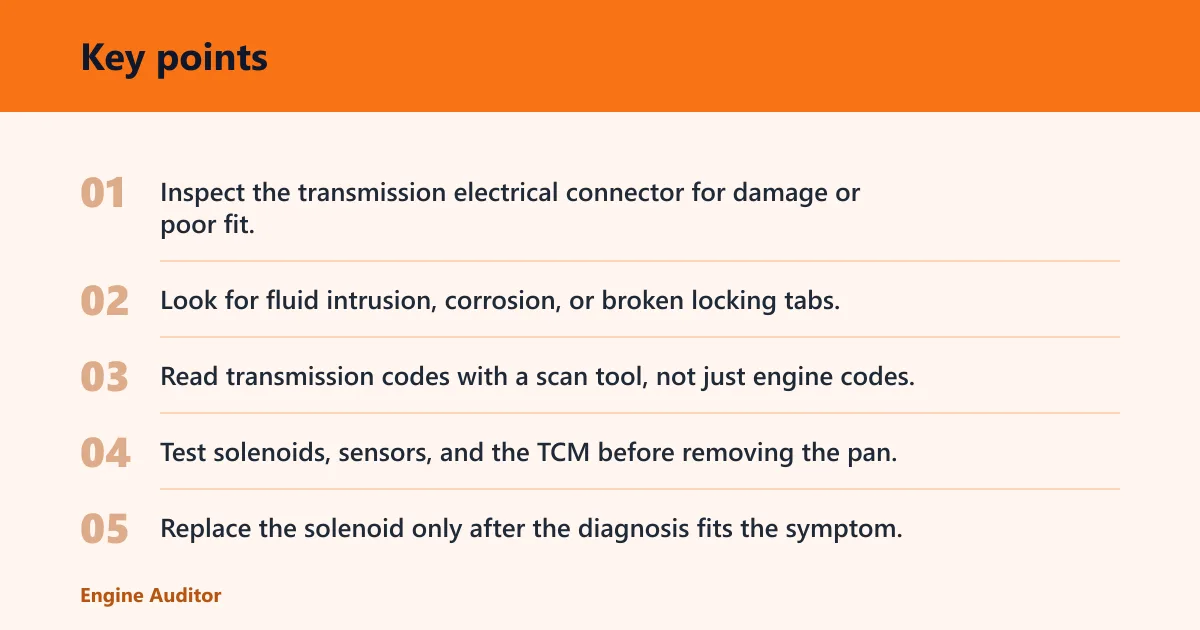
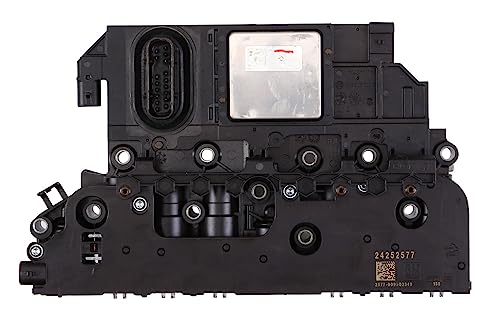
A bad shift solenoid is a common no-reverse path. When reverse or overdrive fails, the source may be a failed solenoid. Some solenoids can be reached by removing the transmission pan and filter, so pan removal may be part of the repair, but only after diagnosis points there. OEM service information is the right place to confirm solenoid location, connector pinouts, and whether the unit uses a replaceable solenoid pack, a valve-body-mounted solenoid, or a mechatronic assembly.
Check the electrical connector first. A poor connection, corrosion, bent pin, or damaged harness can interrupt the command to the solenoid or module. If the connector is loose or oil-soaked, replacing parts before fixing the connection usually wastes time and money.
Solenoid and connector checks
- Inspect the transmission electrical connector for damage or poor fit.
- Look for fluid intrusion, corrosion, or broken locking tabs.
- Read transmission codes with a scan tool, not just engine codes.
- Test solenoids, sensors, and the TCM before removing the pan.
- Replace the solenoid only after the diagnosis fits the symptom.
Transmission sensors matter too. A failed sensor can cause shifting problems on electronically controlled units, especially when the module depends on range or speed inputs to command reverse. If the module does not trust the input, it may block engagement or choose a fail-safe strategy.
The transmission control module can also cause loss of reverse. Software faults, internal failure, or a bad learned calibration can affect shifting on computer-controlled systems. A software update can sometimes help, but it is not a cure-all. If the module is not commanding reverse correctly, the problem still needs code-based diagnosis. For the most accurate path, compare the vehicle’s OEM service information with any TSBs listed in the NHTSA database for the exact year, make, and model.
Use a scanner that reads transmission codes directly. P0700 means a transmission-related fault is present, but it does not identify the specific problem by itself. You still need the actual transmission codes, because P0700 is a gateway code, not a root-cause code. NHTSA’s complaint and TSB resources can also reveal repeat patterns such as software updates, shift-quality fixes, or reverse-engagement complaints tied to a specific calibration.
What transmission codes point to a reverse engagement problem?
Any code stored in the transmission control system can matter if reverse is missing, especially codes tied to solenoids, sensors, range inputs, or module communication. P0700 tells you the transmission computer has flagged a fault, but the real answer is in the transmission-specific codes that the scanner reads from the module. OEM scan-tool documentation is especially useful here because many manufacturers label the same symptom with different code families or test steps.
Do not stop at the engine computer. Some scanners only show generic powertrain data and hide the transmission codes that matter here. If reverse is gone and there is no P0700, that does not clear the transmission; it only means you have not found a module-requested fault yet.
Common reverse-relevant code families often include shift-solenoid, pressure-control, range-sensor, speed-sensor, and communication faults, but the meaning varies by make and model. Examples can include solenoid performance or circuit codes such as P0751, P0752, P0753, P0756, pressure-control codes such as P0745, P0746, and P0776, range or selector-related codes such as P0705, and speed-sensor or ratio-related codes such as P0720, P0722, or P0735. Some vehicles also store manufacturer-specific codes that the generic scanner will not fully explain, which is why OEM code charts matter.
If the reverse complaint is tied to a TCM reflash, adaptive-learn issue, or a known calibration update, the NHTSA TSB database and the manufacturer’s service information can show whether the fix is software, wiring repair, or a hardware replacement. That step is especially important when the symptom is intermittent or only appears hot.
Code-reading priorities
- Read transmission codes directly with a scan tool.
- Note any P0700 as a sign that the transmission controller has stored a fault.
- Check for solenoid, sensor, or communication codes.
- Verify whether the codes match a reverse-only symptom or a broader shift problem.
Will internal transmission damage cause only reverse to fail?
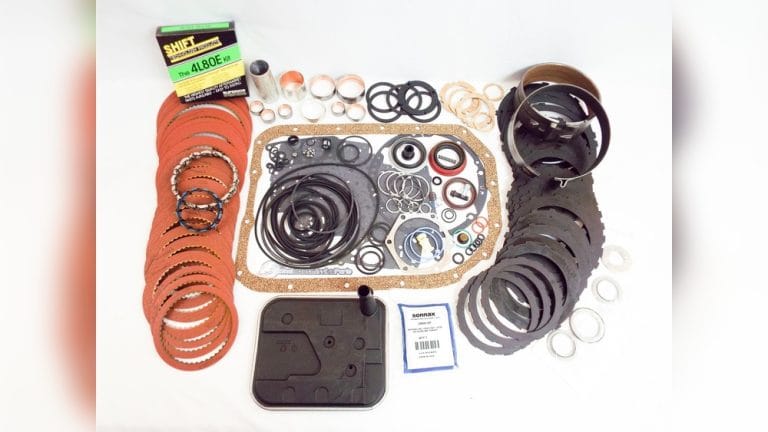
Internal reverse-circuit damage can leave forward gears usable while reverse disappears, especially if the reverse clutch, seals, or apply circuit has failed. If fluid and linkage are correct and the transmission still will not engage, internal damage is likely. That is the point where teardown or rebuild-level diagnosis becomes reasonable.
Valve body problems can create a hydraulic flow issue that affects reverse only. The valve body directs fluid to the right circuit, so a stuck valve, worn bore, or internal leak can block reverse even when the rest of the transmission still functions. This sits between electronic control and full mechanical failure.
A failing torque converter can overlap with this complaint too. A vehicle can go into gear but not move, with the engine revving normally. That symptom can be caused by low transmission fluid, a failing torque converter, or valve body problems. If the complaint is broader than reverse, do not skip these checks.
Suppose reverse is dead, Drive feels weak, and the engine revs higher than normal before the car creeps. That is no longer a simple linkage story. That pattern pushes the diagnosis toward hydraulic loss, valve body failure, torque converter trouble, or internal damage.
Severe internal damage can cause no shift, no reverse, stuck in gear, or no overdrive. Revving hard while the transmission is struggling can make internal damage worse, so avoid repeated full-throttle attempts to “force” reverse to come back. For deeper diagnosis, use the manufacturer’s pressure tests and reverse-apply diagnostics from the OEM service manual or a trusted transmission diagnostic reference before authorizing teardown.
What repair should you do first?
Start with a no-tear-down sequence: fluid, linkage, codes, wiring, solenoid or module checks, then internal diagnosis. That order keeps you from removing the pan or opening the case before the simpler causes are ruled out. It also matches the way a reverse-only fault should be separated from a broader transmission failure.
Do not remove the pan just because reverse is missing. Some solenoids live under the pan and filter, but other faults are upstream in the control system. If the scanner shows a code, the connector is damaged, or the linkage is off, fix those first. Pan removal makes sense when the diagnosis points to an internal control part that sits there. OEM repair procedures are the best source for whether the unit requires special bleed steps, relearn procedures, or a specific solenoid access sequence.
Repair sequence to avoid wasted work
- Check automatic transmission fluid level and condition.
- Inspect for leaks, burnt smell, or contamination.
- Inspect shift linkage for looseness, wear, and adjustment.
- Read transmission codes with a scan tool.
- Inspect electrical connectors, wiring, solenoids, sensors, and the TCM.
- Move to valve body or internal diagnosis only after the earlier checks pass.
Should you drive the car if reverse does not work? Limited driving may be possible, but backing out of a parking space or driveway can be unsafe. If the car must be maneuvered in tight spaces, or if the transmission is slipping, delaying repair can turn a manageable fault into more damage.
A common first-timer mistake is to replace a solenoid before checking fluid level and linkage. That can leave the actual problem untouched. Another mistake is to keep testing reverse over and over with a high engine speed, which can worsen internal wear.
Frequently asked questions
Why won’t my transmission engage reverse but still drives forward?
That pattern usually means the failure is isolated to the reverse path, not the entire transmission. The most likely categories are linkage, low fluid, a solenoid or sensor fault, a valve body problem, or internal reverse-circuit damage. Separate reverse-only failure from broad no-move symptoms before replacing parts.
Can low transmission fluid cause no reverse?
Yes. Low automatic transmission fluid can prevent reverse because fluid creates the hydraulic pressure needed for gear engagement. If the level is low, reverse may fail before forward gears stop working. Check for leaks and fluid condition first, then correct the level with the right procedure.
Is a bad shift solenoid a common cause of no reverse?
Yes. When reverse or overdrive fails, a failed solenoid is a common cause. On many units, the solenoid sits under the pan and filter, so diagnosis should come first. Check the electrical connector and codes before opening the transmission.
How do I tell if the problem is linkage or internal transmission damage?
If the shifter feels loose, misaligned, or disconnected, the fault may be external linkage. If fluid and linkage are correct and reverse still will not engage, internal damage is more likely. A scan tool and a careful inspection of the selector hardware help separate the two.
Can a transmission computer module cause loss of reverse?
Yes. A transmission control module can fail or make the wrong command on computer-controlled transmissions. Software issues can also affect shifting, and a software update may help in some cases. It is a possible cause, but it should be checked after fluid, linkage, and connector inspection.
Should I drive the car if reverse doesn’t work?
Limited driving may be possible if forward gears work normally, but reverse failure can make parking and backing out unsafe. If the transmission slips, revs hard, or loses more than reverse, stop driving and diagnose it sooner. More attempts can worsen internal damage.
Do I need to remove the transmission pan to replace a solenoid?
Sometimes. Some solenoids are reached by removing the transmission pan and filter, but that is not the first step. Read the codes, inspect the connector, and confirm the fault path first. Pan removal is a repair step, not a diagnosis substitute.
What does P0700 mean when reverse is missing?
P0700 means the transmission control module has detected a fault and requested the engine computer to turn on the warning light. It does not tell you whether reverse is lost from fluid, linkage, solenoid, sensor, or internal damage. You still need the transmission-specific codes.
Will a software update fix a transmission that won’t go into reverse?
Sometimes, but not always. A software update can help when the transmission control module has a calibration or command issue. It will not fix low fluid, worn linkage, a failed solenoid, or internal damage. Treat it as one possible repair after diagnosis, not the default answer.
Products related to this article
Sponsored / affiliate links. As an Amazon Associate I earn from qualifying purchases. I may earn additional commission from eligible campaigns.