Transmission Control System Fuse Location and Replacement Guide
The transmission control system fuse is usually in the under-hood fuse box or the cabin fuse panel, but you must confirm the exact slot with the fuse map before replacing anything. Use the same amperage only after checking for a short in the circuit. A bad guess can leave the transmission in limp mode, trigger repeated fuse failures, or damage the control module. This article shows how to find the TCM fuse, test the circuit, and tell a blown fuse from a power, ground, or wiring fault.
What you’ll need


- Vehicle owner’s manual
- Fuse box lid diagram or fuse-panel legend
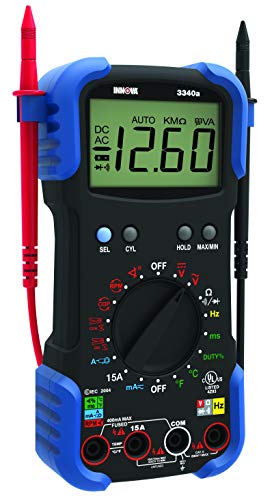
- Test light or multimeter
- Fuse puller or needle-nose pliers
- Replacement fuse with the same amperage rating
- Basic hand tools if the fuse box cover is tight
Where is the transmission control module fuse located?
The TCM fuse is often in the vehicle’s main fuse box, and that box may be in the engine compartment or under the dashboard. Some vehicles have two main fuse boxes, and the label may read Transmission, Trans, TCM, or a related PCM/ECM circuit name. The owner’s manual and fuse-box lid diagram are the fastest way to match the exact slot.
Worked lookup example
Say the fuse-box cover shows “F27 10A TRANS” and the owner’s manual lists the same slot as “Transmission Control.” That is the fuse to inspect first, not the neighboring relay or a similar-looking fuse with a different amp rating. If the manual says key on, engine off for that circuit, test in that position before calling the fuse good or bad.
Do not assume every transmission fuse is in the same place. On some vehicles the TCM is near the battery, while on others it is below the dashboard or built into a powertrain control module. Location varies by make, model, and year, so the diagram matters more than a generic under-hood guess.
How do I tell if the TCM fuse is blown?
Start by turning the key to the position listed in the wiring diagram or owner’s manual before testing power. Some transmission-related fuses are ignition-switched, so checking them in the wrong key position can give a false no-power result. Then inspect the fuse element, and if possible verify both sides with a test light or multimeter.
Why a quick visual check is not enough
A fuse can look intact and still fail under load. The metal link may have a hairline crack, or the fuse may pass a bench look but not carry current when the circuit is active. A voltage test or load test at the fuse terminals gives a better answer than plastic-window inspection alone.
- Confirm the fuse number and amperage in the owner’s manual.
- Set the key to the exact position listed for that circuit.
- Probe both test points on the fuse, or pull it and check continuity.
- Verify power on both sides if the circuit should be live in that key position.
- Replace only a fuse that fails the test, and keep the same amperage rating.
Step-by-step diagnosis and replacement
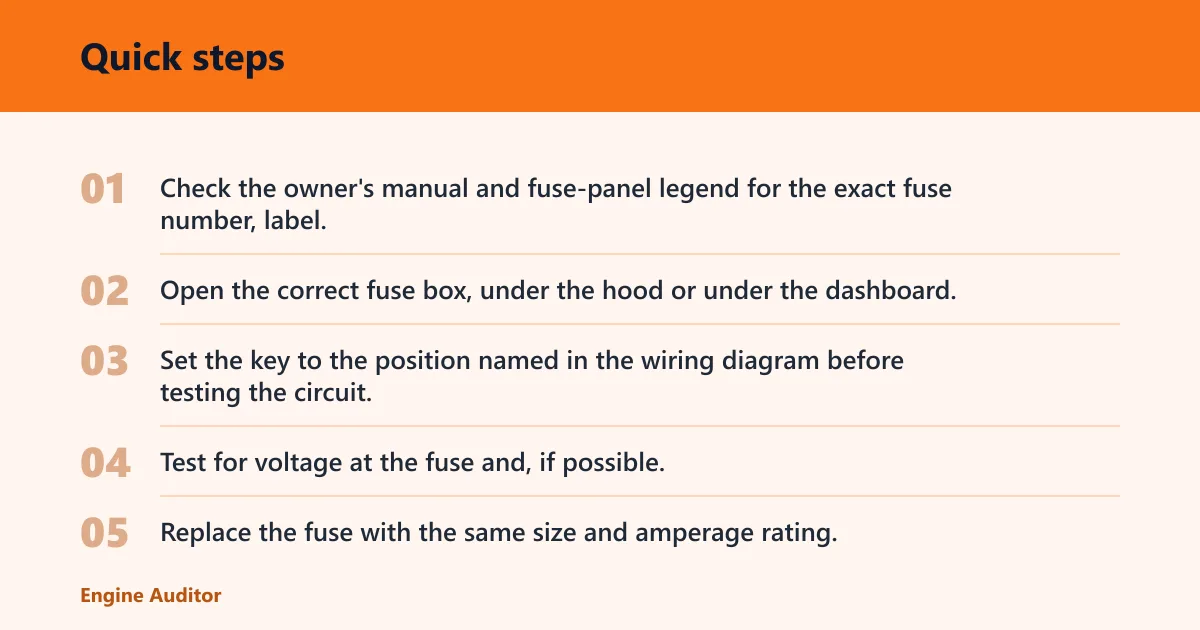
- Check the owner’s manual and fuse-panel legend for the exact fuse number, label, and amperage.
- Open the correct fuse box, under the hood or under the dashboard, and find the transmission-related slot.
- Set the key to the position named in the wiring diagram before testing the circuit.
- Test for voltage at the fuse and, if possible, at the TCM connector to separate fuse loss from downstream faults.
- Replace the fuse with the same size and amperage rating, then clear the symptom and recheck operation.
- If the new fuse blows again, stop and inspect the wiring, connector, relay, and module feed for a short circuit.
If that didn’t work
If the fuse tests good but the transmission still shifts badly, move one step deeper. Check power and ground at the TCM connector, then inspect the transmission wiring for rubbed insulation, corrosion at the connector, or water intrusion near the fuse box. A recurring fuse failure points to a fault that is pulling too much current.
Hypothetical examples
For example, a sedan may show a check engine light and stay in second gear after a rainstorm. The 15A “TRANS” fuse may look intact but still fail a load test with the key in ON. That points away from the fuse itself and toward a wiring or connector problem that needs a voltage-drop check at the TCM feed.
A common first-timer mistake is swapping in a 20A fuse because the correct 10A keeps blowing. That may hide the fault for a short time, but it removes the protection the circuit was designed to have. Use the same amperage and find the reason it failed.
Transmission fuse diagnostic table
| Symptom | Likely fuse-related cause | Quick check | Next test |
|---|---|---|---|
| No communication with the TCM | Open TCM fuse or no power to the module | Check the fuse with the key in the correct position | Verify power and ground at the TCM connector |
| Limp mode | Lost TCM power, weak feed, or failed fuse under load | Scan for transmission codes and test the fuse | Check voltage at the TCM feed circuit |
| Stuck in gear | TCM lost power or the circuit opened | Inspect the labeled Transmission or Trans fuse | Inspect the wiring for a short or open |
| Intermittent shifting | Loose fuse contact, weak fuse, or connector fault | Wiggle-test the fuse box gently while monitoring voltage | Check fuse terminal tension and corrosion |
| Delayed shifting | Low voltage to the TCM | Test both sides of the fuse under load | Measure voltage drop from fuse to TCM |
| Repeated fuse blowing | Short to ground in the circuit | Replace once with the same amperage only | Inspect wiring, relay, and connector for damage |
| No-power-at-TCM check fails | Open fuse feed or ignition-switched supply issue | Confirm key position from the diagram first | Trace the feed back to the fuse box output |
| Check Engine Light or transmission warning lamp | TCM power loss or circuit fault | Read codes and inspect the transmission fuse | Check module power and ground pins |
| Erratic shifting after replacement | Fuse was only part of the fault | Confirm the new fuse is the correct amperage | Inspect for a relay fault or damaged connector |
| Fuse present but no circuit power | Bad fuse terminal, blown feed, or upstream supply issue | Test for voltage at both fuse terminals | Check the supply side from the battery or ignition feed |
| No-power-at-TCM with good fuse | Open wire between fuse box and module | Probe the TCM connector for voltage and ground | Trace the wiring for pinched or corroded sections |
Common mistakes
The biggest mistake is testing the wrong circuit state. If the fuse is ignition-switched, the key position matters. Another common error is using the fuse-box lid alone without checking the manual, which can send you to the wrong slot when several transmission-related circuits sit side by side.
Do not replace the fuse with a higher amperage rating. That can protect the symptom while exposing the wiring to excess current. If the new fuse fails again, treat it as a short-circuit clue, not a routine maintenance item.
Can a blown transmission fuse cause shifting problems?
Yes. A blown TCM fuse can cause the vehicle to get stuck in gear, shift erratically, or enter limp mode. It can also trigger the Check Engine Light or a transmission warning light. Some drivers also notice delayed shifting or lower fuel economy when the module loses power.
That does not mean every shifting complaint is a fuse problem. If the fuse is good, or the replacement fails again, the fault is more likely in the power supply, ground, relay, connector, or the module itself. Replacing parts without checking voltage and ground can waste time and hide the real failure.
What amperage should I use when replacing a transmission fuse?
Use the same amperage rating listed on the fuse and in the owner’s manual. The replacement must match the original size and rating, not a nearby slot that looks similar. If the fuse keeps failing, the answer is not a larger fuse; it is a diagnosis of the circuit fault.
After installation, recheck the symptom and confirm the circuit has power in the correct key position. If the new fuse survives but the problem remains, verify voltage and ground at the TCM connector before moving on to deeper transmission diagnostics.
Can a transmission control module be located under the dashboard?
Yes. The TCM can also be found below the dashboard, and on some vehicles it sits near the battery or is integrated with the powertrain control module. That layout changes the fuse path and the test points, so the module location matters when you trace power and ground.
If the module is under the dash, inspect the nearby wiring and connector for looseness or corrosion. A fuse may be fine while the module still has no power because the issue is farther downstream, especially on vehicles where the TCM shares circuits with other control units.
Do I need to check the owner’s manual for the exact fuse location?
Yes. The owner’s manual typically includes the fuse box diagram and the fuse number, label, and amperage. That is necessary because the same transmission circuit can be labeled differently across makes, models, and years, and some vehicles have more than one main fuse box.
Use the manual before you pull anything. The fuse-box cover may list only a short label such as “Trans” or “TCM,” while the manual shows the matching slot and any key-position note needed for testing. That combination prevents false no-power readings.
What symptoms happen when the transmission control module loses power?
When the TCM loses power, you can see warning lights, limp mode, delayed or harsh shifting, no communication with a scan tool, and sometimes a vehicle stuck in gear. A blown fuse can also reduce fuel economy. Those symptoms often appear together, but not every one has the same cause.
Use the symptom pattern to narrow the test, then confirm the circuit. If power is missing at the TCM but the fuse tests good, the next step is the connector and feed wiring, not another fuse swap. That is where the diagnosis usually turns from a simple replacement into circuit tracing.
Frequently asked questions
Which fuse box usually contains the TCM fuse?
Most often it is in the vehicle’s main fuse box under the hood or in the cabin panel under the dashboard. Some vehicles have two main fuse boxes, so do not stop at the first panel you find. The manual and lid diagram tell you which one contains the transmission circuit.
Products related to this article
Sponsored / affiliate links. As an Amazon Associate I earn from qualifying purchases. I may earn additional commission from eligible campaigns.