Can a Loose Serpentine Belt Cause Overheating?
Yes, a loose serpentine belt can cause overheating if it slips enough to slow the water pump, especially on engines where the belt also drives the pump. Leave it alone, and you can end up with overheating, dead batteries, hard steering, and a repair bill that starts with a belt and ends with a cooling-system fault. This guide shows how to separate belt slip from a bad thermostat, weak pump, low coolant, or a failing tensioner.
When a loose belt actually raises engine temperature

Yes, but only on vehicles where the serpentine belt drives the water pump or affects coolant circulation another way. If the belt slips hard enough, the pump turns slower and coolant flow drops. On some engines, that can mean the temperature climbs in minutes. On others, the belt has nothing to do with coolant circulation.
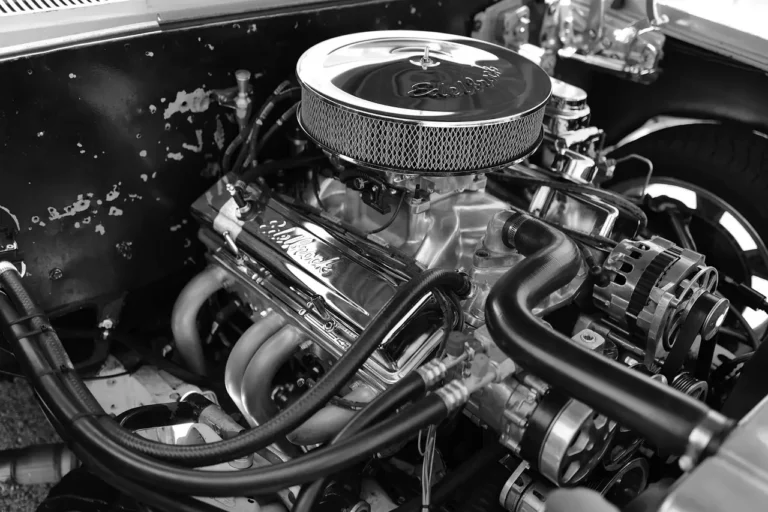
The belt can drive the alternator, water pump, power steering pump on some older vehicles, and the A/C compressor at the same time. That is why one slipping belt can create more than one symptom. The cooling risk depends on engine design, not on the belt alone.
Why belt slip can trigger overheating on some engines
A serpentine belt can drive the water pump and alternator. When the belt slips, it can reduce water-pump circulation and make the alternator produce less electricity. If the pump is belt-driven, overheating can follow quickly because coolant is no longer moving through the engine at the needed rate.
Serpentine belt replacement is commonly recommended at 60,000 to 100,000 miles, but mileage alone does not tell the whole story. A weak tensioner can make a new belt slip and wear early, so a fresh belt does not guarantee proper drive if the tensioner is worn.
When a loose belt will not cause overheating
Some vehicles use an electric water pump, or a water pump driven by the timing belt. On those engines, a loose serpentine belt will not cause overheating in the same way because the belt is not responsible for coolant circulation. In that case, the belt may still cause charging or steering issues, but the overheating fault likely sits elsewhere.
That is also why fan-related overheating needs a separate check. A radiator fan problem can overheat the engine even when the belt is fine, particularly at idle or low road speed. A belt fault tends to show up first as squeal, charging loss, steering effort, or visible slack.
Fast symptom sequence to watch
The symptom sequence often starts with squeal or chirp, then battery or steering symptoms, and may end with overheating if the belt affects the water pump. Squealing comes from the belt slipping on a pulley. If the noise appears before the gauge rises, check the belt path before you chase the rest of the cooling system.
Say your SUV starts squealing for 10 seconds on cold startup, then the battery light flickers at idle, and only later does the temperature gauge climb. That sequence points first to slip, then to reduced alternator output, and only then to possible coolant-flow loss if the engine uses a belt-driven pump.
What problems can a loose serpentine belt cause?
A loose serpentine belt can cause charging trouble, heavy steering, A/C output loss, and overheating on engines that rely on that belt to drive the water pump. The same fault may create more than one symptom, which is why the belt path, tensioner, and pulleys should be checked together.
Battery light and charging loss
A slipping belt can make the alternator produce less electricity. That can bring on a battery warning light, dim lights, or repeated low-voltage complaints that look like a bad battery. The belt may be the real cause if the warning appears with squeal or after a wet start.
Hard steering from reduced pump drive
On older vehicles with a belt-driven power steering pump, belt slip can reduce steering assist at low speed. The steering wheel may feel heavy when parking or turning slowly. That symptom helps separate belt faults from a pure cooling-system issue, because steering effort changes with the same belt problem.
A/C noise or loss of output
The A/C compressor is often belt-driven, but it is not a direct overheating component. A slipping belt can still make the compressor noisy, reduce cooling output, or let a seized compressor damage the belt. If the A/C changes the belt noise, do not ignore the pulley train.
How do you know the belt is slipping?
You usually know by sound, appearance, and accessory behavior together. Squeal or chirp at startup is a common slip clue. So are glazing, cracks, fraying, missing chunks, oily contamination, and a belt that tracks off center. A single clue may be enough to inspect, but several clues together point strongly to a belt-drive fault.
Squeal or chirp at startup
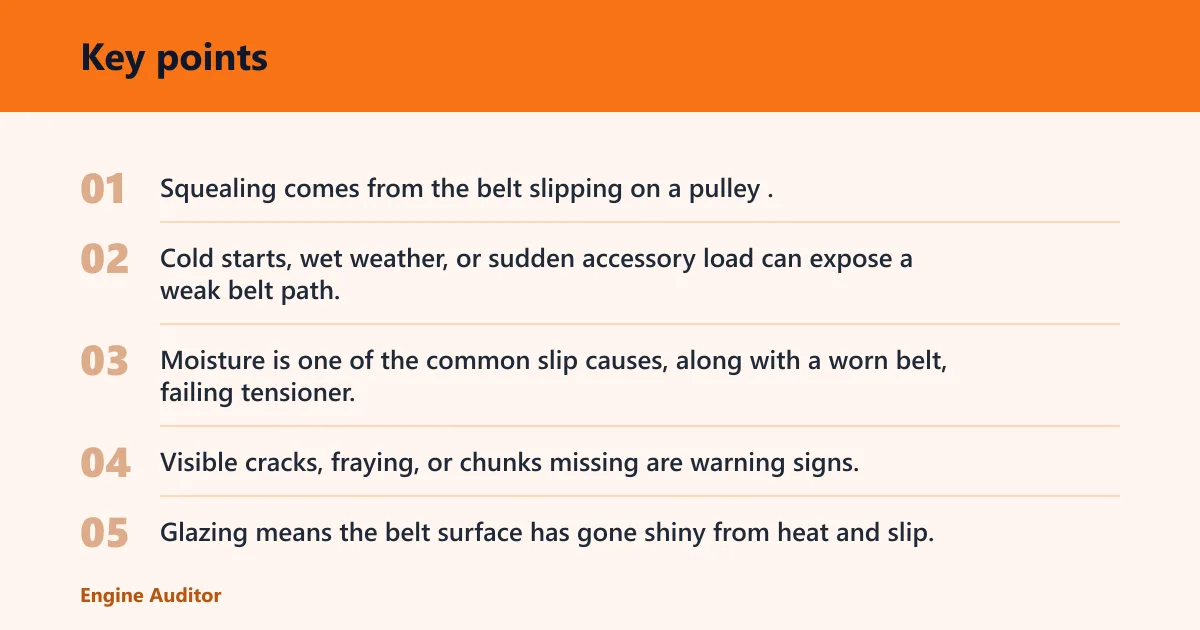
Squealing comes from the belt slipping on a pulley. Cold starts, wet weather, or sudden accessory load can expose a weak belt path. Moisture is one of the common slip causes, along with a worn belt, failing tensioner, or misaligned pulley.
Glazing, cracks, fraying, and missing chunks
Visible cracks, fraying, or chunks missing are warning signs. Glazing means the belt surface has gone shiny from heat and slip, which usually means the belt is no longer gripping the pulley faces properly. EPDM belts wear differently from older belt materials, so look for surface shine and edge wear as much as cracking.
Oil, coolant, or pulley contamination
Oil or coolant on the belt can cause slip and noise. Contamination also shortens belt life and can hide the real fault if you only replace the belt. If the belt path is wet, find the leak or spill source before fitting a new belt.
Picture a sedan that chirps every morning after rain. The belt looks glazed, the alternator light flickers at idle, and the water pump is belt-driven. In that case, the belt slip may be the first problem, but the tensioner and any pulley contamination still need inspection before the cooling fault is blamed on the belt alone.
Belt and pulley diagnostic matrix
This table separates common symptoms from the most likely cause so you can decide whether the belt is the cause, a clue, or not the main fault. Use it with the belt route for your exact engine, because water-pump drive varies by design.
| Symptom | Likely cause | Severity | Next step |
|---|---|---|---|
| Squeal at startup | Belt slip from wear, moisture, weak tensioner, misalignment, or contamination | Moderate | Inspect belt, tensioner, and pulley alignment |
| Battery light | Alternator undercharging from belt slip | Moderate to high | Check belt tension and alternator pulley drive soon |
| Hard steering | Reduced power steering pump drive on belt-driven systems | Moderate | Stop and inspect if steering becomes heavy at low speed |
| Temperature rise at idle | Reduced water-pump circulation or fan-related cooling fault | High | Pull over if the gauge keeps climbing |
| Temperature rise at highway speed | Cooling-system fault, low coolant, thermostat issue, or belt-driven pump loss on some engines | High | Do not keep driving while the gauge rises |
| Belt glaze | Chronic slip from tension loss, contamination, or misalignment | Moderate | Replace the belt and inspect the tensioner and pulleys |
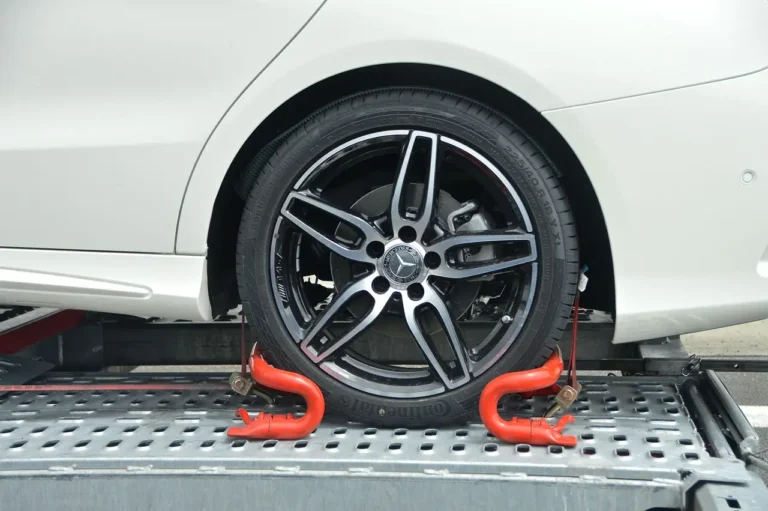
| Coolant temp spike after belt failure | Water pump lost drive on a belt-driven system | Severe | Shut down immediately and tow the vehicle |
| No-overheat cases on vehicles with electric water pumps | Serpentine belt fault without coolant-pump drive loss | Low for overheating, still important for charging or steering | Check the belt path, then inspect the cooling system separately |
What else can look like a loose belt?
A loose belt is not the only cause of squeal or slack. A weak tensioner, a failing idler pulley, or pulley misalignment can create the same noise and wear pattern. Those faults matter because replacing only the belt may leave the real problem in place.
Weak automatic tensioner
The automatic belt tensioner keeps steady belt tension. A weak spring can let the belt slip, and a worn pivot can add chatter or wobble. A weak or broken tensioner can also cause visible slack. On higher-mileage vehicles, the tensioner should be checked and often replaced with the belt.
Idler pulley noise or bearing failure
An idler pulley routes the belt. It should spin smoothly. Bearing noise, roughness, or wobble points to pulley failure, and that failure can create both noise and premature belt wear. A noisy pulley can make a new belt seem bad almost immediately.
Pulley alignment and belt tracking errors
Pulleys must sit in one plane. Misalignment can chirp or squeal and can track the belt off center. A straightedge check across the pulley faces helps spot this. If the belt rides near one edge, do not assume the belt is the only problem.
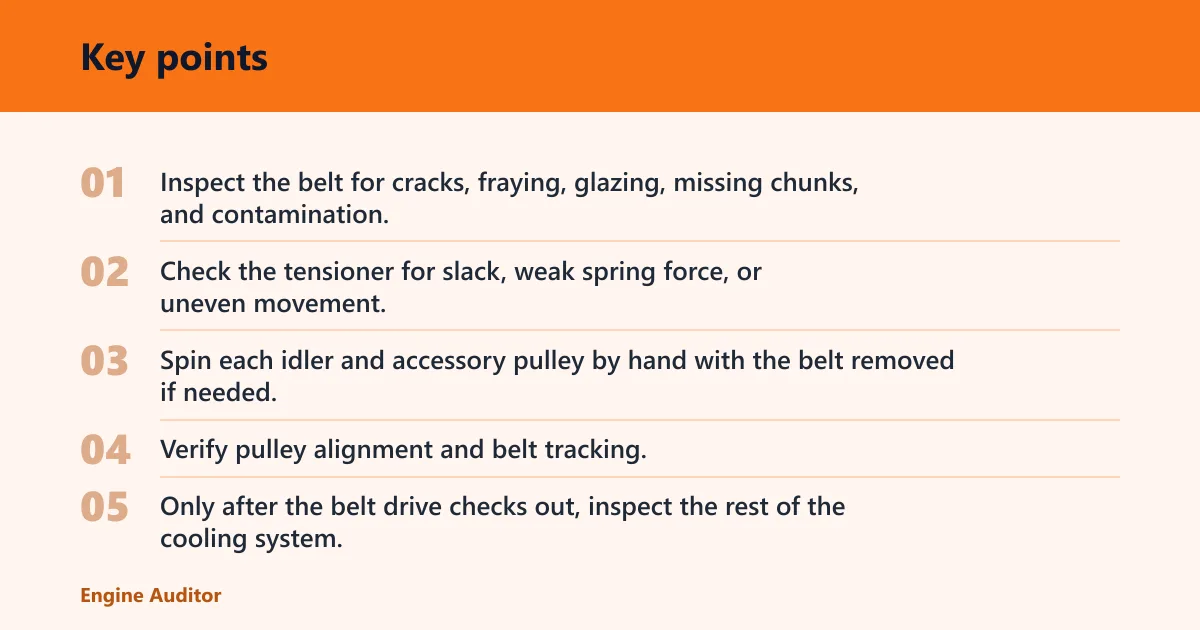
- Inspect the belt for cracks, fraying, glazing, missing chunks, and contamination.
- Check the tensioner for slack, weak spring force, or uneven movement.
- Spin each idler and accessory pulley by hand with the belt removed if needed.
- Verify pulley alignment and belt tracking.
- Only after the belt drive checks out, inspect the rest of the cooling system.
Is it safe to drive with a loose belt?
Sometimes for a very short distance, but not if the temperature gauge is rising, the battery light is on, or steering has become heavy. If the belt drives the water pump and the engine starts overheating, stop driving immediately. If the belt only affects charging or A/C on your vehicle, the risk is lower, but the fault still needs prompt repair.
When to stop driving immediately
Stop now if the temperature climbs quickly, the belt is screaming, or the coolant temperature spikes after a belt failure. A broken serpentine belt can make a car quickly overheat, and a complete belt failure can cause overheating within minutes if the belt drives the water pump.
When short-distance driving may still be possible
If the belt is noisy but the temperature stays stable, you may be able to drive a short distance to a safe repair location. That is only a temporary decision, not a fix. Repeated slip can damage the belt, alternator, power steering pump, and A/C compressor.
A common first-timer mistake is spraying belt dressing and calling the job done. Belt dressing may quiet the squeal temporarily, but it is not a permanent repair. It can also attract dirt and dust, which can make pulley and belt problems harder to diagnose later.
Frequently asked questions
Can a loose serpentine belt cause overheating?
Yes, if it slips enough to reduce water-pump drive on an engine that uses the serpentine belt for coolant circulation. If the vehicle uses an electric water pump or a timing-belt-driven pump, a loose serpentine belt will not cause overheating the same way, though it can still affect charging or steering.
Can a loose drive belt cause overheating?
Yes, but only when that drive belt is part of the cooling system’s coolant flow path. A loose belt that drives the water pump can make the engine overheat quickly. If the belt drives only accessories, the overheating fault is likely elsewhere, such as the thermostat, coolant level, fan control, or pump itself.
Can a loose belt cause overheating?
Yes, if the loose belt is responsible for the water pump or another cooling-related component. The key question is whether the belt actually affects coolant circulation. If it does not, the belt may explain squeal, battery warning lights, or steering effort, but not the overheating complaint.
How do I know if my serpentine belt is slipping?
Listen for squeal or chirp, especially at startup or after a wet drive. Look for glazing, cracks, fraying, missing chunks, or off-center tracking. If the battery light flickers, steering gets heavy, or the A/C changes the noise, inspect the tensioner, idler pulleys, and alignment right away.
Is it safe to drive if the serpentine belt is loose?
Only if the symptoms are mild and the temperature stays normal, and even then for a short distance to repair. Do not keep driving if the gauge rises, the belt screams, or steering turns heavy. If the belt drives the water pump, a sudden failure can turn into overheating within minutes.
Products related to this article
Sponsored / affiliate links. As an Amazon Associate I earn from qualifying purchases. I may earn additional commission from eligible campaigns.