What Are the Symptoms of a Bad Coolant Temperature Sensor?
A bad coolant temperature sensor usually causes hard starting, rich or lean running, poor fuel economy, erratic idle, wrong fan operation, or a temperature gauge that reads cold, hot, or drops out; if the scan tool shows implausible coolant data or the reading never changes, suspect the sensor or wiring. Ignoring it can lead to poor drivability, failed emissions tests, overheating, or unnecessary parts replacement. This guide groups the symptoms by failure mode so you can tell whether the sensor is reading too cold, too hot, or intermittently losing signal.
What does the ECT sensor do?
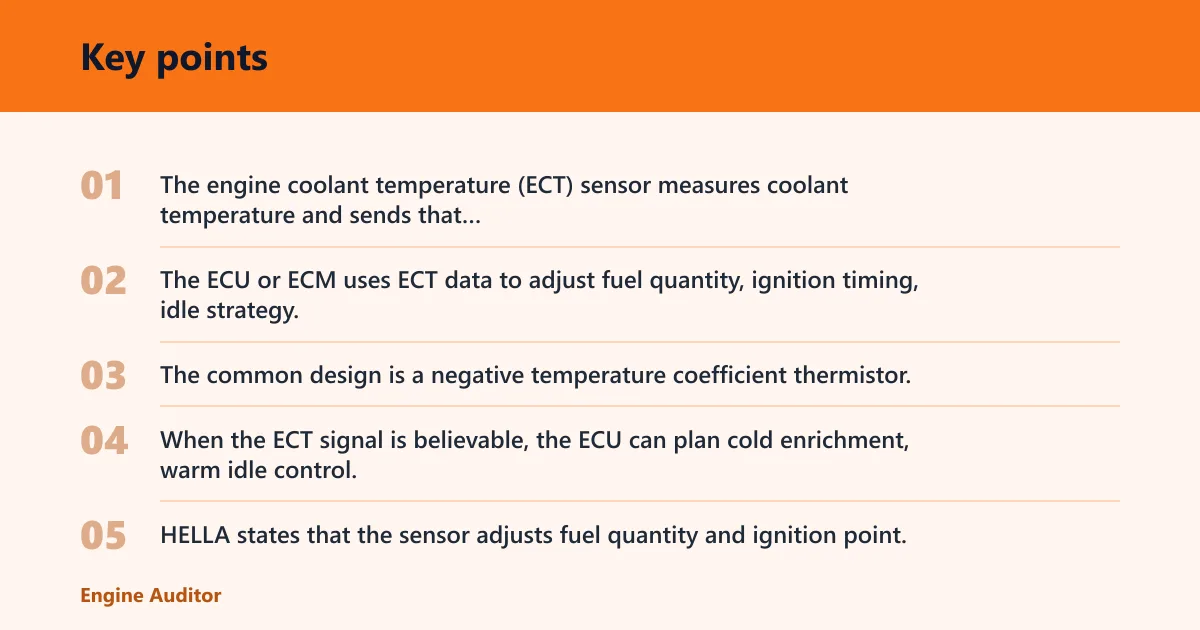

The engine coolant temperature (ECT) sensor measures coolant temperature and sends that signal to the engine computer. The ECU or ECM uses ECT data to adjust fuel quantity, ignition timing, idle strategy, and, on some vehicles, cooling fan commands. The common design is a negative temperature coefficient thermistor, so resistance drops as temperature rises.
How the signal changes engine behavior
When the ECT signal is believable, the ECU can plan cold enrichment, warm idle control, and fan operation with better accuracy. HELLA states that the sensor adjusts fuel quantity and ignition point. A wrong signal can push the engine toward overfueling, underfueling, or a fan command that does not match actual coolant temperature.
Why sensor faults do not all look the same
An ECT sensor does not fail with one universal pattern. A sensor that reads too cold tends to look like a perpetual cold engine. A sensor that reads too hot can make the ECU trim fuel too early. An intermittent circuit fault can make ECT data jump, freeze, or drop out entirely.
ECT sensor symptom matrix
This matrix separates sensor behavior from wiring and cooling-system problems. Use it to decide whether the signal is reading cold, reading hot, or dropping out before you replace parts. A plausible reading at idle does not prove the sensor is good through the full warm-up range.
| Symptom pattern | Likely ECT failure mode | First verification step |
|---|---|---|
| Hard start after a warm soak, rich smell, black smoke, high idle, poor fuel economy | Reading cold | Compare cold-start scan data to ambient temperature before replacement |
| Lean stumble, rough hot idle, hard start when hot, engine feels under-fueled | Reading hot | Check live data for an implausibly high coolant value and inspect the connector |
| Temperature reading freezes, jumps, or drops to an impossible value; warning light appears and disappears | Intermittent dropout | Wiggle-test the connector and wiring while watching scan data |
| Fan runs too early, too late, or not at all | Bad ECT signal or fan-control fault | Inspect the fan fuse, relay, motor, wiring, and command signal |
| Overheating with low coolant, air pockets, or weak circulation | May not be the sensor | Check coolant level, trapped air, thermostat behavior, and circulation first |
First checks before you replace the sensor
Do not start with a parts swap. Check coolant level, scan data, the connector, and the wiring first. Low coolant or trapped air can distort the reading. Corrosion, poor pin tension, broken wires, and coolant intrusion can create the same symptom pattern as a failed sensor.
What happens when it reads cold?
If the ECT sensor reads colder than reality, the ECU may add too much fuel, hold a higher idle, and delay normal warm-up logic. That can cause hard starting, rough or unstable idle, black smoke, and poorer fuel economy. On some vehicles, it can also alter fan behavior or set a fault code.
Hard starting after warm soak
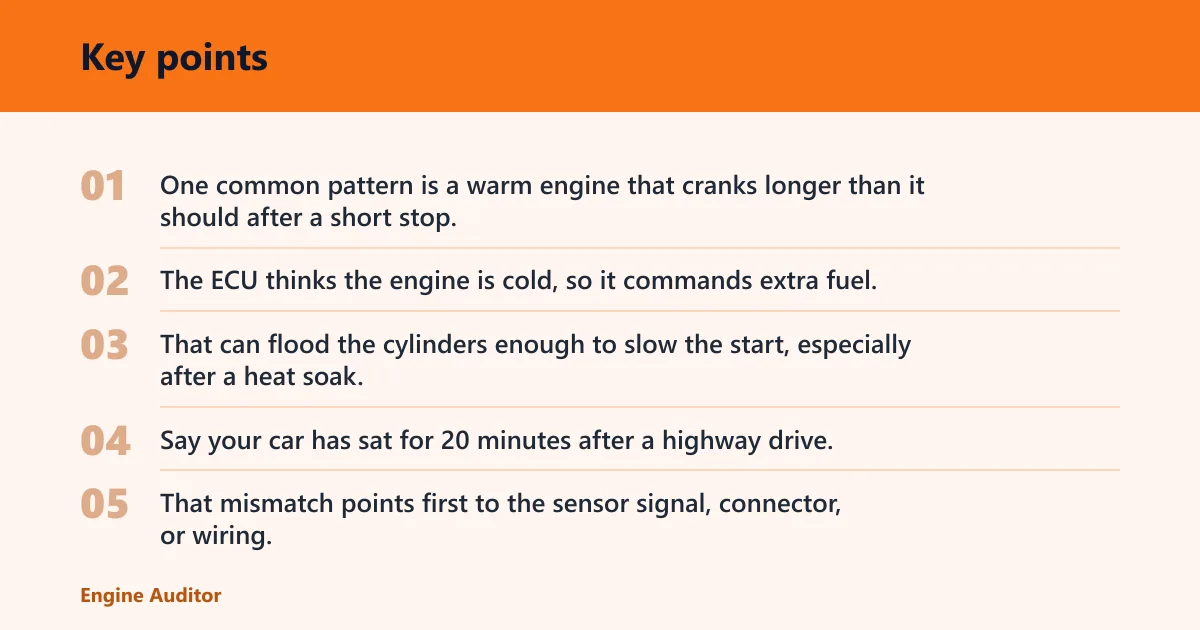
One common pattern is a warm engine that cranks longer than it should after a short stop. The ECU thinks the engine is cold, so it commands extra fuel. That can flood the cylinders enough to slow the start, especially after a heat soak.
Say your car has sat for 20 minutes after a highway drive, and the scan tool still shows coolant at 18°C when the engine bay is clearly hot. That mismatch points first to the sensor signal, connector, or wiring, not to a thermostat fault.
Rich running, black smoke, and poor fuel economy
A wrong cold signal can cause a rich mixture. The same source lists increased fuel consumption and poor starting behaviour as frequent fault symptoms. F1 and F2 also line up with that pattern: the sensor can cause hard starting on some vehicles, and it may cause poor fuel economy if the ECU gets the wrong temperature signal.
Black smoke is a clue, not proof. Fuel pressure faults, injector leaks, and misfires can also load the exhaust with fuel. But when black smoke appears with a coolant reading that stays unrealistically low, the ECT circuit moves up the list fast.
What live data should look like on a cold engine
On a cold engine, the scan reading should be close to ambient temperature before start-up. Auto Sport says diagnosis should begin with a cold-soak comparison. That means the engine, intake air, and coolant should all be near the same temperature after sitting long enough to cool fully.
For a practical check, compare the key-on ECT value with outside air temperature before the engine is started. A small difference is normal. A large gap, especially one that stays fixed, points to a faulty sensor, a wiring issue, or an implausible scan input.
What happens when it reads hot?
If the ECT sensor reads hotter than reality, the ECU may pull fuel too early, trim idle incorrectly, or change fan strategy before the engine is actually warm. That can show up as hot-start complaints, stumble, rough idle, or an engine that feels lean. A high reading can also trigger a check engine light.
Lean fueling, stumble, or hot-start complaints
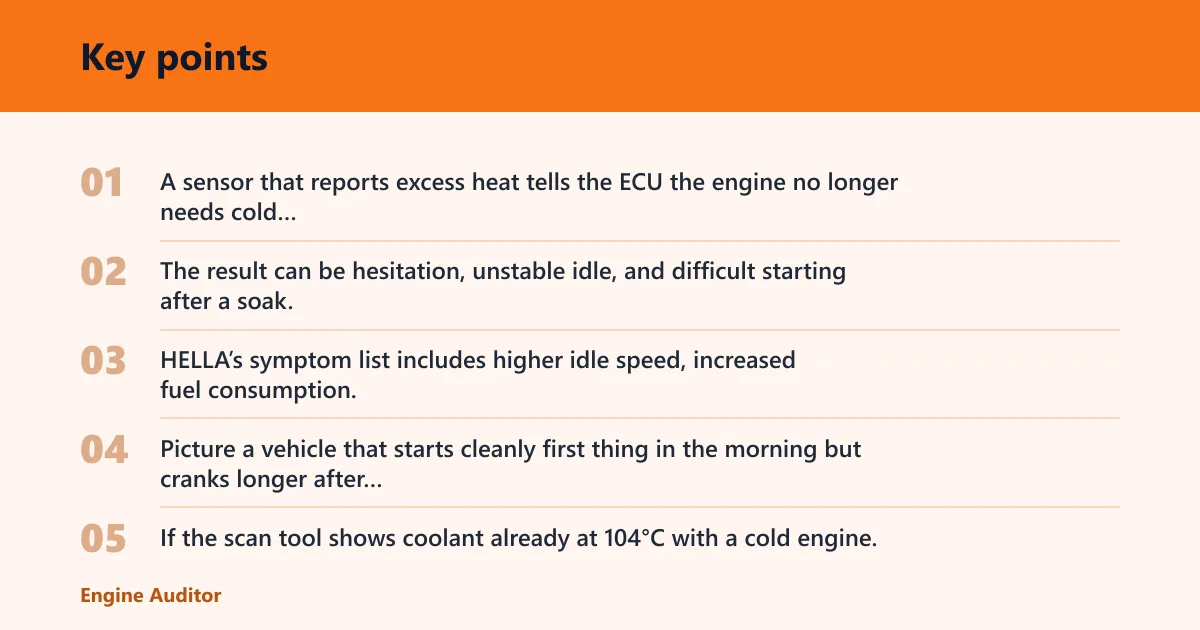
A sensor that reports excess heat tells the ECU the engine no longer needs cold enrichment. The result can be hesitation, unstable idle, and difficult starting after a soak. HELLA’s symptom list includes higher idle speed, increased fuel consumption, and poor starting behaviour, which shows how widely the signal can disturb engine control.
Picture a vehicle that starts cleanly first thing in the morning but cranks longer after a fuel stop. If the scan tool shows coolant already at 104°C with a cold engine, the signal is not believable. That is a sensor-circuit problem until proven otherwise.
Check engine light and implausible data codes
The ECU may set a fault code when circuit data is implausible. That can happen if the signal is stuck high, stuck low, shorted, or open. The code alone does not prove the sensor is the only bad part, because wiring faults can create the same result.
When a hot reading points to wiring or connector faults
A hot reading that never moves with engine temperature often points to an open circuit, high resistance in the connector, or corrosion at the terminals. Coolant intrusion can also alter the signal path. If the reading flickers when you move the wiring, the sensor may be fine and the circuit may be failing around it.
Can it affect cooling fans?
Yes. A bad ECT signal can affect cooling fan operation on some vehicles, but fan strategy varies by vehicle. On one model the ECU may command the fan directly. On another, the command may pass through a relay, fuse, motor, and separate control logic, so the same symptom does not always point to the sensor.
Why overheating does not always mean a bad sensor
Overheating can come from low coolant, trapped air, thermostat behavior, circulation problems, or a fan-control fault rather than the sensor itself. If the engine is actually hot and the scan data follows it, the sensor may be telling the truth while another part of the cooling system is failing.
What to inspect in the fan circuit
- Check the fan fuse and relay.
- Verify the fan motor runs when commanded.
- Inspect wiring between the ECU, relay, and fan.
- Confirm the command signal changes when coolant temperature rises.
- Compare the scan reading to actual engine temperature before blaming the sensor.
If the fan never turns on even though scan data and coolant temperature look normal, the problem may sit in the fan circuit rather than the ECT sensor. If the fan runs constantly from a cold start, the ECU may be reacting to a false hot signal or a failed input circuit.
Scan data and wiring checks
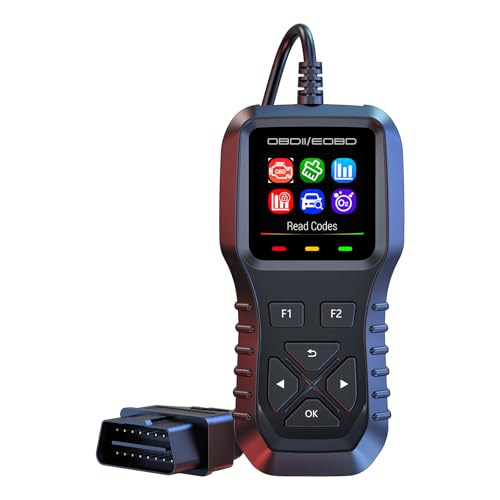
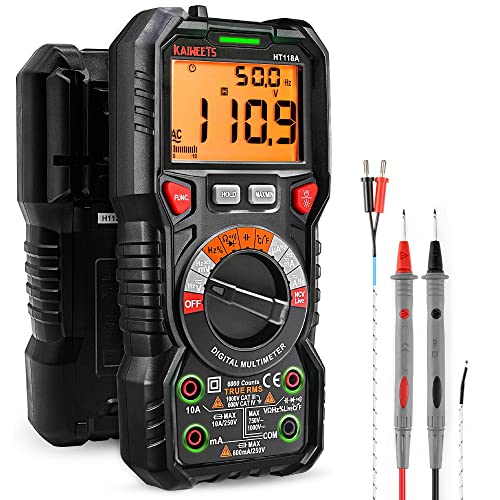
OBD2 live data is the fastest way to separate a bad sensor from a bad circuit. Start with a cold-soak comparison, then watch the reading climb smoothly as the engine warms. If the reading jumps, freezes, or stays far from ambient temperature, inspect the connector and wiring before replacing the sensor.
Connector and wiring checks that matter
Look for corrosion, loose terminals, broken wires, and coolant intrusion at the connector. Pin tension matters. A connector that fits loosely can open the circuit briefly and mimic a failed sensor. A damaged wiring run can do the same thing over bumps, heat, or engine movement.
Do not stop after an idle check
A reading that looks believable at idle does not clear the sensor through the full warm-up range. The value should move steadily as coolant temperature rises. If it starts near ambient but then flat-lines or spikes, the fault may be heat-related in the sensor, the connector, or the wiring.
Suppose the scan tool shows 22°C on a 21°C morning, which looks fine. After 10 minutes of idling, the reading should climb with the engine. If the reading suddenly drops to about -40°C or shoots to about 130°C, that can indicate an intermittent circuit fault rather than a normal warm-up pattern.
Frequently asked questions
What are the symptoms of a bad coolant temperature sensor?
The most common symptoms are hard starting, rough or unstable idle, poor fuel economy, black smoke, check engine light warnings, and fan behavior that does not match engine temperature. The exact pattern depends on whether the sensor reads cold, reads hot, or drops out intermittently.
What are the signs of a bad coolant temperature sensor?
Signs include a scan reading that does not match ambient temperature on a cold engine, a reading that never changes during warm-up, or data that jumps around. You may also see poor starting behaviour, higher idle speed, or fan problems on vehicles that use ECT input for fan strategy.
What happens when the engine coolant temperature sensor goes bad?
The ECU loses a reliable temperature signal and may adjust fueling and timing incorrectly. That can create rich or lean running, rough idle, hard starting, and warning lights. On some vehicles, it can also affect cooling fan operation or leave the ECU with implausible circuit data.
How do you know coolant temp sensor is bad?
Compare cold-start live data with ambient temperature, then watch the reading as the engine warms. If the scan value is implausible, frozen, or erratic, inspect the connector and wiring next. Also check coolant level and circulation before replacing parts, because those faults can distort the reading.
Will a bad coolant temperature sensor cause poor fuel economy?
Yes. If the ECU receives the wrong temperature signal, it can add too much fuel or hold enrichment too long. That raises fuel consumption and may also cause black smoke, rough idle, and hard starting, especially when the sensor reads colder than the engine really is.
Can a bad coolant temperature sensor cause overheating?
It can contribute to fan-control problems on some vehicles, but overheating is often caused by low coolant, trapped air, thermostat issues, circulation problems, or fan circuit faults. If live data matches the real engine temperature, the sensor may be accurate and the cooling system may be the real fault.
Products related to this article
Sponsored / affiliate links. As an Amazon Associate I earn from qualifying purchases. I may earn additional commission from eligible campaigns.