What Should I Do If My Car Starts Overheating While Driving?
If the temperature gauge hits hot, a warning light comes on, or you see steam, pull over at the nearest safe shoulder, lot, or exit lane and shut the engine off. Only move a short distance if the car cools and no warning returns. Ignoring it can turn a small cooling fault into warped heads, a blown gasket, or a seized engine. This guide gives you a roadside decision tree for stop-now, limp-to-safety, and tow calls, plus the likely clue behind each choice.
Roadside overheating decision table


| Symptom observed | Safest immediate action | Most likely cause tier |
|---|---|---|
| Temperature gauge is rising above its normal operating range, but no steam or warning light yet | Turn off A/C, set the heater to full hot, and head for the nearest safe shoulder or parking area | Early coolant flow problem, low coolant, fan not keeping up at idle |
| Steam from the hood or a hissing sound after a hot drive | Pull over now, shut the engine off, and wait for full cool-down before any inspection | Active coolant loss, boiling coolant, hose, radiator, or cap failure |
| Heater blows cold or only lukewarm while the gauge climbs | Use the heater briefly as a heat dump; if it stays cold, stop driving and prepare for a tow | Low coolant, air pocket, thermostat stuck closed, or circulation failure |
| Sweet coolant smell inside or outside the car | Move to a safe stop and check for visible leaks only after the engine cools | Coolant leak, heater core leak, radiator seep, hose or reservoir crack |
| Temperature warning light flashes or the gauge enters the hot/red zone | Stop as soon as traffic allows; do not continue unless you can reach a safe pull-off within seconds | Severe overheating, low coolant, fan failure, thermostat or water pump fault |
| Gauge drops after you turn the heater on full hot | Continue only to a nearby safe exit or shoulder; plan a repair check soon | Temporary extra heat removal, often low coolant, weak fan, or marginal radiator flow |
| Cabin heat fades at idle, then returns when speed rises | Stop if the gauge keeps climbing; if it steadies, limp only to a safer spot | Fan airflow problem, low coolant, weak water pump circulation, or restricted radiator flow |
| Temperature climbs in slow traffic but stays closer to normal on the highway | Get out of traffic and stop if the needle keeps climbing; do not wait for boiling | Cooling fan, relay, fuse, or idle airflow problem |
What should you do first?
Start with load reduction and a safe exit. Turn off the air conditioning, set the heater to full hot, and use the blower on high if the cabin can handle it. Then move toward a shoulder, lot, or exit lane where you can stop without creating a second hazard.
Shut down timing matters
Do not kill the engine in a live traffic lane unless that is the only way to prevent a crash. If the gauge is rising but the car still moves normally, use the next safe pull-off. If the gauge is in the hot zone, steam appears, or the warning light flashes, stop as soon as traffic allows and shut the engine off.
Once parked, leave the hood closed for the first few minutes. Hot coolant can boil under pressure, and opening the cap too soon can spray scalding fluid.
What a normal gauge means
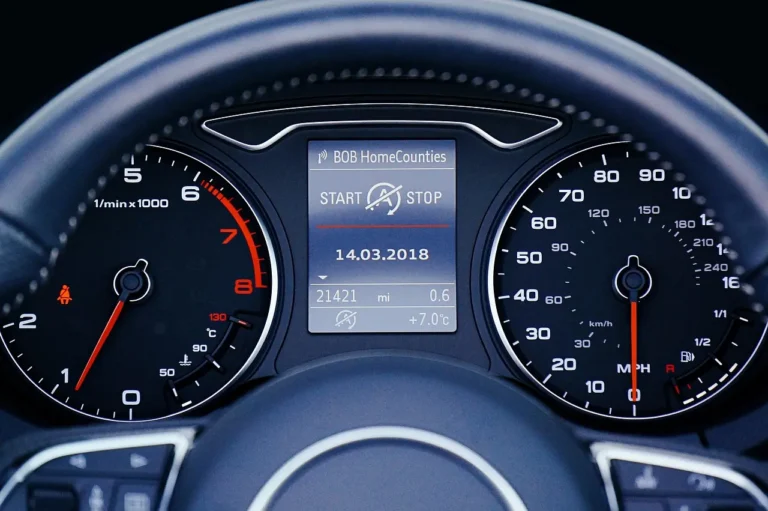
The temperature gauge should usually sit in its normal operating range after warm-up, then move only slightly as traffic and load change. A steady climb means coolant temperature is rising. A needle that enters the hot or red zone means the engine is too hot for safe continued driving.
When should you stop driving immediately?
Stop immediately if the gauge is in the red, the warning light flashes, you see steam, or the engine starts losing power or running rough. Those signs point to active overheating, not a mild cooling glitch. At that point, the safest move is a roadside stop and a cooldown, not a longer drive.
Limp only if the risk stays low
Short, careful limping is reasonable only when the gauge is climbing but not yet in the red, there is no steam, and the car still responds normally. The goal is a safer shoulder or parking area, not your destination. If the needle keeps rising, stop before the problem escalates.
Picture a sedan on a city boulevard with the gauge creeping above halfway and no steam yet. The driver turns off the A/C, turns on the heater, and reaches the next parking lot half a mile away. That is a safer choice than pressing on through more traffic.
Can the heater buy you time?
Yes, for a short period. Turning the heater to full hot can pull heat from the cooling system through the heater core, which acts like a small second radiator. If the gauge drops after that, the system may have enough flow to shed heat for a brief move to safety.
When the gauge drops after heat
A gauge that falls when the heater is set to full hot often means the engine is still circulating some coolant, but heat removal was not keeping up. That can happen with low coolant, a weak fan at idle, a partially clogged radiator, or an early thermostat problem. It is a warning sign, not a fix.
When heater output points to coolant loss
If the heater blows cold while the gauge rises, suspect low coolant or air in the system first. The heater core needs coolant flow to make cabin heat. When coolant level drops, the heater can go cold before the gauge goes fully hot, which is a useful clue at the roadside.
When the heater no longer helps
If the heater stays cold, the gauge keeps climbing, or steam starts, stop and shut down. At that point, the system may have lost too much coolant to circulate, or circulation may have failed altogether. Do not treat heater output as proof that the car is safe to drive farther.
What causes a car to overheat?
Most overheating traces back to one of five problems: low coolant, a radiator that cannot shed heat, a fan problem, a thermostat stuck closed, or a water pump that no longer circulates coolant well. The symptom pattern often points to the likely tier before any tools come out.
Low coolant and leaks
Coolant level in the reservoir should stay between the marked lines when the engine is cool. A low reservoir, wet spots under the car, dried crust at hose joints, or a sweet odor can point to a leak. Coolant boils under pressure, so a loss of pressure can make overheating show up quickly.
A common first-timer mistake is seeing a low reservoir and topping it off before checking for a leak pattern. That only buys time if the leak is small. A fresh puddle, repeated coolant smell, or damp hose clamp means the system is still losing fluid.
Radiator blockage or cap problems
The radiator is the heat exchanger that releases engine heat to outside air. Dirt, bugs, plastic bags, or bent fins can reduce airflow through it. A weak cap or pressure issue can also lower the boiling point margin and let coolant boil sooner than it should.
Cooling fan faults
Electric fans should cycle on when the engine gets hot, especially at idle or in slow traffic. If the car overheats mainly while stopped but cools somewhat at speed, a fan, relay, fuse, or fan motor problem rises on the list. Weak airflow through the radiator matters more when road speed is low.
Thermostat stuck closed
The thermostat controls warm-up by limiting coolant flow until the engine reaches operating temperature. If it sticks closed, hot coolant cannot move through the radiator as it should. That often causes a fast temperature climb soon after warm-up, even if the radiator and fan are intact.
Water pump circulation failure
The water pump moves coolant through the engine, radiator, and heater core. Belt-driven pumps can fail from bearing wear, seal leaks, or damaged impellers. Electric pumps can fail electrically or mechanically. If circulation drops, the gauge may rise, the heater may go cool, and the system may not respond well to normal driving.
How do you check after cool-down?
Wait until the engine is fully cool before touching the cooling system. That can take about 30 minutes or longer, and a longer wait is safer after a steam event. Once cool, check the reservoir first, inspect for leaks or wet spots, and look for belt damage before deciding whether to restart.
What to inspect first
- Check the coolant reservoir level against the cold marks.
- Look for fresh coolant stains, wet hoses, or a damp radiator area.
- Inspect the belt drive if the water pump is belt-driven.
- Look at the radiator face for blockage or bent fins.
- Restart only if the problem is not still active and the gauge was not in the red.
Never open a hot cap
Do not remove the radiator cap while the system is hot. Pressure can turn coolant into a scalding spray. If the reservoir is empty or the car boiled over, that points to a serious issue that needs a cautious refill and a follow-up check, not a rushed restart.
Obd-ii cooling checks
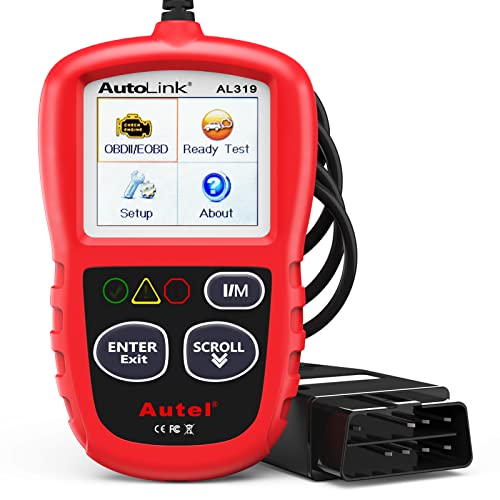
An OBD-II scanner can help separate a bad fan command, thermostat behavior, and sensor problems. Live coolant temperature data is more useful than the dash gauge alone, because it shows whether the engine is truly hot or the display is lying. Stored trouble codes may point to fan control, coolant temperature sensor, or related faults.
What the data can tell you
If live coolant temperature keeps climbing at idle and the fan never comes on, the fan circuit deserves attention. If temperature shoots up quickly after warm-up, a stuck-closed thermostat is a stronger suspect. If the scanner shows normal temperature while the gauge says hot, the dash display or sensor circuit may be at fault.
Frequently asked questions
What should I do if the temperature gauge goes to hot?
Turn off the A/C, turn the heater to full hot, and get to a safe shoulder or parking area as soon as traffic allows. If the gauge reaches the red or a warning light appears, shut the engine off. Do not open the radiator cap until the engine is fully cool.
Can I keep driving if my car is overheating?
Only for a very short distance, and only if the gauge is rising but not in the red, there is no steam, and the car still behaves normally. The goal is a safer place to stop. If the gauge keeps climbing or any warning appears, stop now and arrange a tow.
Should I turn the heat on if my car is overheating?
Yes, as a temporary step. Full hot can move heat into the cabin heater core and may slow the temperature rise long enough to reach a safe stop. If the heater blows cold, the engine may be low on coolant or losing circulation, so do not rely on it as a fix.
What causes a car to overheat while driving?
The common causes are low coolant, a leak, radiator blockage, fan trouble, a thermostat stuck closed, or water pump failure. The clue often depends on when the overheating starts. City traffic points toward fan airflow issues, while rapid warm-up after startup can point toward the thermostat or circulation loss.
When should I pull over if my car starts overheating?
Pull over as soon as it is safe if the gauge keeps rising, if you smell coolant, or if you hear hissing or see steam. If the gauge is already in the hot or red zone, do not wait for a better moment. Use the nearest safe shoulder, lot, or exit lane.
What should I inspect after the engine cools?
Check the reservoir level first, then look for leaks, stains, damaged hoses, and belt problems. A radiator face packed with debris or bent fins can also matter. Restart only if the overheating was brief, the cause is not active, and the system looks intact enough for a cautious move to repair.
Products related to this article
Sponsored / affiliate links. As an Amazon Associate I earn from qualifying purchases. I may earn additional commission from eligible campaigns.