Can a Bad Heater Core Cause the Engine to Overheat?
A bad heater core can contribute to overheating if it restricts coolant flow, traps air, or leaks enough coolant to lower the system level. Ignore it and you can chase the wrong repair, overheat repeatedly, and risk head-gasket damage. This guide separates heater-core faults from thermostat, radiator, water pump, cap, hose, and air-bleed problems fast.
What the heater core does

The heater core is a small cabin heat exchanger inside the engine cooling system. Hot coolant flows through it, a fan blows air across its fins, and the cabin gets heat. Because it sits in the pressurized coolant circuit, a flow problem, leak, or trapped air can show up as weak heat before the engine temperature moves much.
The cooling system around it includes the radiator, water pump, thermostat, cooling fans, hoses, and the pressure cap. Those parts move heat away from the engine and keep coolant moving at the right pressure and temperature.
Most heater-core faults are first noticed in the cabin. Cold air from the vents, a sweet coolant smell, fogging windows, or wet carpet point toward the heater circuit. Engine overheating can follow, but the heater core is not the default suspect every time the gauge climbs.
How cabin heat depends on coolant flow
Cabin heat depends on a steady supply of hot coolant. If coolant cannot reach the heater core, the air from the vents stays cool or only turns lukewarm at speed. A restriction, low coolant level, or air pocket can interrupt that flow without immediately stopping the engine from running.
Can a bad heater core overheat the engine?
A clogged heater core can reduce circulation through the heater circuit, and a leaking heater core can lower coolant level enough to contribute to overheating. Even so, thermostat faults, water pump weakness, radiator problems, and fan failure cause many overheating complaints that have nothing to do with the heater core.
Clogged heater core versus leaking heater core
A clogged heater core is mainly a flow problem. Cabin heat drops first, one heater hose may stay much cooler than the other, and the engine may overheat only if the blockage is part of a broader coolant restriction or if low flow affects the whole system. A leaking heater core is different: it can lose coolant into the cabin or through a slow external seep, and low coolant alone can cause overheating.
When the heater core is a clue, not the cause
If the engine overheats at idle but the heater works better on the highway, the heater core is usually not the main fault. That pattern often points to airflow trouble at the radiator, a weak fan, or poor circulation. If the heater blows cold at all speeds and the gauge climbs quickly, check coolant level, trapped air, thermostat operation, and pump flow first.
Bad heater core cause matrix
This table gives a fast branch-point check. Use it before replacing parts.
| Symptom pattern | Likely cause | Quick check | Next action |
|---|---|---|---|
| Weak or no cabin heat, one heater hose hot and the other much cooler | Clogged heater core | With the engine warm, feel both heater hoses near the firewall. Big temperature difference suggests poor flow. | Plan heater-core inspection, flush, or replacement. Check for sludge or corrosion in the coolant first. |
| Sweet smell, damp carpet, oily film on glass, or fog from vents | Heater-core leak | Look for wetness under the dash and a steady coolant drop in the reservoir. | Stop leak hunting. Arrange pressure test and repair soon. A leak can empty the system and overheat the engine. |
| Heat comes and goes after coolant service or hose repair | Air pocket | Coolant level is full when cold, but heat fluctuates and the gauge may rise and fall. | Bleed the cooling system correctly. Recheck after a full warm-up and cool-down cycle. |
| Rapid overheating with weak or absent cabin heat | Thermostat stuck closed | Upper radiator hose stays cool while the gauge climbs quickly. | Do not keep driving. Let the engine cool, then test or replace the thermostat. |
| Heat is weak at idle and engine temperature rises with higher load | Water pump weakness | Look for belt slip, wobble, or coolant seep from the pump area; compare hose warmth at idle and at speed. | Inspect drive belt and pump operation. Reduced circulation can overheat the engine and starve the heater core. |
| Overheats in traffic, cools at highway speed | Radiator fan failure | With the engine hot and A/C on, see whether the fan runs when it should. | Check fuses, relays, wiring, and the fan motor. This fault is usually separate from the heater core. |
| Gauge creeps up, heater output changes, reservoir is low | Low coolant | Check the reservoir and radiator when the engine is cold. Low level is a pass/fail clue, not a guess. | Find the leak, refill with the correct mix, and bleed air before more driving. |
What symptoms point to heater-core trouble?
Weak cabin heat, a sweet coolant smell, wet carpet on the passenger side, and fogging windows are the main heater-core clues. A clogged core usually cuts heat first. A leaking core usually adds smell, moisture, and coolant loss. If the heater works better at highway speed than at idle, the fault may be elsewhere.
Hot one hose and cool return hose
Heater hoses give one of the quickest checks a driver can make. The supply line should be hot when the engine is warm. The return line should be warm too. If the supply is hot and the return stays much cooler, flow is restricted by a clog, kink, collapse, or air pocket. That points toward the heater circuit, not an automatic heater-core replacement.
Say your sedan reaches normal temperature on the road, but the vents only blow lukewarm air at idle. If one heater hose is hot and the other is cool, the heater core or one of its hoses is restricting flow. If both hoses are cold while the gauge climbs, the thermostat or coolant level deserves attention first.
Why low coolant and air pockets matter
Coolant is usually an ethylene glycol or propylene glycol mix with water in the correct ratio. That mix carries heat, resists freezing, and helps the system hold pressure. Low coolant or contaminated coolant can reduce heat transfer, create sludge, and leave air in the heater core or engine passages. Either one can cause overheating.
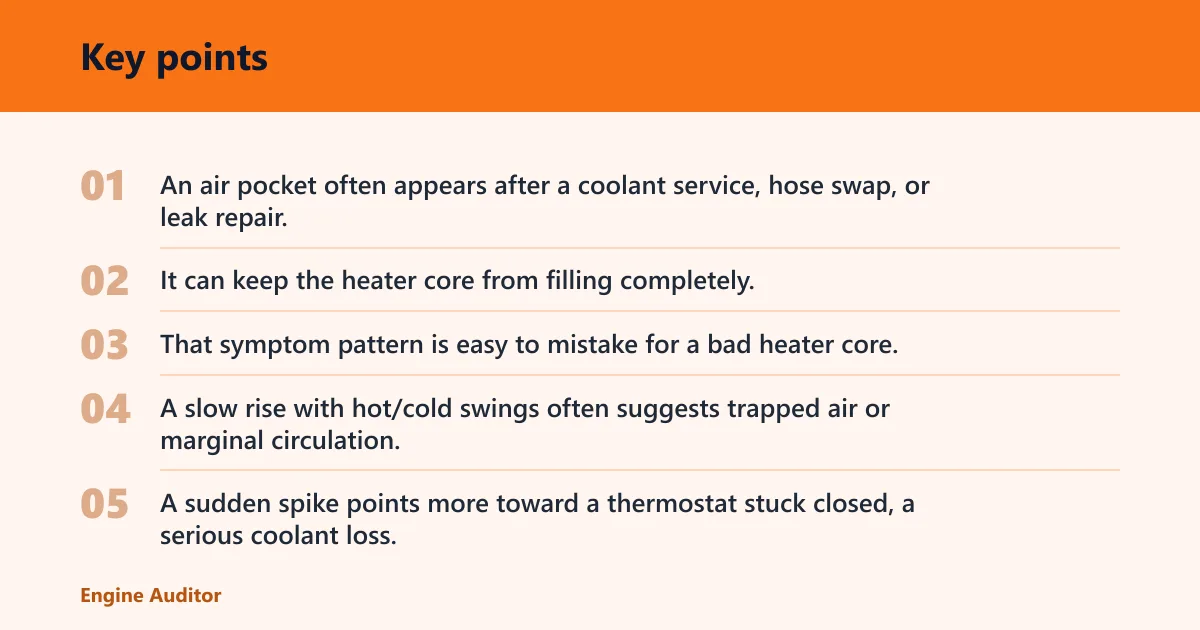
An air pocket often appears after a coolant service, hose swap, or leak repair. It can keep the heater core from filling completely, which gives you weak or no cabin heat and a temperature gauge that bounces around. That symptom pattern is easy to mistake for a bad heater core.
A fluctuating gauge matters. A slow rise with hot/cold swings often suggests trapped air or marginal circulation. A sudden spike points more toward a thermostat stuck closed, a serious coolant loss, or a pump problem.
What a pressure test adds
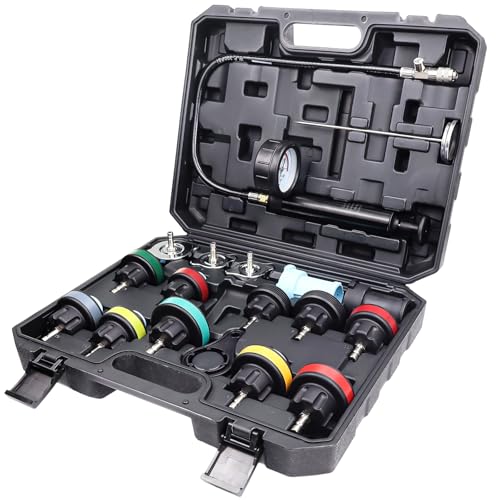
A cooling system pressure test helps find leaks that do not drip on the ground. It can reveal heater-core seepage, hose leaks, or a weak cap by showing pressure loss before the leak becomes obvious. If the system will not hold pressure, the heater core may be part of the problem, but the radiator, hoses, pump seal, and cap all stay on the list until checked.
What else can make a car overheat?
Many overheating faults are separate from the heater core. A thermostat stuck closed can cause rapid overheating because coolant cannot reach the radiator. A weak water pump or belt-drive issue can slow circulation through the engine and heater circuit. A radiator fan failure can cause overheating in traffic while the car seems fine at road speed. A restricted radiator or blocked grille can do the same.
Idle overheating versus highway overheating
That split is useful. Overheating at idle or in stop-and-go traffic usually points to fan or airflow trouble. Overheating on the highway points more toward coolant flow, thermostat, pump, radiator restriction, or low coolant. The heater core can be part of the picture, but it rarely explains every version of the fault by itself.
Picture a crossover that idles in the driveway with the gauge climbing, yet settles down once it gets moving. If the heater output improves with road speed, look hard at the radiator fan and front-end airflow first. A bad heater core does not usually create that pattern on its own.
Can a clogged heater core cause a car to overheat?
Yes, but usually indirectly. A clogged heater core can reduce cabin heat and may contribute to poor coolant circulation if the blockage is severe or if sludge is present elsewhere in the system. More often, the clog is a warning sign of contaminated coolant or a broader restriction, not the main reason the engine is overheating.
Can a leaking heater core cause overheating?
Yes. A leaking heater core can lower coolant level, and low coolant can lead to overheating quickly under load or at idle. The leak may show up as a sweet smell, fogging windows, damp carpet, or a reservoir that keeps dropping. Pressure testing helps confirm the leak before more driving.
Frequently asked questions
Can a bad heater core cause engine to overheat?
Yes, but only under specific conditions. A bad heater core can overheat the engine if it clogs flow, traps air, or leaks enough coolant to reduce system level. If the engine overheats with no cabin heat, thermostat, pump, fan, radiator, or low-coolant problems are often higher on the list.
Can a bad heater core cause overheating?
It can, but it is not the first suspect. A clogged heater core mainly hurts cabin heat, while a leaking heater core can drop coolant level and lead to overheating. If the temperature rises fast, check coolant level, hose temperature, and radiator fan operation before blaming the heater core alone.
Can a heater core cause a car to overheat?
Yes, though usually as part of a larger cooling fault. The heater core can reduce flow if it is restricted, or it can cause overheating by leaking coolant and letting air enter the system. A separate problem, such as a stuck thermostat or weak water pump, is often the real driver.
How do I tell if the heater core is clogged or leaking?
A clog usually shows up as poor cabin heat, a hot supply hose, a cooler return hose, and little or no smell inside the cabin. A leak usually adds coolant loss, wet carpet, fogging windows, and a sweet odor. A pressure test helps confirm seepage that may not drip visibly.
Why is my car overheating but the heater blows cold?
That pattern usually points to low coolant, trapped air, a stuck thermostat, or poor circulation from a weak water pump. A heater-core clog can also do it, but the radiator fan and radiator itself still need attention, especially if the car overheats at idle or in traffic.
Products related to this article
Sponsored / affiliate links. As an Amazon Associate I earn from qualifying purchases. I may earn additional commission from eligible campaigns.