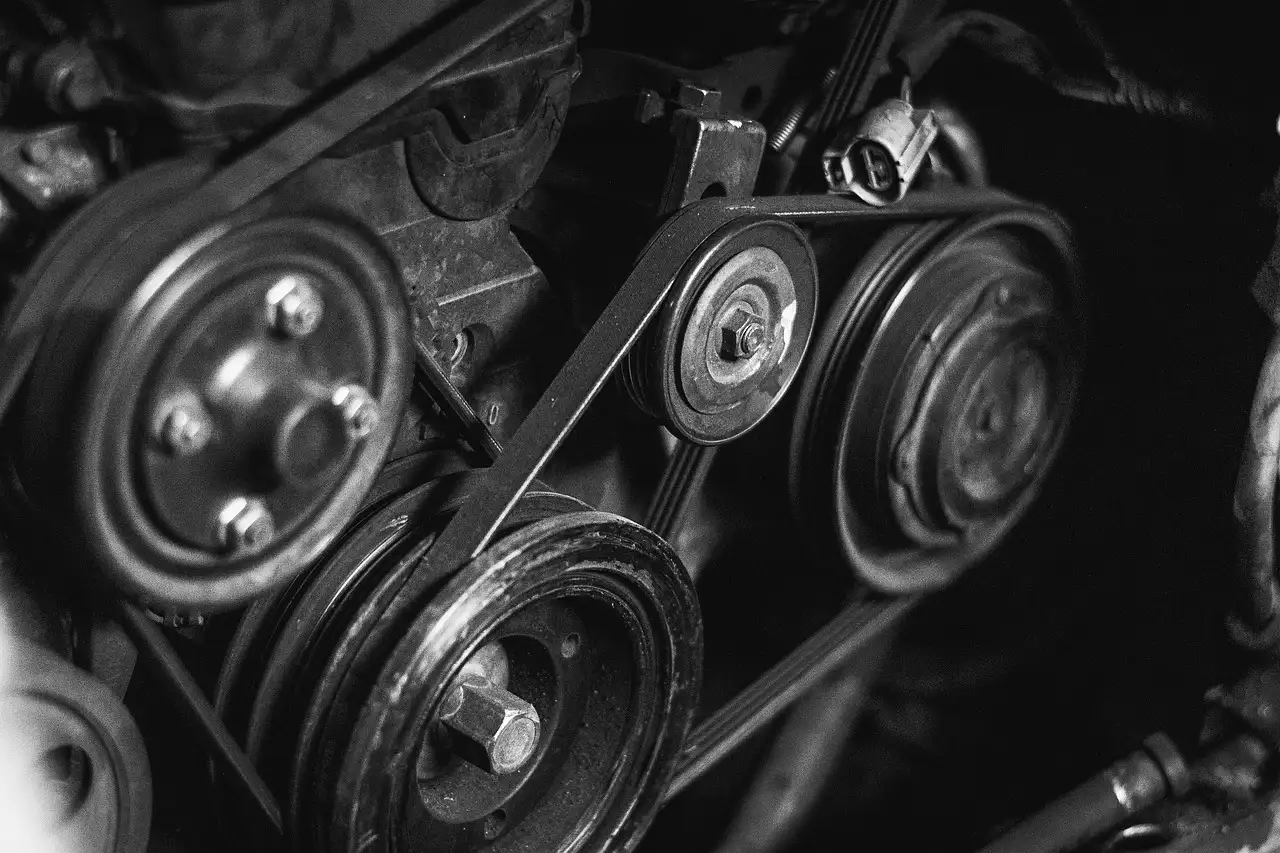
Why Is My Serpentine Belt Squealing?
A serpentine belt squeal usually means belt slip; if the noise changes with RPM or after a splash of water, start with belt tension and pulley alignment, then check the tensioner and each accessory. Ignoring it can leave you with a dead battery, engine overheating, or a belt that shreds and stops the engine. This article gives a symptom-based decision tree to separate belt slip, pulley misalignment, weak tensioner, and accessory drag before you replace parts.
Serpentine belt noise at a glance

- Powerful magnets for fast attachment
- Three-dimensional target area simplifies alignment
- Facilitates tension and alignment adjustment
One EPDM belt drives multiple accessories on most vehicles, including the alternator, A/C compressor, power steering pump, and water pump. Noise usually comes from low tension, contamination on the ribs, or pulley misalignment. A squeal is not the same as a growl, and that difference tells you where to look first.
Use the sound and the moment it appears to narrow the fault. A short, high chirp on first start often points to a glazed belt or a slow tensioner. A deeper growl or whir points more toward a rough bearing than a slipping belt.
Quick symptom split
- Cold start squeal that fades: think belt glaze, moisture, or weak tensioner take-up.
- Squeal with A/C or steering load: think extra accessory load, belt slip, or a dragging component.
- Rhythmic chirp that rises with rpm: think pulley alignment or a damaged rib.
- Growl or whir that changes with speed: think bearing noise in an accessory or idler pulley.
- Smoke or burning rubber smell: think urgent slip, seized accessory, or a belt skating across a locked pulley.
Serpentine belt diagnosis matrix
Use this table before buying a belt. It separates slip from alignment, tension, and accessory drag using the noise pattern and the load that triggers it.
| When the noise happens | Likely cause | Quick check | Next action |
|---|---|---|---|
| Cold start, then it fades within seconds | Glazed belt or weak tensioner take-up | Look for a polished belt surface and watch the tensioner arm for slow movement on start | Inspect belt condition and tensioner before replacing only the belt |
| A/C clutch engages | Compressor drag or belt slip under extra load | Turn the A/C on at idle and listen for the squeal to begin exactly at clutch engagement | Check compressor drag, belt condition, and pulley alignment |
| Steering at parking speed | Power steering load or weak belt grip | Turn the wheel near full lock for a brief moment and listen for a squeal | Inspect belt tension, steering pump load, and contamination on the ribs |
| High-rpm squeal under throttle | Belt slip or pulley misalignment | Raise engine speed gently; note whether the squeal gets louder with rpm | Check alignment, tensioner force, and belt glazing |
| Rhythmic chirp once per revolution | Misalignment or damaged rib | Listen for a steady repeat that speeds up with engine rpm | Inspect each pulley for out-of-plane offset and rib damage |
| Squeal with smoke or burning rubber smell | Seized accessory or severe slip | Stop the engine and look for belt dust, smoke, or a hot pulley area | Shut down immediately and have the belt path inspected before driving again |
Why does it squeal on startup?
Startup squeal most often points to a belt that cannot grip for the first few seconds, usually because the belt is glazed, the tensioner is slow to take up slack, or moisture has reduced friction. If the squeal is short and high-pitched, focus on belt surface condition and tensioner action before looking elsewhere.
Cold belt slip and moisture
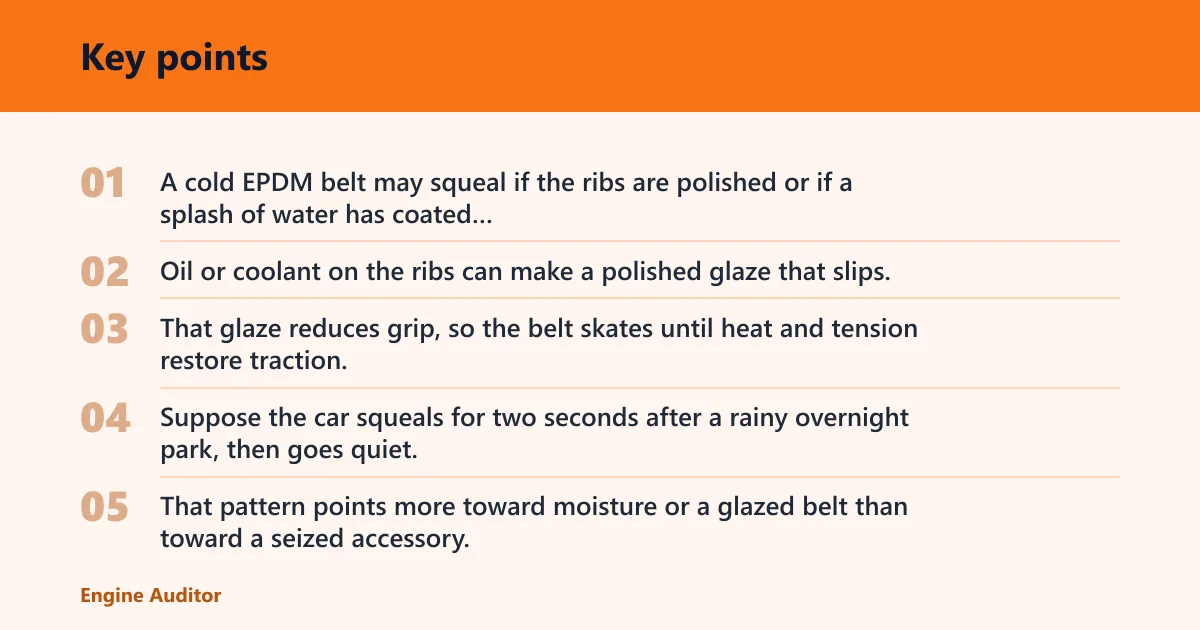
A cold EPDM belt may squeal if the ribs are polished or if a splash of water has coated the belt or pulley faces. Oil or coolant on the ribs can make a polished glaze that slips. That glaze reduces grip, so the belt skates until heat and tension restore traction.
Suppose the car squeals for two seconds after a rainy overnight park, then goes quiet. That pattern points more toward moisture or a glazed belt than toward a seized accessory. If the noise returns every cold start, the tensioner or belt surface needs attention.
Weak tensioner take-up
A spring-loaded tensioner keeps the belt tight. A weak tensioner can allow tiny speed differences that chirp, especially at first start when loads change quickly. If the arm moves slowly or bounces, it may not be maintaining enough force at idle.
Look at the tensioner arm with the engine running. A steady, smooth position is better than visible flutter. If the belt squeal starts at ignition and fades as rpm rises, a slow tensioner or glazed belt is a stronger suspect than the alternator itself.
Why does it squeal when you turn on A/C or steer?
Extra load is a big clue. A squeal can appear when steering at parking speeds or when the A/C clutch engages because both events ask the belt to transmit more torque. If the belt slips only under those loads, the root cause may be friction loss, weak tension, or a dragging accessory.
A/C clutch engagement
The A/C compressor adds a load. Compressor drag can contribute to belt slip, and clutch engagement can trigger squeal right as the load comes in. If the noise starts the instant the clutch clicks, inspect the compressor and the belt path together.
That timing matters. A noise that starts before the clutch engages suggests another issue. A noise that starts exactly with engagement points more directly to extra load or compressor drag.
Parking-speed steering load
The power steering pump load changes with steering input, and slow-speed steering can trigger squeal when the pump load spikes. That symptom often shows up while parking or making a tight turn at idle. If the belt slips only while the wheel is turned, the steering load is exposing a weak grip or a worn pump.
If the noise also appears with A/C use, the belt may be marginal under multiple loads. That does not prove the belt is bad by itself. It means the belt system is near its limit and needs a full inspection, not a guess.
Is the belt slipping or is a pulley failing?
Slip and bearing failure can sound similar at first, but they usually behave differently. A slipping belt tends to squeal under load. A rough bearing often growls or whirs and may change with engine speed even when accessory load stays the same.
Belt glazing and contamination
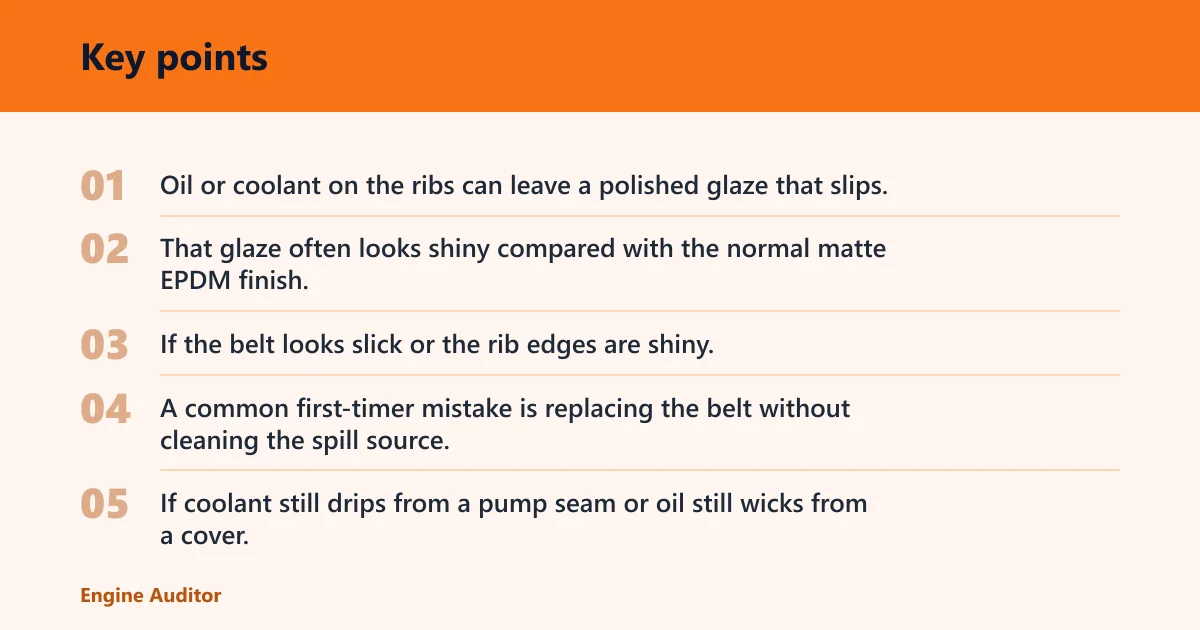
Oil or coolant on the ribs can leave a polished glaze that slips. That glaze often looks shiny compared with the normal matte EPDM finish. If the belt looks slick or the rib edges are shiny, do not assume the fix is only tighter tension.
A common first-timer mistake is replacing the belt without cleaning the spill source. If coolant still drips from a pump seam or oil still wicks from a cover, the new belt can squeal again within days.
Pulley alignment
A pulley that is a few millimeters out of plane can cause noise. A pulley out of plane can make the ribs scrub, and that scrub can create rhythmic noise once per rotation. Misalignment also wears the belt ribs unevenly, which can turn into a repeated chirp.
Check the belt path from the side. The pulleys should sit in the same plane, with no obvious step or lean. A small offset is enough to make the belt walk, squeal, or chirp at a steady interval.
Idler pulley bearing noise
The idler pulley guides the belt path. If its bearing is rough, it can growl or whir instead of squealing. That sound usually follows engine speed more than accessory load, which helps separate it from a belt that is simply slipping.
Use a mechanic’s stethoscope near housings, not on the belt, to help localize rough bearings. Listen near the idler, alternator, A/C compressor, and tensioner body. A rough bearing often sounds harsh through the housing even when the belt itself looks fine.
Tensioner spring weakness
A weak tensioner can allow the belt to flutter and slip. That problem can also create a slow take-up on cold start, which often produces a chirp before settling down. If the belt tension changes wildly with small throttle blips, the tensioner deserves close inspection.
That check matters after service work too. If a new belt still squeaks after replacing a tensioner, the issue may be routing, a misaligned pulley, or a dragging accessory rather than the belt itself.
What if the belt is new but still squeals?
A new belt does not rule out the problem. A new belt can squeak after replacing it if the routing is wrong, the tensioner is weak, a pulley is out of plane, or an accessory is dragging. Replacing only the belt may not solve the root cause.
Wrong routing or tension
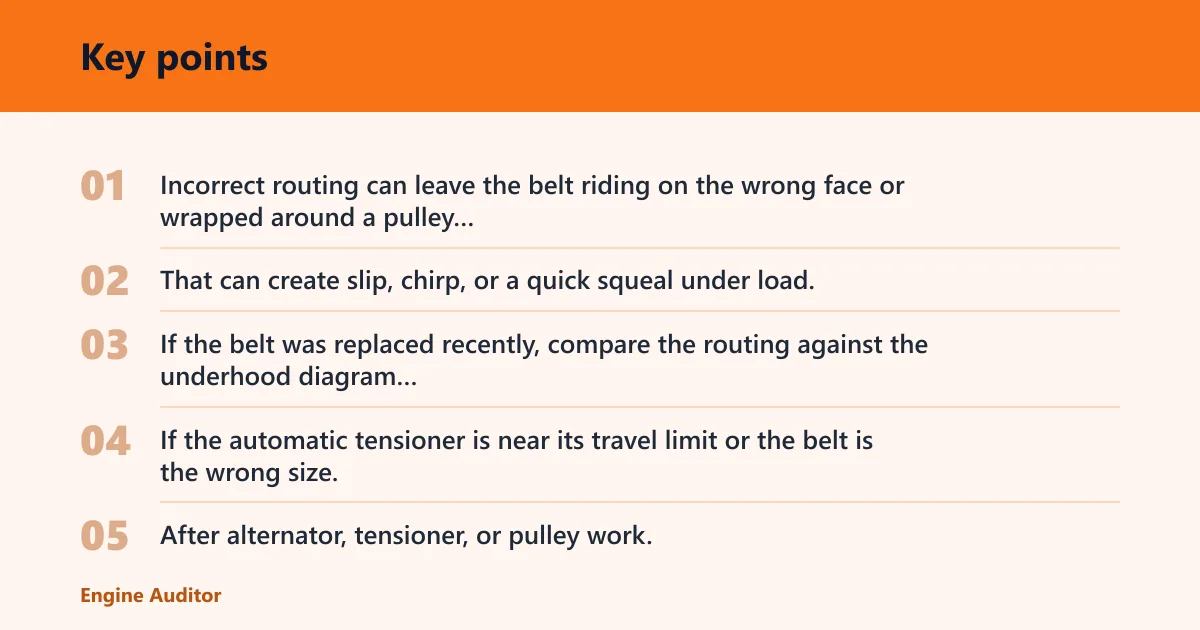
Incorrect routing can leave the belt riding on the wrong face or wrapped around a pulley at the wrong angle. That can create slip, chirp, or a quick squeal under load. If the belt was replaced recently, compare the routing against the underhood diagram before assuming a bad part.
Also check tension. If the automatic tensioner is near its travel limit or the belt is the wrong size, the belt may not have enough grip even though it is new.
Accessory drag after replacement
After alternator, tensioner, or pulley work, a new squeal can mean the accessory itself is loading the belt too hard. The alternator can add drag if its bearing is rough. The water pump can overheat the belt if it is seized or dragging. The A/C compressor can do the same when its clutch or internals bind.
Picture a fresh belt installed after alternator replacement, but the squeal remains only when the engine revs past idle. That pattern points away from belt age and toward pulley alignment, alternator drag, or another accessory that is still loading the system.
When to stop and inspect further
A sudden squeal with burning rubber smell is urgent. Smoke means the belt is slipping hard enough to heat up fast, and a seized accessory or failed bearing can force the belt to skate. Shut the engine down and let the system cool before checking anything by hand.
If the belt is smoking, do not keep driving to see whether it clears up. The heat can damage the belt, the tensioner, and nearby hoses. Overheating risk is real if the water pump is belt-driven and the belt stops doing its job.
How do I get my serpentine belt to stop squeaking?
Start with the cause, not the belt. Clean any oil or coolant contamination, verify pulley alignment, check the tensioner, and listen for accessory drag. If the belt is glazed, contaminated, or worn, replacing it makes sense; if a pulley or bearing is the problem, a new belt alone will squeak again.
Work in this order: inspect, confirm, then replace. That approach keeps you from masking a seized accessory with a fresh belt that will fail the same way.
At-home checks in order
- Listen for the noise at cold start, A/C engagement, steering load, and higher rpm.
- Look for oil, coolant, dust buildup, or a shiny glazed belt surface.
- Check whether the belt runs in a straight line across each pulley.
- Watch the tensioner for flutter, slow response, or a near-limit position.
- Use a mechanic’s stethoscope near accessory housings to isolate rough bearings.
- Stop driving if the belt squeals with smoke or a burning rubber smell.
Frequently asked questions
Why is my serpentine belt squealing when I start the car?
A squeal right at startup usually points to a glazed belt, moisture on the ribs, or a tensioner that is slow to take up slack. If the sound fades after a few seconds, look first at belt surface condition and tensioner action before assuming the alternator or water pump is failing.
Why is my serpentine belt squealing after replacing alternator?
If the squeal began after alternator work, check pulley alignment, belt routing, and alternator bearing drag. A failing unit can increase belt load, and a pulley that sits a few millimeters out of plane can make the ribs scrub. A new belt will not fix either problem by itself.
Why is my serpentine belt squealing and smoking?
Squealing with smoke means the belt is slipping hard and heating fast. That is urgent. Shut the engine off, let it cool, and inspect for a seized accessory, a locked pulley, or severe misalignment. Continued running can shred the belt or overheat a belt-driven water pump.
Why does my serpentine belt squeal on cold start?
Cold start squeal often comes from belt glaze, moisture, or a weak tensioner. A short, high chirp on first start often means a glazed belt or slow tensioner. If the noise disappears as the engine warms, the belt may be losing grip only during the first few seconds of load change.
How do I get my serpentine belt to stop squeaking: do not start?
Do not start with a replacement part guess. Check for contamination, verify pulley alignment, inspect the tensioner, and listen for accessory drag under A/C or steering load. If the belt is polished, cracked, or oil-soaked, replace it after you correct the source of the contamination.
Why is my serpentine belt squeaking when I accelerate?
Squeaking on acceleration usually means the belt is slipping as load rises. That can come from low tension, a glazed rib surface, or pulley misalignment. If the noise rises with rpm and repeats in the same pattern, suspect alignment or a damaged rib rather than only belt age.
Products related to this article
Sponsored / affiliate links. As an Amazon Associate I earn from qualifying purchases. I may earn additional commission from eligible campaigns.