What Is an EV Battery Pack? How It Works in EVs Explained
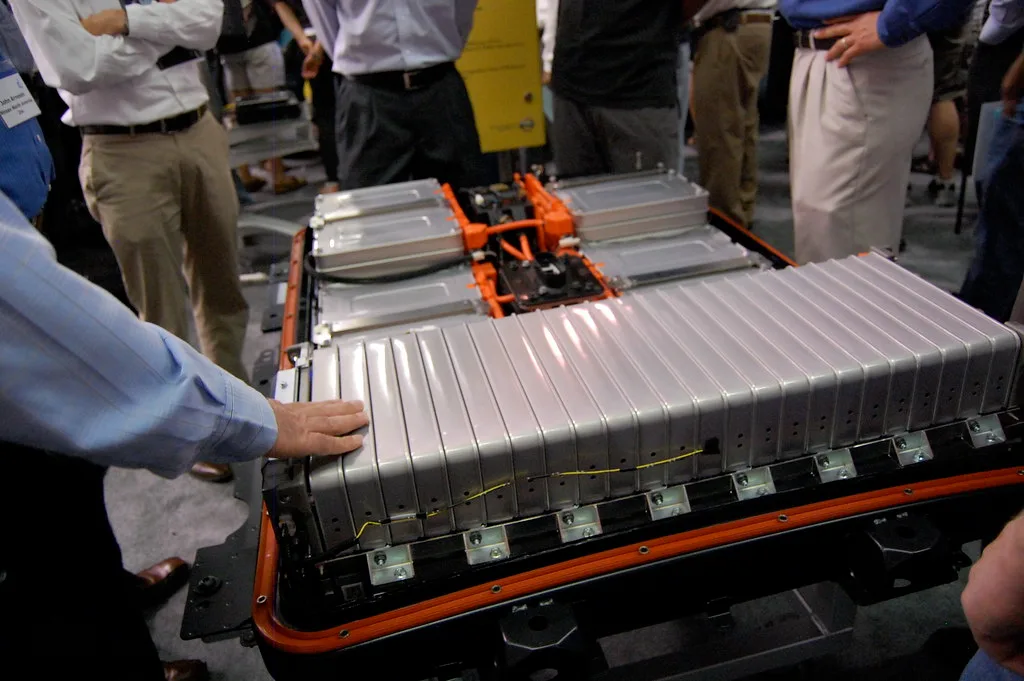
An EV battery pack is the car’s full high-voltage energy system: many cells arranged in modules or built directly into a pack, plus cooling, sensors, wiring, and software that control power, temperature, and charging. Get the pack wrong, and you can lose range, slow charging, and shorten battery life. This guide explains how pack parts work together and which specs matter most when you compare EVs.
This guide is part of our Electric vehicle basics: a simple owner guide series.
What is an EV battery pack?
An EV battery pack is the full assembly that stores and delivers energy to the drive system, not a single cell. It combines many lithium-ion cells, electrical connections, thermal hardware, sensors, and control electronics inside a protected enclosure so the vehicle can use electricity safely and predictably.
Electric vehicles are propelled fully or mostly by electricity, and EVs include battery electric cars and other electric road vehicles. The pack sits under the floor, between the axles, or in another protected structure, where it can support weight, protect the cells, and keep the center of gravity low.
Battery cell vs battery pack
A lithium-ion cell is the basic energy storage unit. A battery pack is the system made from many cells plus the parts that manage them. EV batteries can consist of hundreds or typically thousands of connected cells, so pack design matters as much as cell chemistry.
Inside each cell are the anode, cathode, electrolyte, separator, and the ion movement process called intercalation. The pack adds the enclosure, high-voltage output, sensors, cooling, and software that let those cells work together without overheating or drifting out of balance.
Why packs contain more than cells
Cells alone cannot safely supply a car. The pack must monitor voltage, limit current, manage temperature, isolate faults, and connect the battery to the inverter, charger, and rest of the vehicle. That extra hardware is why two EVs with similar cell chemistry can charge and age differently.
How the pack fits into the vehicle
The pack feeds the inverter, which converts battery DC power into AC for the motor in most EVs. It also supports the 12-volt system through a DC-DC converter, so lights, computers, pumps, and other low-voltage loads still work when the car is driving or parked.
📊 Federal EV battery warranties must cover at least eight years or 100,000 miles. Source: EV Batteries Explained: How Electric Car Batteries Work, Charge….
How does an EV battery pack work?
An EV battery pack works by moving lithium ions between electrodes inside each cell while electrons travel through the external circuit to power the motor. The pack’s series and parallel wiring sets voltage and capacity, and the battery management system keeps all cells within safe limits during driving and charging.
How lithium-ion cells store and release energy
During discharge, lithium ions move through the electrolyte from the anode toward the cathode, while electrons go through the vehicle’s electrical path. During charging, that flow reverses. The separator prevents direct contact between electrodes, which reduces short-circuit risk inside the cell.
How series and parallel connections build voltage and capacity
Cells in series increase voltage. Cells in parallel increase capacity and current capability. A pack layout may be described with shorthand such as 96s2p, which usually means 96 series groups and 2 cells in parallel per group. More series groups raise pack voltage; more parallel cells raise usable amp-hours.
Suppose a pack uses four cells rated at around 3.7 volts and 50 amp-hours each. If they are arranged 2s2p, the pack becomes 7.4 volts at 100 amp-hours. If the same four cells are arranged 4s1p, the pack becomes about 14.8 volts at 50 amp-hours. The layout changes both numbers.
What pack voltage means in practice
Today’s EV batteries usually operate at 400 to 800 volts. Higher voltage can reduce current for the same power, which can cut cable losses and help support faster DC charging, though charger design, cell chemistry, and thermal limits still control the final charge rate.

Inside an EV battery pack: parts and jobs

An EV pack is a system of hardware, sensing, and software, not a box of cells. The enclosure protects the cells, the wiring moves current, the sensors report conditions, and the cooling hardware keeps temperature in range so the pack can deliver power, accept charge, and survive over time.
Cells, modules, and cell-to-pack layouts
Some packs group cells into modules first, then place modules inside the enclosure. Others use cell-to-pack layouts that remove the module layer to save space and mass. The trade-off is serviceability versus packing efficiency, and manufacturers choose based on cost, structure, and thermal design.
Structural enclosure and high-voltage connections
The enclosure is the pack’s rigid shell. It protects against road impact, water, and debris, while high-voltage busbars and connectors route power to the rest of the vehicle. Good enclosure design also helps the pack survive vibration and crash loads without deforming cell groups.
Sensors, contactors, and pack cooling hardware
Pack sensors track cell voltage, current, and temperature. Contactors act like heavy-duty switches that connect or isolate the battery. Cooling hardware may use liquid loops, heat spreaders, or heating elements to manage warm and cold conditions and reduce the chance of thermal runaway spreading.
| Inside an EV battery pack: component | Job | Failure mode | Owner-facing symptom |
|---|---|---|---|
| Cell | Store and release energy through lithium-ion movement | Loss of capacity, internal resistance rise, or cell fault | Shorter range, slower charging, warning lights |
| Module or cell-to-pack group | Organize cells into serviceable or space-efficient units | Uneven cell aging or local heat buildup | Range drop, imbalance, limited power under load |
| BMS | Monitor voltage, temperature, current, balance, and state of charge | Sensor fault or control-limit trigger | Charge cutback, reduced power, fault messages |
| Contactor set | Connect or disconnect high voltage | Welded contacts or failed coil | Car will not start or will isolate the pack |
| Cooling plate or liquid loop | Move heat out of the cells | Pump failure, leak, blocked flow, or sensor error | Fast-charge taper, reduced power, hot-soak warnings |
| Structural enclosure | Protect cells and support the vehicle body | Crash damage, corrosion, or seal failure | Water intrusion risk, service isolation, repair alerts |
How does the battery management system protect the pack?
The battery management system, or BMS, is the pack’s control center. It watches each cell group, estimates available energy, limits unsafe operation, and decides how much charge or discharge the pack can accept. Without it, the battery could drift out of balance, overheat, or be damaged by overcharge.
Cell balancing and voltage monitoring
Cell balancing keeps individual cells or cell groups from drifting too far apart in voltage. Monitoring matters because a weak cell can reach empty or full before the rest of the pack. The BMS uses those readings to protect the pack and preserve usable capacity.
Temperature sensing and safety limits
Temperature sensors let the BMS slow charging, limit power, or shut the pack down if heat rises too much. That is the first line of defense against thermal stress. Cooling hardware helps, but the BMS makes the decision when the pack is too hot or too cold for normal operation.
State-of-charge estimation and fault response
State-of-charge estimation tells the driver how much usable energy remains. When a sensor fails, a cell goes out of range, or the cooling system underperforms, the BMS may reduce power, cap charging speed, or isolate the pack so the problem does not spread.
How do chemistry choices change EV ownership?
Battery chemistry affects energy density, lifespan, temperature behavior, and how the car charges in cold weather. NMC and LFP are the most common chemistry names shoppers see. The right choice depends on whether you care more about range per kilogram, cold-weather charge behavior, or long cycle life.
NMC vs LFP
NMC batteries have higher energy density and charge better in low temperatures. LFP batteries last longer and tolerate high temperatures better. That means NMC often supports longer range in a smaller pack, while LFP often favors durability and thermal stability.
Energy density and usable range
Higher energy density lets a pack store more energy in the same space and mass. That is one reason lithium batteries offer superior energy density and current output versus lead-acid batteries. For buyers, it affects vehicle packaging, curb weight, and how far the car can go between charges.
Cold-weather behavior and charging habits
Cold cells accept charge more slowly and can limit regenerative braking until they warm up. A pack with liquid heating or strong thermal control can recover faster in winter. People shopping in colder climates should check whether the vehicle preconditions the battery before fast charging.
Say your commute is 45 miles each way and you park outside at 10°F. A pack with weak preconditioning may charge slowly at a DC station until the cells warm up, then taper again near the top. The result is a longer stop than the charger label suggests.
Why does pack voltage affect charging speed?
Pack voltage affects charging speed because power equals voltage multiplied by current. At a higher voltage, the same power can move with less current, which helps reduce heat in cables and connectors. That is why 800V-class systems can support faster charging when the rest of the hardware is designed for it.
AC charging and the onboard charger
Level 1 charging uses a regular 120-volt AC outlet. Level 2 charging uses a 240-volt outlet or wall-mounted home charger. In both cases, the onboard charger inside the vehicle converts AC to DC and limits how much power the pack can accept from the wall.
DC fast charging and external charger power flow
Level 3 DC fast charging is only available at public charging stations. The external charger sends DC power directly to the battery pack, bypassing the onboard charger. Even then, the car still controls current and voltage, and charging slows as the pack nears full or warms up.
400V class vs 800V class packs
Most EVs use 400V class packs, which fit common inverter and charger designs. 800V class packs can reduce current for a given charging power and may charge faster on compatible equipment. The catch is compatibility: the charger, inverter, wiring, and thermal system all need to match the pack voltage.
A common first-timer mistake is assuming the charger’s kilowatt rating alone sets speed. A high-power station may not deliver that full number if the car’s pack voltage, BMS limits, or battery temperature force lower current.
how does an ev battery work
An EV battery works by storing electrical energy in chemical form and releasing it as direct current when the car needs power. Lithium ions shuttle between the anode and cathode through the electrolyte, while electrons flow through the external circuit to feed the motor and vehicle systems.
The pack does not work alone. The BMS, cooling hardware, wiring, and contactors keep the cells in a range where they can charge, discharge, and age safely. That system-level control is what makes a car battery very different from a small consumer battery.
how does an ev battery pack work
An EV battery pack works by arranging many cells into a voltage and capacity target that matches the vehicle, then managing those cells with electronics and cooling. The pack supplies high-voltage DC power, accepts AC or DC charging, and uses software to keep each cell within safe limits.
In practice, the pack’s behavior changes with temperature, state of charge, and cell chemistry. That is why two EVs with similar range ratings can feel different when charging on a cold morning or after repeated fast-charge sessions.
what is inside an ev battery pack
Inside an EV battery pack are cells, connection hardware, sensing electronics, safety switches, and thermal management parts. Some packs also include modules, while others use cell-to-pack layouts. The key point is that the pack is an integrated electrical and thermal system, not a passive container.
When comparing models, check whether the car uses liquid cooling, what chemistry it uses, and whether the manufacturer publishes pack voltage or charging limits. Those details often explain real differences in charging speed and winter behavior.
what are the components of an ev battery pack
The main components are the cells, pack enclosure, busbars or connectors, contactors, sensors, the BMS, and thermal management hardware. Some packs also add heaters, cooling plates, fuses, and crash isolation features. Each part affects range, charging, safety, or durability.
If a spec sheet is thin, use the pack checklist: voltage class, chemistry, cooling method, charging limits, and warranty terms. Federal EV battery warranties must cover at least eight years or 100,000 miles, and manufacturers must guarantee at least 70 percent capacity during the warranty period.
how many volts is an ev battery pack
Today’s EV batteries usually operate at 400 to 800 volts. The exact number depends on the vehicle architecture, the number of cells in series, and whether the pack is designed for a 400V class or 800V class system. That choice affects charging compatibility and current flow.
For shoppers, the useful question is not only voltage, but whether the pack matches the charger network you expect to use. A higher-voltage pack can support faster charging in the right setup, while a lower-voltage pack may still charge well if the current and thermal design are strong.
what is the difference between a battery cell and a battery pack
A battery cell is one electrochemical unit that stores and releases energy. A battery pack is many cells plus the parts that make them useful in a vehicle: enclosure, cooling, sensors, contactors, and the BMS. The pack is the vehicle-grade system; the cell is only the building block.
That distinction matters because a cell spec sheet tells only part of the story. Two packs using similar cells can age and charge differently if one has better thermal control, tighter voltage monitoring, or a more conservative safety strategy.
how long does an ev battery last
Battery life depends on chemistry, temperature exposure, charge habits, and how aggressively the pack is cycled. Federal EV battery warranties must cover at least eight years or 100,000 miles, and manufacturers must guarantee at least 70 percent capacity during the warranty period, which gives buyers a baseline.
LFP packs often last longer in cycle life terms, while NMC packs often trade some longevity for higher energy density. Repeated heat, frequent high-state fast charging, and poor cooling can shorten life more quickly than moderate daily use.
does fast charging damage an ev battery
Fast charging does not automatically damage an EV battery, but repeated high-power charging can add heat and stress if the pack management is weak or the battery is cold. The BMS limits current, and the thermal system helps, yet charging rate still affects long-term wear.
The usual pattern is not sudden failure. It is gradual loss of capacity or longer charge taper over time, especially if the pack spends a lot of time hot, full, or frequently pushed to its limits by DC charging.
what is battery management system in an ev
The battery management system is the pack’s supervisory computer. It monitors cell voltages, temperature, current, and state of charge, then applies balancing and safety limits to keep the battery operating inside its safe envelope. It is one of the most important parts of the pack.
When the BMS sees imbalance, heat, or a sensor fault, it can reduce charging speed, cut power, or isolate the battery. That response is why a BMS fault often shows up first as reduced range, slower charging, or a warning message rather than a sudden failure.
what is the difference between NMC and LFP batteries
NMC batteries have higher energy density and better low-temperature charging behavior. LFP batteries generally last longer and tolerate high temperatures better. In ownership terms, NMC often helps with range and cold-weather fast charging, while LFP often favors cycle life and heat tolerance.
Neither chemistry is best in every case. Buyers should weigh climate, daily driving distance, charging access, and expected ownership length. Usable capacity buffers also matter, because manufacturers often hide a small reserve at the top and bottom of the pack to protect life.
how ev motorcycle battery pack charge fast
An EV motorcycle battery pack charges fast by using a charging system that matches the pack’s voltage, current limits, and thermal capacity. The same basic rules apply as in cars: higher voltage can help, but battery chemistry, onboard charging hardware, and cooling still control real charge speed.
Because motorcycle packs are smaller and packaging is tighter, heat management and connector design matter even more. A compact pack may accept strong charging only for a short time before temperature limits force a taper, so charger power alone does not tell the whole story.
how does an ev work
An EV works by storing electrical energy in a battery pack, converting that energy through power electronics, and using an electric motor to move the wheels. The battery supplies DC power, the inverter shapes that power for the motor, and the control systems manage charging, regeneration, and safety.
That is why battery specs matter so much. The pack is not only the fuel tank. It is also a major part of the vehicle’s performance, charging behavior, cold-weather response, and long-term ownership cost.
Frequently asked questions
how does an ev battery work
An EV battery works by moving lithium ions between the anode and cathode through the electrolyte while electrons flow through the external circuit. The pack converts chemical energy into electrical energy for the motor, and the BMS keeps the cells within safe voltage and temperature limits.
what is inside an ev battery pack
Inside an EV battery pack are cells, connectors, sensors, contactors, cooling hardware, the BMS, and a structural enclosure. Some packs also include modules, heaters, or liquid cooling plates. Those parts control range, charging speed, durability, and safety as a single system.
what is the difference between a battery cell and a battery pack
A cell is one energy-storing unit. A pack is the full vehicle battery system made from many cells plus cooling, safety electronics, wiring, and software. A cell stores energy; the pack manages that energy so the car can use it safely and repeatedly.
how many volts is an ev battery pack
Today’s EV batteries usually operate at 400 to 800 volts. The exact pack voltage depends on how many cells are wired in series and which architecture the car uses. Voltage affects current, charging compatibility, inverter design, and how much heat the system must manage.
does fast charging damage an ev battery
Fast charging can add wear if it happens often, especially when the pack is hot or cold, but the BMS and thermal system are designed to control that risk. Charge taper, temperature limits, and chemistry choice all shape how much stress the battery sees over time.
what is the difference between NMC and LFP batteries
NMC batteries usually offer higher energy density and better cold-temperature charging behavior. LFP batteries usually last longer and tolerate high temperatures better. The better choice depends on climate, charging habits, and whether the buyer values range density or long cycle life more.
Products related to this article
Sponsored / affiliate links. As an Amazon Associate I earn from qualifying purchases. I may earn additional commission from eligible campaigns.