How Can I Tell If a Noise Is Exhaust or Engine?
This guide is part of our Car Noise Diagnosis by Symptom: Where the Sound Comes From and How Serious It Is series.
Methodology note: The five-minute listening check below is a safe, no-tools first pass performed with the vehicle parked on level ground, transmission in Park or Neutral as applicable, parking brake set, and the observer clear of belts, fans, and hot exhaust parts. It is meant to localize the noise before any hands-on inspection; it does not replace a lift inspection, scan tool data, or manufacturer service information.
If the noise is loudest under the car, changes with bumps or throttle lift, and fades once hot, it is more likely exhaust-related; if it follows engine rpm in Park, gets sharper under load, or comes with misfire symptoms, suspect the engine. Guessing wrong wastes diagnostic time and can let a cracked manifold, loose heat shield, or low-oil engine problem get worse. This guide includes a roughly five-minute sound check for location, heat, load, and A/C clues.
Exhaust or engine noise?
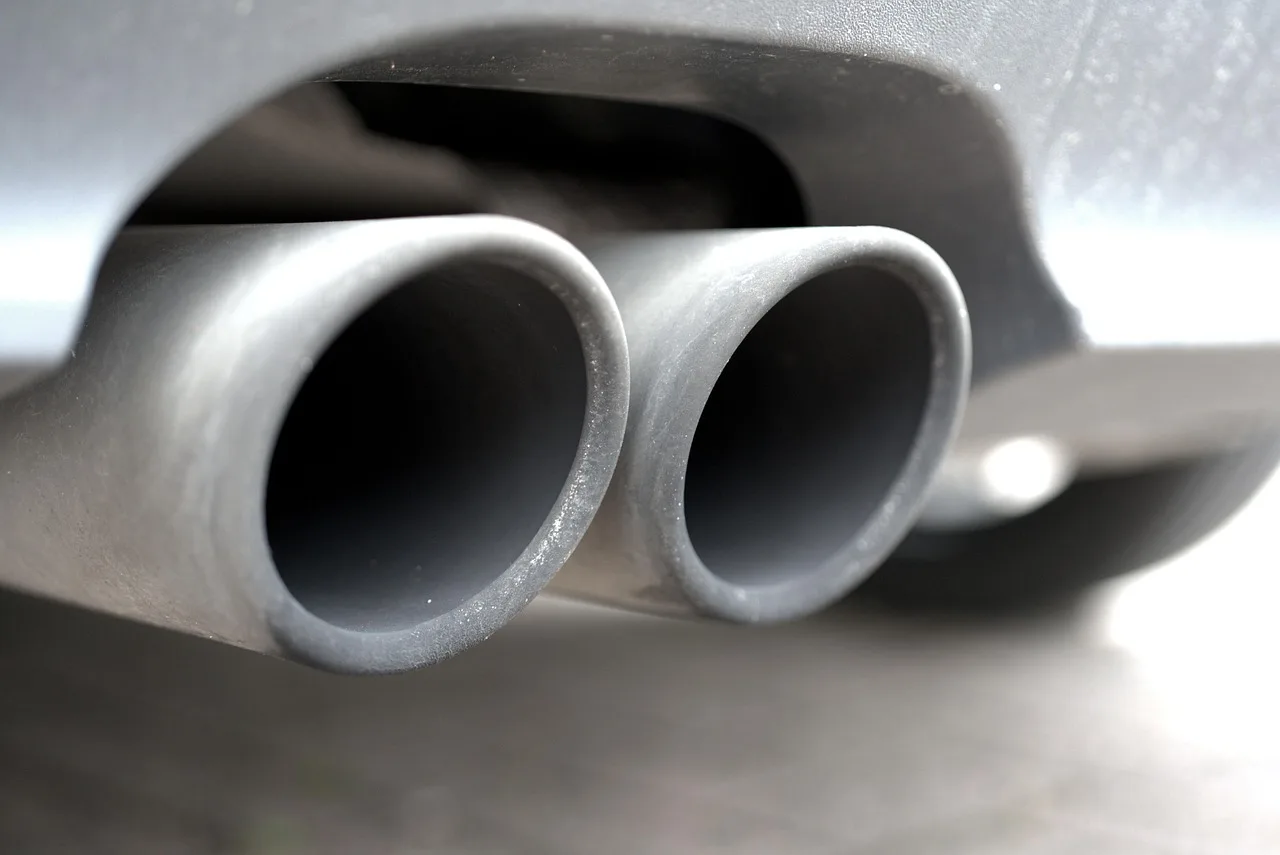


Start by finding the loudest point, then check whether the sound tracks vehicle motion, engine rpm, or temperature. Exhaust faults are usually loudest under the floor or near a wheel well. Engine faults are usually loudest at the front or top of the engine and stay tied to rpm even in Park. That approach matches the basic noise-isolation logic used in OEM service literature and professional diagnostic training.
Five-minute listening map
- Listen beside the front wheel, then under the middle of the car.
- Move to the front of the engine bay with the hood open.
- Listen near the top of the engine, away from belts.
- Repeat at idle, then at a light hold around 1,500 to 2,000 rpm.
- Turn the A/C on and off once, then note any change.
The goal is separation, not diagnosis by guesswork. A rattle that lives under the car and changes with road bumps points away from internal engine parts. A noise that stays with engine speed in Park points back toward the engine or a belt-driven accessory. If you want more context on neighboring faults, compare it with exhaust manifold leak symptoms, timing chain rattle at cold start, and serpentine belt noise diagnosis.
Cold start, idle, and rev checks
Cold start matters because some parts are noisier before metal expands and oil pressure stabilizes. Timing chain noise is often loudest in the first few seconds after a cold start. By contrast, an exhaust leak or shield rattle may quiet as the system heats and expands. This temperature pattern is a useful clue, but it is not proof on its own; OEM-style diagnostics treat it as one data point alongside location and rpm behavior.
Revving the engine safely in Park helps sort loose, resonant parts from mechanical knocks. A shield rattle may appear at one rpm band and then disappear. A rod knock or timing-related metallic rattle usually follows engine speed more faithfully and does not vanish just because the car is warm.
Five-minute noise map
Use this map to localize the sound before you start replacing parts. The same noise can seem to move through the cabin, but the loudest spot still tells you a lot.
Under the car
Heat shields sit over exhaust pipes and the catalytic converter, so a thin metallic buzz from below often points there first. The noise may be louder cold and may change when the exhaust moves as the engine rocks on its mounts.
Wheel well and side of engine
A rattle near the wheel well can be exhaust heat shield noise, catalytic converter shield noise, or an exhaust section touching the body. If the noise changes with bumps or when you lightly blip the throttle, suspension or exhaust movement is more likely than an internal engine knock.
Front of engine
Front-of-engine metallic noise raises suspicion for the timing chain tensioner, accessory drive, or a front cover leak. Timing chain noise is often loudest in the first few seconds after a cold start, and persistent front rattle should be treated as more serious than a loose shield. Manufacturer service procedures typically start by confirming oil level, belt condition, and accessory isolation before condemning the chain.
Top of engine
Top-end ticking can come from low oil, wrong viscosity, valvetrain wear, or an exhaust manifold leak that sounds like a sharp tick near the cylinder head. Check the dipstick before assuming a major internal failure. Low oil can make idle noise more obvious, and service manuals commonly call for checking lubrication level and pressure before deeper disassembly.
Inside the cabin
If the sound is strongest in the cabin but not easy to locate outside, it may still be coming from under the car and resonating through the floor. Cabin loudness alone is not a clue. The useful clue is where the sound is loudest on the outside of the vehicle.
Exhaust noises that fool drivers
Exhaust-related noises often sound mechanical enough to worry you, but many are external, heat-related, and loudest from below. The key clues are location, a hollow metallic tone, and changes as the exhaust warms up.
Heat shield rattle
Heat shield rattle is one of the most common idle rattles. Heat shields sit over exhaust pipes and the catalytic converter, so the sound usually comes from under the car. A loose heat shield is often a simple fastener or clamp repair rather than a major component failure.
The sound is often a thin metallic buzz or chatter. It may be louder cold, then fade as the parts expand. If the noise changes when you tap the exhaust lightly or when the engine rocks at idle, a shield is a strong suspect. An ASE-style approach is to confirm the shield is the source, then inspect retainers, weld points, and nearby hangers before replacing any part.
Exhaust manifold leak tick
An exhaust manifold collects exhaust gases from the cylinders, and a crack or gasket leak can make a sharp tick or light rattle near the top of the engine. It often sounds like a mechanical lifter tick, but it may quiet as the metal heats and expands. Soot at the manifold flange, gasket line, or port area is a classic leak clue in OEM leak-detection procedures.
Look for soot marks near the manifold, flange, or gasket line. Soot is a strong clue that exhaust gas is escaping. A fast, repeated tick near the front of the engine that becomes less obvious warm is more consistent with a leak than a deep internal knock. For a deeper compare-and-contrast, see exhaust manifold leak symptoms.
Catalytic converter shield noise
The catalytic converter sits under the vehicle near the exhaust, and its shield can rattle the same way a heat shield does. That is why drivers often confuse the two. Metallic noise from the middle or rear underbody, especially at idle or light throttle, often points here first.
Check for loose brackets, broken retainers, or visible heat marks. If the sound changes when the exhaust warms and settles, the issue is more likely a shield or hanger than a failing engine part.
Engine noises that need attention
Engine noises are more concerning when they follow rpm, stay present in Park, or get worse with load. The closer the sound is to the front or top of the engine, the more you should think about oiling, timing, or accessory drive parts before you blame the exhaust.
Timing chain tensioner rattle
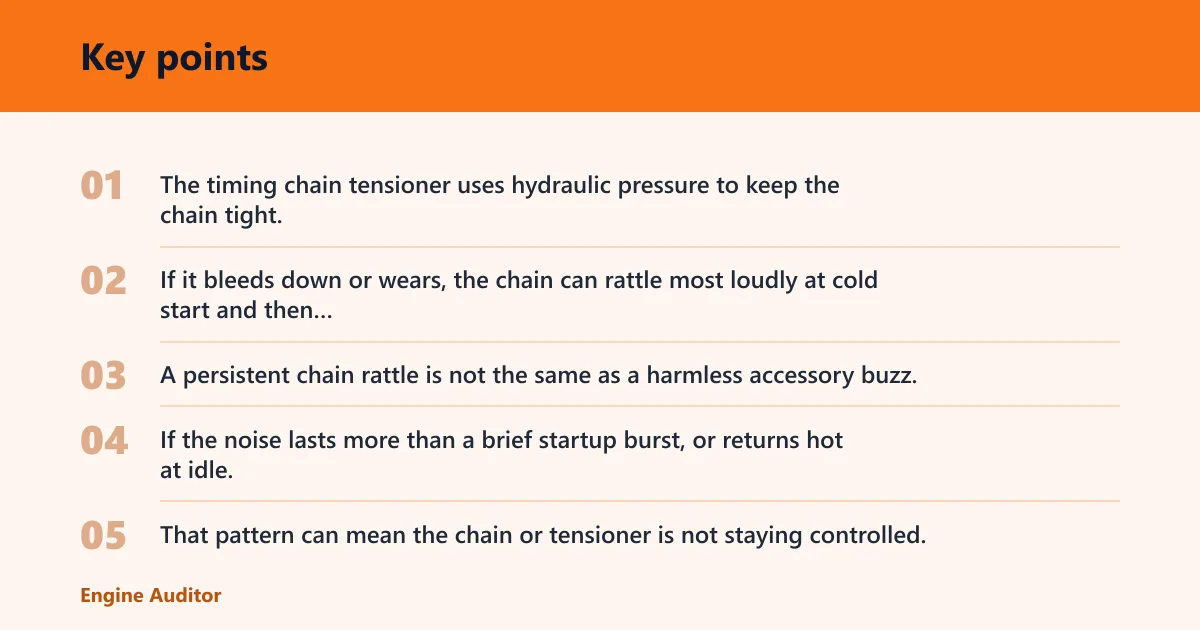
The timing chain tensioner uses hydraulic pressure to keep the chain tight. If it bleeds down or wears, the chain can rattle most loudly at cold start and then quiet as oil pressure builds. A persistent chain rattle is not the same as a harmless accessory buzz, and OEM service manuals typically treat continued chain noise as a prompt for inspection of oil supply, tensioner function, guides, and chain wear.
If the noise lasts more than a brief startup burst, or returns hot at idle, do not keep driving and hoping it clears. That pattern can mean the chain or tensioner is not staying controlled. For a more focused guide, compare it with timing chain rattle at cold start.
Rod knock
Rod knock is a classic sign of severe engine damage. It is usually a deep, heavy knocking from the engine block, often worse at idle or low rpm. A blown engine can present with loud knocking or banging, and that is a stop-driving-now symptom.
This is not the same sound as a light exhaust tick. Rod knock is deeper, harder, and more mechanical. If you hear a strong knock that rises with rpm, shut the engine off and do not continue the trip. SAE/ASE diagnostic guidance generally treats a deep, repeatable knock as a priority lubrication or bottom-end concern, not an exhaust issue.
Low oil top-end tick
Low oil level can cause top-end ticking or rattle, and viscosity matters too. Check the dipstick first, because low oil can make idle noise worse before it becomes a full failure. Wrong oil viscosity can also change how quickly the top end quiets after startup.
Suppose the engine ticks mostly at idle, gets quieter above idle, and the dipstick shows the oil level below the safe range. That points more toward lubrication than exhaust. Do not ignore it if the noise gets sharper after a long idle. If the oil level is correct, the next checks are pressure, valvetrain condition, and service history.
Loose engine mounts
Engine mounts absorb vibration, and wear can increase idle vibration and make engine movement audible. Loose or failed mounts can let the engine shift enough to create a clunk or knock that sounds like a mechanical failure, especially when you shift into gear or blip the throttle.
A mount problem often changes with load rather than pure engine temperature. The engine may rock visibly, and the noise may be strongest in the cabin or at the firewall when the drivetrain moves.
Does A/C change the noise?
Yes. If the sound changes when you switch the A/C on and off, the compressor clutch or another belt-driven accessory moves up the list. That clue matters because it points away from internal engine damage and toward the accessory drive.
A/C compressor clutch rattle
An A/C compressor clutch is a belt-driven accessory, and it can rattle at idle when engaged. If the noise appears only with the A/C on, or changes clearly when the A/C is switched off, the compressor clutch or compressor internals deserve attention. It can sound like an engine rattle without being one.
Belt-driven accessory clues
The serpentine belt drives accessories, and belt-driven parts can squeal, screech, or rattle. That noise may be mistaken for engine failure because it sits at the front of the engine bay. If the sound changes with A/C engagement, belt load, or steering load, think accessory first. For a step-by-step comparison, use serpentine belt noise diagnosis.
Idle-only noise versus load noise
A noise that is loud only at idle and fades under light rpm often points to a loose shield, mount, or accessory. A noise that gets worse under load or follows engine speed more exactly is more concerning for engine internals or exhaust leaks. That split is one of the fastest ways to avoid a bad guess.
Noise behavior by heat and rpm
Heat and rpm are the two best filters after location. Cold metal contracts, hot metal expands, and some failures change character in a very predictable way. Use that pattern before you start removing parts.
Why cold noises matter
Cold-start noise that fades after about a minute can point to exhaust expansion, shield movement, or a timing chain tensioner that quiets as oil pressure builds. A noise that stays unchanged after warm-up is more suspicious. Temperature behavior helps separate a loose exhaust part from a persistent mechanical problem.
What revving tells you
If the sound tracks rpm exactly, it is more likely tied to the engine or a belt-driven accessory. If it stays at the same rough speed regardless of rpm, or comes and goes with bumps and body flex, it is more likely exhaust hardware. That is why a short, safe rev test is useful.
When warmth points to exhaust expansion
Exhaust leaks and shields often change as the system heats up. A manifold leak may tick cold and quiet warm. A heat shield may buzz before the metal expands, then settle down. That pattern is far less typical of rod knock or a serious oiling problem.
Noise decision table
Use this table as a quick filter. Start with where the sound is loudest, then move across temperature behavior, rpm behavior, and whether bumps, load, or throttle lift make it better or worse. The next check column tells you what to inspect first.
| Noise location | Temperature behavior | RPM behavior | Load vs rpm vs bumps discriminator | False positives to rule out | Likely system | Urgency | Next check |
|---|---|---|---|---|---|---|---|
| Under car, thin metallic buzz | Louder cold, may fade warm | May change with light throttle or bumps | More affected by bumps than rpm | Loose undertray, heat shield touching body | Exhaust | Low | Inspect heat shield fasteners |
| Under car near catalytic converter | Often worse cold | May rattle at idle | May change when exhaust rocks at idle | Hanger slap, shield resonance | Exhaust | Low | Check converter shield and hangers |
| Top of engine, sharp tick | May quiet as metal warms | Follows engine speed | Stays with rpm more than bumps | Injector tick, normal valvetrain noise | Exhaust | Medium | Look for soot at manifold or gasket |
| Front of engine, metallic rattle | Worst in first seconds after cold start | Tracks rpm closely | More tied to rpm than vehicle motion | Belt idler, tensioner pulley, A/C clutch | Engine | High | Check timing chain tensioner |
| Deep knock from engine block | Often present hot and cold | Often worse at idle or low rpm | Gets louder under load and throttle | Exhaust rattle, mount clunk | Engine | Do not drive | Shut engine off and call for diagnosis |
| Top-end tick at idle | Worse when cold or after long idle | May lessen with rpm | More obvious at idle than at steady cruise | Exhaust manifold leak, injector noise | Engine | Medium | Check oil level and viscosity |
| Noise changes only with A/C on | Usually unrelated to heat | Most obvious at idle | Appears with compressor load, not bumps | Idle resonance, weak mount | Engine/accessory | Medium | Test A/C clutch and belt drive |
| Rattle near front accessory drive | May start cold, then stabilize | Changes with engine speed | Changes with rpm and accessory load | Alternator bearing, belt tensioner, pulley bearing | Engine | Medium | Inspect serpentine belt and pulleys |
| Cabin vibration with engine movement | May be worse in gear | Appears at idle or shift-in | Worse with drivetrain load, not road bumps | Exhaust contact with body, subframe clunk | Engine | Medium | Check engine mounts |
| Wheel-well metallic chatter | Often cold-first, then fades | May come and go at idle | Often changes with bumps and body flex | Loose splash shield, fender liner, brake dust shield | Exhaust | Low | Inspect shield edges and brackets |
| Manifold-area tick with soot | Often quieter warm | Follows rpm | More tied to rpm than bumps | Injector click, valvetrain tick | Exhaust | Medium | Check manifold gasket and cracks |
| Loud banging or grinding | May worsen quickly | Can intensify under load | Gets worse with load and throttle; not just bumps | Exhaust shield, mount clunk, loose heat shield | Engine | Do not drive | Stop the engine and inspect oil pressure concerns |
| Noise only when shifting into gear | Often unchanged by warm-up | May stay at idle speed | Strongly tied to load change, not rpm rise | Mount clunk, exhaust contact | Engine | Medium | Check mounts and exhaust clearance |
| Tick that follows one cylinder area | May fade as engine warms | Follows rpm | More audible under light load than bumps | Fuel injector, direct-injection tick | Engine | Medium | Compare with manifold leak symptoms |
Do not drive now
Stop driving if the noise is a deep knock, loud banging, or persistent grinding. Grinding noises mean metal contacting metal without lubrication. Also stop if the oil pressure light is on, the engine sounds suddenly harsher, or the knock gets worse within minutes. OEM guidance treats low oil pressure and severe knocking as immediate shutdown conditions, not “monitor it and see.”
White smoke that does not dissipate quickly often suggests coolant. If that appears with a knock, overheating, or a severe metallic rattle, shut the engine off. A manifold leak or loose shield can wait for diagnosis; a rod knock, oil-pressure noise, or blown-engine symptom cannot.
Frequently asked questions
How can I tell if a noise is coming from the exhaust or the engine?
Start with location and behavior. Under-car noise that changes with bumps, throttle lift, or heat is usually exhaust-related. Noise that stays tied to engine rpm in Park, gets sharper under load, or sounds strongest at the front or top of the engine points more toward the engine or a belt-driven accessory.
What does an exhaust rattle sound like compared with an engine rattle?
An exhaust rattle is often light, metallic, and hollow, like a loose sheet or bracket buzzing under the floor. An engine rattle is usually tighter, more rhythmic, and tied closely to rpm. A deep knock, in particular, is not a normal exhaust sound and should be treated as an engine concern.
Why is my noise louder when the car is cold?
Cold metal contracts, so loose shields, exhaust joints, and some timing components can be noisier until heat expands the parts. Timing chain noise is often loudest in the first few seconds after a cold start. If the sound fades as the engine warms, that pattern leans toward exhaust or startup oiling behavior.
Does a heat shield rattle from under the car or from the engine bay?
Usually from under the car, because heat shields sit over exhaust pipes and the catalytic converter. Drivers often hear the noise in the cabin and assume the engine is at fault, but the loudest spot is often below the floor. A loose shield may sound worst at idle or over small bumps.
How do I check if a ticking noise is an exhaust leak?
Listen near the manifold area, then look for soot marks around the gasket or flange. A true exhaust leak often sounds like a fast tick near the top of the engine and may quiet as the metal heats and expands. If the tick tracks rpm and leaves soot, suspect the manifold or gasket.
What engine noises mean I should stop driving immediately?
Stop driving for a deep knock, loud banging, or grinding noise from the engine block. Rod knock is a classic sign of severe engine damage, and grinding means metal contacting metal without lubrication. Also stop if the oil pressure light is on or the noise suddenly becomes much worse.
Can an AC compressor sound like an engine rattle at idle?
Yes. If the noise changes clearly with A/C on and off, the compressor clutch or compressor internals can rattle at idle and sound like an engine problem. That clue is valuable because it points to a belt-driven accessory rather than internal engine damage. Test the A/C switch before assuming the worst.
Why does the noise change when I rev the engine?
Rev changes help separate rpm-linked engine noise from loose exhaust hardware. If the sound follows engine speed exactly, suspect the engine or accessory drive. If it stays around the same rough volume, shifts with vibration, or fades as the car warms, a shield, bracket, or exhaust leak is more likely.
Products related to this article
Sponsored / affiliate links. As an Amazon Associate I earn from qualifying purchases. I may earn additional commission from eligible campaigns.