How to Know If Your Oil Filter Is Clogged
A clogged oil filter can trigger valve train noise or a bypass-valve event, but the same symptoms also come from low oil, degraded oil, a failing pump, or a clogged pickup screen. Ignore the warning long enough and a simple light can become bearing damage. This guide helps you sort a clogged filter from lookalike faults, choose the first checks, and decide when the car should stay parked.
Why normal pressure does not rule out filter problems
An oil filter removes dirt, metal bits, and other contaminants from engine oil. When the filter media fills with debris, flow restriction rises and lubrication can suffer. A clogged filter may also force the bypass valve to open, which keeps oil moving but can let unfiltered oil circulate through the engine.
That change in flow pattern is why symptoms can look uneven. You may see pressure complaints, or you may see normal pressure on the gauge while filtration quality has fallen off. Normal pressure does not rule out a filter problem if bypass flow is active.
How restriction changes the symptom pattern
Oil pressure in modern engines often runs between 20-60 PSI, but the exact reading depends on engine design, speed, oil temperature, and wear. A filter that is partly blocked may show up first as a pressure complaint when the engine is under demand. In other cases, the pressure sender or gauge may stay quiet while dirty oil keeps circulating.
Published filter capture ratings vary by brand, test standard, and product line. Once the media is overloaded, torn, or crushed, that capture path changes fast.
Clogged oil filter triage table
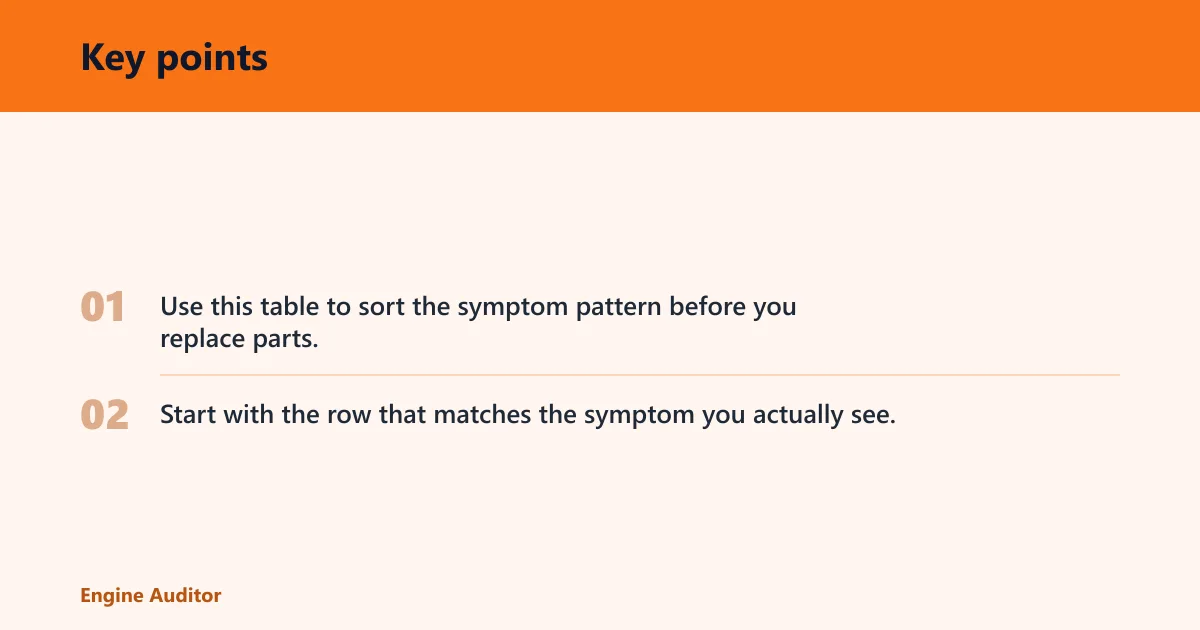
Use this table to sort the symptom pattern before you replace parts. Start with the row that matches the symptom you actually see, then follow the next action in order.
| Symptom pattern | Most likely cause | Next action |
|---|---|---|
| Low oil pressure at idle | Restricted filter flow, low oil level, worn pump, or pickup screen restriction | Check the dipstick, then inspect for leaks and confirm the filter part number |
| Pressure drop at high RPM | Filter restriction, bypass-valve flow, or oil pump weakness under demand | Do not keep revving the engine; inspect the filter and consider pump or pickup checks if the filter looks normal |
| Ticking on cold start | Oil drain-back, delayed oil delivery, or filter media that is slowing flow | Check the filter housing, gasket, and anti-drainback behavior before replacing random parts |
| Overheating | Restricted lubrication and added friction, sometimes from a clogged or dirty filter | Stop driving if the temperature climbs quickly; inspect oil level and cooling system after the engine is safe to touch |
| Oil leak at filter base | Cracked, torn, or missing gasket; loose filter; damaged mounting surface | Shut the engine off, inspect the seal area, and replace the filter before running again |
| After-oil-change issues | Wrong part number, over-tightening, double gasket, or poor installation | Compare the old and new filter, then check thread and gasket fit against the manual |
| Dirty oil with normal pressure | Bypass valve opened, so pressure stayed up while filtration dropped | Replace the filter and inspect whether the oil has been contaminated by earlier engine work or overdue service |
| Warning light with no noise | Failed pressure sender, wiring fault, or real pressure loss before noise starts | Do not assume the warning is false; verify oil level and inspect the filter, then test the sender circuit if needed |
| Do not drive | Oil pressure light stays on, hard knocking starts, or temperature rises fast | Stop the engine now. Tow the vehicle and inspect for pump, pickup, sensor, and filter failure before restart |
How do you know if your oil filter is clogged?
A clogged filter is most likely when oil pressure drops at idle, noise appears on cold start, or a warning light comes on after service or a long interval. The filter can also be the problem when pressure changes with engine speed, yet oil level and visible leaks do not explain the symptom. A bypass-valve event can hide the pressure drop while dirty oil still moves through the engine.
Low oil pressure at idle
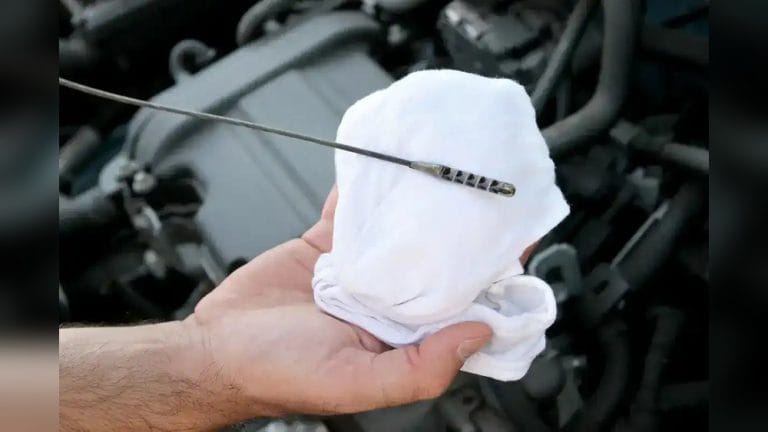
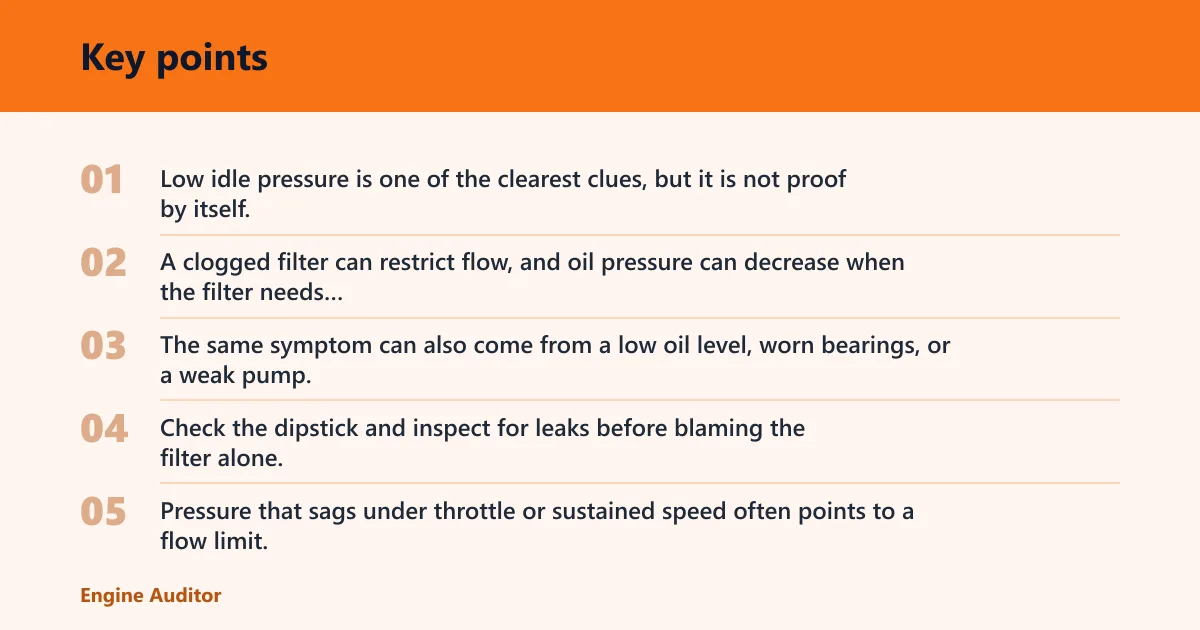
Low idle pressure is one of the clearest clues, but it is not proof by itself. A clogged filter can restrict flow, and oil pressure can decrease when the filter needs replacement. The same symptom can also come from a low oil level, worn bearings, or a weak pump. Check the dipstick and inspect for leaks before blaming the filter alone.
Pressure drop at high RPM
Pressure that sags under throttle or sustained speed often points to a flow limit. The filter may be partly blocked, the bypass valve may be opening, or the pump may be unable to keep up. If the filter has the wrong size or thread, oil can leak or bypass the media in a way that looks like pressure loss.
Suppose a 2.4-liter engine idles with a steady gauge, then the needle falls when the driver merges onto a freeway. That pattern can fit a restricted filter, but it also fits a pickup screen that is loading up with sludge. You need the physical inspection before you guess.
Cold-start ticking or metallic noise
Ticking, knocking, or metallic rapping on cold start suggests delayed oil delivery or poor lubrication. A clogged filter can slow flow until pressure builds, so the top end stays noisy for a few seconds. If the noise gets worse under load, that raises concern for oil starvation and not just a harmless filter issue.
A common first-timer mistake is to blame every brief tick on the filter and keep driving. If the sound is heavy, persistent, or paired with a pressure warning, stop the engine and check the system before restart.
Warning light with no noise
A dashboard warning can appear before the engine gets loud. A clogged filter may trigger dashboard warning lights, but a bad sender or wiring fault can do the same thing. If the oil pressure light stays on, treat it as real until proven otherwise, because the engine may still be running with reduced lubrication even if it sounds normal.
What should you check before replacing the filter?
Check oil level, leaks, the filter seal, and the part number before you buy another filter. A bad installation can copy the symptoms of a clogged element. Visual inspection is useful here, but it does not replace the owner’s manual, a pressure warning, or basic engine-health checks.
- Check the oil level with the vehicle on level ground and the engine off for the recommended time.
- Look around the filter base for fresh oil, wet dust, or drips.
- Inspect the gasket for cracks, tears, flattening, or a missing seal.
- Verify that the mounting surface is clean and free of the old gasket.
- Confirm the filter part number and thread match the engine specification.
- Check the canister for crush damage, swelling, or signs that the media has collapsed.
If you suspect true low oil pressure, confirm it with a mechanical gauge or the factory diagnostic procedure before replacing parts.
Gasket and mounting surface check
Oil leaks around the filter can reduce oil pressure and lubrication. A cracked or missing gasket can leak at the block, and a dirty mounting surface can stop the seal from seating. If the filter was tightened too far, the gasket may distort and seep even when the canister itself looks normal.
Canister and media check
A damaged canister can point to torn or crushed filter media inside. A collapsed filter media pack can block flow and still leave the outside of the filter looking fine. That is why a visual check of the canister matters, especially after a recent oil change or when the engine has run with contaminated oil.
Correct part number matters
The wrong filter can fit badly, seal poorly, or change the flow path. A filter that is too long, too short, or threaded incorrectly may leak or bypass as soon as pressure rises. Do not fix that by over-tightening it. Use the correct filter for the engine, then verify the seal after startup.
Why is my oil filter empty?
An oil filter can look empty after shutdown because oil drains back into the pan, because the anti-drainback valve is faulty, or because the housing design holds very little oil. A spin-on filter can lose much of its oil as the engine sits, while some cartridge-style housings may appear dry or only partly filled by design. An empty-looking filter is not proof of failure by itself. What matters is whether the engine is starving for oil on startup or showing leaks, noise, or pressure loss.
Drain-back after shutdown
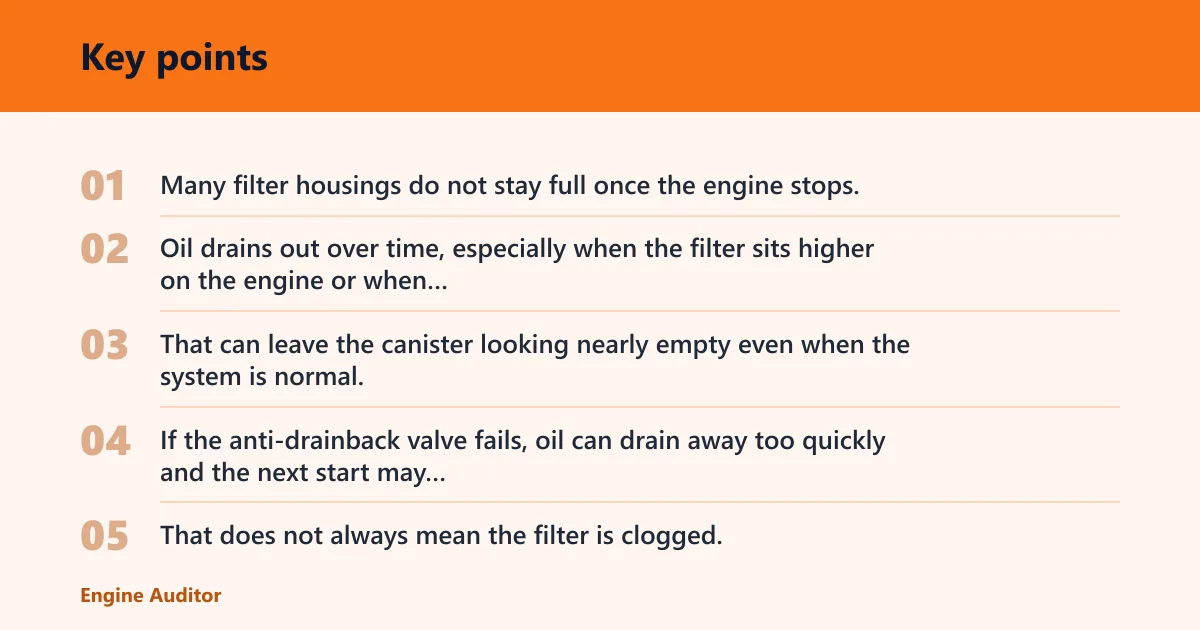
Many filter housings do not stay full once the engine stops. Oil drains out over time, especially when the filter sits higher on the engine or when the design does not trap much oil. That can leave the canister looking nearly empty even when the system is normal.
Faulty anti-drainback valve
If the anti-drainback valve fails, oil can drain away too quickly and the next start may be noisy. That does not always mean the filter is clogged. It can mean the filter cannot hold oil in place during shutdown, which shows up as cold-start ticking or delayed pressure after the vehicle sits overnight.
Housing design and normal appearance
Some filter assemblies and cartridge housings appear dry or only partly filled after shutdown by design. The key question is not whether the filter looks full at rest. It is whether pressure builds normally on startup and whether the engine shows leak, noise, or temperature symptoms.
When the filter is not the real problem
If the filter checks out, move to the parts that can imitate a clogged filter. A blocked pickup screen, a weak oil pump, a bad pressure sensor, or damaged wiring can all create pressure warnings, noise, or poor lubrication. A clogged filter can also coexist with one of these faults, so do not stop at the first symptom match.
Oil pickup screen restriction
The pickup screen sits in the sump and can collect sludge or debris. If it is restricted, the pump cannot feed the engine well, and the result can look like a bad filter. This is more likely when the oil is dirty, service has been delayed, or the engine has seen contamination after repairs.
Oil pump trouble
A failing pump can cause low or unstable pressure even when the filter is new. If pressure drops at idle and at speed, and the filter and oil level look correct, the pump becomes more likely. At that point, driving further can turn a minor warning into bearing damage.
Bad pressure sender or wiring
A failed sender or damaged wiring can light the warning lamp without a real pressure drop. That is why an OBD2 scanner is not always the main tool for this job the way it can be in some other faults; some vehicles do store relevant oil-pressure or sender-related fault data, but for oil pressure concerns, visual inspection and warning behavior matter more, and a sensor fault still needs confirmation. Never assume the light is false until you have checked the oil level and the filter area.
Collapsed media versus clogging
True clogging is only one failure mode. Filter media can be torn, crushed, or collapsed, and the canister can deform enough to disrupt flow. In that state, oil may bypass the media or starve the engine, even though the outside of the filter looks ordinary.
How often should you change the oil filter?
Follow the owner’s manual first. Many vehicles change the filter at every oil change, while some manufacturers advise changing the filter every other oil change. Example intervals commonly listed include about 3,000–7,500 miles, around 8,000 miles, 10,000 km, and 15,000 km, but the manual for the engine should take priority.
Why severe duty shortens filter life
Severe duty can load a filter faster. Short trips, dust, towing, stop-and-go traffic, and hot operation all increase contamination and can shorten service life. Neglecting oil filter changes can increase friction and engine stress. Oil change interval advice only works when it matches the use case.
When recent repairs can contaminate the filter
Oil changes after engine work can pick up debris left behind in the system. That contamination can load the filter early, even when mileage since the last service is low. If the engine recently had internal repairs, follow the service information closely and inspect the filter sooner rather than later.
Say your sedan gets an oil and filter change, then a warning light appears two days later and the drain plug area is dry. That points away from a simple leak and toward the wrong filter, a missing gasket, or a sender fault. The next step is inspection, not guessing.
Frequently asked questions
What happens when an oil filter is clogged?
When an oil filter is clogged, oil flow to the engine can become restricted and lubrication can suffer. The bypass valve may open so oil keeps moving, but that can send unfiltered oil through the engine. Low pressure, warning lights, and noise can follow.
How do I know if my oil filter is clogged?
Look for low oil pressure at idle, a pressure drop at speed, cold-start ticking, or a pressure light that comes on after service or long intervals. Then inspect the filter base, gasket, and part number. If pressure is normal, the bypass valve may be hiding the restriction.
Can a clogged oil filter cause low oil pressure?
Yes. A clogged oil filter can contribute to low or fluctuating oil pressure, especially at idle or under load. But low pressure can also come from low oil, a weak pump, a clogged pickup screen, or a sensor fault. Check the simple items before replacing parts.
Can a clogged oil filter make the engine overheat?
A clogged oil filter is not a common primary cause of coolant-temperature overheating. If temperature rises quickly, do not keep driving to “see what happens.” Shut the engine down and inspect the oil system after it is safe.
Can the bypass valve open if the filter is clogged?
Yes. When restriction rises, the bypass valve can open and let unfiltered oil circulate. That may protect flow and pressure for a short time, but it also means contaminants can keep moving through the engine. Normal pressure does not always mean normal filtration.
Products related to this article
Sponsored / affiliate links. As an Amazon Associate I earn from qualifying purchases. I may earn additional commission from eligible campaigns.