What Does a Bad Alternator Sound Like?
A bad alternator is often reported to make a whining, grinding, or growling noise that rises with engine speed; a squeal more commonly points to belt slip than to the alternator itself. Ignore it and the battery can run flat, the car can stall, and charging-system damage can spread. This guide separates alternator bearing noise, belt noise, and electrical charging faults so you can match the sound to the likely cause.
What noises point to alternator trouble?

- Measures AC/DC voltage, current, resistance, and continuity
- Includes diode testing for charging-system checks
- Backlit display helps in low light
A bad alternator can make a high-pitched whine or whir that rises and falls with engine RPM, or a deeper growl and grinding if the bearings are worn. Electrical faults can add a buzz or charging-system whine. Sound alone cannot confirm failure.
Whine and whir from worn bearings or charging faults
A whine or whir that tracks engine speed is one of the clearest alternator clues. It can point to bearing wear, diode issues, or a voltage regulator fault, especially if the noise starts near the front of the engine and changes with RPM. That pattern matters more than volume.
Growl or grinding when the bearings are failing
Worn alternator bearings can create a deeper growl or grinding sound. This is the noise type that deserves the most urgency, because advanced bearing wear can damage the alternator or disrupt belt operation. If the sound gets rough fast, shut the engine off and inspect the drive system before running it again.
Suppose the noise begins at idle after a cold start, then turns into a steady whir as you raise engine speed. That pattern leans toward alternator bearings or an internal charging fault, not a simple cabin rattle. If the sound becomes grinding, treat it as a prompt inspection item.
Buzz or electrical whine from charging faults
A buzz, electrical whine, or faint oscillating sound can come from charging faults rather than a worn pulley. A failing diode or voltage regulator may create noise plus charging symptoms. If the sound appears with dimming lights or a warning lamp, the alternator deserves a charging-system test, not guesswork.
How do you tell alternator noise from belt noise?
Alternator noise usually follows engine RPM and sounds like whine, whir, growl, or grind from the front of the engine. Belt noise usually sounds like a sharp squeal or chirp and often changes with cold starts, damp weather, acceleration, or sudden accessory load. The pattern helps separate the two.
Squeal, chirp, crack, fray, and glaze point to the belt
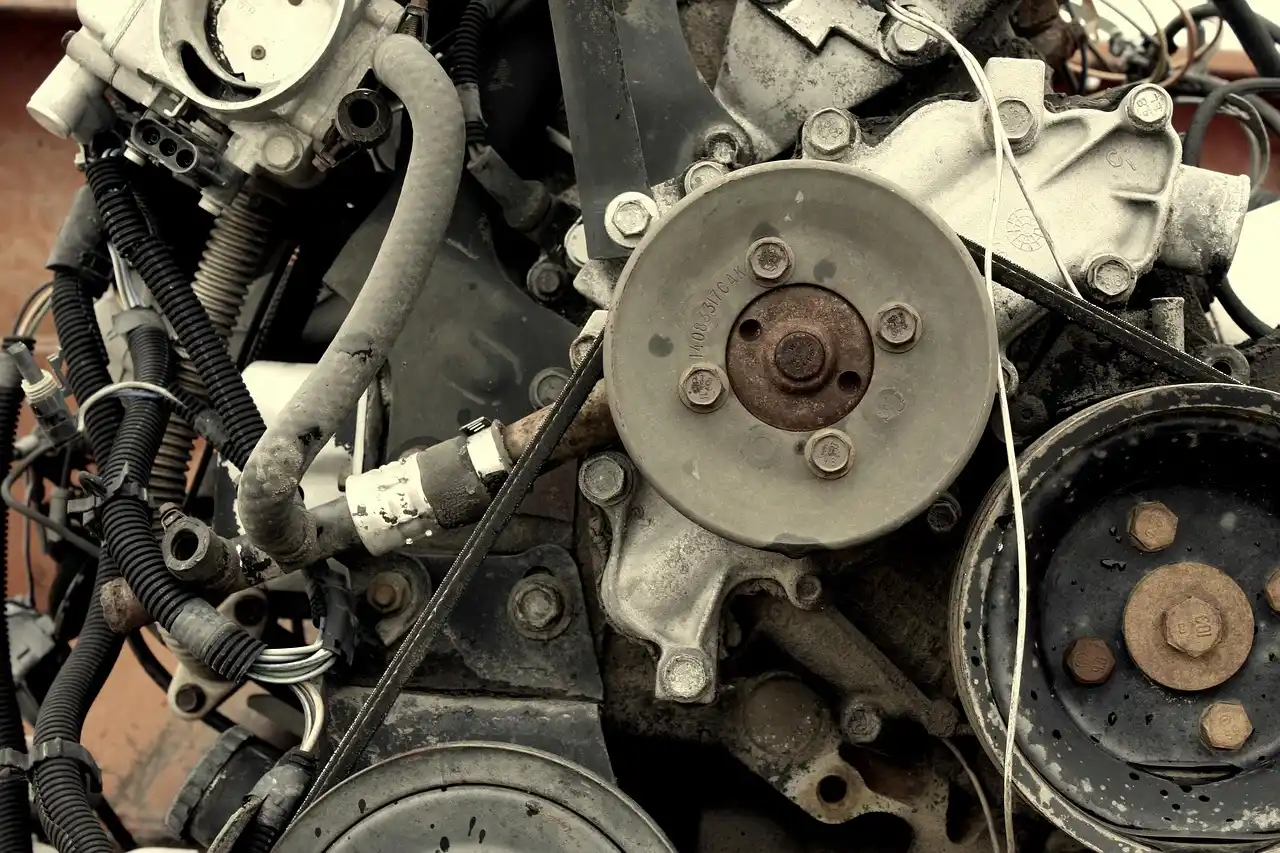
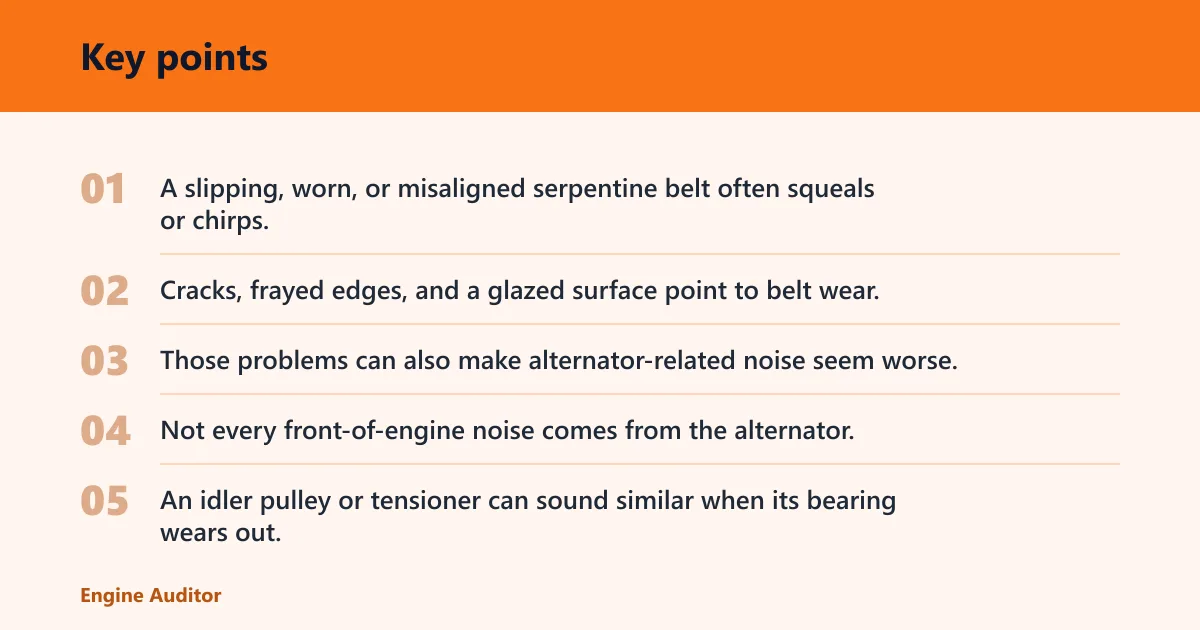
A slipping, worn, or misaligned serpentine belt often squeals or chirps. Cracks, frayed edges, and a glazed surface point to belt wear. Those problems can also make alternator-related noise seem worse, because the alternator is belt-driven and depends on that drive to spin correctly.
When a pulley or tensioner sounds like the alternator
Not every front-of-engine noise comes from the alternator. An idler pulley or tensioner can sound similar when its bearing wears out. That is why a mechanic’s stethoscope is useful: it helps isolate the noisiest accessory safely. Do not touch spinning parts with bare hands or improvised tools.
Picture a car that squeals for two seconds after a rainy cold start, then quiets down once the belt dries. That points more toward belt slip than alternator bearings. If the sound becomes a steady grind at all engine speeds, the diagnosis shifts toward a bearing or pulley issue.
Why RPM clues matter
Noise that changes with engine RPM is a strong clue for alternator trouble because the alternator is belt-driven from the serpentine belt. A constant squeal that appears mainly under load points more toward belt slip. A whine that rises and falls with speed points more toward the alternator itself or its bearings.
What else points to a bad alternator?
Noise is only one clue. Dimming or flickering headlights, weak dash illumination, and a battery-shaped, ALT, or GEN warning light are common signs of charging trouble. Loose battery cables and grounds can mimic those symptoms, so the whole charging path needs inspection.
Warning lights and dimming accessories
The battery warning light, ALT light, or GEN light means the charging system wants attention. If those lights appear with dim headlights, slow power windows, or a weak blower motor, the alternator moves higher on the list. The battery may still be fine; it just may not be getting charged.
Voltage regulator and diode symptoms
A voltage regulator can create charging-system symptoms when it fails. A faulty diode can also cause electrical noise or poor charging. These are not belt squeal problems. They are electrical faults inside the alternator or charging circuit, and they need testing rather than part-swapping.
Battery cables and grounds
Loose or corroded battery cables and grounds can mimic alternator failure. They can cause dim lights, warning lamps, hard starting, and odd charging readings. Inspect the terminals, ground points, and cable ends during diagnosis. A poor connection can make a good alternator look bad.
| Sound type | When it appears | Likely cause | Quick check | Urgency | Common lookalikes |
|---|---|---|---|---|---|
| Whine or whir | Rises and falls with engine RPM | Alternator bearing, diode, or regulator issue | Listen near the front of the engine with a mechanic’s stethoscope | Book service soon; higher urgency if lights dim | Idler pulley, tensioner, power steering pump |
| Growl or grinding | Present at idle and worsens with speed | Worn alternator bearing | Do not keep running it if the noise is severe | Stop driving now if it is harsh or getting louder | Failed pulley bearing, belt misalignment |
| Squeal or chirp | Cold starts, damp weather, acceleration, sudden load changes | Slipping, worn, cracked, frayed, glazed, or misaligned serpentine belt | Inspect belt condition and routing; confirm the belt drive per the manual | Book service soon; sooner if charging warning lights appear | Tensioner, idler pulley, alternator under heavy load |
| Buzz or electrical whine | With accessories on or when charging changes | Diode or voltage regulator fault | Use a multimeter for charging voltage and AC ripple; compare to service information | Book service soon | Loose grounds, weak battery, stereo interference |
| Battery warning lamp with dim lights | While driving or after startup | Charging fault, weak battery, wiring issue, or alternator failure | Check cables, grounds, belt drive, and charging output together | Stop driving now if the engine is stalling or the battery is not being charged | Battery that cannot hold charge, corroded connections |
| Battery vs alternator confusion | Cranking is weak, but noise may be absent | Battery state, alternator output, or both | Test battery condition, then charging voltage under load | Book service soon unless the car is stalling or the warning lamp is on solid | Starter issue, parasitic draw, loose terminal |
Bad alternator sound like checklist
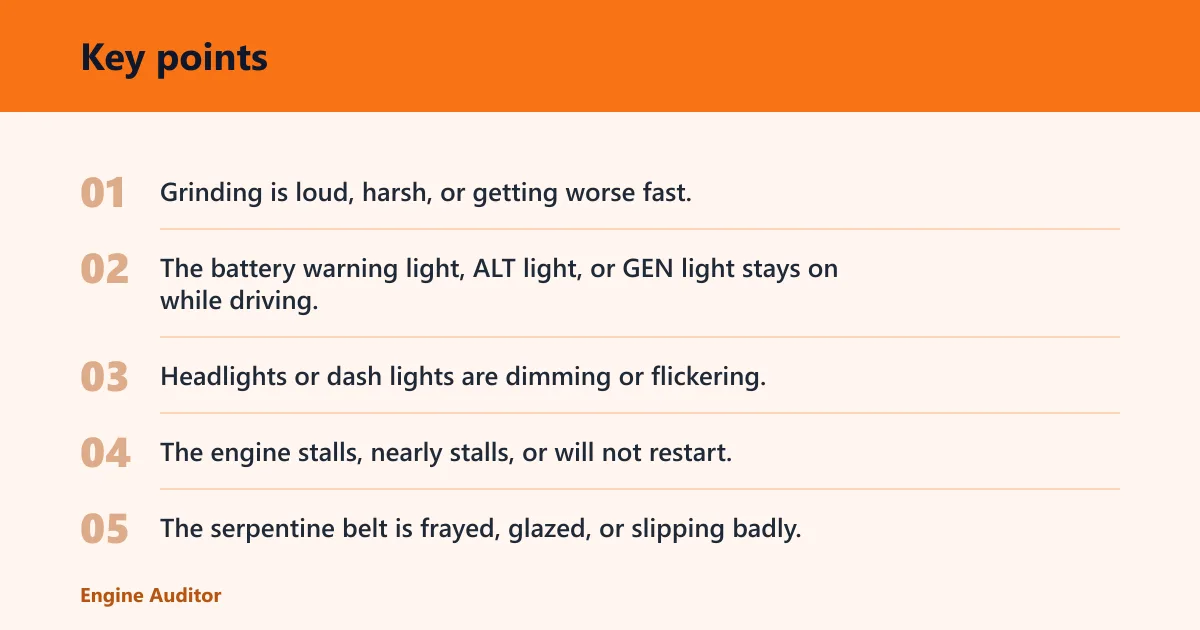
- Grinding is loud, harsh, or getting worse fast.
- The battery warning light, ALT light, or GEN light stays on while driving.
- Headlights or dash lights are dimming or flickering.
- The engine stalls, nearly stalls, or will not restart.
- The serpentine belt is frayed, glazed, or slipping badly.
- You smell burning rubber or electrical heat from the front of the engine.
How can you confirm the fault?
A charging-system test is the right next step. It should evaluate the alternator, battery, belt drive, wiring, and grounds together. That is the only practical way to separate a bad alternator from a weak battery or a bad connection. Sound alone cannot do that job.
Use a multimeter, but keep the limits in mind
A multimeter can be used to measure DC charging voltage and AC ripple. About 13-15 volts is only a broad reference range for some charging systems, and modern vehicles may use variable charging strategies. Service information and the correct test procedure matter more than a single number.
Never disconnect a battery terminal while the engine is running because voltage spikes can damage electronics. Follow the vehicle manual for test steps. If the charging system uses smart control, the reading may change with load, temperature, or battery state, so check the manufacturer’s listing for your model.
Use a mechanic’s stethoscope to isolate noise safely
A mechanic’s stethoscope can help isolate the noise safely at the alternator, idler pulley, or tensioner. That is better than unsafe contact methods near moving belts. Keep hands, clothing, and tools clear of the belt drive. If the noise is severe, stop the engine first.
Why belt drive, wiring, and grounds must be checked too
Alternator diagnosis fails when the rest of the circuit is ignored. A loose belt, bad tensioner, corroded cable, or poor ground can mimic alternator failure. The alternator is only one part of the charging path. The test has to include the whole path to be reliable.
Is it safe to keep driving?
It is unsafe to keep driving if the charging system is failing hard, the engine is stalling, or grinding is severe. If the alternator stops charging, the battery can drain quickly and the car may stall in traffic. Book service soon for mild noise without warning lights; stop driving now for major symptoms.
When to stop driving now
Stop driving now if the battery light stays on, the headlights are fading, the engine is stumbling, or the alternator noise becomes grinding. Those signs can mean the battery is about to go flat or the belt drive is at risk. A roadside tow is safer than pushing the system farther.
When to book service soon
Book service soon if you hear a whine, whir, or chirp but the car still starts normally and the warning lights stay off. That still needs diagnosis, because a bearing, belt, pulley, or regulator fault can get worse. Early repair is cheaper than a belt failure plus a dead battery.
Frequently asked questions
What does a bad alternator sound like?
A bad alternator often sounds like a whine, whir, growl, or grinding noise that changes with engine speed. A sharp squeal usually points more toward belt slip than the alternator itself. If the noise comes with dim lights or a warning lamp, a charging-system test is the next step.
Does a bad alternator make noise?
Yes. A failing alternator can make mechanical noise from worn bearings or electrical noise from charging faults such as diode or regulator problems. The sound may rise and fall with RPM. But sound alone cannot confirm the diagnosis, because pulleys, belts, and cables can create similar symptoms.
Do alternators make noise when going bad?
They often do. Worn alternator bearings can whine, whir, growl, or grind, and the noise usually follows engine RPM. Some failures are mostly electrical, so the alternator may be noisy or nearly silent while the battery warning light comes on and accessories dim.
How can I tell if my alternator is bad?
Look for a battery warning light, dim or flickering lights, weak accessories, or a noise that tracks engine speed. Then confirm it with charging-system testing that checks the alternator, battery, belt drive, wiring, and grounds together. A multimeter and service information help sort out the result.
How do I know if the alternator is bad or the battery is bad?
A weak battery can cause hard starting, but it does not usually create a front-of-engine whine or grinding noise. A bad alternator often adds charging lights, dimming accessories, and low charging output. Loose battery cables and grounds can imitate both, so inspect and test the whole system.
Is it safe to drive with a failing alternator?
Not for long, and sometimes not at all. If the battery is not charging, the car can stall once stored battery power is used up. If the noise is grinding or the warning light is on with dim lights, stop driving now. If symptoms are mild, book service soon.
Products related to this article
Sponsored / affiliate links. As an Amazon Associate I earn from qualifying purchases. I may earn additional commission from eligible campaigns.