Does Overfilled Oil Cause Smoke? Symptoms and Fixes
Yes, overfilled engine oil can cause smoke, and if the level is noticeably above the full mark in many passenger cars, it should be corrected before driving. Ignore it, and you can foul plugs, push oil into the intake, and turn a simple fix into a costly repair. This guide shows how to tell residual smoke from overfill-driven smoke, what to drain, and when to stop driving.
Smoke triage table


| Symptom | Likely cause | Immediate action | Next verification step |
|---|---|---|---|
| Brief haze right after an oil change, then it fades | Minor overfill, or oil residue in the exhaust after service | Check the dipstick on level ground with the engine warm. Drain excess oil if the level is above MAX. | Recheck the dipstick after a short idle and inspect for fresh smoke or leaks. |
| Thick white or blue smoke that keeps coming back | Severe overfill, aeration, or oil pushed into the intake | Shut the engine off and correct the level before more running. | Inspect the PCV system, intake tract, spark plugs, and oil filter. |
| Blue smoke after overfill on a turbo engine | PCV or separator/canister path has pulled oil into the intake | Do not keep driving until the oil level is corrected and the intake path is checked. | Inspect the PCV valve, oil separator, and intercooler piping if fitted. |
| Blue smoke that started before the oil change | Pre-existing oil-burning fault, such as worn rings, valve seals, or turbo seal wear | Do not assume the oil change caused it. | Track oil use, check plugs, and consider compression or leak-down testing. |
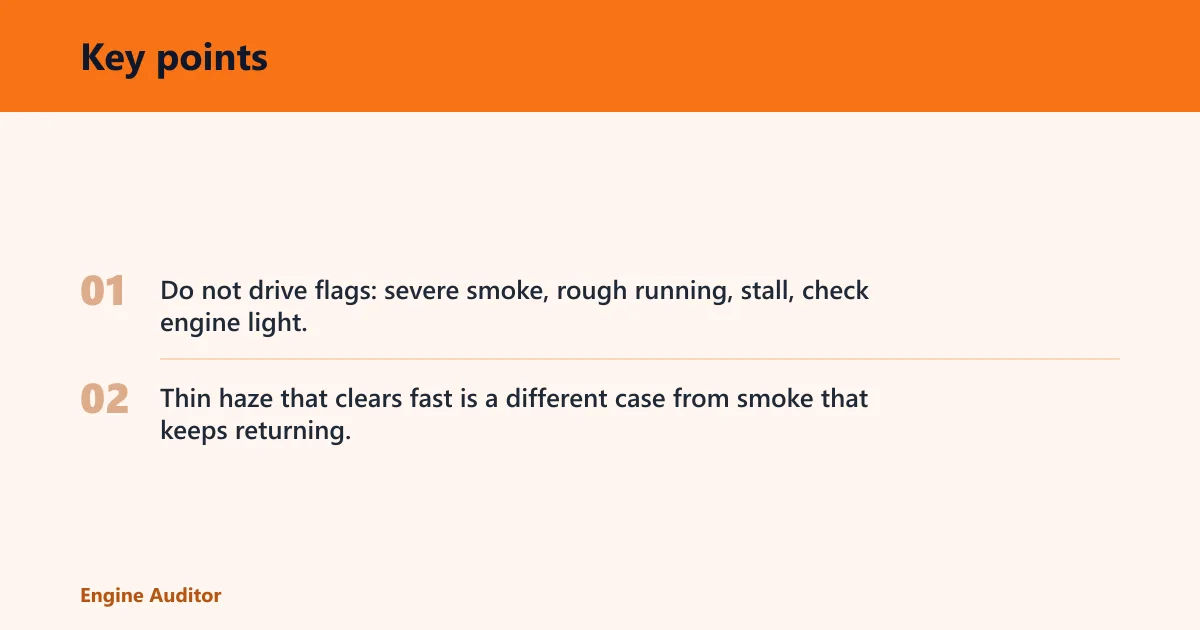
Do not drive flags: severe smoke, rough running, stall, check engine light, or oil level far above MAX. Thin haze that clears fast is a different case from smoke that keeps returning.
Minor overfill: brief smoke and what it usually means
A small overfill can create a short burst of blue or blue-gray exhaust smoke, especially right after startup or after a short idle. In many cases, the oil level is only slightly above MAX and the smoke fades once the extra oil burns off or the level is corrected.
That still matters. Overfilled oil can trap air and cut lubrication, and a spinning crankshaft can whip excess oil into foam. If the dipstick shows the oil above the full mark, fix it instead of waiting to see what happens.
Severe overfill: when smoke points to aeration or pressure rise
Severe overfill is different. When the oil level sits well above MAX, the crankshaft can whip oil into foam, pressure can rise, and the engine can start to run poorly.
That is the point where smoke is not just cosmetic. The engine may knock, tick, or feel loaded down, and the oil may no longer protect the moving parts the way it should. If the smoke is heavy, persistent, or paired with unusual noise, stop driving and correct the level first.
PCV or intake oil ingestion: why turbo engines can smoke longer
Some vehicles can pull excess oil into the intake through the PCV system. That can happen after an overfill, and turbo engines are especially worth checking because intake plumbing and separators can hold oil that later burns and makes blue smoke for longer than a brief overfill haze.
In that case, draining oil alone may not clear the symptom right away. The PCV valve, separator, or canister may need inspection, and the intake tract may need to be checked for pooled oil. If smoke continues after the level is corrected, do not assume the fix is complete.
Why excess oil can burn in the combustion chamber
When oil reaches places it should not, it can enter the combustion chamber and burn. That is why overfilled oil can cause blue smoke from the exhaust. The smoke may be temporary if the overfill was small, but continuous smoke suggests a broader contamination path.
What makes the smoke stop after the level is corrected
If the smoke came only from a small overfill, it often fades once the excess oil is removed and the engine clears itself. If oil has already reached the intake, spark plugs, or exhaust, the smoke may last longer and need follow-up checks before the problem is actually gone.
How can I tell if my engine oil is overfilled?
Check the dipstick on a flat surface after the engine has been shut off and given time to settle, since many manufacturers specify a shutdown-and-wait procedure. The oil should sit between the minimum and maximum, or fill, marks. Anything above MAX means the crankcase is overfilled.
Read the marks correctly between MIN and MAX
The dipstick marks are the reference, not the top of the shiny oil film alone. Pull the stick, wipe it, reinsert it fully, then read it again. If the oil reaches above the MAX or fill line, do not assume it is close enough. Small errors matter here.
How far above MAX is a warning sign?
Even a small rise above MAX is a reason to remove oil. A level around 1 quart high can matter in many passenger cars, and a much higher reading can increase the chance of foam, pressure rise, smoke, and rough running. The more it exceeds MAX, the more urgent the fix.
What symptoms come with too much oil?
Too much oil can cause smoke, rough idle, stall, noise, leaks, and a check engine light. It can also make the engine feel less responsive because aerated oil does not lubricate as well as liquid oil. Some vehicles show only one symptom at first.
A common mistake is to assume the smoke is from a bad sensor and ignore the oil level. A foamy dipstick reading, ticking, or a fresh oil leak beneath the vehicle can be just as important. Excess oil can contaminate spark plugs, and it can also lead to leaks beneath the vehicle.
Rough idle, stall, or misfire after an oil change
If the engine stumbles after an oil change, check the level before looking elsewhere. Oil-fouled spark plugs can misfire, and overfill can also trigger the check engine light. If the rough running began right after the service and the dipstick is high, the overfill is a strong suspect.
Foamy oil, noise, or pressure-related leaks
Foam on the dipstick, knocking, ticking, or oil pushed past seals points to pressure and aeration. Overfilled oil can create foam that harms lubrication, and too much oil can create unusual engine noises like knocking or ticking. That combination is not a normal “wait and see” condition.
When smoke is the only visible symptom
Sometimes smoke is the only visible clue. That can still come from overfill, but it can also mean the engine already had an oil-burning fault. If the smoke persists after the level is corrected, treat it as a separate problem until you confirm otherwise.
Why overfill can damage the engine
Overfill can damage the engine because the moving parts are forced to work through oil that should not be there. The crankshaft can whip excess oil into foam, which reduces lubrication and can increase friction and resistance. That raises the risk of internal wear and damage.
Pressure is part of the problem too. An overfilled crankcase can raise internal pressure and stress seals and gaskets. Excess oil can lead to engine overload, and too much oil can create a foam that harms lubrication.
Crankshaft aeration and foaming
When the oil level is high enough, the crankshaft can submerge into the oil and whip it. Foamy oil does not support bearings the same way a proper oil film does. That is why a simple top-off error can become a lubrication problem if it is ignored.
Internal pressure rise and seal stress
Raised pressure can push oil past weak points. That can mean leaks at seals, gaskets, or the oil filter area. If you see oil underneath the vehicle after an overfill, do not assume the leak is unrelated. Pressure from excess oil can be part of the cause.
Catalytic converter and spark plug contamination
Oil burned in the exhaust can contaminate the catalytic converter, and the risk increases when overfill is left unresolved. Spark plugs can also foul if excess oil reaches the combustion chambers or intake tract. That is one reason a quick drain can be only the first step, not the whole repair.
How do I remove excess oil safely at home?
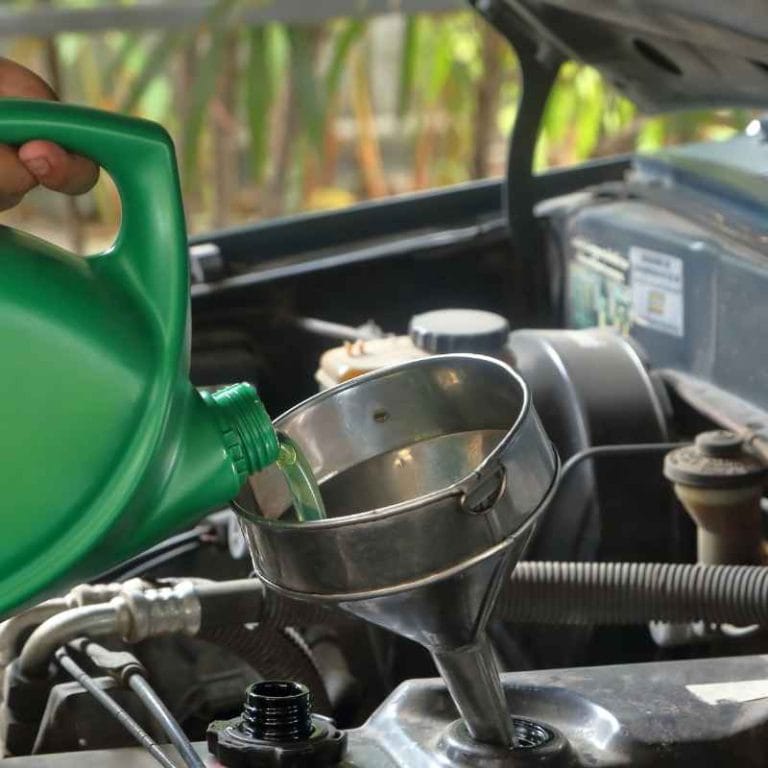
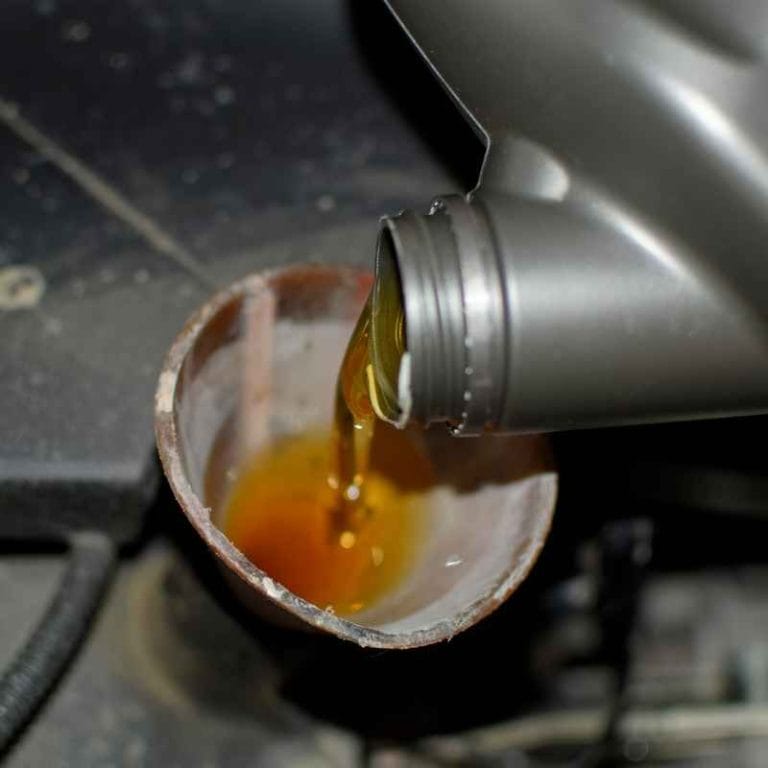
Drain the extra oil carefully through the oil pan drain plug, or use a pump or suction tool when access allows. Loosen the plug slowly. If you back it out too far, you can dump all the oil at once.
- Park on level ground and let the engine warm briefly, then shut it off.
- Check the dipstick to confirm the oil is above MAX.
- Place a drain pan under the oil pan drain plug.
- Loosen the plug just enough to let a small amount out, then retighten and wipe clean.
- Recheck the dipstick after the oil settles.
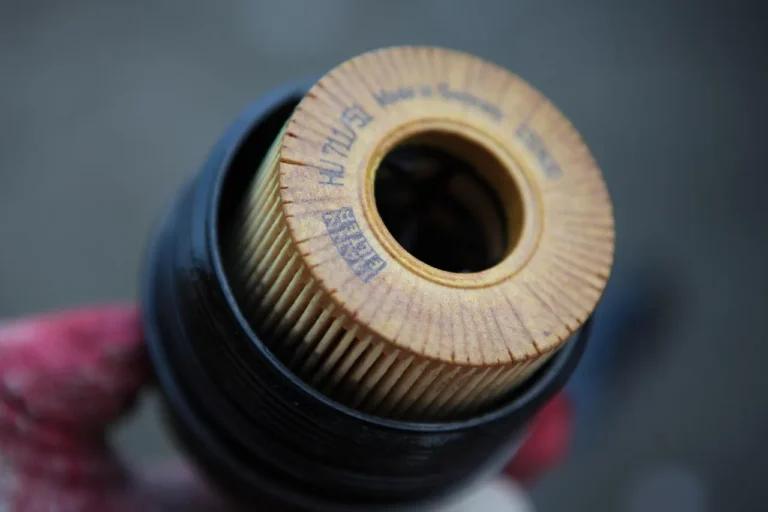
- Inspect the oil filter area for fresh seepage or damage.
If access is tight or you are not comfortable loosening the plug, a suction tool can remove small amounts in controlled steps. That is often easier than cracking the plug loose and hoping the flow stops where you want it.
Recheck the dipstick and inspect the oil filter
After removing oil, recheck the dipstick on level ground after the engine has been shut off and the oil has settled. Confirm the level now sits between MIN and MAX. If the filter was damaged, loose, or contaminated during the overfill event, inspect or replace it as part of the complete fix.
Should I drive if I think I added too much oil?
If the level is above MAX and the smoke is heavy, the idle is rough, or the check engine light is on, do not drive. Correcting the overfill first is safer than gambling on a short trip. If you cannot drain the oil safely, get a mechanic or towing help.
Say your sedan shows the oil 1/2 quart high and gives off a thin puff after startup. That is a different case from a truck that idles badly, leaves blue smoke in traffic, and shows oil above the top mark. The first needs a prompt correction. The second should stay parked.
Why blue smoke can appear after an oil change
Blue smoke after an oil change often means oil is being burned, but the route matters. It can come from a simple overfill, oil pushed into the PCV system, or a pre-existing fault that the service exposed. Turbo engines can be more sensitive because intake paths can hold oil and burn it later.
Suppose a turbo crossover is filled above MAX and then smokes blue at idle after a few minutes. Draining to the proper mark may reduce the smoke, but a PCV valve or separator that is carrying oil into the intake may still need inspection. If the smoke continues, look deeper.
Will draining the oil back to normal fix the rough running?
Sometimes, yes. If the rough running came from a mild overfill, correcting the level can restore normal operation once the engine clears excess oil. If spark plugs were fouled, the oil filter was damaged, or oil reached the intake, the rough running can continue after the drain.
That is why a flat dipstick reading is only the first checkpoint. If the engine still misfires, stalls, or smokes after the level is corrected, inspect the plugs, the PCV path, and the intake tract. Compression testing may be needed when the symptom does not resolve.
Frequently asked questions
Does overfilled oil cause smoke from the exhaust?
Yes. Overfilled oil can cause blue smoke from the exhaust, especially if the level is high enough for the crankshaft to whip the oil into foam or for oil to enter the intake. Brief smoke may fade after the level is corrected, but ongoing smoke needs more checks.
How much over the full mark is too much oil?
Any reading above the MAX or fill line is too much and should be corrected. A small excess may cause only brief smoke, while a larger overfill raises the chance of foaming, pressure rise, leaks, and rough running. If the level is clearly above the mark, remove oil before driving.
Can overfilled oil damage seals, spark plugs, or the catalytic converter?
Yes. Higher pressure can stress seals and gaskets, excess oil can contaminate spark plugs, and burned oil can damage the catalytic converter over time. The longer the overfill stays unresolved, the more chance there is for secondary damage, especially if the engine keeps running with smoke or misfire.
How do I check the dipstick correctly after an oil change?
Park on level ground, then shut the engine off and wait for the oil to settle before checking the dipstick. Pull the dipstick, wipe it, reinsert it fully, and read it again. The oil should sit between the minimum and maximum marks, not above them.
Products related to this article
Sponsored / affiliate links. As an Amazon Associate I earn from qualifying purchases. I may earn additional commission from eligible campaigns.