How to compare AWD vs FWD for winter driving: which fits
Choose AWD over FWD for winter only if your commute includes steep grades, unplowed roads, deeper snow, or repeated starts on slick hills; for many city and highway drives with proper winter tires, FWD is often enough. Pick the wrong setup and you spend more on fuel, tires, and repairs without stopping shorter. This guide compares traction, tire needs, costs, and the exact winter scenarios where AWD pays for itself.
This guide is part of our Car comparison guide series.
| Decision factor | How to compare AWD | FWD for winter driving | Winner |
|---|---|---|---|
| Launch traction on slick starts | Power reaches all four wheels, so it pulls away better on snow, slush, and icy ramps. | Power reaches the front wheels only, but engine weight sits over those driven wheels, which helps in normal winter commuting. | AWD |
| Stopping and turning on ice | Does not improve braking or cornering grip on ice. | Does not improve braking or cornering grip on ice either. | tie |
| Tire sensitivity | Depends heavily on tire choice; AWD on all-season tires can still slide badly. | With winter tires, it can outperform an AWD crossover on all-season tires. | FWD for winter driving |
| Purchase and running cost | Higher purchase price, more weight, lower fuel economy, and extra service items. | Lower purchase price and better fuel economy than AWD. | FWD for winter driving |
| Best winter use case | Best when traction at launch is the limiting factor: steep grades, deep snow, and poorly plowed routes. | Best when roads are mostly plowed and the driver can buy winter tires. | depends on route |
AWD vs FWD for winter driving: what changes, and what does not

AWD improves traction during acceleration, but not braking or turning. FWD sends power to the front wheels only, and the engine’s weight over those wheels helps with winter starts on normal roads. The real winter choice is usually AWD with all-season tires versus FWD with winter tires.
How FWD sends power to the front wheels only
Front-wheel drive sends engine power to the front axle, so the car pulls itself from the same end that carries much of the vehicle’s weight. That makes FWD a practical layout for sedans, hatchbacks, and crossovers, especially when roads are plowed and speeds stay moderate.
MotorTrend describes front-drive as the sensible-shoes choice. That fits winter commuting: predictable, affordable, and less demanding on tires and fuel than AWD.
How AWD sends power to all four wheels
All-wheel drive sends power to all four wheels, either full-time or on-demand. The point is launch traction. When one tire starts to slip, the system can route torque to tires with more grip and help the vehicle move off the line.
AWD adds weight and friction. I have seen that show up at the pump, in tire wear, and in service bills after the sale.
Why AWD helps launch traction, not braking or turning
AWD can improve traction during acceleration, but not braking or turning. That means it helps most when the winter problem is getting moving from a stop, not when the problem is stopping at a light or holding a line through a turn on glare ice.
That is where many shoppers get misled. A car that pulls away better can still slide through a curve or stop longer than expected if it rides on weak tires.
According to AWD vs FWD for Winter Driving: Do You Really Need AWD? — Winter tires stay flexible below 45°F (7°C).
Do you need AWD if you already use winter tires?

Usually no. Winter tires matter more than drivetrain on ice and packed snow, because their soft rubber compound stays flexible below 45°F (7°C) and their tread is built to move snow, slush, and water. On ice at 30 mph, winter tires reduce stopping distance by 20–30% versus all-season tires, and on packed snow they improve cornering grip by 25–40%.
Why winter tires matter more than drivetrain on ice and packed snow
All-season tires harden in cold temperatures and lose significant grip in winter. That changes the order fast. A well-tired FWD car can have more usable winter grip than an AWD vehicle still on all-seasons, and FWD with winter tires can outperform an AWD crossover on all-season tires.
That is the cleanest rule in winter shopping: tires control stopping and turning, and those are the moments that usually matter most.
Where AWD on all-season tires still falls short
AWD on all-season tires still leaves the car dependent on a tire compound that stiffens in the cold. Traction control systems help limit wheelspin, but they do not replace winter tires. They cannot create grip that the tire itself does not have.
This is why AWD can create false confidence. It helps the car move, then leaves the driver with weak braking and weak cornering once the road turns shiny or packed.
When FWD with winter tires is the better buy
FWD with winter tires is the better buy when roads are mostly plowed, snowfall is periodic rather than constant, and the route is flat or only mildly hilly. For city commuters, that setup usually buys more real winter control per dollar than paying for AWD and skipping tires.
Compact sedans and hatchbacks often fit this case well. They are common, light, and easier to outfit with dedicated winter tires than many larger crossovers.
What is the difference between AWD and 4WD?
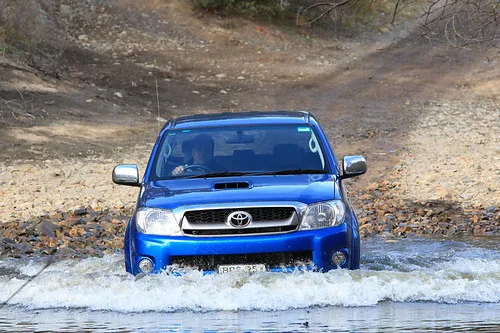
AWD and 4WD are not the same thing. AWD is built for regular road use, while 4WD is mechanically different, usually with a transfer case and low- and high-range gearing. 4WD is more off-road-focused and is usually the wrong comparison for a passenger car or crossover shopper.
Transfer case, low range, and high range in 4WD
4WD uses a transfer case to split power mechanically, and it often includes low range for slow, difficult terrain plus high range for normal driving. That extra hardware is useful in dirt, mud, rocks, and other low-speed situations that winter commuters rarely face.
MotorTrend distinguishes 4WD as off-road-focused with low- and high-range gearing. That matters because the winter shopper is usually comparing street traction, not trail capability.
Why shoppers cross-shop the terms incorrectly
People often ask for 4WD when they really want better winter launch traction. That is why the terms get mixed up at the dealer desk. For passenger cars and crossovers, the real choice is usually FWD versus AWD, then tire choice on top of that.
How much winter traction do you actually need?
The right drivetrain depends on where traction is lost first. If your roads are plowed quickly and salted often, FWD with winter tires is usually enough. If your drive includes steep grades, unplowed roads, deep snow, or repeated hill starts, AWD with winter tires starts to make sense.
City streets with quick plowing and salted pavement
City drivers usually face cold pavement, slush, and occasional packed snow more than deep accumulation. In that case, winter tires do most of the work, and FWD is often the sensible setup because it keeps costs down while covering the real hazard: stopping and turning on cold, wet pavement.
Rural roads, steep grades, and unplowed drives
Rural routes raise the bar. Hills, drifting snow, and slower plow response can make launch traction the limiting factor. That is where AWD pays for itself more often, especially if the driver cannot avoid early-morning starts on a slick grade.
Packed snow, slush, and black ice: the worst-case mix
Packed snow and slush punish weak tires first, then expose poor launch traction. Black ice is worse because neither drivetrain fixes a low-friction surface. In that mix, winter tires are the real control point, and AWD only helps one part of the problem.
Winter decision matrix: FWD, FWD plus winter tires, or AWD plus winter tires
Use this matrix to score the car you actually need, not the badge you like. Add the points across all six factors, then match the total to the recommendation at the bottom.
| Factor | 1 point | 2 points | 3 points |
|---|---|---|---|
| Road condition | Mostly plowed, salted pavement | Mixed plowed roads and light slush | Frequent packed snow, deep snow, or icy grades |
| Snowfall frequency | Light or occasional | Regular but short-lived | Frequent, heavy, or drifting snow |
| Hilliness | Flat routes | Some mild grades | Steep driveway or steep commute |
| Tire budget | Can afford winter tires | Can stretch for winter tires with rims | Cannot fit winter tires this season |
| Annual mileage | Moderate or low | Average | High mileage in winter regions |
| Ability to use winter tires | Yes, every winter | Sometimes | No practical way to swap tires |
How to read the score and make the buy
Add the six rows. A lower total tends to point to FWD, a middle total to FWD plus winter tires, and a higher total to AWD plus winter tires.
If the score says AWD but the tire budget is weak, the fix is usually not AWD on all-seasons. The fix is better tires, then a drivetrain only if the route still demands it.
Cost, fuel use, and ownership tradeoffs

AWD costs more to buy and more to run. AWD can add about $1,500–$3,000 to a new car purchase, and it may reduce fuel economy by 1–3 MPG versus the FWD version. FWD is usually cheaper at purchase and better on fuel, which matters if the car sees a lot of miles.
Purchase price difference between FWD and AWD
The drivetrain premium is immediate. Buyers often see AWD as a one-time winter expense, but it is really an upfront cost layered onto the car before any tire or maintenance decision is made. If winter traction needs are modest, that money often buys a better return when spent on tires first.
Fuel economy and weight penalty from AWD
AWD adds weight and friction, so the fuel economy penalty is real. The exact hit varies by vehicle, but the direction does not: FWD is usually the more efficient choice.
That matters most for commuters who keep the car for years. More fuel burned is not free winter insurance.
Maintenance and tire replacement costs shoppers miss
AWD systems may require all four tires to be replaced simultaneously, which can surprise buyers who expect to replace tires in pairs. Transfer case fluid changes are recommended every 30,000–60,000 miles, and rear differential fluid changes are also needed on the same interval.
A set of winter tires on steel rims can cost $600–$1,200. That expense exists for either drivetrain, but it often delivers more winter grip than paying for AWD and staying on all-seasons.
When is FWD enough for winter driving?
FWD is enough when roads are plowed well, snowfall is moderate, and the route is mostly flat. It is also enough for many compact sedans, hatchbacks, and crossovers when the driver can fit winter tires every season. In that setup, FWD is the low-cost winter answer that still handles the real hazards.
Good plowing, moderate snowfall, and flat routes
If the road network gets treated quickly, the biggest winter threat is usually lack of tire grip, not a lack of driven wheels. FWD handles that well because the front axle carries the engine weight and winter tires do the heavy lifting.
Drivers who can fit winter tires every season
Drivers who swap tires reliably can often skip AWD without giving up winter usability. That is because winter tires fix the basic grip problem, while AWD only addresses one slice of it. If the swap is realistic every year, FWD becomes much easier to justify.
Why many compact sedans and hatchbacks do fine with FWD
Compact sedans and hatchbacks are lighter, common, and often easy to pair with winter tires. They do not need a badge to manage winter commuting. They need good tires, sensible speeds, and a route that is not constantly buried or steep.
Frequently asked questions
awd vs fwd winter driving
For winter driving, AWD helps most when the problem is getting moving on snow, slush, or icy hills. FWD is usually enough when roads are plowed and winter tires are fitted. Neither drivetrain shortens braking on ice; tires do that work.
what’s better for winter fwd or awd
FWD is better when cost matters and roads are mostly maintained. AWD is better when repeated launches on steep or poorly plowed roads are the real problem. If winter tires are in play, FWD often closes most of the gap for everyday commuting.
Does AWD help more than winter tires in snow?
No. Winter tires usually matter more because they improve braking, cornering, and general grip in cold weather. AWD mainly helps with acceleration traction. On packed snow and ice, tire compound and tread design decide far more of the result than the driven-wheel count.
When is FWD enough for winter driving?
FWD is enough when snowfall is moderate, streets are plowed, and the route is not steep. Add winter tires and it becomes a strong winter setup for city and highway use. The limit shows up first on unplowed hills, deep snow, or repeated stop-and-go starts.
How much more does AWD cost to own than FWD?
AWD can add about $1,500–$3,000 to a new car purchase, and it may reduce fuel economy by 1–3 MPG versus the FWD version. Some AWD systems also bring extra service items, including transfer case and rear differential fluid changes on a 30,000–60,000-mile interval.
What is the difference between AWD and 4WD?
AWD is a traction system for regular roads, often full-time or on-demand. 4WD is mechanically different, usually with a transfer case and low- and high-range gearing. For winter shoppers in cars and crossovers, AWD is the relevant comparison, not 4WD.
Verdict
Choose FWD for winter driving if your roads are mostly plowed, your hills are mild, and you can buy winter tires. Choose AWD plus winter tires if your route includes steep grades, unplowed roads, deep snow, or repeated slick starts where launch traction is the limiting factor.
For most buyers, the smarter order is tires first, drivetrain second. AWD is worth paying for only when the winter route still beats up FWD after proper winter tires are already in place.
Products related to this article
Sponsored / affiliate links. As an Amazon Associate I earn from qualifying purchases. I may earn additional commission from eligible campaigns.