How Do You Dispose of Old Antifreeze?
Take old antifreeze to a household hazardous-waste site or an auto-parts store that accepts coolant. Never pour it into a drain or onto soil, and send contaminated coolant to hazardous-waste collection. Dumping it wrong can poison water, break local rules, and create cleanup costs. This guide gives you a simple decision tree by coolant type, contamination level, volume, and local drop-off rules.
This guide is part of our Car Cooling System Problems: Overheating, Coolant Leaks, Fan and Gauge Faults Explained series.
What you’ll need

- Absorbs coolant spills 3x faster than standard pads
- Reusable up to 5–7 times with rinsing
- Tear-proof for heavy equipment or repeated use
- A clean, sealed, compatible container, preferably HDPE
- A permanent marker and a label
- Gloves and absorbent material for drips
- A funnel used only for coolant waste, if needed
- The phone number or web listing for your local household hazardous-waste site
- The phone number for nearby auto-parts stores or service centers
Identify the coolant first
Start by checking what you have and how dirty it is. Used antifreeze is also called engine coolant, and after use it may be toxic or hazardous because it can contain metals, rust, oil, fuel, and other contaminants. Keep it separate from brake fluid, engine oil, washer fluid, and other automotive chemicals.
Ethylene glycol coolant
Ethylene glycol is the traditional antifreeze base. It is highly toxic if ingested, and its sweet taste can attract pets and wildlife. Treat any leftover mix with the same care you would give to a hazardous chemical spill.
Propylene glycol coolant
Propylene glycol is less toxic than ethylene glycol, but it still needs proper disposal. Do not pour it into a drain, onto soil, or into a storm sewer. Lower toxicity does not mean safe release.
Check for contamination
Look for oil sheen, fuel smell, heavy rust sludge, brake fluid, or mixed fluids. Clean used coolant may have a better chance of being accepted for recycling. Contaminated coolant is more likely to be rejected or sent to hazardous-waste handling.
Where should you take used antifreeze?
The right destination depends on contamination and local rules. For many homeowners, a household hazardous-waste facility is the most reliable option. Clean used coolant may be accepted by an approved recycling program or an auto-parts store drop-off, but policies vary by location and some sites may limit container size or total gallons.
Where to take old antifreeze
| Waste type | Contamination level | Likely destination | Call-ahead questions | Rejection risks |
|---|---|---|---|---|
| Clean used coolant | Low; no oil, fuel, or sludge | HHW facility, recycling program, or auto-parts drop-off | Do you accept used coolant from personal vehicles? Is this container type allowed? Is there a gallon limit? | Unlabeled jug, wrong container, mixed fluids |
| Oil-contaminated coolant | High; mixed with oil or other chemicals | HHW facility only, if accepted | Do you accept coolant contaminated with oil or brake fluid? Is special packaging required? | Many recycling programs reject contaminated fluid |
| Small DIY quantities | Usually low to moderate | Local auto-parts store or HHW site | What is the maximum amount per visit? Do you require proof of residency? | Store does not take coolant, or has a strict volume cap |
| Larger flush volumes | Can be clean or contaminated | HHW facility or approved recycling program | What is your gallon limit? Can you accept several gallons at once? Do you need an appointment? | Volume above local limit, no appointment, unsuitable container |
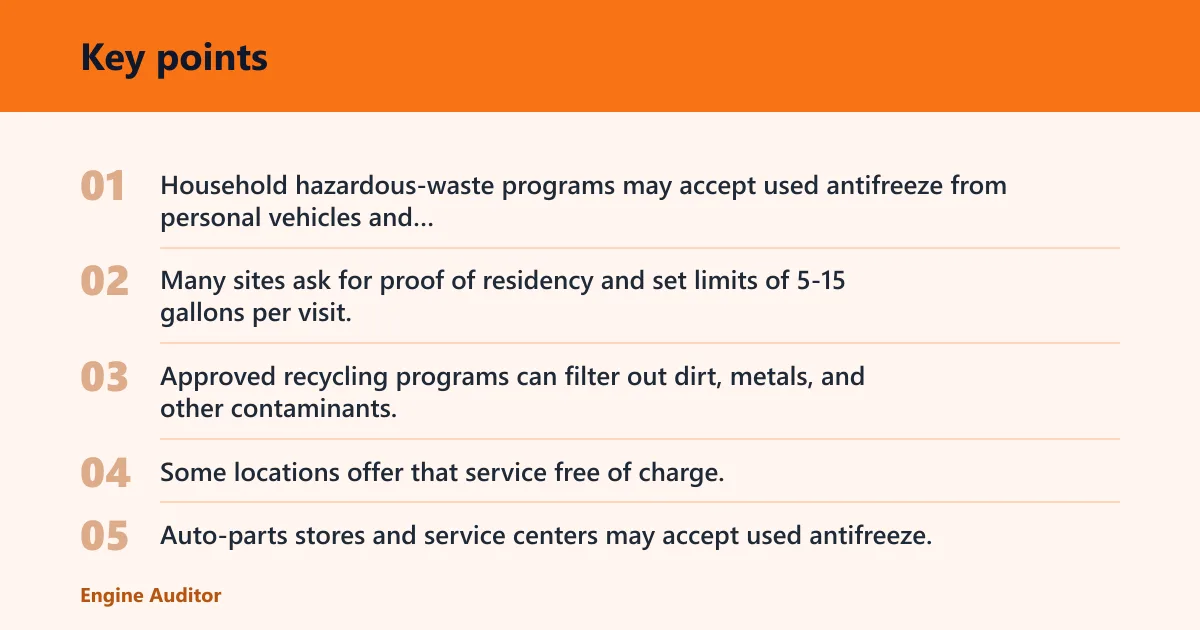
Household hazardous-waste programs may accept used antifreeze from personal vehicles and some contaminated coolant mixtures. Many sites ask for proof of residency and set limits of 5-15 gallons per visit. Approved recycling programs can filter out dirt, metals, and other contaminants, then turn used antifreeze into new coolant. Some locations offer that service free of charge.
What to expect from auto-parts drop-off
Auto-parts stores and service centers may accept used antifreeze, but no national retail chain accepts it at every store. Availability varies by location. Call ahead before loading the jug into your car, because container rules, volume caps, and accepted contamination levels can differ from one store to the next.
How do you dispose of old antifreeze?
Choose the destination in this order: a local household hazardous-waste site, an approved recycling program, or an auto-parts store that confirms acceptance. For clean coolant, recycling is often possible. For oil-contaminated or mixed-fluid coolant, plan on hazardous-waste collection rather than recycling.
How do you properly dispose of old antifreeze?
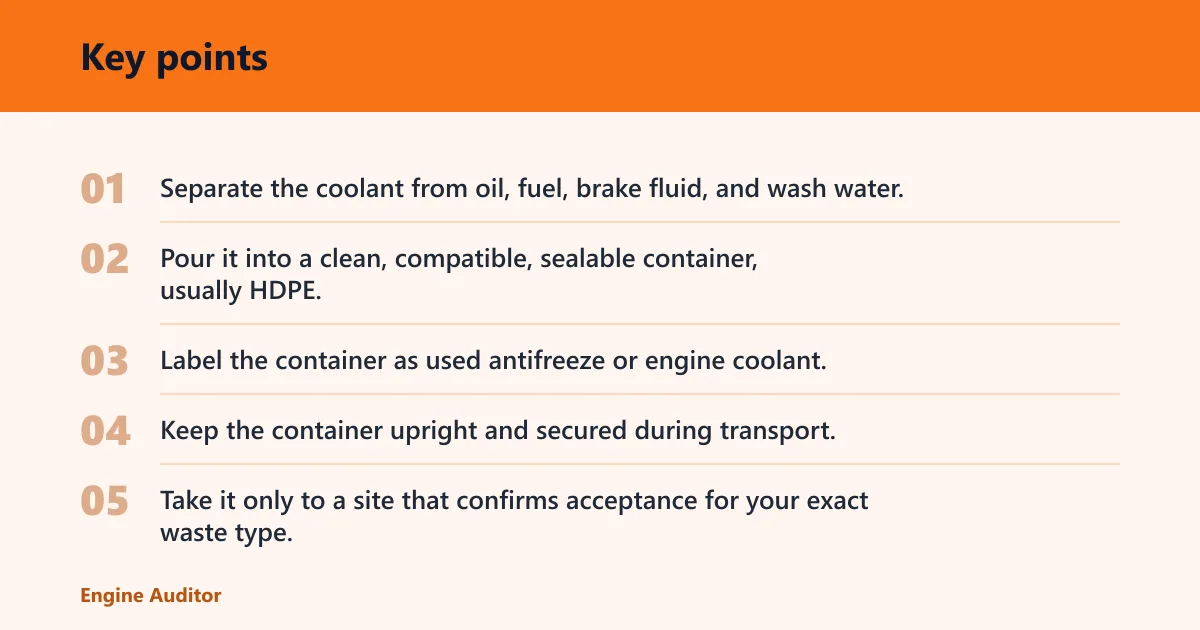
- Separate the coolant from oil, fuel, brake fluid, and wash water.
- Pour it into a clean, compatible, sealable container, usually HDPE.
- Label the container as used antifreeze or engine coolant.
- Keep the container upright and secured during transport.
- Take it only to a site that confirms acceptance for your exact waste type.
How do you dispose of used antifreeze?
If the coolant is clean, a recycling program may be the best fit. If it is dirty, oily, or mixed with other fluids, use hazardous-waste collection instead. One gallon of antifreeze can contaminate one million gallons of fresh water, so the wrong outlet can create a large pollution problem from a small amount of waste.
How do you dispose of old coolant?
Old coolant follows the same path as old antifreeze because the terms are closely related in practice. Most engine coolant is a mixture of antifreeze and water, often around a 50:50 ratio. Treat any used batch as waste until a local facility confirms it can recycle or collect it.
How do you prepare it for drop-off?
Preparation keeps the waste from being rejected and keeps the transport safe. The main goals are simple: keep fluids separate, use a proper container, and confirm the site’s rules before you leave. A common first-timer mistake is assuming any plastic jug will do.
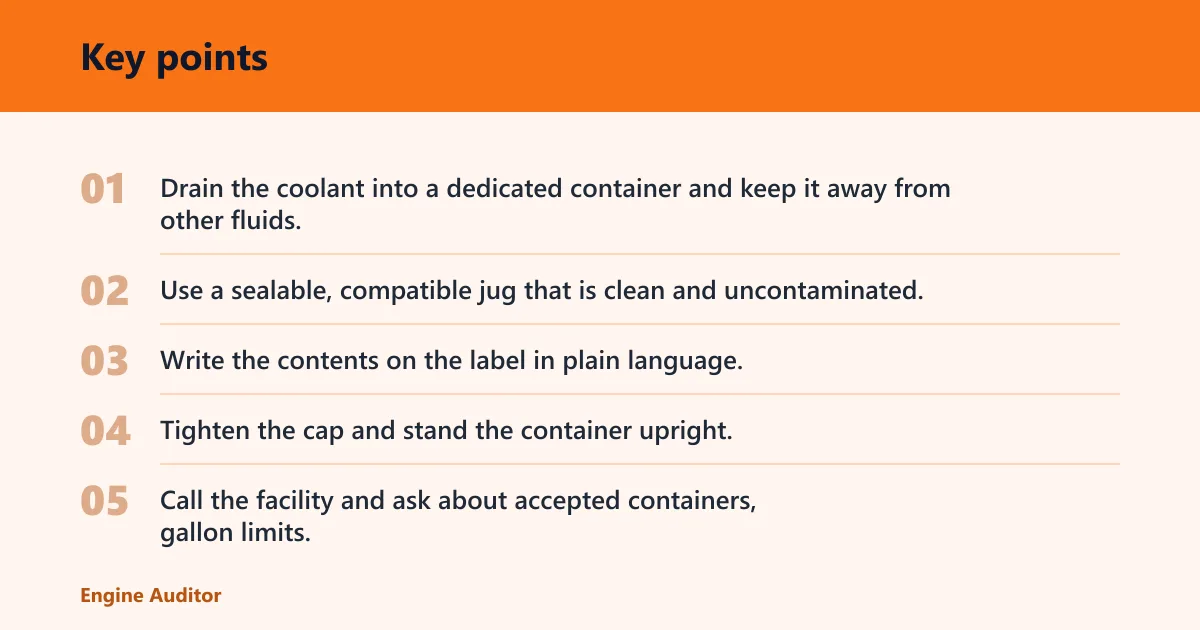
- Drain the coolant into a dedicated container and keep it away from other fluids.
- Use a sealable, compatible jug that is clean and uncontaminated.
- Write the contents on the label in plain language.
- Tighten the cap and stand the container upright.
- Call the facility and ask about accepted containers, gallon limits, and contamination rules.
Suppose you have about 2 gallons left after a flush and the liquid looks clean and bright. That batch may fit a local recycling program or store drop-off if the site accepts coolant. If the same 2 gallons has an oily film, expect a hazardous-waste answer instead.
Say your repair leaves about 8 gallons in a drain pan. That amount may exceed a store limit even if the coolant is clean. A household hazardous-waste site is more likely to handle the full volume, but only if it accepts that much per visit and the container meets its rules.
How do you dispose of old antifreeze near me?
Search your city or county waste pages for household hazardous-waste drop-off, auto-parts coolant collection, or recycling centers that list antifreeze. Then call before you drive over. Ask whether they accept personal-vehicle coolant, whether proof of residency is needed, and whether contaminated coolant is refused.
What should you do with the empty container?
Do not assume the jug belongs in recycling. Some sites may accept only the coolant and want the container kept separate. Others allow a triple-rinsed container if it is part of their packaging rules. The answer depends on the receiving program, not on a general rule.
Check whether triple-rinsed jugs are accepted
Ask the site whether the empty jug can go with household recycling, be reused for the same coolant stream, or must go out with trash. If the original container held oily or contaminated coolant, acceptance rules often become stricter.
Separate the container from the coolant waste
Keep the waste jug closed until drop-off. If the facility wants the coolant in one bin and the empty container elsewhere, follow that setup exactly. Do not leave drips or residue on the outside of the jug.
Common mistakes
Most disposal problems come from three errors: the wrong outlet, the wrong container, or mixed fluids. Avoiding those mistakes saves time and keeps the waste from being rejected.
- Pouring coolant into a drain, storm sewer, toilet, sink, gully, or outside drain
- Emptying antifreeze onto soil or a driveway
- Mixing coolant with oil, fuel, brake fluid, or other chemicals
- Using an unsealed, cracked, or unlabeled container
- Skipping the call-ahead check on container size, residency, or contamination rules
- Assuming every auto-parts store accepts coolant
Do not pour antifreeze into a drain, storm sewer, or onto the ground. Those routes are prohibited or illegal in many places and can contaminate groundwater and wastewater systems. Used antifreeze can be hazardous after use, so keep it contained until a local site accepts it.
Prevention is simple here: after each coolant drain, label the waste jug right away and store it apart from other automotive fluids. That one habit prevents accidental mixing and makes the next drop-off much easier.
Frequently asked questions
Does AutoZone dispose of old antifreeze?
Sometimes, but not at every location. Call the store first and ask whether it accepts used coolant, whether there is a gallon limit, and whether contaminated fluid is refused. A store that takes motor oil may still reject antifreeze or mixed-fluid coolant.
Can I recycle old antifreeze?
Yes, if the coolant is clean enough and the local program accepts it. Recycling centers can filter out metals, dirt, and some contaminants, then make new coolant from the recovered fluid. If the coolant is oily, fuel-contaminated, or sludge-filled, recycling acceptance is much less likely.
Can I pour antifreeze down the drain?
No. Never pour antifreeze into a drain, toilet, sink, gully, or outside drain. That can damage wastewater systems and pollute water. Use a collection site that accepts used coolant instead, and keep the fluid separate from other chemicals until then.
How do you dispose of old antifreeze near me: check your city, county?
Check your city, county, or waste authority site for household hazardous-waste drop-off and coolant recycling options. Then call the facility and ask about residency proof, gallon limits, and whether the coolant must be clean. Nearby store drop-off may exist, but local acceptance still controls the answer.
Products related to this article
Sponsored / affiliate links. As an Amazon Associate I earn from qualifying purchases. I may earn additional commission from eligible campaigns.