What Does a Failing Water Pump Sound Like?
A failing water pump can make a whining, grinding, chirping, or rumbling noise from the front of the engine, and if that noise comes with coolant loss or the temperature gauge starts climbing, it is commonly advised to pull over and stop the engine. Driving on can overheat the engine, warp the head, and turn a cheaper repair into a major one. This guide matches the sound pattern, engine condition, and warning signs to the most likely pump failure mode.
What different water pump noises mean
A failing water pump often starts as a high-pitched whine, then moves into rattling, clicking, squeaking, or a low rumble as the bearing wears. The sound usually comes from the front of the engine and often changes with RPM. If the tone grows louder with engine speed, the pump bearing is a strong suspect.
Noise patterns and what they usually mean
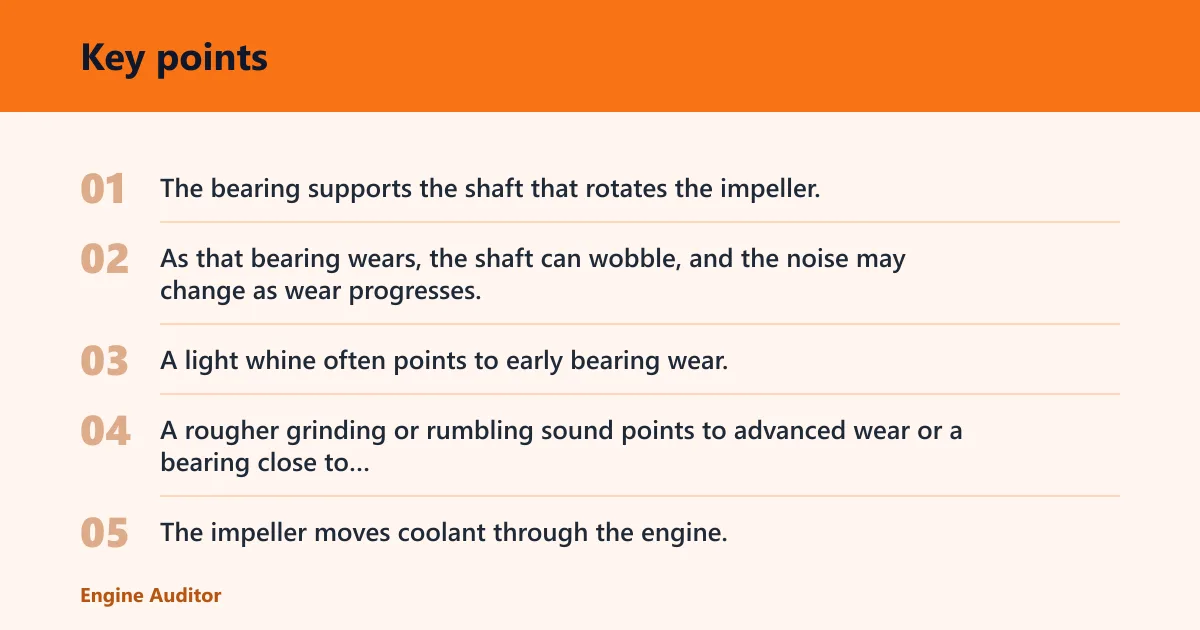
The bearing supports the shaft that rotates the impeller. As that bearing wears, the shaft can wobble, and the noise may change as wear progresses. A light whine often points to early bearing wear. A rougher grinding or rumbling sound points to advanced wear or a bearing close to seizure.
The impeller moves coolant through the engine. If it corrodes or loses blades, the pump may fail internally without an external leak. In that case, the noise may be mild or absent while temperature climbs. Sound helps, but it is not enough by itself.
Water pump noise matrix
| Noise type | When it happens | Likely cause | Likely non-pump lookalike | Do not confuse with | Stop-driving threshold |
|---|---|---|---|---|---|
| High-pitched whine | Idle, acceleration, steady cruise | Worn water pump bearing | Alternator bearing | Alternator whine that rises with electrical load | Stop if temperature rises or coolant is low |
| Whine that grows with RPM | Acceleration | Worn water pump bearing | Serpentine belt or idler pulley | Belt squeal from pulley misalignment | Stop if the gauge moves into the hot zone |
| Rattling or clicking | Idle, cold start, low speed | Loose bearing or shaft play | Timing cover noise | Timing component rattle | Stop if the noise becomes harsh or temperature climbs |
| Grinding or rumbling | Steady cruise, acceleration | Advanced bearing wear | Accessory pulley noise | Alternator or AC compressor bearing | Stop driving soon; seizure risk is high |
| Squeak or squeal | Cold start, acceleration | Misaligned pulley from shaft play | Serpentine belt slip | Belt squeal from misalignment | Stop if overheating follows the noise |
| Light hiss with residue | After shutdown, near pump housing | Seal failure at the weep hole | Radiator hose seep | Coolant dripping from another front-end part | Stop if coolant loss is visible or the gauge rises |
Say your sedan starts making a whine only when you pull away from a stop, then the coolant gauge climbs above its usual middle mark on the same trip. That pattern points more toward pump wear than a random belt chirp, especially if the sound stays tied to engine speed instead of road speed.
What does a bad water pump sound like when accelerating?
When accelerating, a bad water pump often makes a whining noise that rises with RPM. A squeal can also appear if shaft play has let the pulley drift out of line. If the sound appears mainly during throttle input and fades at steady cruise, that pattern fits pump bearing wear or pulley misalignment.
Why acceleration changes the sound
Higher RPM loads the bearing and can make a worn pump easier to hear. A healthy pump bearing keeps the shaft centered. A worn one lets the shaft move enough to alter belt tracking, which can add squeal on top of the base whine.
That same acceleration pattern can come from the serpentine belt, so do not treat it as proof by itself. Belt slip, an idler pulley, and the alternator can all create front-engine noise. The difference is that pump noise often tracks engine speed and may pair with coolant symptoms.
Is it the pump or the belt?
Front-engine belt noise can sound very close to a bad water pump. The serpentine belt can transmit pulley noise that mimics pump noise, and belt squeal can come from pulley misalignment. A pump-related sound often seems centered near the pump housing and may come with temperature or circulation symptoms.
How to separate pump noise from belt and accessory noise
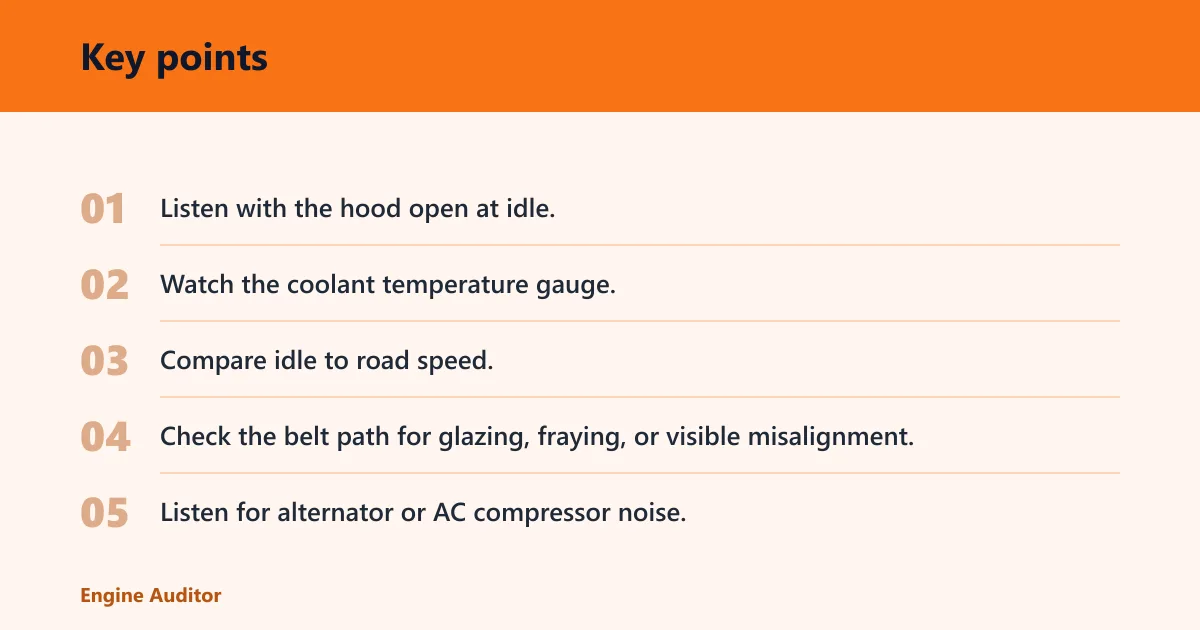
- Listen with the hood open at idle. Note whether the noise comes from one front corner or the center of the engine.
- Watch the coolant temperature gauge. A steady climb, a swing upward, or movement into the hot zone matters more than a single brief spike.
- Compare idle to road speed. Belt slip often changes with load and moisture; pump bearing noise often follows RPM more steadily.
- Check the belt path for glazing, fraying, or visible misalignment.
- Listen for alternator or AC compressor noise, which often changes when electrical or HVAC load changes.
Using a mechanic’s stethoscope safely
A mechanic’s stethoscope can help isolate bearing or pulley noise. Touch the probe to the pump housing, the idler bracket, or nearby accessory housings while the engine idles, then compare the sound. Keep the probe and your hands far from moving belts and pulleys.
If the loudest point is the pump housing, that supports a bearing diagnosis. If the noisiest spot is another accessory, the pump may be innocent. This check helps, but it does not replace a temperature check or a leak inspection.
What other symptoms point to pump failure?
Noise becomes more convincing when it lines up with overheating, coolant loss, or weak heat from the cabin heater. A bad water pump can overheat the engine if it stops moving coolant. Typical coolant operating temperature is stated as 195°F to 220°F, so repeated movement into the hot zone deserves attention.
Temperature gauge behavior
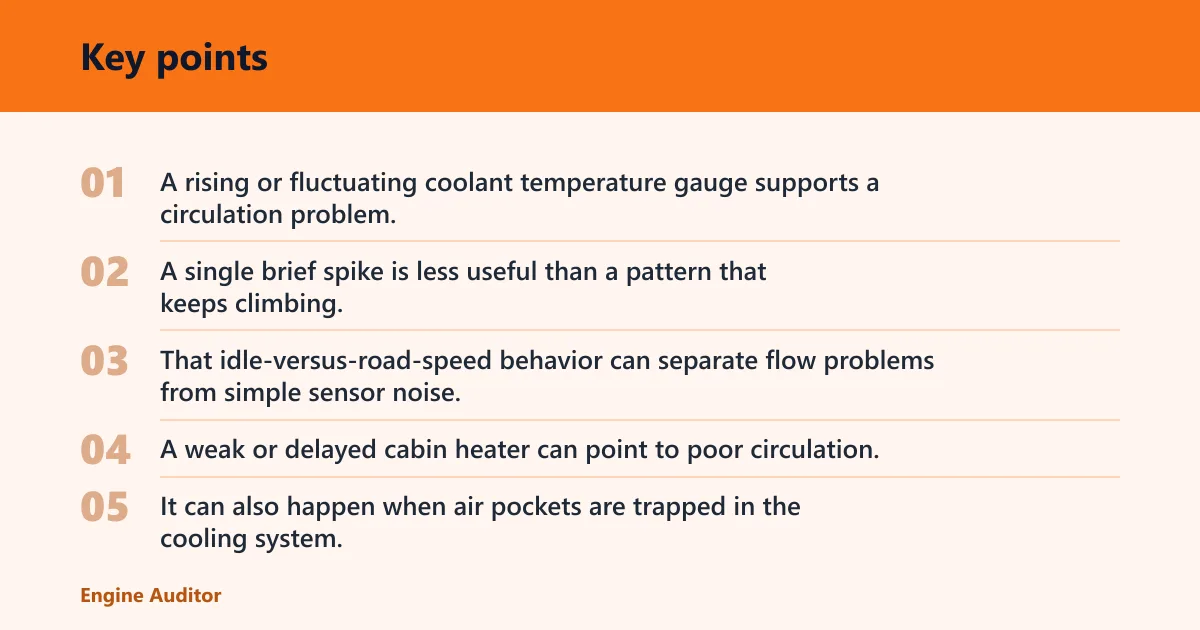
A rising or fluctuating coolant temperature gauge supports a circulation problem. A single brief spike is less useful than a pattern that keeps climbing, dips at highway speed, then rises again at idle. That idle-versus-road-speed behavior can separate flow problems from simple sensor noise.
Cabin heater clues
A weak or delayed cabin heater can point to poor circulation. It can also happen when air pockets are trapped in the cooling system, so it works as supporting evidence, not proof alone. If the heater goes cold while the gauge climbs, the system may not be moving coolant well.
Leaks, steam, and the weep hole
A water pump may leak through a small weep hole when internal seals fail. Fresh coolant at that hole is a strong warning sign. A bad pump can also leave stains on the housing or crusted residue around the front of the engine. Steam from the engine bay means stop driving.
Suppose a pickup idles at a job site and the heater starts blowing lukewarm air while the gauge creeps upward, but there is no puddle under the truck. That can still fit a pump problem, because an impeller can fail internally without an external leak, and air pockets can blur the picture.
Can a bad water pump sound like rod knock?
It can be mistaken for rod knock, especially if the pump bearing is badly worn and the sound turns into a heavy rumble. The difference is location and rhythm: pump noise usually stays at the front of the engine and changes with belt speed, while rod knock comes from inside the engine and often changes more with load than with accessory rotation.
Why the two noises get confused
A low-frequency grinding or rumbling from a water pump can sound deep enough to worry you about internal engine damage. Rod knock is usually tied to engine load and can be heard more clearly under throttle, while pump noise often stays tied to the accessory drive area.
If the sound gets harsher fast, the temperature gauge climbs, or the engine begins to overheat, stop driving. A seized pump can take the belt with it and leave you stranded. Rod knock is also serious, but the repair path is different, so proper location matters.
What does a bad water pump look like?
Visible clues include coolant stains, crusty residue, pulley wobble, and fresh coolant near the weep hole. A bad water pump does not always leak enough to leave a puddle. You may see dampness on the pump housing before you ever see liquid under the car.
Inspection points at the front of the engine
- Look for wet coolant trails below the pump housing.
- Check the weep hole for fresh coolant.
- Inspect the pulley for wobble or uneven belt tracking.
- Look for rust, mineral crust, or pink, orange, or green residue around the housing.
- Check the belt for glazing or contamination.
What the impeller can hide
The impeller can corrode or lose blades and still look fine from the outside. That means a pump can fail internally without an obvious leak. In that case, sound may be mild or absent, but the engine may still run hot, especially at idle or in slow traffic.
Failing water pump sound checklist
Use this checklist before deciding whether the car can move under its own power. If the gauge is rising, the heater is weak, or fresh coolant is visible at the pump, treat the situation as active, not theoretical.
- Check the coolant temperature gauge for rising or fluctuating movement.
- Look for steam, coolant smell, or fresh wetness at the front of the engine.
- Check the coolant level only when the engine is cool enough to inspect safely.
- Scan for related fault codes with an OBD-II scanner. Use it to rule out sensor problems, not to confirm pump failure.
- Listen at idle and during light throttle for a whine, rattle, squeak, or rumble from the pump area.
- If safe, use a mechanic’s stethoscope to compare the pump housing with nearby accessories.
- Decide based on the full pattern, not one clue alone.
The OBD-II scanner can help if a sensor fault is making the gauge look odd, but it does not directly confirm pump failure. The gauge, heater behavior, leak evidence, and noise pattern matter more.
Frequently asked questions
What does a failing water pump sound like in a car?
A failing water pump in a car usually sounds like a whine, squeak, rattle, grinding, or rumble from the front of the engine. A worn bearing is the most common noise source. If the sound rises with RPM and the temperature gauge starts moving up, treat it as a warning.
What does a failing water pump bearing sound like?
A failing water pump bearing can produce a high-pitched whine at first, then rattling, clicking, squeaking, or a low grinding rumble as wear gets worse. The sound usually comes from the front of the engine and follows RPM more than road speed. Advanced wear can lead to seizure.
What does a bad water pump look like on a car?
Look for coolant residue, wet stains, pulley wobble, or fresh fluid at the weep hole. A bad pump does not always leave a puddle under the car. Internal impeller failure can also happen without obvious external leakage, so a clean driveway does not rule it out.
Can a water pump fail without a puddle under the car?
Yes. A pump can fail through worn bearings or a damaged impeller without leaving a puddle. Coolant may seep only at the weep hole, or the pump may stop circulating coolant internally while the outside stays mostly dry. Rising temperature and weak heater output add important context.
Products related to this article
Sponsored / affiliate links. As an Amazon Associate I earn from qualifying purchases. I may earn additional commission from eligible campaigns.