Can You Drive a Car with a Blown Head Gasket?
Yes, but only for a short, low-speed move to a safe spot if the engine stays cool, oil and coolant stay separate, and the car is not misfiring badly; otherwise, do not drive it. Ignoring the fault can warp the cylinder head, seize the engine, or contaminate the oil. This guide explains when to move it, when to stop driving, and when to call a tow.
Can you drive it at all?
Yes, but only in a narrow case. Driving with a blown head gasket is not recommended, and there is no safe distance that applies to every car. If the car only needs to roll a few feet, that is different from road driving. If the temperature warning comes on, do not drive.
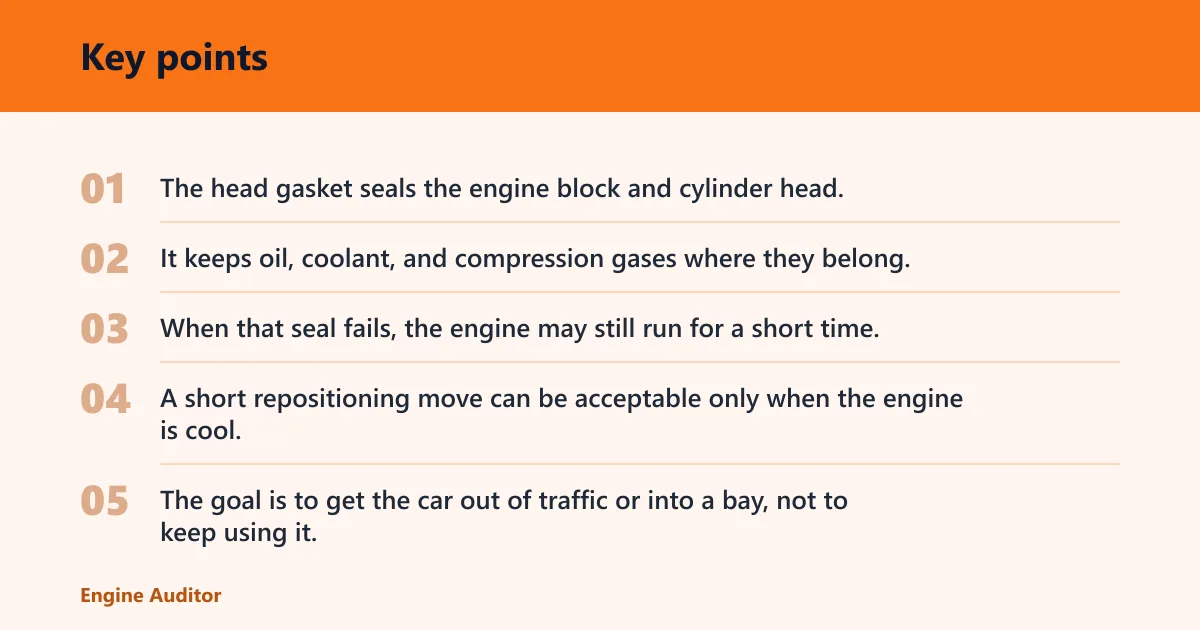
The head gasket seals the engine block and cylinder head. It keeps oil, coolant, and compression gases where they belong. When that seal fails, the engine may still run for a short time, but the failure path controls how quickly the risk rises.
Move a few feet versus drive on the road
A short repositioning move can be acceptable only when the engine is cool, the warning lamps are off, the coolant reservoir is not bubbling, and the oil looks normal. The goal is to get the car out of traffic or into a bay, not to keep using it.
If the car is overheating, misfiring heavily, or blowing thick white smoke after warm-up, that is not a repositioning case. Shut it off and arrange a tow.
How a head gasket fails
Failure does not happen in one shape. The common paths are coolant into a cylinder, combustion gases into the cooling system, oil-to-coolant mixing, and leakage between cylinders. Each path creates a different symptom pattern and a different risk level.
That is why a car can still run normally for a short time and still be in serious trouble. A combustion-gas leak can lead to total gasket failure quickly.
| Symptom | What it suggests | What to test next | Why | Immediate risk level | Next action |
|---|---|---|---|---|---|
| Engine overheating or temperature warning | Cooling system is under stress; head gasket breach may be forcing gases into coolant or starving the engine of cooling | None roadside if hot; after cool-down, pressure test and combustion-gas test | Overheating can warp the cylinder head or crack the block | High | Do not drive; tow now |
| Thick white exhaust smoke after warm-up | Coolant entering a cylinder and burning; coolant smell often present | Cooling system pressure test, then combustion-gas test | Thick white smoke after warm-up is not normal and points away from cold vapor | High | Do not drive; tow now |
| Milky oil on the dipstick or under the oil filler cap | Coolant mixing with oil | Do not run the engine further; check oil and coolant condition only after shutdown | Oil contamination can damage bearings fast | High | Do not drive; tow now |
| Coolant reservoir bubbling with loss of coolant | Combustion gas entering the cooling system | Combustion-gas test, then pressure test | Pressurized combustion gas can push coolant out and raise temperature quickly | High | Do not drive; tow now |
| Rough running with a single-cylinder misfire, but no overheating yet | Cylinder sealing loss or coolant entering one cylinder | Compression test and leakage follow-up | Misfires can result from a blown head gasket and can become worse under load | Moderate to high | Move only a very short distance if needed; otherwise tow |
| External coolant loss with no smoke and stable temperature | May be an external leak rather than a head-gasket breach | Cooling system pressure test first | The pressure test helps separate external leaks from internal ones | Moderate | Move a short distance only if temperature stays normal; then repair |
How bad is a blown head gasket?
How bad is a blown head gasket? Bad enough that you should treat it as an engine-threatening fault, not a minor leak. A failed gasket can let coolant enter the combustion chamber, mix oil with coolant, or let combustion pressure into the cooling system. Any of those paths can turn a running engine into a damaged one fast.
The danger is not the gasket alone. It is the chain reaction. Overheating can happen, and once the temperature rises enough, the cylinder head can warp or the block can crack. Continued driving can also contaminate the oil and destroy lubrication.
Why the same fault can look mild at first
Some engines will idle and move around a parking lot before the problem becomes obvious. That does not make the failure minor. A cylinder can lose sealing before the temperature needle climbs, especially if the leak starts small or only opens when the engine is loaded.
Say your sedan starts, idles, and moves six parking spaces without drama, then begins pushing white smoke after a minute of warm-up. That pattern still fits an active coolant-to-cylinder leak, even though the car seemed fine at first.
Signs that mean stop now
Engine overheating is the clearest stop-driving signal. Milky oil is another. Coolant reservoir bubbling, persistent coolant loss, and a temperature warning also mean the fault has moved beyond a simple diagnostic question. At that point, the safest move is to shut the engine off.
Overheating or a temperature warning
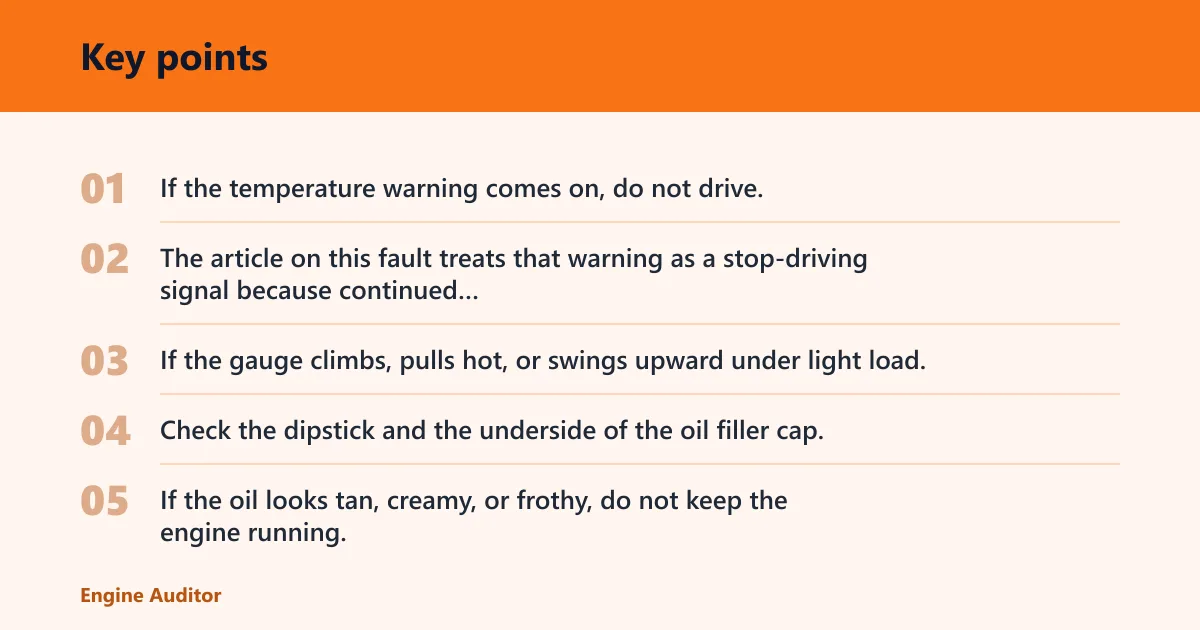
If the temperature warning comes on, do not drive. The article on this fault treats that warning as a stop-driving signal because continued running can warp the cylinder head or crack the block. If the gauge climbs, pulls hot, or swings upward under light load, stop and let it cool without opening the system while hot.
Milky oil on the dipstick or under the oil filler cap
Milky oil points to coolant mixing with oil. Check the dipstick and the underside of the oil filler cap. If the oil looks tan, creamy, or frothy, do not keep the engine running. That contamination can move through the bearings and shorten engine life quickly.
Coolant reservoir bubbling and steady coolant loss
Bubbling in the reservoir can indicate combustion gas entering the cooling system. It often appears with overheating, and it may be caused by a pressurized cooling system that is being fed by cylinder pressure. If coolant loss continues and the tank keeps bubbling after warm-up, stop driving.
White smoke or coolant smell?
Thick white smoke after warm-up often indicates coolant entering a cylinder, and a coolant smell can be part of the same fault. Normal cold-start vapor should fade as the engine warms. If the smoke stays thick after warm-up, or the tailpipe odor has a sweet coolant note, treat it as a warning sign rather than normal condensation.
Cold-start vapor versus true white smoke
Cold vapor is light, brief, and common on cool mornings. True head-gasket smoke is thicker, lasts after the engine has warmed, and may leave a coolant smell. That difference matters. Do not confuse a few seconds of normal steam with smoke that keeps returning after the engine reaches temperature.
What a coolant smell usually points
A coolant smell with white smoke often points to coolant entering a cylinder or exhaust stream. It can happen even without a visible leak under the car. If the smell appears with overheating, misfires, or coolant loss, treat the car as a stop-driving case.
Picture a hatchback that starts with a light steam cloud on a cold morning, then clears in a minute. That is usually ordinary vapor. Add a sweet coolant smell, a rising temperature gauge, and white smoke that stays after warm-up, and the symptom pattern changes completely.
Head gasket symptoms and next steps
The question is not only whether the engine still runs. It is which failure path is active and how severe the symptom is. A car with external coolant loss may need a short move to a repair spot. A car with overheating, milky oil, or reservoir bubbling should be stopped and towed.
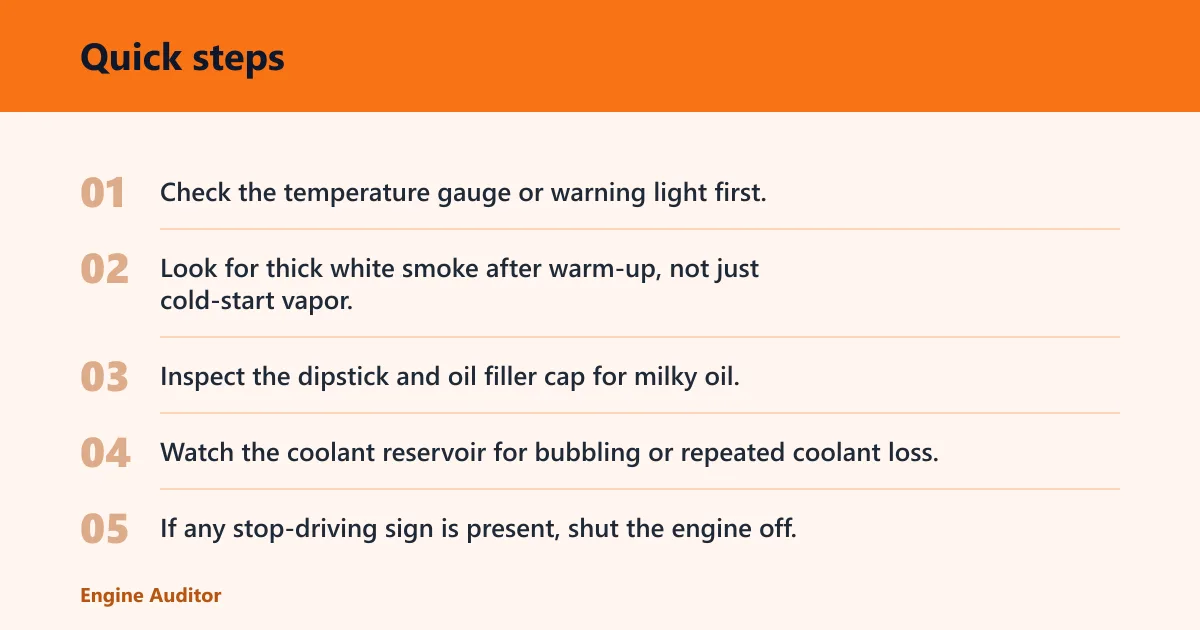
- Check the temperature gauge or warning light first.
- Look for thick white smoke after warm-up, not just cold-start vapor.
- Inspect the dipstick and oil filler cap for milky oil.
- Watch the coolant reservoir for bubbling or repeated coolant loss.
- If any stop-driving sign is present, shut the engine off.
- Arrange a tow unless the car only needs a very short repositioning move with normal temperature and clean fluids.
Can a head gasket blow without overheating?
Yes. A head gasket can fail without an immediate temperature spike. Coolant can enter a cylinder, combustion gas can enter the cooling system, or oil and coolant can mix before the gauge climbs. That is why running temperature alone is not a complete screen for the fault.
Do not use “it still starts” or “it still idles” as proof that the problem is mild. A leaking gasket can still be serious even when the engine seems usable for a short time.
Which test to do first?
The most useful first checks are a cooling system pressure test and a combustion-gas test. The pressure test helps find hidden leaks and helps separate external coolant loss from internal loss. The combustion-gas test checks the coolant for hydrocarbons and can help indicate a head-gasket problem.
Cooling system pressure test
This is often the best first step when coolant loss is part of the story. It can show whether the system loses pressure to an external leak or into the engine. It is especially useful when the car is not actively overheating at the moment of inspection.
Combustion-gas test
If the reservoir bubbles, the car overheats, or you suspect combustion pressure in the cooling system, this is the key confirmation test. It looks for combustion gases in the coolant and is often the quickest way to support a head-gasket diagnosis.
Compression test and leak-down follow-up
A compression test helps confirm loss of cylinder sealing and can identify affected cylinders. It is a strong follow-up when misfires, rough running, or one-cylinder symptoms are present. A leak-down test can narrow the fault further, but it usually follows the first confirmation steps rather than replacing them.
Keep the cooling system in shape. Fix coolant leaks early, service the thermostat and radiator when needed, and do not ignore a rising temperature gauge. Avoid repeated overheating. That is the path that most often turns a repairable cooling fault into a head gasket failure.
If the engine overheats once, treat it seriously even after the car cools down. Repeated hot running can damage the head gasket, the cylinder head, and the block itself.
Frequently asked questions
Can you drive a car with a blown head gasket?
No safe distance can be guaranteed, and driving with a blown head gasket is not recommended. If the engine is overheating, the oil is milky, or the reservoir is bubbling, do not drive. A very short move may be possible only when the car stays cool and the fluids remain separate.
Will a car run with a blown head gasket?
Often, yes, at least for a short time. A car can still idle or even move under light load while the gasket is failing. That does not mean it is safe to keep driving. The fault can worsen quickly, and combustion-gas leaks can lead to total gasket failure quickly.
What happens if a head gasket blows?
The engine may overheat, misfire, lose coolant, make white smoke, or show milky oil. In some cases, the cooling system starts bubbling as combustion gas enters it. The exact result depends on which sealing path failed, but none of them are good for continued driving.
Is my head gasket blown?
You cannot confirm it from one symptom alone. Overheating, white smoke after warm-up, milky oil, coolant smell, and bubbling in the reservoir are strong clues, but the best confirmation comes from a combustion-gas test and a cooling system pressure test. Compression testing can help after that.
Products related to this article
Sponsored / affiliate links. As an Amazon Associate I earn from qualifying purchases. I may earn additional commission from eligible campaigns.