Is a Coolant Flush Really Necessary?
A coolant flush is needed only when the coolant is overdue, contaminated, or the wrong type for your vehicle’s cooling system. Skip a needed flush, and corrosion, clogged passages, overheating, and a larger repair bill can follow. This guide explains when a flush makes sense, when a drain-and-fill is enough, and when a cooling fault needs diagnosis first.
What a coolant flush can and cannot do
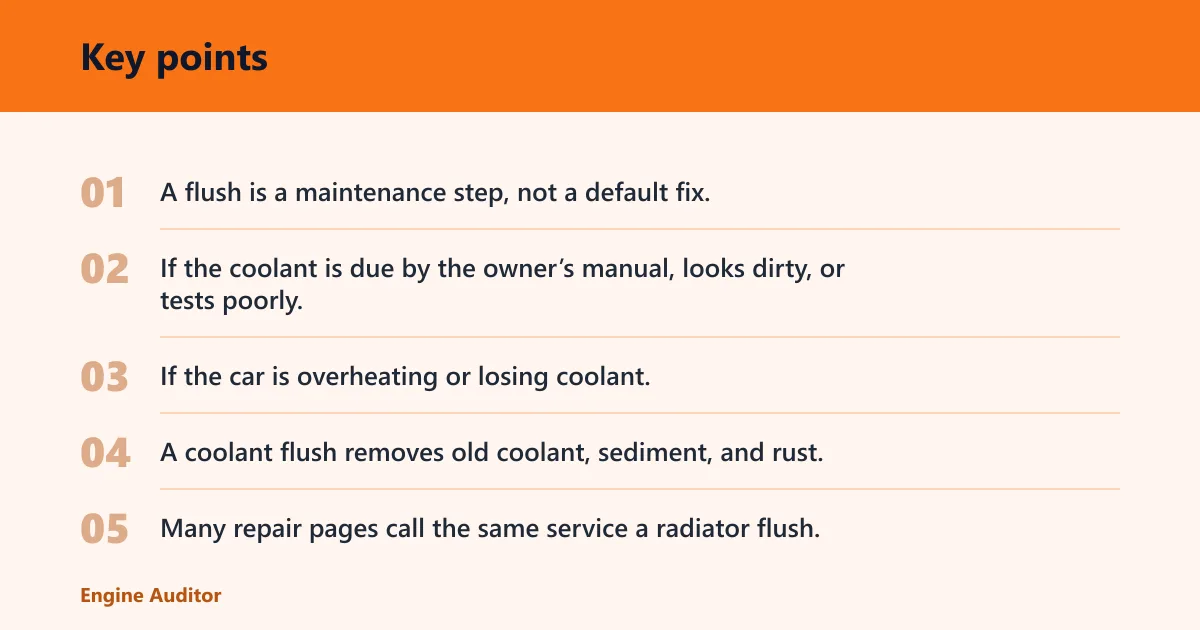


Sometimes yes. Often, no. A flush is a maintenance step, not a default fix, and the right call depends on coolant type, service interval, contamination, and whether the system has a separate problem such as a leak, thermostat fault, or water pump issue.
If the coolant is due by the owner’s manual, looks dirty, or tests poorly, a flush can be the cheapest way to protect the cooling system from rust and corrosion. If the car is overheating or losing coolant, diagnosis should come first so you do not pay for service that cannot solve the real fault.
What the service can and cannot do
A coolant flush removes old coolant, sediment, and rust, then refills the system with the correct coolant mix. Many repair pages call the same service a radiator flush, and some shops pair it with a drain-and-fill when they are cleaning the cooling system and renewing the fluid.
It can help restore heat transfer and corrosion protection. It generally will not repair a cracked hose, stop a leaking radiator, fix a failed thermostat, correct a bad water pump, or resolve head-gasket symptoms by itself.
Coolant flush basics
The engine cooling system includes the radiator, hoses, water pump, heater core, and engine passages. Those parts depend on clean fluid for heat transfer and corrosion protection, because neglected coolant lets rust, scale, and acidic byproducts circulate where they should not.
When corrosion inhibitors wear out, the coolant protects metal parts less well. Sediment and rust then matter more. They can cut flow through narrow passages, coat surfaces that should transfer heat, and raise the chance of overheating.
Why many pages call it a radiator flush
Radiator flush is a common label for the same basic service. It usually means the cooling system is cleaned, old coolant is removed, and fresh coolant is installed. The wording varies by shop, but the maintenance goal is the same: remove worn fluid and protect the system.
That label can mislead if it sounds narrower than it is. A full cooling-system service reaches more than the radiator alone, because the coolant also moves through hoses, the water pump, the heater core, and engine passages.
Does your coolant type change the answer?
Yes. Coolant chemistry matters, and vehicle-specific recommendation matters more than color. IAT, OAT, and HOAT formulas are treated differently. Mixing incompatible types can shorten service life and create maintenance problems that a routine flush is meant to avoid.
IAT, OAT, and HOAT in plain terms
Conventional green coolant is described as IAT formula. Older systems often used that type, while many newer vehicles specify OAT or HOAT. Those formulas are not interchangeable just because they look similar in the reservoir.
Color is not a safe guide. Different brands can use similar colors for different chemistry, and two fluids with the same color may not belong in the same system. The owner’s manual or the under-hood label is the place to confirm what belongs in the vehicle.
Why mixing formulas is a bad bet
Mixing the wrong coolant types can shorten service life and reduce corrosion protection. That matters because the cooling system depends on the inhibitors in the fluid to protect metal parts over time. If the chemistry is wrong, the system can age faster than expected.
Say your sedan calls for a specific OAT coolant, but a previous top-off added an unrelated green fluid. The car may still run for a while, but the maintenance schedule is no longer reliable, and the safest next step is usually to correct the fluid choice rather than treat color as proof of compatibility.
How often should you flush coolant?
Start with the owner’s manual. That schedule matters most because coolant life depends on the formula the manufacturer specifies. A common legacy interval is 30,000-50,000 miles or 2-5 years, but many modern coolants last much longer.
Legacy intervals versus modern coolant
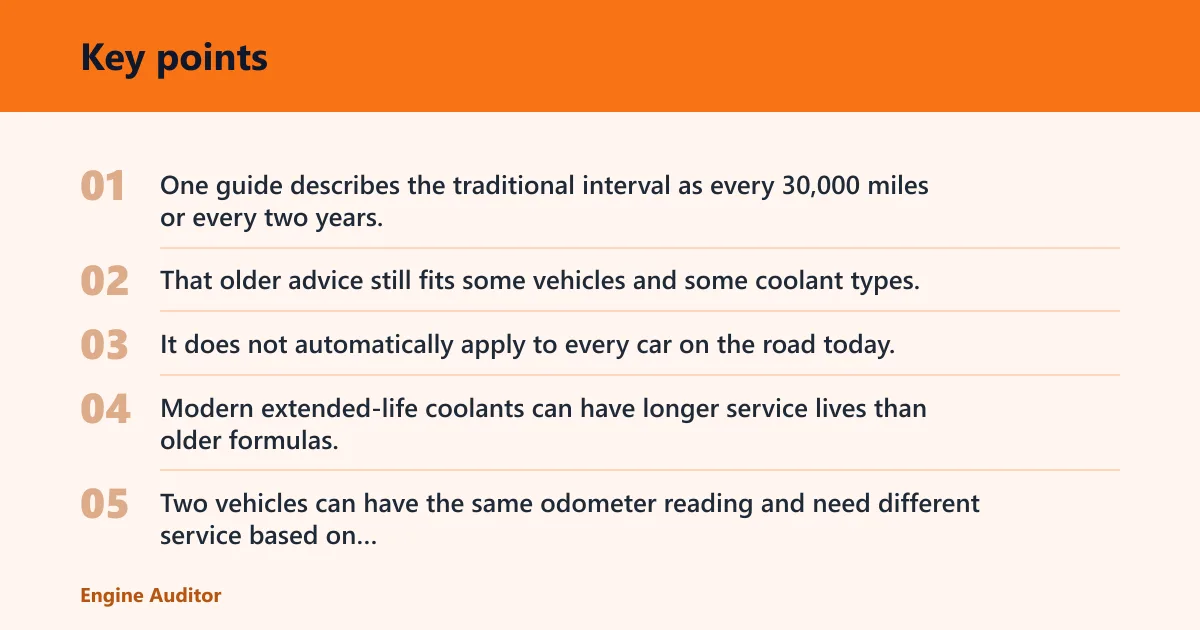
The traditional interval is often described as every 30,000 miles or every two years. That older advice still fits some vehicles and some coolant types, especially older IAT systems. It does not automatically apply to every car on the road today.
Modern extended-life coolants can have longer service lives than older formulas. That is why mileage alone is not enough. Two vehicles can have the same odometer reading and need different service based on coolant chemistry, age, and how the system has been maintained.
| Condition | What to look for | Next step |
|---|---|---|
| Normal maintenance due | Owner’s manual interval reached; coolant age matches schedule; no symptom present | Plan a flush or drain-and-fill using the correct coolant type |
| Coolant condition looks bad | Rust, sediment, discoloration, sour odor, or test strips showing worn fluid | Service the coolant and inspect for contamination source |
| Cooling-system symptom present | High temperature gauge, sweet smell, visible leaking fluid, or repeated top-offs | Diagnose the fault first; repair leaks or failed parts before flushing |
| Flush is not the first fix | Overheating, pressure loss, coolant disappearing, or signs of head-gasket trouble | Find the cause before any flush so the service is not wasted |
Flush or diagnose first?
Use this checklist to separate routine service from a repair problem. A flush is the right move when maintenance is due or the coolant itself has failed. It is the wrong first step when the car is already showing a symptom that points to another fault.
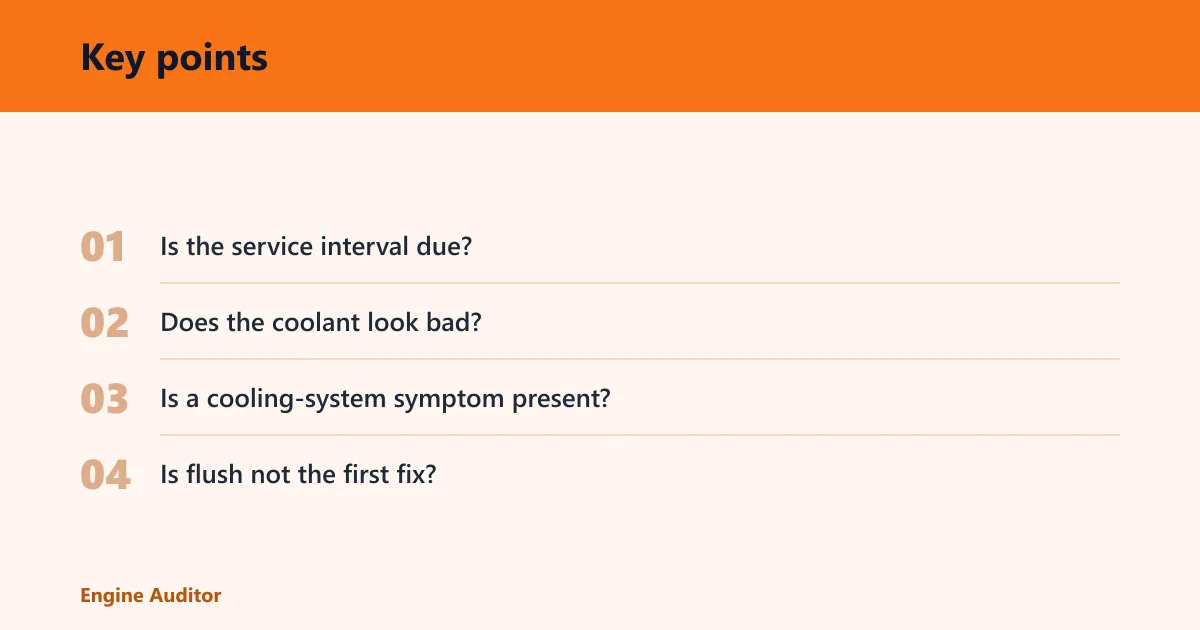
- Is the service interval due? Check the owner’s manual first. If the listed time or mileage is reached, a flush or drain-and-fill may be normal maintenance.
- Does the coolant look bad? Look for rust, sediment, sludge, discoloration, or a burnt or sour smell. Test strips that show depleted coolant can also point to worn fluid.
- Is a cooling-system symptom present? A rising temperature gauge, sweet smell linked to ethylene glycol in coolant, or visible leaking fluid means the system may need diagnosis before service.
- Is flush not the first fix? If overheating, fluid loss, or pressure issues suggest a thermostat, water pump, hose, radiator, or head-gasket problem, repair that fault first.
Suppose a compact SUV is due for service at 5 years, and the coolant in the reservoir looks dark with visible scale. That is a maintenance case, and a flush makes sense after the correct coolant type is confirmed.
Now picture a minivan with a hot temperature gauge and dripping coolant under the front bumper. That is not a simple flush decision. The leak should be found and repaired first, because fresh fluid will not stay in the system if the leak remains open.
What happens if you skip it?
Skipping a needed flush lets corrosion inhibitors wear out while sediment keeps building. That can reduce heat transfer, weaken protection for the radiator and other metal parts, and raise the chance of clogging in passages that are supposed to move coolant freely.
Over time, acidic coolant can damage metal parts. The result may be slower heat exchange, hotter running temperatures, and more wear inside the system. The problem often grows quietly before it becomes a visible breakdown.
Why contamination matters
Rust and sediment do more than make the fluid look ugly. They interfere with circulation and create deposits where coolant needs to move and shed heat. That is why service is about more than replacing old liquid; it is about keeping the system clear.
What starts as neglected coolant can turn into restricted flow, heater complaints, or cooling performance loss. If the system is already contaminated, service is usually cheaper than waiting for a radiator, heater core, or water pump problem to follow.
Does a flush fix overheating or leaks?
It may help after the underlying fault is corrected, but it is not a cure for overheating or leaks on its own. A flush can improve coolant condition and restore protection, yet a hot engine, visible leak, or persistent coolant loss usually points to another issue first.
When overheating points to another fault
A high temperature gauge can come from a stuck thermostat, a weak water pump, low coolant from a leak, or even head-gasket symptoms. In those cases, a flush may be part of the repair plan, but it is not the first or only answer.
The same is true for visible leaking fluid. A flush is often described as something that may be suggested when leaking fluid is visible, but the leak itself still needs attention. Fresh coolant cannot stay clean or full if the system is still losing fluid.
When a flush can help after diagnosis
If a repair finds contaminated coolant, rust, or incompatible fluid, then a flush can be the right follow-up. It clears old material out of the cooling system after the underlying fault is fixed, which helps prevent repeat contamination and restores the correct coolant mix.
A flush is most useful when it matches the actual condition inside the system. That is where maintenance and diagnosis work together instead of competing for the same money.
Frequently asked questions
Is a radiator flush necessary?
It can be, but only when the coolant is due, contaminated, or the vehicle calls for that service by schedule. Many repair pages use radiator flush and coolant flush as the same basic service. If the car is overheating or leaking, diagnosis should come first.
How often should I flush my coolant system?
Start with the owner’s manual. Many modern coolants last longer, so the schedule depends on the formula.
Can modern coolant go longer without a flush?
Yes. Many modern coolants are extended-life formulas and can last longer than older IAT coolant. That does not make them permanent. Age, contamination, and vehicle-specific requirements still matter, and a wrong top-off or mixed formula can shorten service life.
What happens if I skip a coolant flush?
Old coolant loses corrosion protection over time. Rust and sediment can build up, heat transfer can drop, and metal parts can suffer damage. The risk is higher in neglected systems, especially when the coolant is acidic or already showing contamination.
Does a coolant flush fix overheating or leaks?
No, not by itself. A flush can help once the root cause is known and repaired, but it will not fix a bad thermostat, water pump failure, head-gasket symptom, or active leak. Those faults need diagnosis first so the next service actually lasts.
Is a coolant flush really necessary: only when the coolant?
Only when the coolant is overdue, contaminated, or wrong for the vehicle. That answer changes with coolant chemistry, service interval, and system condition. If the cooling system is showing symptoms, the first job is to find the cause, not to assume the flush is the cure.
Products related to this article
Sponsored / affiliate links. As an Amazon Associate I earn from qualifying purchases. I may earn additional commission from eligible campaigns.