Can You Drive on a Tire with a Bent Rim?
You can sometimes drive a few miles on a mildly bent rim at low speed, but if the tire loses air, the wheel wobbles, or the bead is damaged, stop driving and tow it. Ignoring it can destroy the tire, bend the suspension, and turn a repairable wheel into a roadside breakdown. This guide shows the warning signs, the drive-or-tow decision, and the next steps after a pothole or curb strike.
Can you drive on a bent rim?

- Factory-calibrated for dependable pressure checks
- Backlit LCD and nozzle light help in the dark
- Switches easily between PSI, Bar, Kgf/cm², and KPA
Yes, sometimes, but only when the bend is minor, the tire still seals, and the car stays stable at low speed. A bent rim with air loss, a wobble, a crack, or a sidewall bubble is a no-drive problem. Stop, inspect the wheel, and do not keep going until you know the tire still holds pressure.
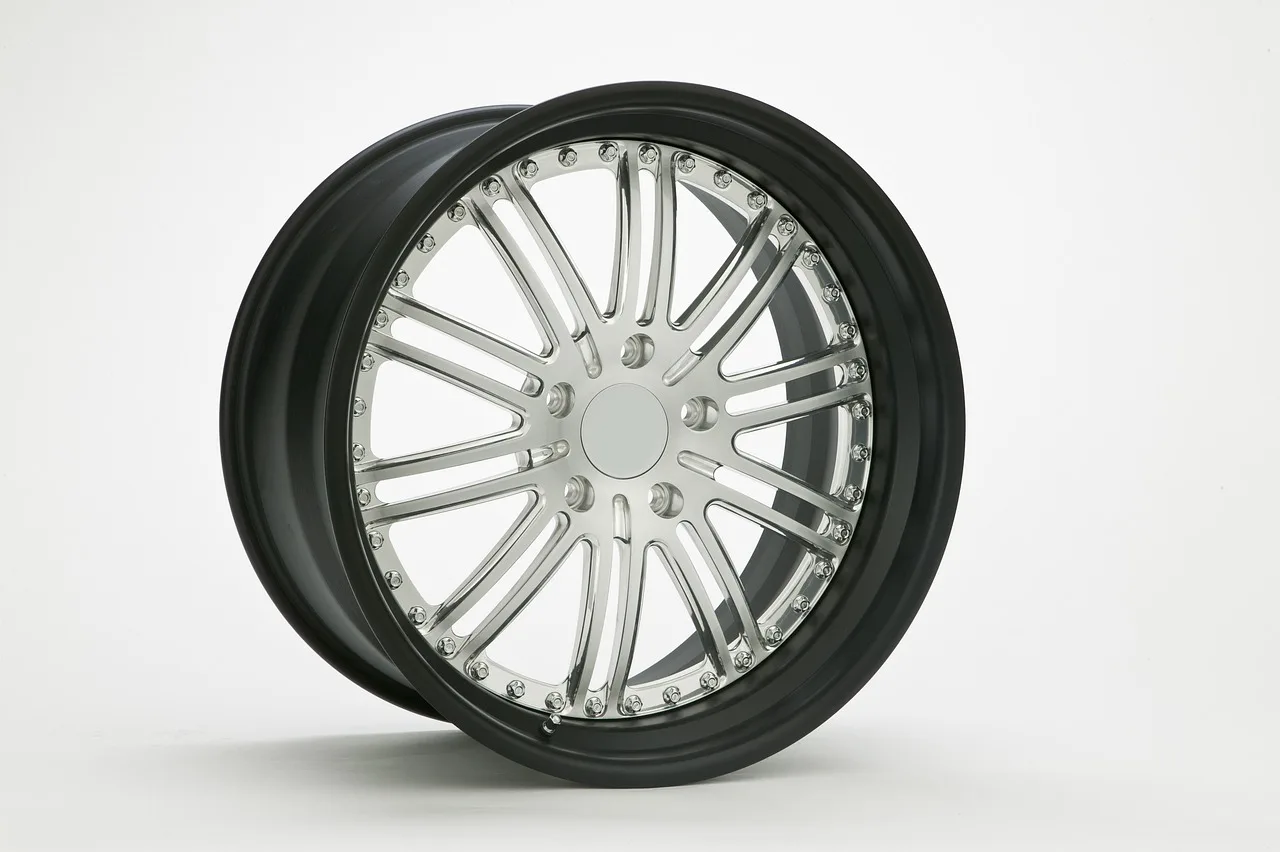
A bent wheel can be damaged at the outer lip or in the barrel. That difference matters. Outer-lip damage is more likely to affect the tire bead seal, while barrel deformation points to a deeper structural problem and a higher risk of failure.
Bent rim driveability triage
| Symptom | Likely failure mode | Max-risk action | Next step |
|---|---|---|---|
| Visible lip bend | Possible bead-seal leak, but may be only cosmetic if the tire still holds pressure | Low-speed limp only if pressure is stable | Inspect the tire and wheel, then get it checked by a wheel repair specialist — drive slowly to shop |
| Slow air loss | Bead seal is leaking at the rim edge | Tow if pressure keeps dropping | Stop if the leak is fast; any ongoing pressure loss means stop and inspect — stop and inspect |
| Vibration at speed | Wheel balancing problem or a deformed wheel | Limit speed and distance | Have the wheel and suspension checked before more driving — drive slowly to shop |
| Steering pull | Wheel alignment may be off after impact | Do not keep driving at highway speed | Get the alignment checked after the wheel issue is confirmed — drive slowly to shop |
| TPMS light | Pressure is significantly low, often from bead leakage | Treat as unsafe until pressure is verified | Check all tire pressures and look for the leak source — stop and inspect |
| Sidewall bubble | Internal cord damage in the tire | No-drive | Replace the tire before moving the car any farther — tow now / no-drive |
| Cracked rim | Structural failure | No-drive | Arrange a tow and replacement inspection — tow now / no-drive |
| Tow now / no-drive verdict | Any crack, bubble, fast leak, or visible deformation that affects sealing or stability | Stop driving immediately | Use a flatbed tow truck, especially for freeway shoulder stops or severe rim damage — tow now / no-drive |
What a bent rim can do to the tire
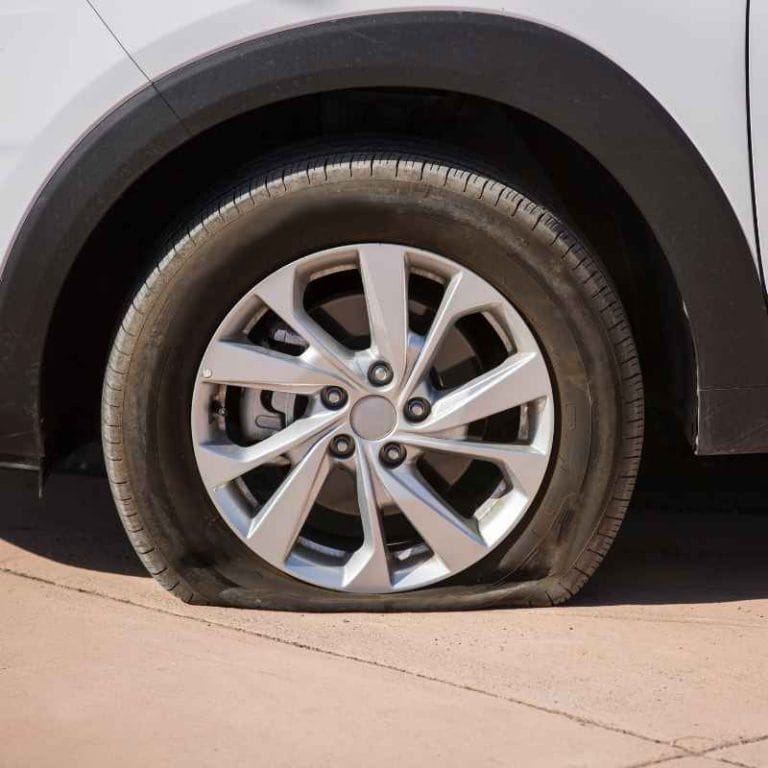
A bent rim can lose the tire bead seal and let air seep out at the rim edge. That can happen slowly or quickly. Once pressure drops far enough, the tire can heat up, wear badly, and fail. A bent wheel can also turn into a suspension problem, not just a wheel problem.
This is why a bent rim can sometimes cause a flat tire even when the tire itself looks normal. It does not need to be shredded to be unsafe. If the bead no longer seals, the tire can leak down, trigger the TPMS light, and become a no-drive condition.
A common example is a curb strike that leaves a small bend at the outer lip of a 17-inch wheel, with the tire still holding air overnight. That may still be a short shop run at low speed. If the same wheel starts dropping pressure on the way home, the problem is no longer cosmetic.
How to inspect the wheel in 2 minutes
Do a fast inspection before moving the car. Look at the rim, look at the tire, and check the dash. If anything suggests a leak or structural damage, do not assume it is safe because the car still rolls.
- Look at the outer lip and barrel for a visible bend, crease, or flat spot.
- Check for fresh scuffs, a crack, or metal that looks split rather than simply pushed in.
- Inspect the tire bead area where the tire meets the rim for wetness, dirt movement, or obvious gaps.
- Check the sidewall for a bubble, cut, or bulge.
- Read the TPMS light and compare tire pressure to the other side.
- Watch for steering pull or a wheel that sits off-center when you start rolling.
Even if the pressure is close to normal, that does not override a visible crack, bubble, or wobble. Pressure is only one part of the check. Shape, sealing, and stability matter just as much, and a tire can look inflated while still being unsafe to drive.
Can you keep driving to a shop?
Sometimes, yes. A mild bend with a tire that still seals can be driven a short distance at low speed, and a bent wheel from a pothole may be okay to limp at 25 mph or less if the tire still seals. Keep it off the interstate. Heat and speed turn a small defect into a bigger one fast.
Low-speed city driving
If the wheel is only lightly bent, the tire holds air, and the car tracks straight enough to stay controlled, a short city move to a shop may be reasonable. Keep speed down, avoid hard braking, and stop if the vibration grows or the TPMS light starts flashing again after reinflation.
Highway driving and shoulder stops
Do not treat freeway travel the same as a short neighborhood move. A compromised wheel can fail under sustained speed, and a shoulder stop adds more danger if the tire is already losing air. For severe rim damage or a roadside shoulder situation, a flatbed tow truck is the safer call.
Picture a driver who hears a bang after a pothole, then sees a TPMS warning five minutes later. If the tire is still full and the steering is stable, a low-speed move may be enough to reach a nearby shop. If the wheel starts vibrating harder above city speed, that is a stop-and-tow problem.
When should you tow instead of driving on a bent rim?
Tow it instead of driving whenever the rim is cracked, the tire is losing air, the wheel wobbles, or the damage reaches the structural part of the wheel. A flatbed is the safest choice when the car has a sidewall bubble, a persistent TPMS warning, or any sign that the wheel cannot hold pressure reliably.
Why flatbed towing is safer for bent wheels
A flatbed avoids forcing a damaged wheel to roll. That matters when the rim edge is bent enough to leak or the barrel shape is distorted enough to stress the tire. It also helps when the car is stopped on a freeway shoulder, where even a short drive to a safer place can be the wrong move.
When a wheel-lift tow is the wrong choice
A wheel-lift can add load to the damaged corner and make a weak rim worse. If the wheel is already cracked, badly bent, or sitting with low pressure, do not gamble on a tow method that may keep the damaged wheel in play. Use a flatbed whenever possible.
Signs that mean no-drive now
A sidewall bubble is one of the clearest no-drive signs because it points to internal cord failure in the tire. A fast leak, a visible crack in the wheel, a rim that will not hold air, or a wheel that visibly wobbles all point to the same answer: stop and tow.
Bent wheel repair or replacement
A wheel repair specialist decides repair versus replacement. Mild bends can sometimes be straightened with proper equipment, but cracked wheels and severely deformed wheels should be rejected. If the damage is beyond the outer lip, or if the barrel is badly misshapen, replacement is often the safer path.
Do not treat a cheap repair as a default fix. The wheel has to seal the tire bead and run true at speed. If it cannot do both, a repair that looks inexpensive at first can turn into a repeat problem.
Can you put a tire on a bent rim?
Sometimes, but only if the wheel can still seal correctly and pass inspection. If the rim lip is bent enough to prevent bead sealing, mounting a tire on it may just create a leak. If the wheel is cracked or severely deformed, the right answer is replacement, not another tire on the same rim.
Repair costs vary by damage type, wheel design, and whether the rim can be safely straightened, welded, or must be replaced. Costs are best confirmed with a local wheel shop or OEM parts source because a cracked wheel often pushes the job from repair into replacement.
Frequently asked questions
Can you drive on a tire with a bent rim?
Sometimes, yes, if the bend is minor, the tire still seals, and the car remains stable at low speed. If the rim is visibly bent, the tire will not hold air, or the wheel wobbles, stop driving. A sidewall bubble or crack means no-drive, not “drive carefully.”
Can you drive with a bent wheel rim?
You can sometimes limp a short distance to a shop, but only with a mild bend and stable pressure. A bent rim that causes vibration, steering pull, or air loss should not be treated as a normal driving problem. Highway use raises the risk, and short city travel is safer.
Will a bent rim ruin my tire?
It can. A bent rim may damage the bead seal, which lets air out and can wear the tire unevenly. If the wheel becomes badly deformed, the tire can suffer heat damage or fail outright. The tire may still look usable while the internal risk keeps rising.
Is it safe to drive on a bent rim?
Only in limited cases. A mild bend that still seals and does not change how the car steers may be moved slowly to a nearby shop. If there is a crack, a sidewall bubble, a fast leak, or a strong wobble, it is not safe and should be towed.
Can you put a tire on a bent rim: sometimes, but only after?
Sometimes, but only after the wheel is inspected. If the rim lip still lets the tire bead seal and the wheel is not cracked or severely deformed, a tire can sometimes be mounted. If the rim leaks at the bead or fails inspection, the wheel needs repair or replacement first.
How far can you drive on a bent rim before damage gets worse?
There is no fixed distance that is safe for every case. The risk depends on whether the tire still seals, how fast it loses air, and whether the wheel is wobbling or vibrating. If the pressure drops quickly or the rim is cracked, do not drive farther at all.
Products related to this article
Sponsored / affiliate links. As an Amazon Associate I earn from qualifying purchases. I may earn additional commission from eligible campaigns.