Can You Drive on a Tire with a Small Sidewall Cut?
If the cut appears to be only a surface scuff, with no cord showing, no bulge, and no air loss, you can usually drive only to a tire shop at low speed. Any deeper sidewall damage generally means stop and replace the tire. Ignoring it can lead to a sudden blowout, wheel damage, and a tow that costs far more than a tire. This guide explains what to inspect, what needs immediate replacement, and how to move the car only if you must get help.
When a sidewall cut is safe to drive
Only the lightest cosmetic marks are worth monitoring. A tire sidewall holds air, supports vehicle weight, and flexes with every rotation, so cuts there are far less forgiving than tread damage. If the cut is more than a surface scuff, is near the shoulder, or is leaking, do not treat it as safe.
The location matters more than the size alone. A small scuff in outer rubber can be harmless if the tire still holds pressure and shows no bulge. A small cut closer to the shoulder can be dangerous because that transition zone bends hard under load.
Sidewall cut decision table
| Damage type | Drive decision | Reason | Next action |
|---|---|---|---|
| Cosmetic scuff | Drive now | No cut reaches the carcass, no bulge, and no pressure loss is present. | Check pressure, then monitor the mark for spreading. |
| Shallow cut in outer rubber | Drive only to shop | The cut is small, but the sidewall flexes constantly and can open wider. | Limit speed, recheck pressure, and get an inspection soon. |
| Cut near shoulder | Do not drive | The shoulder is the transition zone between tread and sidewall, so damage there is high risk. | Arrange a tow or spare tire if one is available and safe to use. |
| Cut with visible cords | Do not drive | Visible cords mean the tire’s structure is exposed and failure risk is high. | Remove the tire from service and replace it. |
| Any cut with air loss | Do not drive | Air loss can mean the tire is failing and may lead to wobble, heat buildup, and blowout. | Stop as soon as safely possible and call for help. |
What to check right away
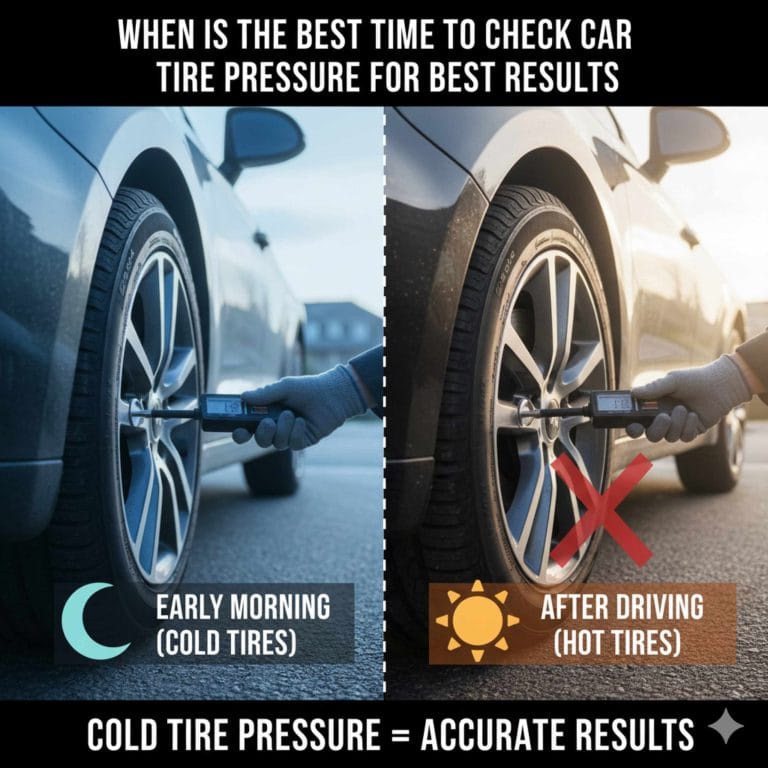
Park safely and check tire pressure before you decide anything. That advice matters because pressure drop is a warning sign by itself, and a hissing sound means air is escaping. Also inspect the sidewall for cuts, bulges, and embedded debris, then look at the shoulder and nearby tread for spread damage.
Do not pull the object out right away if a screw, nail, or similar item is embedded. A screw in the tread may sometimes be patched, but sidewall damage usually means replacement. Pulling it out first can turn a slow leak into a faster one.
- Stop in a safe place and keep the car still.
- Look for visible cuts, bubbles, bulges, or debris in the sidewall.
- Listen for hissing near the damaged area.
- Check tire pressure immediately and compare it with normal inflation.
- Decide whether the tire can only be driven a very short distance, or not at all.
Suppose you notice a 1-inch scuff on the rear tire, but the pressure stays normal and there is no bulge. That may stay in the monitor category. If the same mark sits at the shoulder and the gauge shows a pressure drop, it moves into replace-now territory.
When the tire is too risky
Visible cords, fabric, a bubble, or a widening cut mean the tire should come out of service. So does any leak. The same is true for damage close to the shoulder transition, because that zone takes heavy flex every time the wheel turns.
A sidewall cut can look minor and still fail under load. Highway speed, a loaded car, or a heavy vehicle increases stress on the damaged sidewall. A cut that seems tolerable in a driveway can become unsafe once the tire heats up and flexes.
Can a sidewall cut be repaired?
In most cases, no. Tread punctures are different because they occur in the repairable part of the tire, while sidewall cuts happen in a section that flexes and contains air under load. Shoulder or sidewall damage usually means replacement, even when the opening looks small.
Patch or plug repair is meant for tread punctures, not for sidewall cracks or cuts. A temporary seal on the sidewall is not a sound fix. The tire may still fail later because the damage moves with every rotation and can open wider.
Why tread damage is different
The tread area is built for road contact, and a screw or nail there may be repairable if the damage is in the right place and the tire has not been driven flat. Sidewall damage is different because the sidewall carries load and flexes constantly, so a repair there does not restore the structure in the same way.
That difference matters when the object sits near the edge of the tread. If it is close to the shoulder, the tire is already in the higher-risk zone. Treat it more like sidewall damage than a routine tread puncture.
Picture a sedan with a screw in the center tread and no pressure loss. That may be a repair candidate. If the screw is one inch farther out, near the shoulder, the same tire should be treated as unsafe until a shop inspects it.
What to do before towing
Leave embedded objects in place until the tire is inspected. If the tire is not losing air, move the car only if necessary and only the shortest safe distance. If you have a spare, use it according to the vehicle’s instructions. If you have a run-flat tire, remember that it only allows temporary mobility after pressure loss.
Run-flat tires have reinforced sidewalls, but they are not a permanent solution. Their exact distance and speed limits vary by tire and vehicle, so check the owner’s manual or tire maker guidance; many are limited to about fifty miles and around fifty miles per hour after losing pressure. That does not make sidewall cuts safe; it only buys limited mobility after a pressure loss.
Can a sidewall cut lead to a blowout?
Yes. A sidewall cut can sometimes spread into a larger split, especially when the tire is hot, heavily loaded, or driven at higher speed. A blowout means immediate control issues, so a cut that spreads or starts leaking should be treated as an urgent stop-and-tow problem.
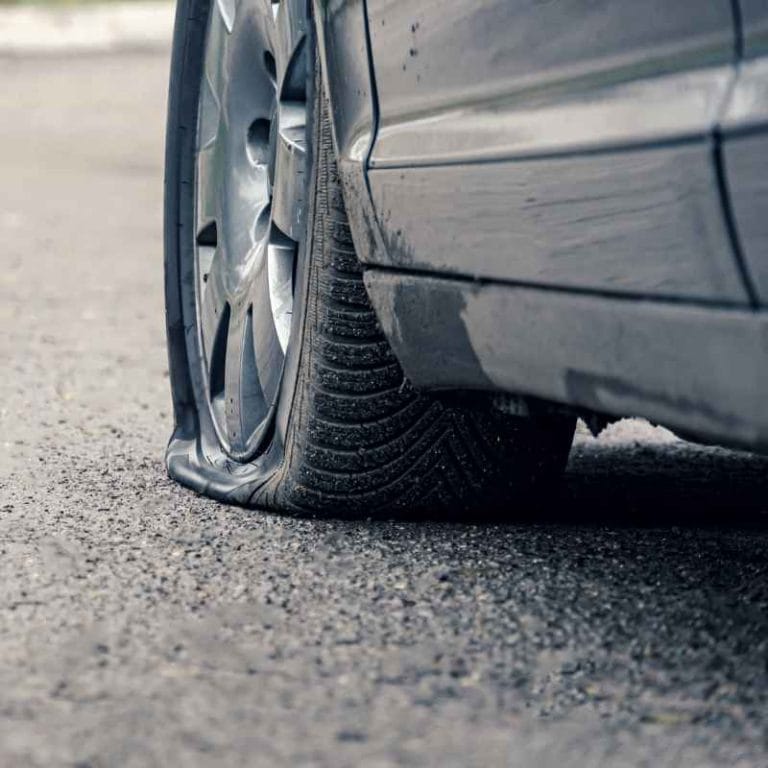
Driving on a flat makes the problem worse. A flat tire can damage the tire itself and the wheel rim, because the rim can contact the road surface after deflation. A completely flat tire should not be driven at all except, if necessary, to reach an immediate safe stopping point, and even a mile or less can cause irreversible damage.
What loading and speed change
The more weight the tire carries, the more the damaged area bends. That repeated bend can open a cut farther. Higher speed adds heat and force, which can move a tire from a slow leak to a sudden failure.
Say your compact SUV has a shallow sidewall cut on a rear tire, and the vehicle is packed for a trip. The same cut that looks stable in the driveway can fail much sooner once the tire supports extra load on the highway.
What should you do immediately after finding tire damage?
Stop driving as soon as safely possible if the tire is losing air. Do not pull out a nail, screw, or other object before checking for air loss. Inspect the sidewall integrity for cuts, bulges, or embedded debris, then decide whether the tire can be driven only to a shop or should be towed.
- Pull over safely and keep clear of traffic.
- Look and listen for hissing.
- Check pressure right away.
- Inspect the sidewall, shoulder, and nearby tread.
- Keep the object in place until a repair shop can assess it.
- Use a spare, run-flat, or tow only within the tire’s limits.
What not to do
Do not assume a tiny cut is harmless just because it is short. Do not continue on a tire that is wobbling or vibrating. Do not rely on a plug for sidewall damage. Do not keep driving once a leak is obvious, because the rim can be damaged too.
Frequently asked questions
Can you drive on a tire with a small sidewall cut?
Only if it is a true cosmetic scuff with no cord showing, no bulge, and no pressure loss. In that narrow case, drive only to a tire shop at low speed. If the cut is deeper than the outer rubber, treat it as unsafe and replace the tire.
How do you know if a sidewall cut is too dangerous?
It is too dangerous when you see cords, fabric, a bulge, or a cut that is growing or leaking air. Damage near the shoulder is also high risk because that area flexes heavily. Any wobble, hissing, or rapid pressure drop should move the tire out of service.
Is a sidewall cut repairable or does the tire need replacing?
Most sidewall cuts need replacement, not repair. Tread punctures may sometimes be patched, but sidewall damage usually cannot be made reliable again because the sidewall flexes and contains air under load. Shoulder or sidewall damage usually means replacement, even when the cut looks small.
How far can you drive on a damaged tire before it fails?
There is no safe general distance for a damaged sidewall. A completely flat tire should not be driven at all except, if necessary, to reach an immediate safe stopping point. If the tire is leaking, the safest move is to stop and arrange help.
What are the warning signs that a tire is losing air fast?
Listen for hissing, watch for a rapid pressure drop, and feel for wobble or unstable handling. A visible bulge, a growing cut, or vibration can mean the tire is failing. If the tire is going flat, do not keep driving; get off the road and inspect it safely.
Can a tire sidewall cut turn into a blowout?
Yes. The sidewall flexes with every rotation, so a small cut can spread, heat up, and fail suddenly. Loading the vehicle, driving at highway speed, or continuing after pressure loss raises the risk. A blowout can happen without much warning once the damage reaches the internal structure.
Products related to this article
Sponsored / affiliate links. As an Amazon Associate I earn from qualifying purchases. I may earn additional commission from eligible campaigns.