How Many People Use Electric Cars in the UK? 2026 Data
As of 2026, over 2.1 million fully electric vehicles are licensed on UK roads — around 6% of all cars. In 2025, electric cars took 23.4% of all new car sales, up from 18.7% in 2024.
This guide covers UK EV registration numbers by year, who is buying electric cars, regional adoption differences, how the UK compares globally, and what is driving or slowing the switch.
The Current Number Of Electric Car Users In The Uk
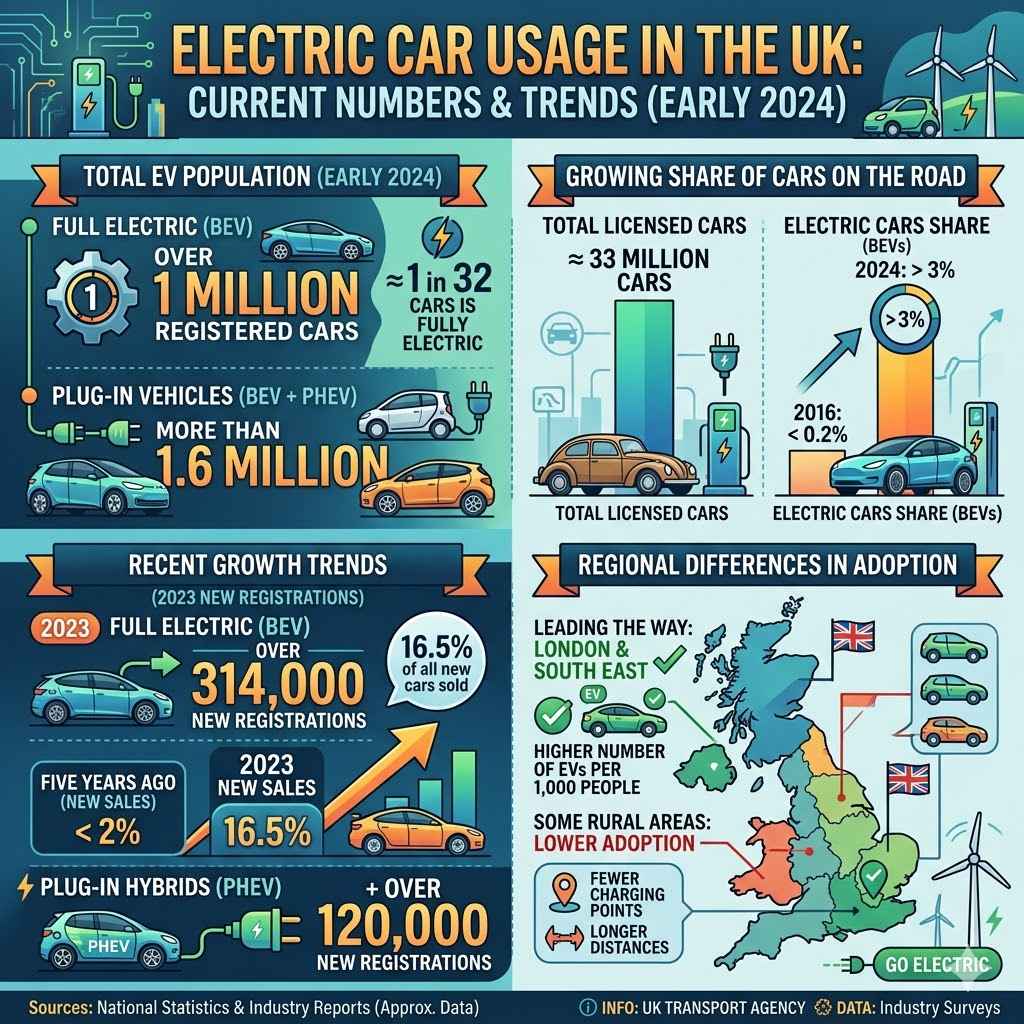
By the start of 2024, over one million battery electric vehicles (BEVs) were registered in the UK. This means around 1 in every 32 cars on British roads is now fully electric. If you include plug-in hybrids (PHEVs), the number rises to more than 1.6 million.
Grizzl-E Classic Level 2 EV Charger (32A/24A) — $249.99
With 2.1 million EVs now on UK roads, home charging has become the default way most EV owners fuel up. The Grizzl-E delivers a full charge overnight on most EVs and works with every J1772-compatible vehicle.
- Best for: New EV owners who want a reliable Level 2 home charger after making the switch
- Why picked: 32A output adds up to 30 miles of range per hour — the most important factor for the 77% of UK EV owners who charge primarily at home
- Main drawback: Requires a 240V NEMA 14-50 outlet and a licensed electrician for installation — budget an additional $150-250 for install
To put this in perspective, there are about 33 million licensed cars in the UK. So, while electric cars are still a minority, their share is growing quickly. In 2016, less than 0. 2% of cars were electric. By 2024, that figure had jumped to more than 3%.
Recent Growth Trends
The growth of electric car adoption is not slowing down. In 2023 alone, over 314,000 new battery electric cars were registered, making up about 16.5% of all new cars sold that year. This is a remarkable increase from just five years ago, when electric cars were less than 2% of new sales.
Plug-in hybrids also added more than 120,000 new registrations in 2023, showing continued interest in vehicles that offer both electric and petrol power.
Regional Differences
Electric car use is not equal across the UK. London and the South East lead the way, with higher numbers of EVs per 1,000 people. Some rural areas still have lower adoption, mainly due to fewer charging points and longer distances between towns.
Who Is Buying Electric Cars In The Uk?
The profile of a typical electric car driver in the UK has changed a lot in recent years. Early adopters were mainly tech enthusiasts or wealthy individuals looking for the latest trend. Now, a wider range of people are making the switch.
- Company car drivers: Many businesses are choosing electric cars for their fleets because of lower tax rates and running costs.
- Families: As more models with bigger ranges and boot space arrive, families are choosing electric for daily use.
- Urban drivers: People living in cities are often first to switch, as electric cars are perfect for shorter journeys and city driving.
It’s important to note that while electric cars are becoming more common, the average EV owner is still more likely to be male, middle-aged, and living in a house with off-street parking. This is slowly changing as prices fall and charging infrastructure improves.
Why Are So Many People Switching To Electric Cars?
There are several reasons why more people are using electric cars in the UK:
1. Lower Running Costs
Electric cars are much cheaper to run than petrol or diesel cars. Charging is often less expensive than filling a tank, and there are fewer moving parts, so maintenance costs are lower. Owners also benefit from zero road tax (for now) and other incentives.
2. Environmental Concerns
Many drivers are worried about climate change and want to reduce their carbon footprint. Electric cars produce no tailpipe emissions, helping to improve local air quality and reduce greenhouse gases.
3. Government Policies And Incentives
The UK government has announced a ban on new petrol and diesel cars by 2035. There are also grants for buying electric cars (although these have been reduced over time), and businesses get tax breaks for choosing electric.
4. Improved Model Range And Technology
There are now more than 90 different electric car models available in the UK, from small city cars to large SUVs. Battery ranges have improved, and charging infrastructure is expanding rapidly.
5. Access To Clean Air Zones
Some cities, like London, charge older cars to enter central areas. Electric cars are usually exempt from these charges, making them attractive for city dwellers.
Challenges Facing Electric Car Adoption
While electric cars are growing in popularity, several challenges remain:
Limited Charging Infrastructure
Charging at home is easy if you have a driveway or garage, but many people in flats or terraced houses cannot easily install a charger. Public charging points are increasing, but some areas still lack reliable, fast chargers.
Upfront Cost
Although running costs are lower, the purchase price of a new electric car is still higher than a petrol or diesel model. This puts EVs out of reach for some buyers, despite second-hand prices slowly falling.
Range Anxiety
Some drivers worry about running out of charge, especially on long journeys. While many new models offer 200 miles or more per charge, the fear of not finding a charger can put people off.
Charging Speed And Reliability
Fast charging is available at motorway services and some city locations, but not all chargers work perfectly. Waiting times, technical faults, or occupied chargers can cause stress, especially on busy days.
Used Electric Car Market
The market for second-hand electric cars is growing, but some buyers worry about battery health and future resale values. Warranty terms and battery guarantees vary between manufacturers, adding confusion.
How Does Electric Car Use In The Uk Compare To Other Countries?
To understand the UK’s position, it helps to compare with other leading countries in electric car adoption.
| Country | % of New Car Sales (2023) | Total Electric Cars (approx.) |
|---|---|---|
| Norway | 82% | 700,000 |
| UK | 16.5% | 1,000,000+ |
| Germany | 18% | 1,400,000 |
| France | 16% | 1,200,000 |
| Netherlands | 24% | 450,000 |
| USA | 7.6% | 3,200,000 |
The UK is ahead of the US in terms of percentage sales but behind countries like Norway and the Netherlands, where incentives and infrastructure are even stronger.
Electric Car Models Popular In The Uk
A variety of electric cars are on the market, but some models are especially popular with UK drivers.
- Tesla Model 3: Known for its range, technology, and charging network.
- Nissan Leaf: One of the first affordable EVs, made in Sunderland.
- Kia e-Niro: Offers good value, range, and space.
- Volkswagen ID.3: Modern design and solid features.
- Hyundai Kona Electric: Compact SUV with strong battery options.
- MG ZS EV: Affordable family SUV.
- Renault Zoe: Small, affordable, and practical.
- BMW i3: Unique style and good city car.
- Polestar 2: Premium features and range.
- Audi Q4 e-tron: Luxury and space for families.
Many of these models offer ranges above 200 miles, making them practical for both city and longer trips.
The Role Of Charging Infrastructure
The charging network in the UK is improving, but it still affects how many people use electric cars. As of early 2024, there were over 50,000 public charging points across the UK, more than double the number just three years ago.
Types Of Chargers
- Slow (3-7kW): Often found at home or work, adds 10-30 miles per hour.
- Fast (7-22kW): Public car parks, supermarkets, adds 20-60 miles per hour.
- Rapid (43-150kW): Motorway services, can charge 80% in 30-40 minutes.
- Ultra-rapid (150kW+): The newest and fastest, mainly at motorway stops.
Geographic Spread
Most chargers are concentrated in London and the South East, with fewer in rural and northern areas. This can slow adoption outside the big cities.
Payment And Access
Not all chargers use the same payment system. Some require apps, others use cards. This can confuse new users. The government is pushing for contactless payment at all new chargers to make things easier.
Home Charging
Over 80% of electric car charging happens at home. The government’s EVHS grant (Electric Vehicle Homecharge Scheme) helped many people install home chargers, but it ended in 2022 for most homes. Flats and rented homes now have special support.
Environmental Impact And Benefits
Switching to electric cars offers several environmental advantages:
Reduced Emissions
Electric cars have zero tailpipe emissions, which means no CO2, nitrogen oxides, or particulates are released while driving. This helps fight air pollution, especially in urban areas.
Lower Lifetime Carbon Footprint
Even when you consider electricity generation, electric cars are cleaner than petrol or diesel. The UK’s grid is getting greener, with more wind and solar power every year.
Noise Pollution
Electric cars are quieter, reducing noise in towns and cities. This makes roads more pleasant and can improve health for people living near busy routes.
Battery Recycling
Early worries about battery waste are being addressed. Companies now recycle most EV batteries, recovering valuable materials like lithium and cobalt for reuse.
Government Policies And Their Effect
Government support is a major driver of electric car adoption in the UK:
Ban On Petrol And Diesel Cars
The UK plans to ban new petrol and diesel car sales by 2035 (previously 2030 but delayed). This sends a clear signal to the car industry and buyers.
Incentives And Grants
- Plug-in Car Grant: Reduced over time and now ended for most cars, but was important for early buyers.
- Company car tax breaks: Electric company cars have very low tax rates, making them popular with businesses.
- Home charger grants: Helped with installation costs for owners.
Clean Air Zones
Cities like London, Birmingham, and Bristol have zones where only clean vehicles can enter without paying a fee. This encourages drivers to switch.
Support For Charging Infrastructure
The government invests in public chargers, especially in rural and hard-to-reach areas. Plans include making all new homes and offices “EV-ready. ”
The Future Outlook For Electric Cars In The Uk
Electric car adoption is expected to continue rising fast. By 2030, forecasts suggest there could be 8 to 10 million electric cars on UK roads—up from just over 1 million today.
Factors Driving Future Growth
- Falling battery prices will make electric cars more affordable.
- More second-hand EVs will appear, opening the market to more people.
- Charging infrastructure will expand, reducing “range anxiety.”
- Further government policies (like stricter emissions rules) will push more drivers to switch.
Challenges That Remain
- The used car market needs to become more trusted and transparent.
- More support is needed for people without off-street parking.
- Power grid upgrades are required to handle more car charging.
Non-obvious Insights
- Grid Balancing: As more EVs connect to the grid, some owners can earn money by letting energy companies use their car batteries to balance supply and demand—a concept called “vehicle-to-grid.” This could make electric cars even more valuable.
- Smart Charging: Many new home chargers are “smart,” meaning they can charge when electricity is cheapest and greenest, saving money and reducing carbon impact.
Common Misconceptions About Electric Cars
Many myths still surround electric cars in the UK:
- “Electric cars are slow.” In reality, most EVs have quick acceleration and are fun to drive.
- “Batteries don’t last.” Most modern EV batteries come with 8-year warranties and last much longer.
- “There aren’t enough chargers.” While coverage isn’t perfect, the number of chargers is growing quickly, especially in cities.
- “Electric cars are only for the rich.” Second-hand EVs and company car tax breaks are making them more accessible.
Electric Car Use: Social And Economic Effects
Widespread electric car adoption is changing more than just the environment:
- Jobs: UK factories (like Nissan in Sunderland) are building more electric models, creating new jobs.
- Energy: More demand for electricity means more investment in renewables.
- Health: Better air quality leads to fewer cases of asthma and other breathing problems.
How Many People Use Electric Cars In The Uk: Summary Data
To make the current situation clear, here’s a summary of the most important numbers:
| Category | 2024 Figure |
|---|---|
| Battery Electric Cars | 1,000,000+ |
| Plug-in Hybrids | 600,000+ |
| % of Total Cars (BEV) | ~3% |
| Public Chargers | 50,000+ |
| New BEV Sales (2023) | 314,000 |
| Forecast for 2030 | 8–10 million |
What Beginners Often Miss
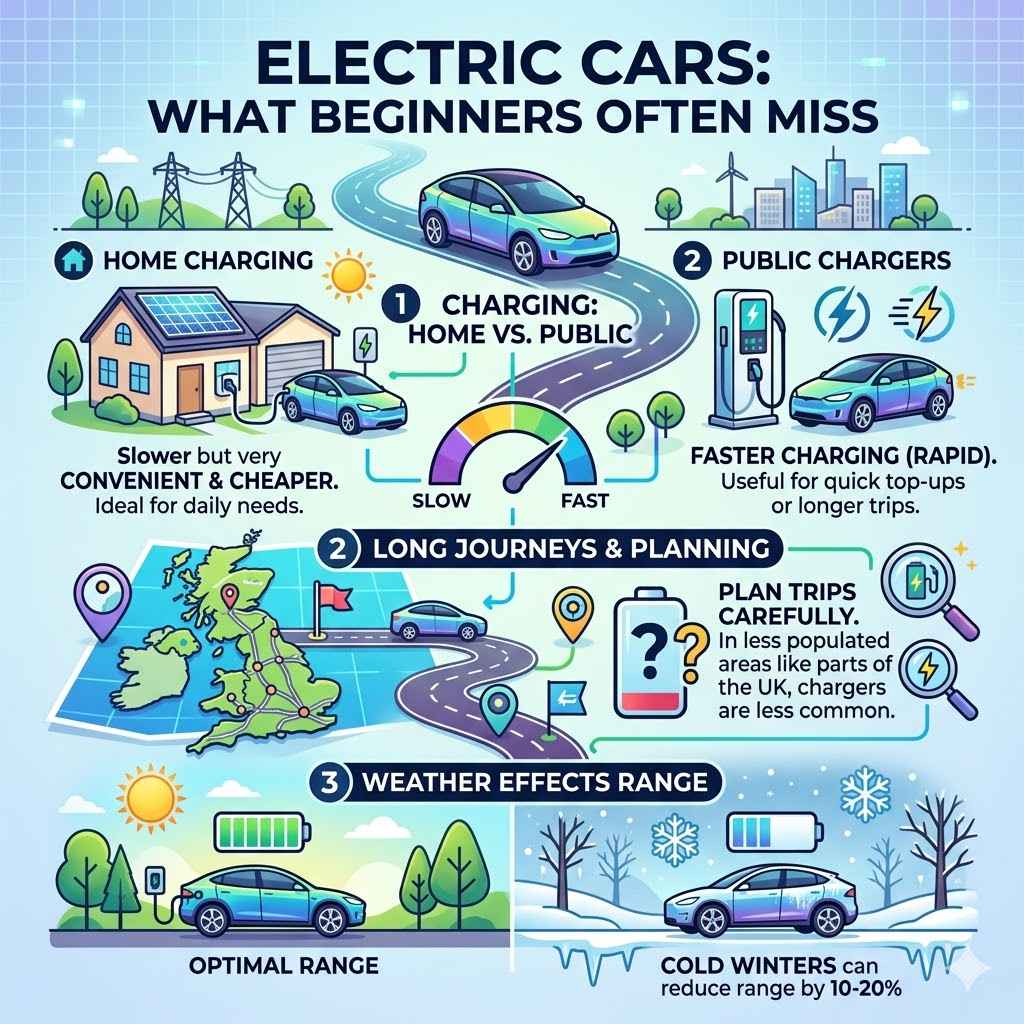
Buying an electric car is not just about the car itself. Beginners often overlook:
- The importance of charging speed at home versus public chargers. Home charging is usually slower but more convenient and cheaper.
- The need to plan longer journeys, especially in less populated parts of the UK where chargers are less common.
- How weather affects range—cold winters can reduce battery range by 10–20%.
Frequently Asked Questions
How Many Electric Cars Are Currently On The Road In The Uk?
As of early 2024, there are over 1 million battery electric cars and about 600,000 plug-in hybrids on UK roads, making electric cars around 3% of the total car fleet.
Is The Charging Infrastructure Good Enough For Everyone To Switch?
The charging network is growing, with more than 50,000 public points. However, some areas—especially rural or remote—still lack enough chargers, making home charging important for most EV owners.
What Is The Average Price Of An Electric Car In The Uk?
Most new electric cars cost between £25,000 and £45,000. Second-hand prices are now as low as £10,000 for older models. Prices are expected to fall as more cars enter the market.
Do Electric Cars Really Help The Environment?
Yes. Electric cars produce no tailpipe emissions and have a lower total carbon footprint than petrol or diesel cars, especially as the UK’s electricity gets greener.
Where Can I Learn More About Electric Cars And Government Policies?
You can find up-to-date information from the UK government and trusted automotive sources. One useful resource is the Society of Motor Manufacturers and Traders (SMMT).
The journey to full electric adoption is well underway in the UK. While challenges remain, more people are making the switch every year, and the future looks increasingly electric. As prices fall, infrastructure grows, and awareness spreads, the number of people using electric cars will only keep rising.
Products related to this article
Sponsored / affiliate links. As an Amazon Associate I earn from qualifying purchases. I may earn additional commission from eligible campaigns.